Artwork
Marchioness of Baden
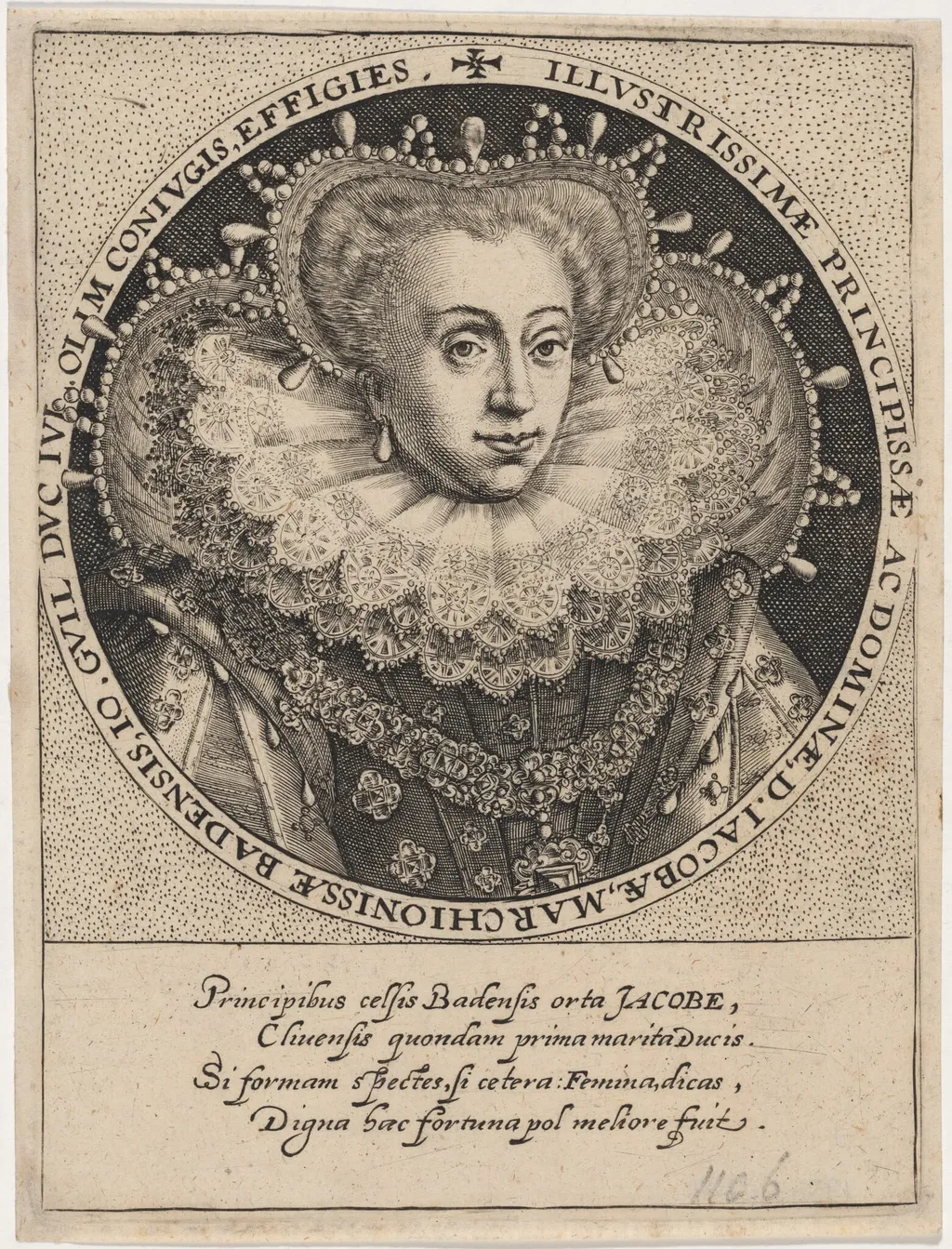
Marchioness of Baden is an ink print by the Romanticist artist Unknown 19th Century. It dates from 1850 and is held in the collection of the National Gallery of Art.
About this work
Overview
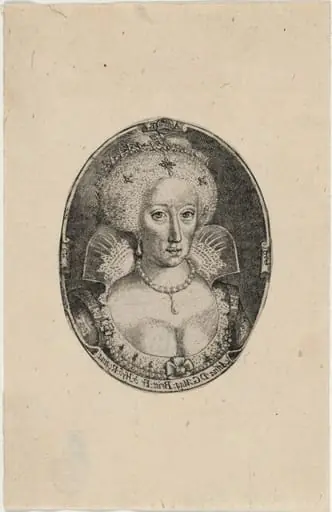
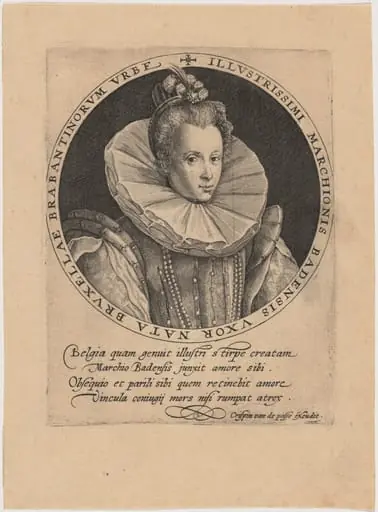
An oval border surrounds the image, inscribed with her title and a Latin text beneath, typical of early modern portraiture in print form.
This black-and-white engraving depicts the portrait of a noblewoman identified as the Marchioness of Baden. Rendered in fine, precise lines, the image focuses on her face and upper shoulders against a plain background. Her attire includes a detailed collar with intricate patterns and a substantial necklace of looped chains. An oval border surrounds the image, inscribed with her title and a Latin text beneath, typical of early modern portraiture in print form.
Subject & Meaning
The sitter is presented with solemn dignity, her gaze direct and composed, reflecting her status as a member of the German nobility. The elaborate jewelry and finely rendered collar signify wealth and social rank, while the Latin inscription reinforces her identity within a learned, aristocratic tradition. The portrait functions as a formal representation, intended for dissemination among elite circles rather than personal intimacy.
Technique & Style
The artist employed engraving techniques using a burin to incise fine lines into a metal plate, creating tonal gradations through density and direction of strokes. Shadows and textures, particularly in the lace-like collar and necklace, are built with meticulous cross-hatching. The absence of color and the emphasis on linear precision align with Northern European print traditions of the period, prioritizing clarity and detail over atmospheric effect.
History & Provenance
The print likely originated in the late 17th or early 18th century, produced in a German-speaking region where engraving was a common medium for aristocratic portraiture. Its circulation would have been limited to collectors, courts, or print dealers. No definitive record of its original commission survives, but its formal style suggests patronage by or for the House of Baden.
Context
Engraved portraits like this were widely used to project noble identity beyond the confines of court life. In an era before photography, such prints served as visual records and diplomatic gifts. The Latin text reflects the continued use of the language among European elites, while the restrained composition echoes contemporary Flemish and German portrait engravings that valued restraint over flamboyance.
Legacy
As a specimen of early modern printmaking, this engraving exemplifies the technical skill required to translate three-dimensional presence into two-dimensional line work. Though not attributed to a major named artist, it contributes to the broader understanding of how noblewomen were visually represented in print culture, preserving their image through reproduction rather than painting.
Artist & collection

Artist

 Anne of Denmark
 Lucia Harrington, Countess of Bedford
 Elizabeth, Princess, Wife of the Elector Palatine Frederick V, King of Bohemia
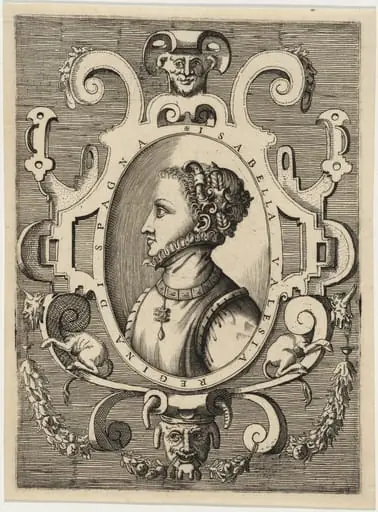 Isabella, Wife of Philip IV of Spain
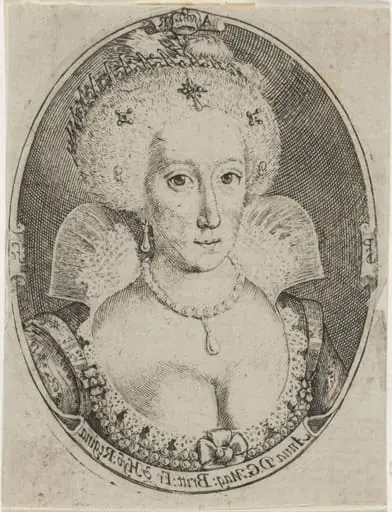 Anne of Denmark
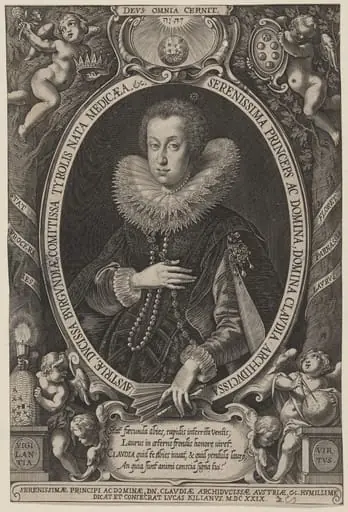 Claudia de Medici, Wife of Leopold of Austrian Tyrol
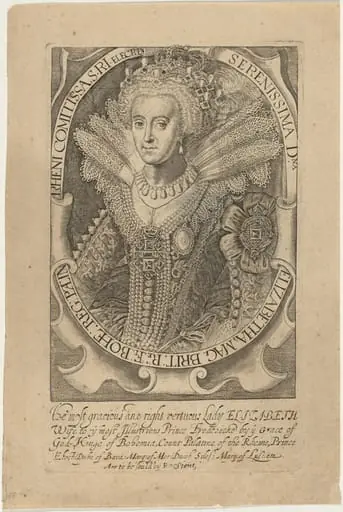 Elizabeth, Queen of Bohemia
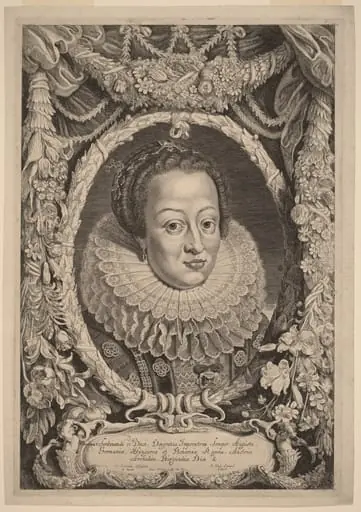 Eleanora, Wife of Ferdinand II
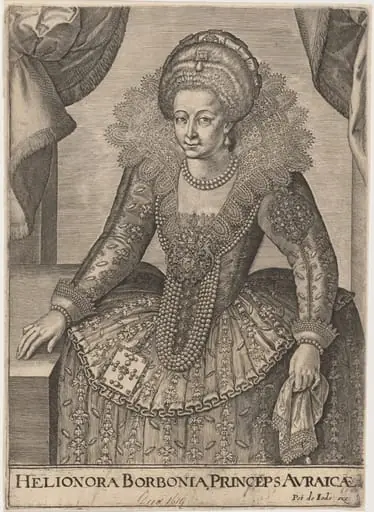 Eleanora, Princess of Orange
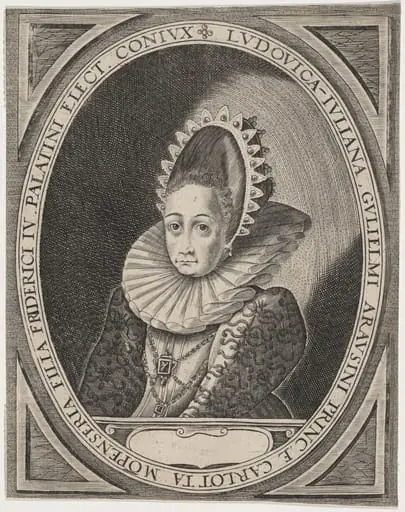 Louise Juliana, Wife of Frederick IV
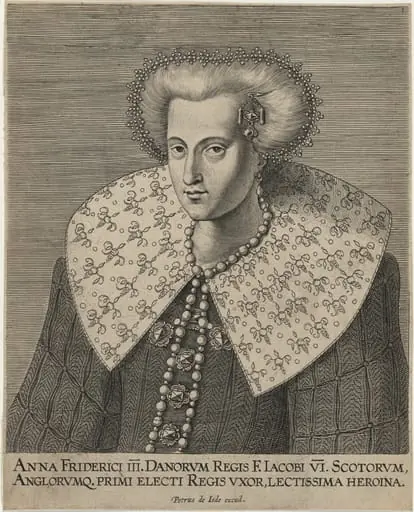 Anne of Denmark, Queen of Scotland and England
 Elizabeth van Pallandt, Countess of Culemborg, Wife of Jacob, Margrave of Baden