Artwork
Eleanora, Wife of Ferdinand II
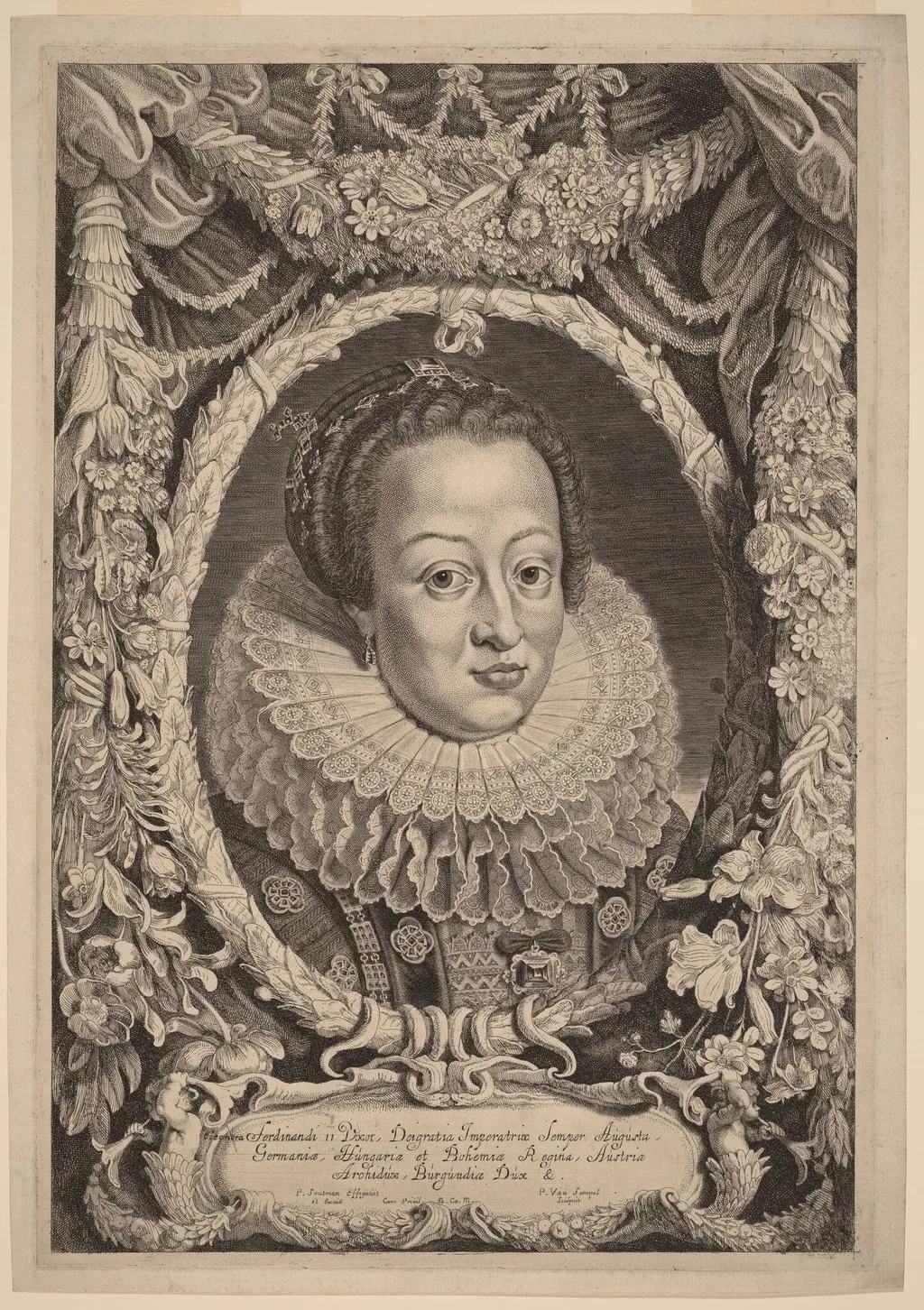
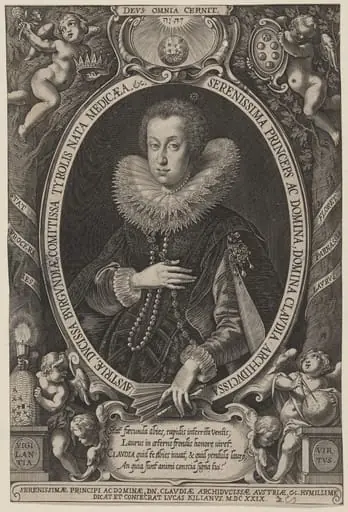
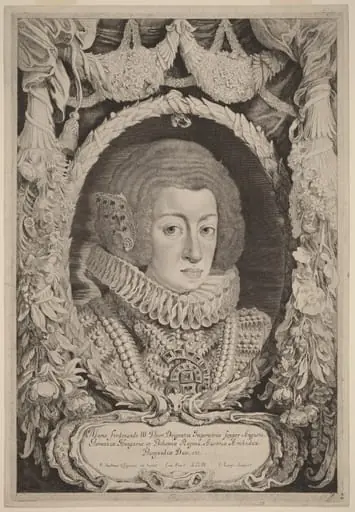
Eleanora, Wife of Ferdinand II is an ink print by the Baroque artist Pieter van Sompel. It is held in the collection of the National Gallery of Art.
About this work
Overview
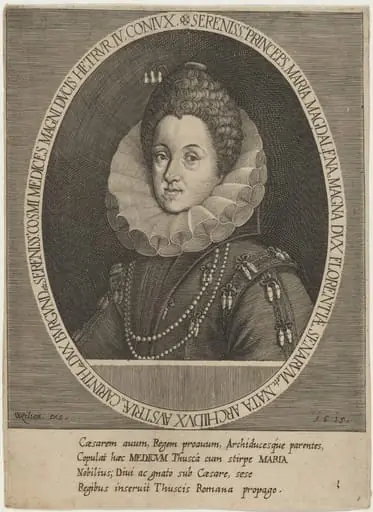
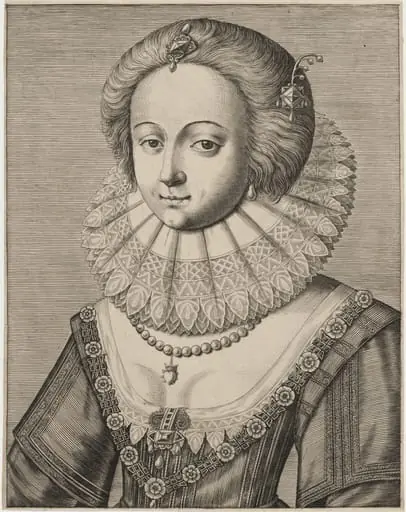
Rendered in black and white, the image presents a composed woman whose expression is solemn, framed by an elaborate lace collar and a decorative headpiece.
Pieter van Sompel’s print, dated around 1644, depicts Eleanor, the consort of Ferdinand II, in a formal portrait. Rendered in black and white, the image presents a composed woman whose expression is solemn, framed by an elaborate lace collar and a decorative headpiece. The surrounding border is densely filled with ornamental motifs, creating a richly detailed composition typical of mid‑17th‑century portrait prints.
Subject & Meaning
The sitter is identified as Eleanor, the wife of Ferdinand II, suggesting the work functioned as a commemorative likeness for a noble household. Her restrained demeanor and sumptuous attire convey status and virtue, while the intricate border underscores the prestige associated with her position within the aristocratic milieu of the period.
Technique & Style
The image is executed through etching and engraving on laid paper, employing fine incised lines to model textures such as lace, fabric, and foliage. Van Sompel’s handling of line work creates delicate tonal variations, while the dense ornamental frame demonstrates the artist’s skill in rendering complex decorative patterns within the constraints of printmaking.
History & Provenance
Created circa 1644, the print likely originated in the Dutch Republic, where van Sompel was active. It was produced as a single‑sheet portrait, a common practice for disseminating images of notable individuals among courtly circles. Surviving copies are found in several European print collections, indicating its circulation among collectors of aristocratic portraiture.
Context
During the mid‑17th century, portrait prints served both documentary and propagandistic purposes, reinforcing the social hierarchy and familial alliances. Van Sompel’s work aligns with contemporary Dutch printmakers who combined realistic likenesses with elaborate ornamental borders, reflecting the period’s taste for detailed, symbolic framing in portraiture.
Artist & collection