Artwork
Eleanora, Princess of Orange
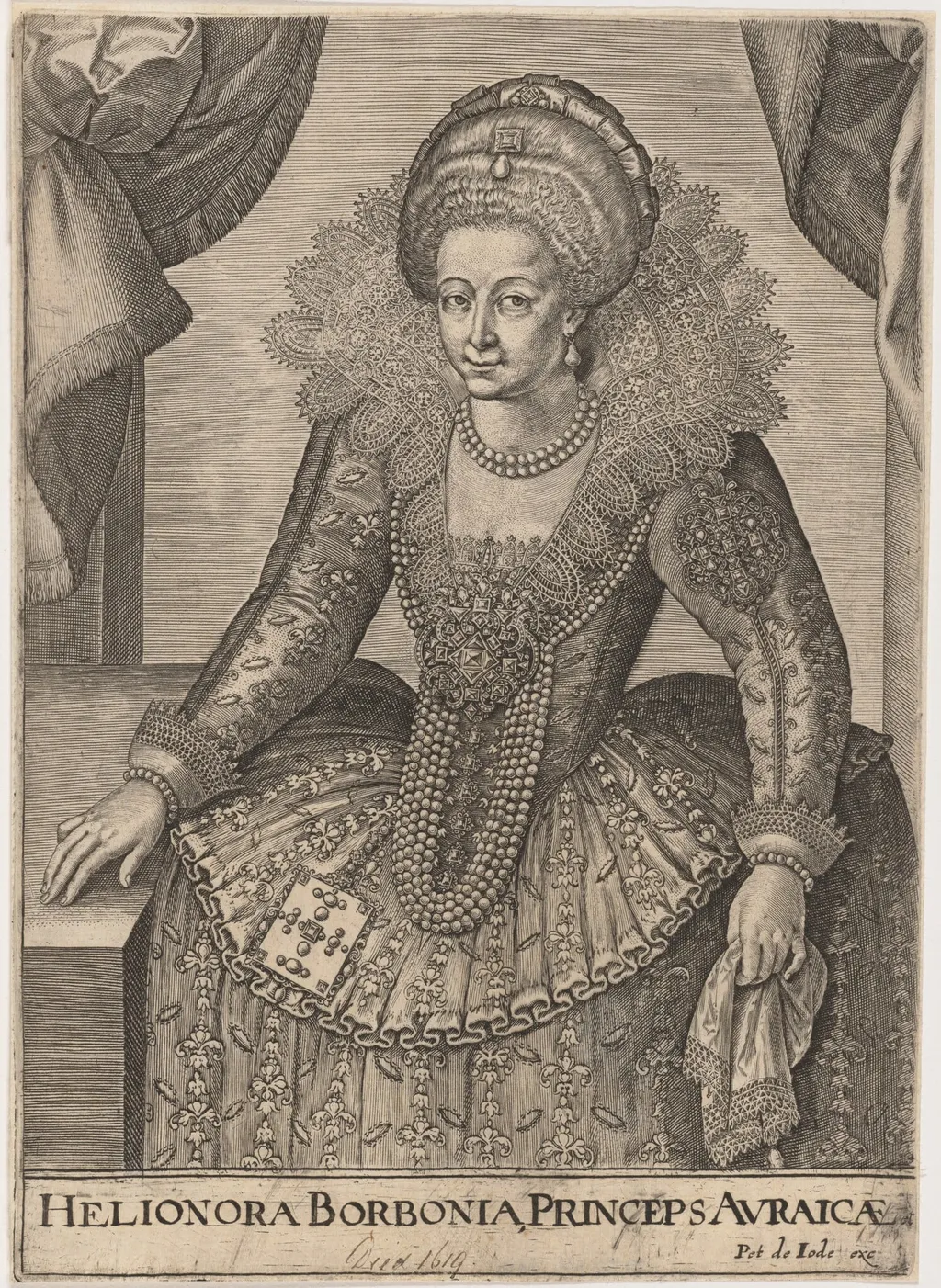
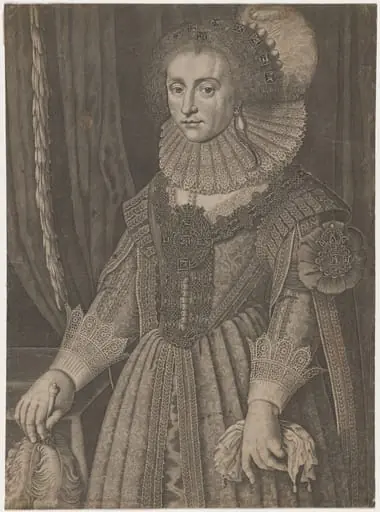
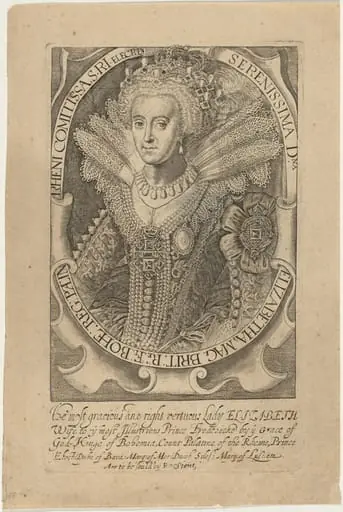
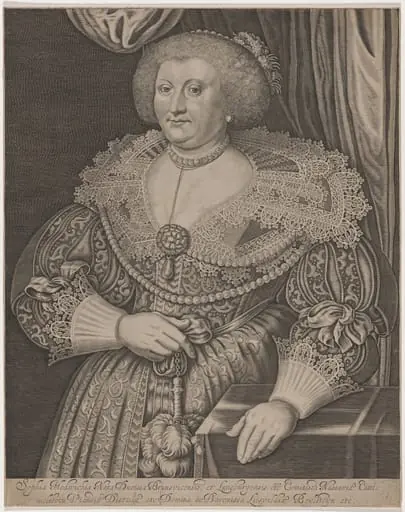
Eleanora, Princess of Orange is an ink print by the Baroque artist Johan Wierix. It is held in the collection of the National Gallery of Art.
About this work
Overview
The image was produced using cross-hatching to model form and depth, reflecting the precision valued in Northern European reproductive prints of the period.
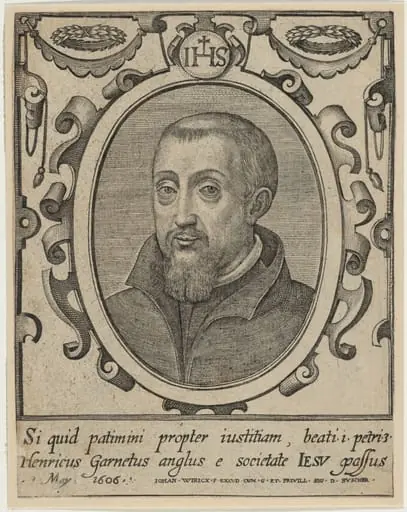
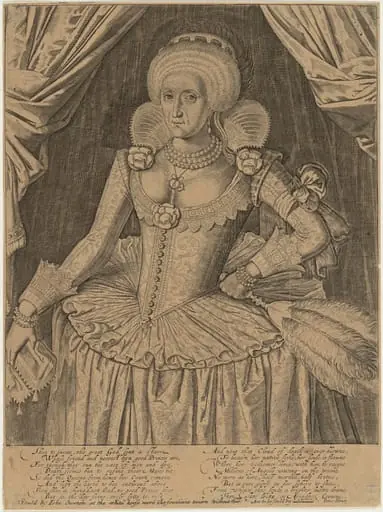
This 1641 engraving by Johan Wierix portrays Eleanora, Princess of Orange, rendered in fine line work typical of early Baroque printmaking. The composition centers on a seated noblewoman, framed by a draped curtain, with attention paid to the textures of fabric and jewelry. The image was produced using cross-hatching to model form and depth, reflecting the precision valued in Northern European reproductive prints of the period.
Subject & Meaning
Eleanora, daughter of the Duke of Savoy and wife of Frederick Henry, Prince of Orange, is depicted in formal court attire, emphasizing her status through adornment. The pearls, elaborate headdress, and folded cloth suggest both wealth and refined comportment. Her calm expression and composed posture convey dignity rather than individual personality, aligning with conventions of dynastic portraiture meant to affirm lineage and authority.
Technique & Style
Wierix employed fine, controlled engraving lines to render the intricate patterns of the dress, the sheen of pearls, and the soft folds of fabric. Cross-hatching builds subtle gradations of light and shadow, particularly on the face and sleeves, enhancing three-dimensionality. The background curtain is rendered with loose, suggestive strokes, contrasting with the meticulous detail of the figure, a hallmark of Baroque print aesthetics.
History & Provenance
Created in 1641, the engraving likely served as a reproductive portrait to circulate Eleanora’s image among European aristocratic circles. It may have been commissioned or authorized by the House of Orange to reinforce political alliances through visual representation. The print survives in several institutional collections, indicating its early distribution and preservation as a record of noble identity.
Context
In mid-17th century Europe, engraved portraits of royalty were tools of diplomacy and legacy. Wierix, part of a family of Flemish printmakers, specialized in translating painted likenesses into detailed prints for wider audiences. This work reflects the intersection of court culture and print technology, where visual authority was disseminated beyond the palace walls through the medium of the printed image.
Legacy
The engraving remains a documented example of how noblewomen’s images were standardized and reproduced in the Baroque era. While not widely known today, it contributes to the study of gender, representation, and print culture in the Dutch Republic and beyond. Its survival in museum collections underscores its role as a historical artifact rather than a celebrated work of art.
Artist & collection