Artwork
Martin Luther
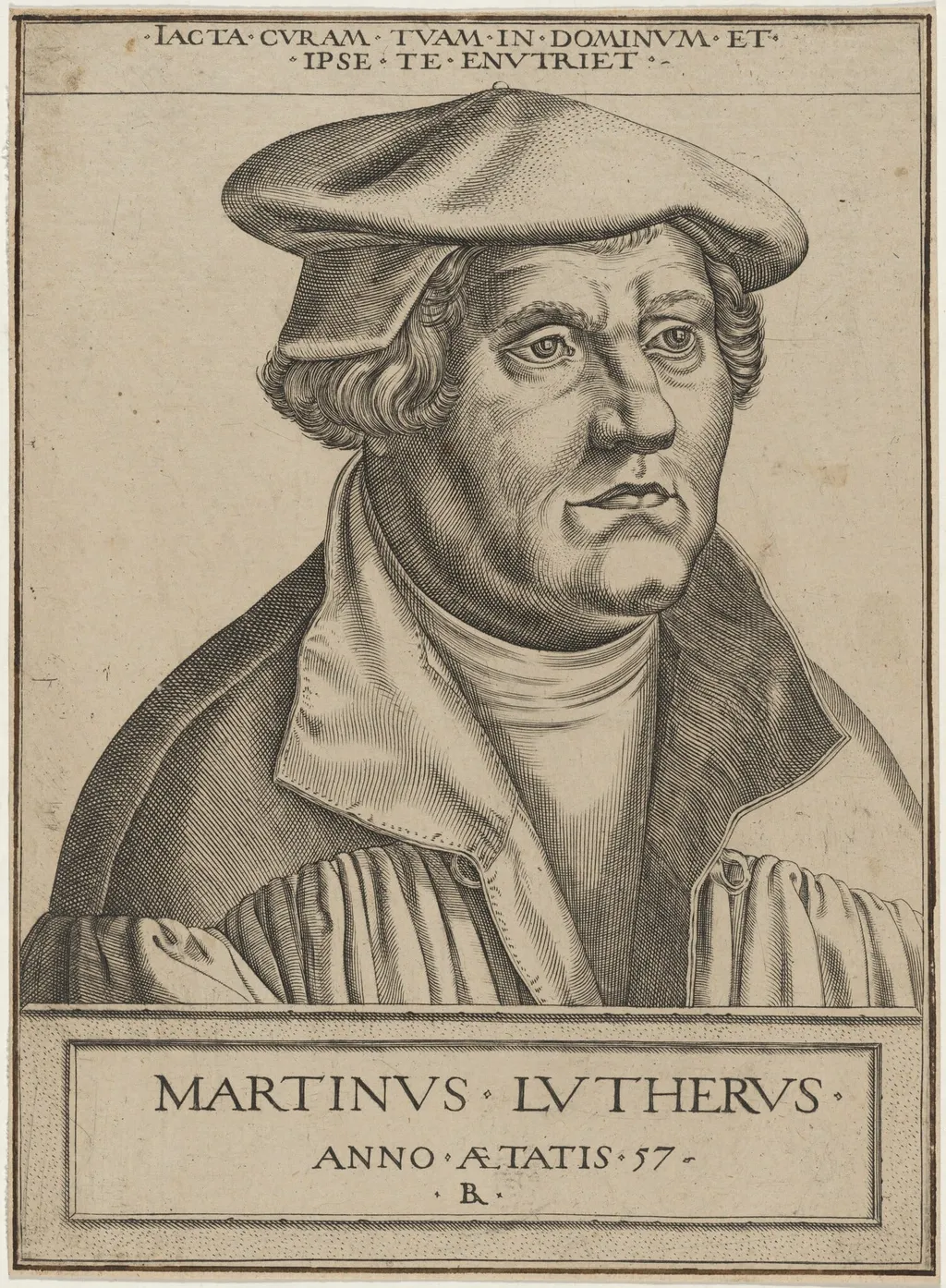
Martin Luther is an ink print by the Romanticist artist Unknown 19th Century. It dates from 1850 and is held in the collection of the National Gallery of Art.
About this work
Overview
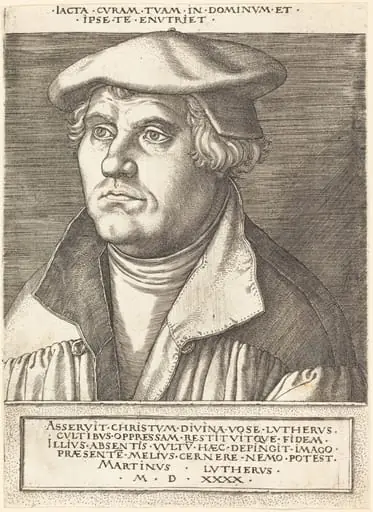
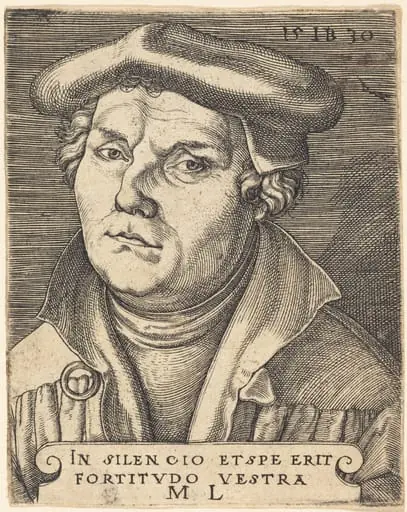
This black-and-white engraving depicts Martin Luther at age fifty-seven, rendered in fine linear detail characteristic of early printmaking.
This black-and-white engraving depicts Martin Luther at age fifty-seven, rendered in fine linear detail characteristic of early printmaking. The portrait is formal and restrained, with no background or decorative elements, focusing entirely on the figure. The inscription 'Martinus Lutherus' and 'Anno Aetatis 57' confirm the subject’s identity and age, aligning with historical records of his life in the mid-16th century.
Subject & Meaning
Luther is portrayed with a solemn, introspective gaze and hands clasped, suggesting contemplation and authority. The attire—dark hat, white collar, and layered robe—reflects his role as a scholar and reformer, not a clergyman in ecclesiastical vestments. The image conveys intellectual gravitas, reinforcing his public identity as a figure of religious conviction and moral seriousness.
Technique & Style
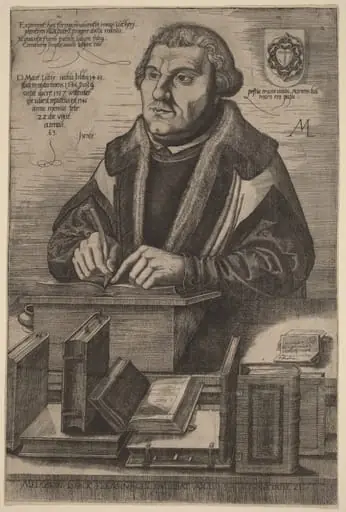
Executed in engraving, the portrait relies on precise incised lines to model form and texture. The sharp definition of facial wrinkles and the crisp edges of fabric folds demonstrate technical control typical of Northern European printmakers. The style echoes earlier Renaissance portraiture, avoiding theatricality in favor of restrained realism, possibly to align with Protestant ideals of simplicity.
History & Provenance
Created during Luther’s lifetime, the engraving likely served as a widely distributed likeness to support his public image. Such prints were crucial for disseminating the reformer’s appearance across Europe, especially as literacy and print culture expanded. The inclusion of his Latinized name and age suggests an audience familiar with scholarly conventions of the time.
Context
In the mid-1500s, engraved portraits of religious figures were powerful tools for shaping public perception. Luther’s image, circulated in pamphlets and books, helped solidify his role as a leader of the Reformation. Unlike Catholic saints depicted with halos or divine light, this portrait emphasizes humanity and intellect, reflecting Protestant theology’s focus on individual faith.
Legacy
This engraving contributed to the standardized visual representation of Luther that endured for centuries. Its clarity and restraint influenced later portraits and became a template for how reformers were depicted in print. As one of the earliest widely reproduced images of a Protestant leader, it played a quiet but lasting role in shaping religious iconography.
Artist & collection

Artist