Artwork
Queen Elizabeth
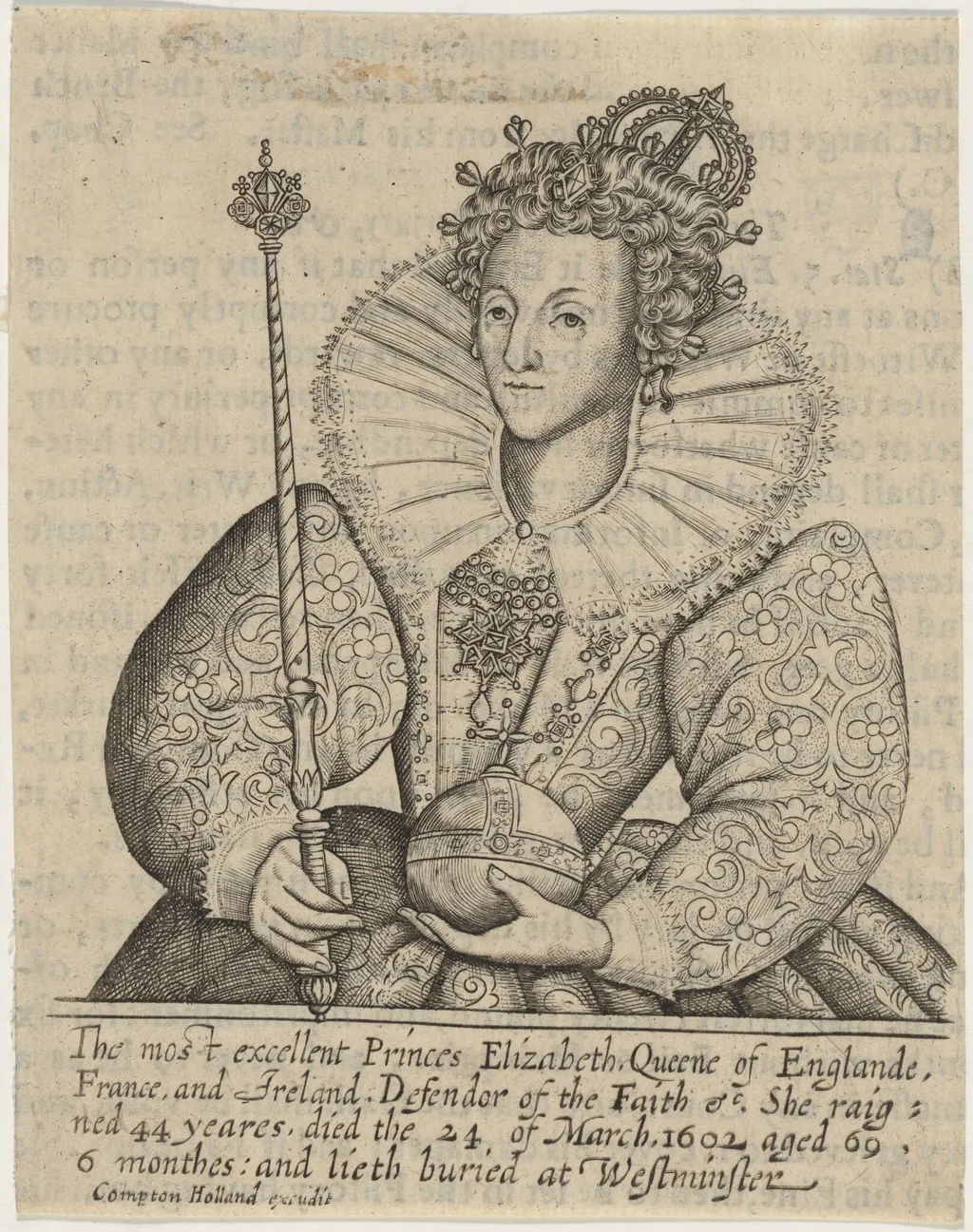
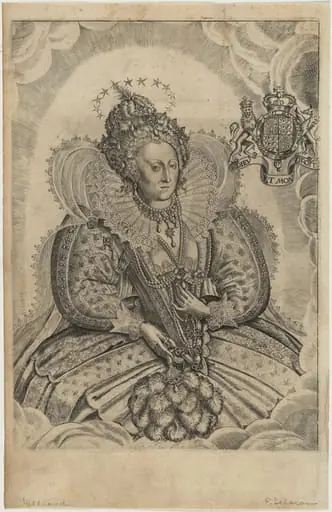
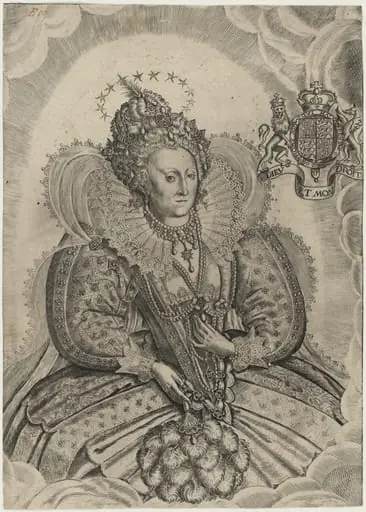
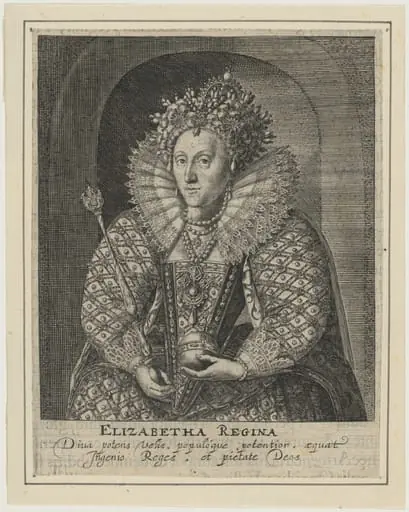
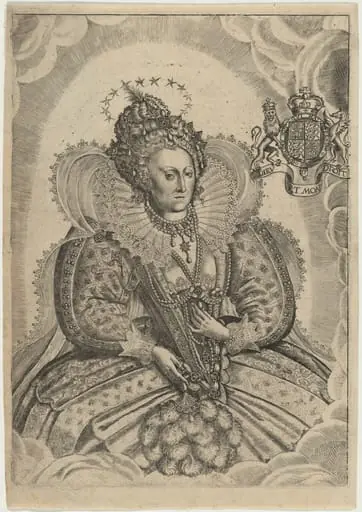
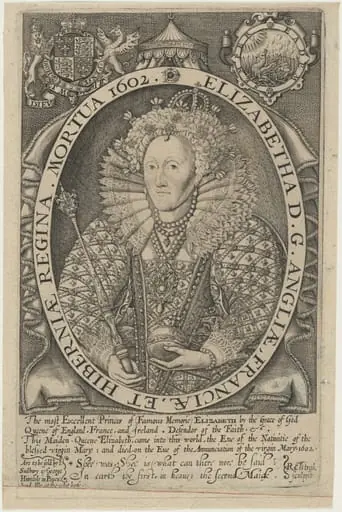
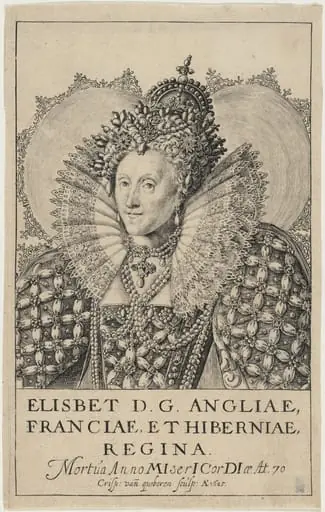
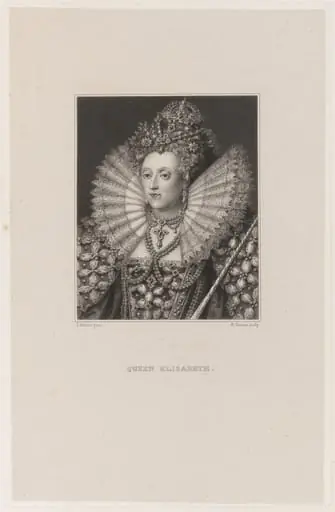
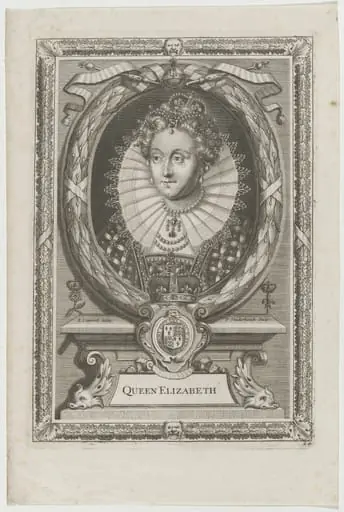
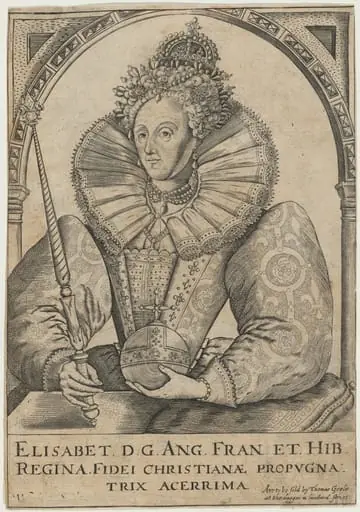
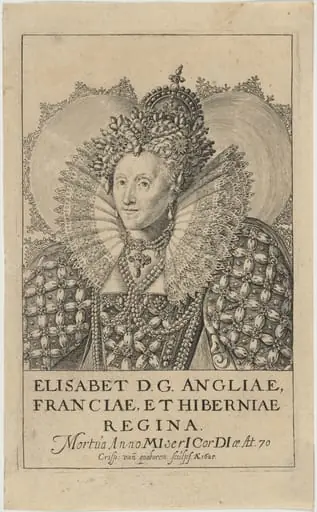
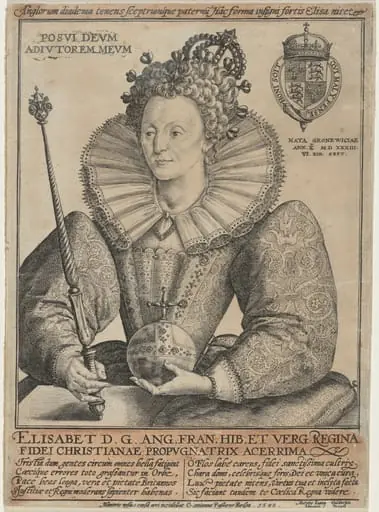
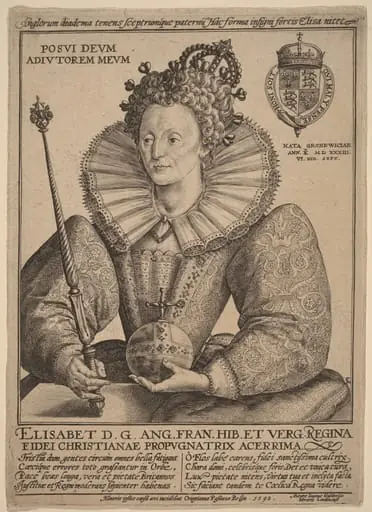
Queen Elizabeth is an ink print by the Baroque artist Unknown 19th Century. It dates from 1622 and is held in the collection of the National Gallery of Art. The print is a black‑and‑white engraving portraying a regal woman in richly patterned attire.
About this work
Overview
The print is a black‑and‑white engraving portraying a regal woman in richly patterned attire. She is crowned, holds a globe surmounted by a cross in one hand, and a sword in the other, her expression solemn. An inscription identifies her as “the most excellent Princes Elizabeth, Queen of England, France, and Ireland.”
Subject & Meaning
The figure represents Queen Elizabeth I, emphasizing her sovereign authority over multiple realms. The globe with a cross symbolizes her dominion and Christian legitimacy, while the sword conveys martial power. The elaborate robes and high collar reflect the ceremonial dress of Tudor court portraiture, reinforcing her status and political legitimacy.
Technique & Style
Executed as an engraving, the image is created by incising fine lines into a metal plate with a burin. The dense cross‑hatching produces texture, depth, and tonal variation without the use of colour. This method allows precise rendering of fabrics, metalwork, and facial features, characteristic of early modern printmaking.
Context
Engravings of monarchs served both decorative and propagandistic purposes in the 16th and 17th centuries, circulating the ruler’s image beyond the court. By presenting Elizabeth I with regalia and symbols of empire, the print reinforced contemporary notions of royal authority and the political claims of England over France and Ireland.
Artist & collection

Artist