Artwork
Queen Elizabeth
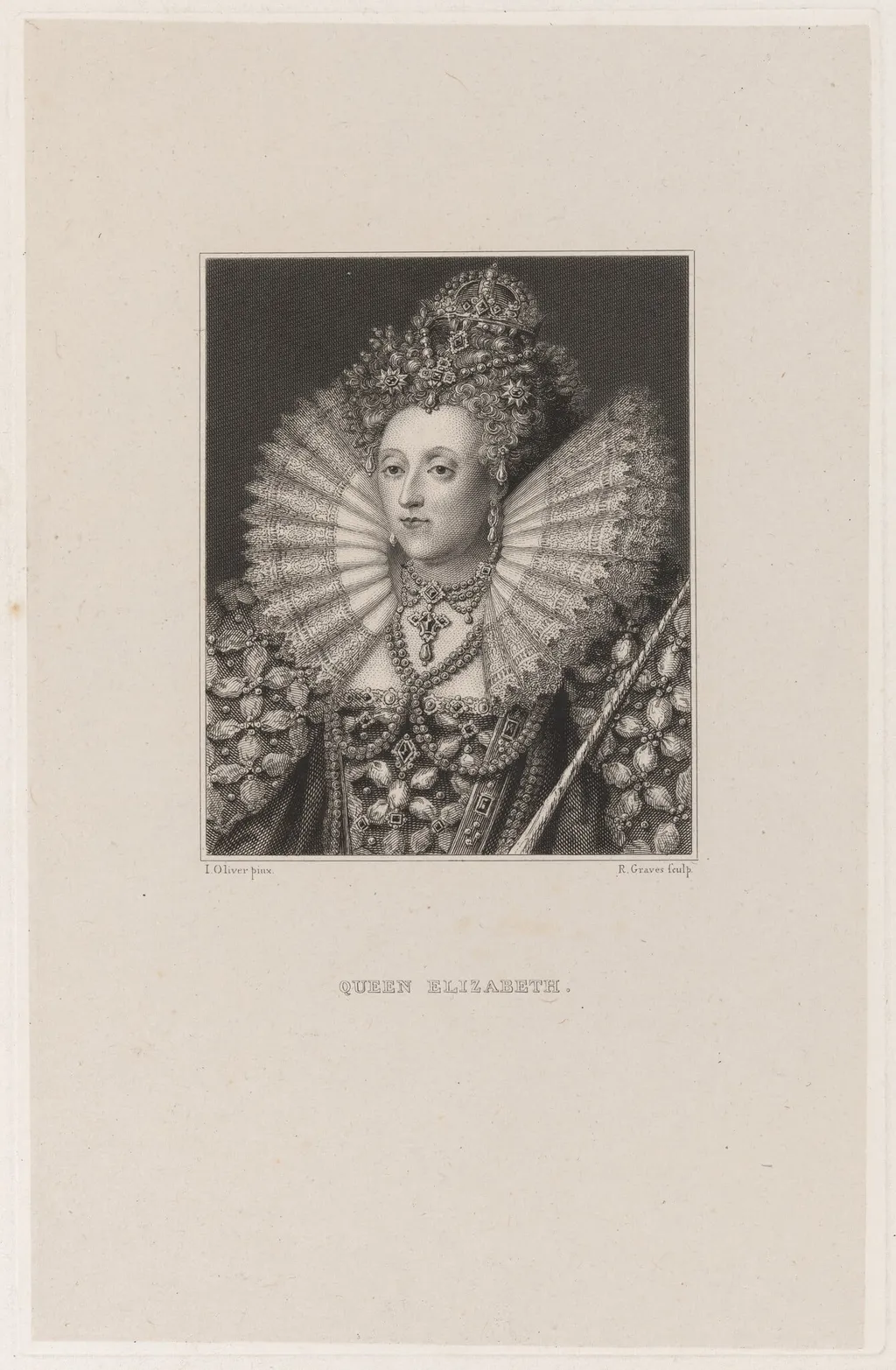
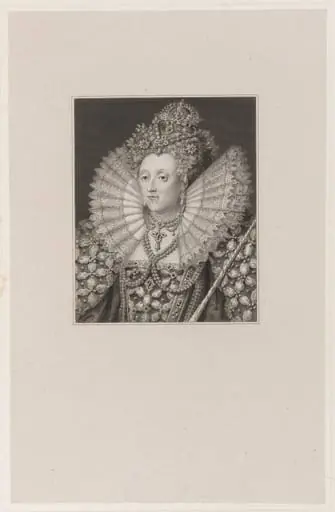
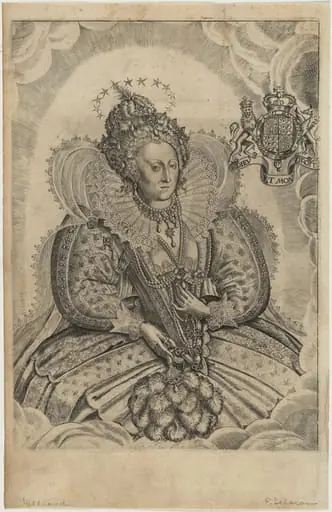
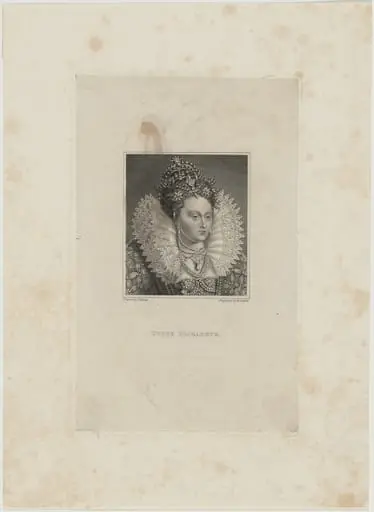
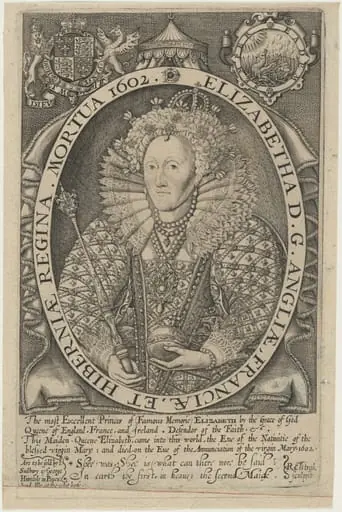
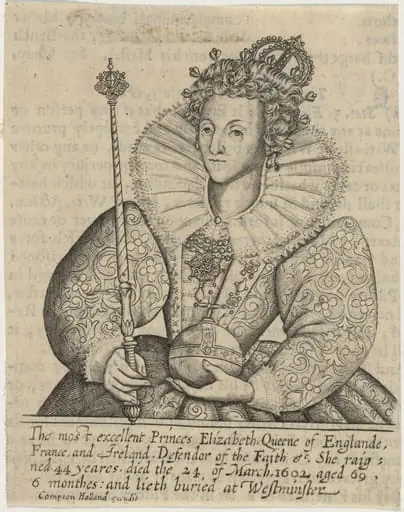
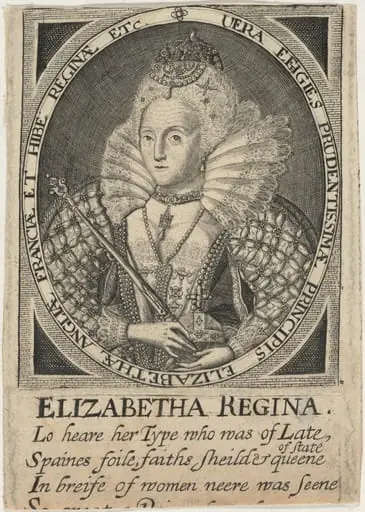
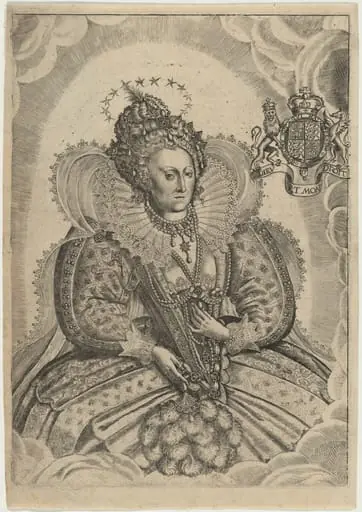
Queen Elizabeth is an ink print by the Romanticist artist Robert Graves. It dates from 1836 and is held in the collection of the National Gallery of Art.
About this work
Overview
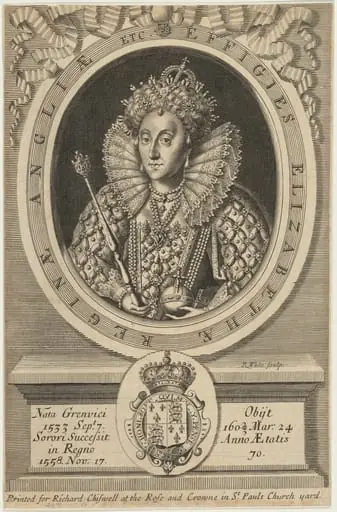
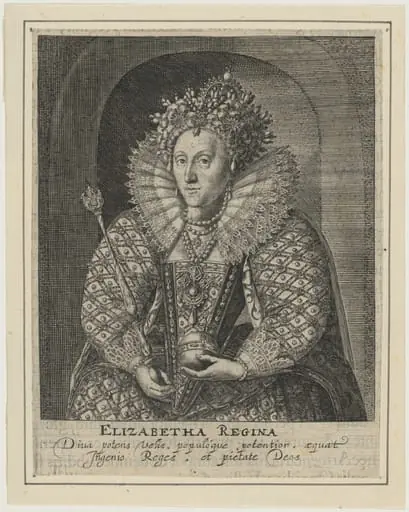
This black-and-white print, created in 1836 by Robert Graves, depicts Queen Elizabeth I through the technique of engraving. The image is rendered in fine, precise lines on a metal plate, then transferred to paper to produce a detailed portrait. The composition focuses on the queen’s formal attire and regal bearing, characteristic of 19th-century historical portraiture in print form.
Subject & Meaning
The image reflects 19th-century fascination with Tudor monarchy, reinforcing her legacy as a sovereign figure rather than documenting her actual appearance.
The subject is Queen Elizabeth I, portrayed in an idealized, ceremonial guise rather than a lifelike likeness. Her elaborate ruffled collar, high coiffure, ornate necklace, and held fan evoke the iconography of her reign—symbols of authority, refinement, and courtly power. The image reflects 19th-century fascination with Tudor monarchy, reinforcing her legacy as a sovereign figure rather than documenting her actual appearance.
Technique & Style
Graves employed engraving, a method involving incised lines on a copper plate inked and pressed onto paper. The fine, controlled strokes capture the texture of lace, fabric folds, and metallic jewelry with meticulous detail. The monochromatic palette enhances the graphic clarity of the design, emphasizing contour and pattern over tonal variation, typical of reproductive prints of the period.
History & Provenance
Created in 1836, the engraving likely served as a reproductive image for public distribution, common in an era before photography. It may have been published in a historical or biographical volume, intended to educate or commemorate the Tudor queen. No specific early ownership records are documented, but such prints were widely circulated among middle-class households seeking cultural imagery.
Context
In the 1830s, interest in British royal history surged amid national identity debates and the Romantic revival of the past. Engravings of historical figures like Elizabeth I were popular in books and periodicals, blending historical reverence with artistic convention. Graves’s work reflects this trend, presenting the queen through stylized, symbolic elements rather than empirical accuracy.
Legacy
This engraving contributes to the visual tradition of Elizabeth I as a timeless emblem of sovereignty. Though not a contemporary portrait, it helped shape 19th-century perceptions of the queen through standardized imagery. Its technical precision and formal composition influenced later reproductive prints, preserving her iconography for generations before photographic reproduction became widespread.
Artist & collection