Artwork
William Camden
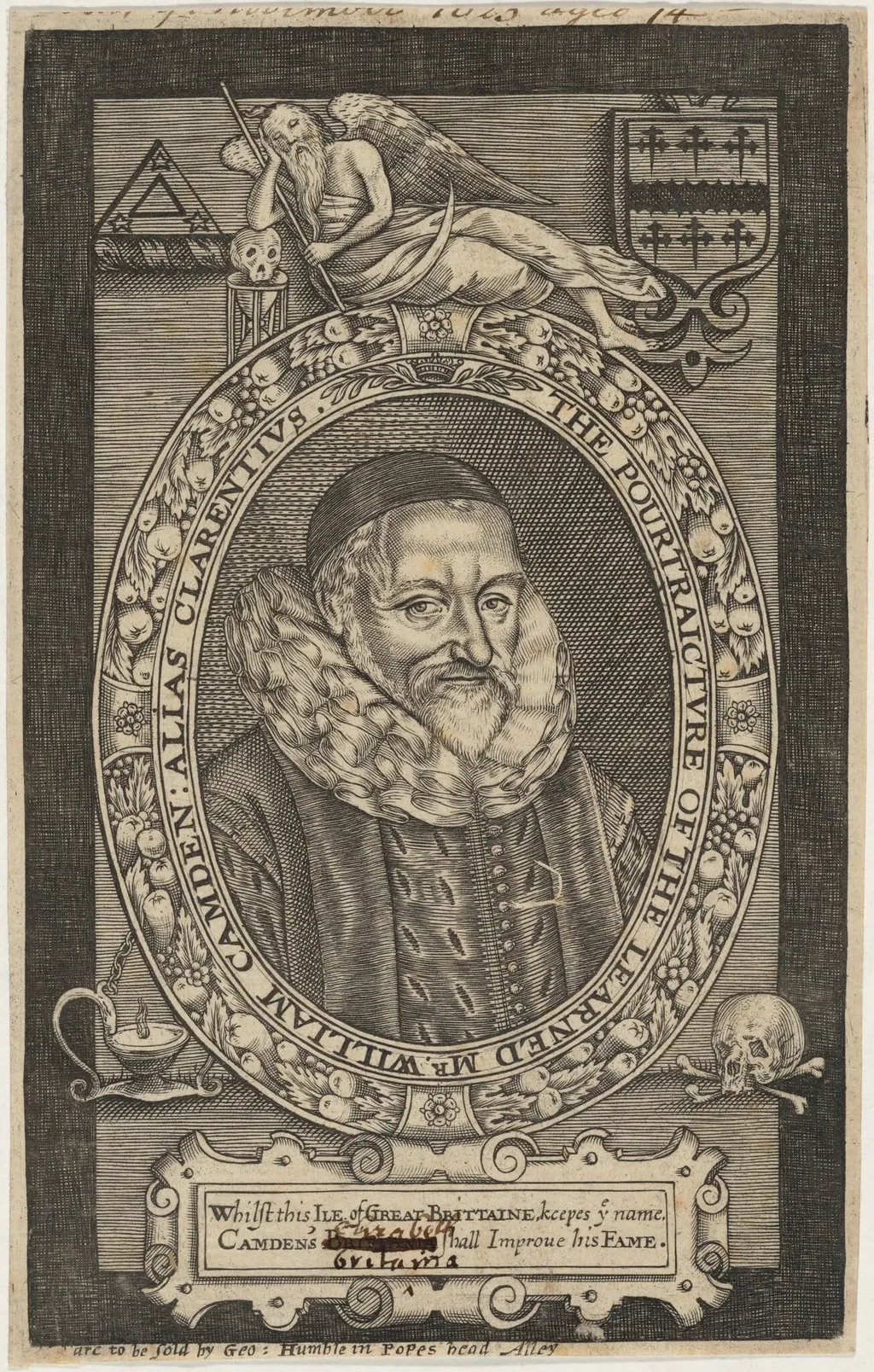
William Camden is an ink print by the Baroque artist Unknown 19th Century. It dates from 1617 and is held in the collection of the National Gallery of Art.
About this work
Overview
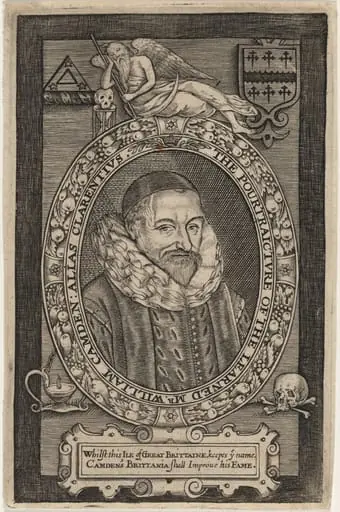
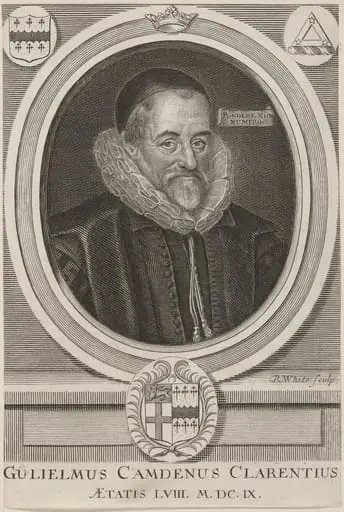
The work is a black‑and‑white engraving titled “William Camden.” It presents a bearded, curly‑haired male figure set within an elaborate oval frame. Above the portrait a cherubic figure holds a scroll, while the surrounding border is filled with various symbolic motifs.
Subject & Meaning
The central figure is identified as William Camden, likely the noted English antiquarian. The inclusion of skulls, tools, a lyre, and a wreath in the decorative border suggests themes of mortality, scholarly labor, artistic achievement, and classical honor, framing Camden’s intellectual legacy.
Technique & Style
Executed as an engraving, the image was incised on a metal plate, allowing for fine linear detail and tonal variation. The crisp lines of the portrait contrast with the densely packed, ornamental border, demonstrating the artist’s skill in balancing figural representation with intricate decorative elements.
History & Provenance
The print dates from the early modern period, when portrait engravings served to disseminate the likenesses of prominent figures. Though the specific printer and date are not recorded, such works were commonly issued in limited runs for collectors and scholarly circles.
Context
Engravings of scholars and antiquarians were popular in the 16th and 17th centuries, reflecting a growing public interest in history and learning. The classical symbols surrounding Camden align the work with contemporary humanist ideals that linked contemporary scholarship to ancient traditions.
Artist & collection

Artist