Artwork
William I, Prince of Orange
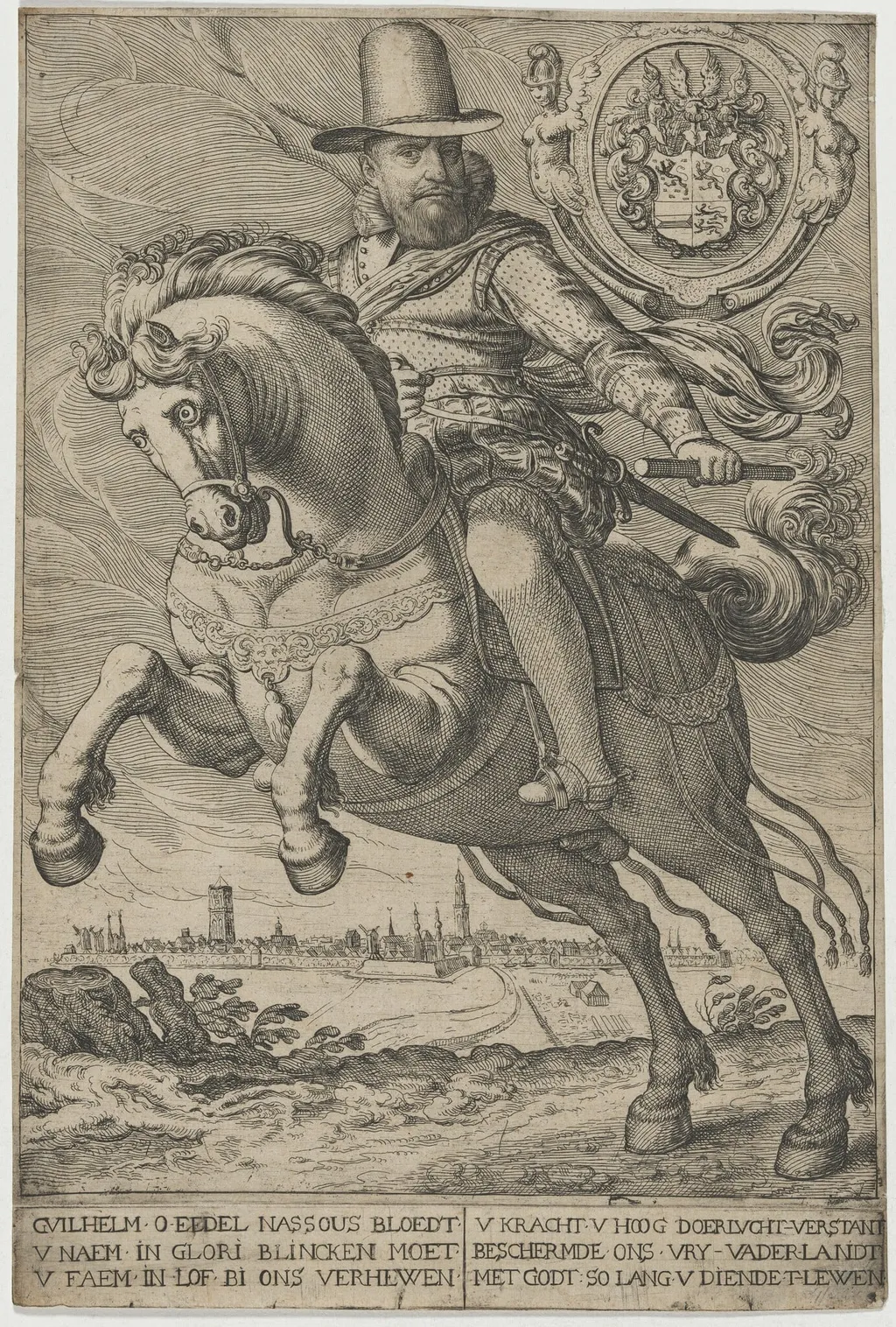
William I, Prince of Orange is an ink print by the Romanticist artist Unknown 19th Century. It dates from 1850 and is held in the collection of the National Gallery of Art.
About this work
Overview
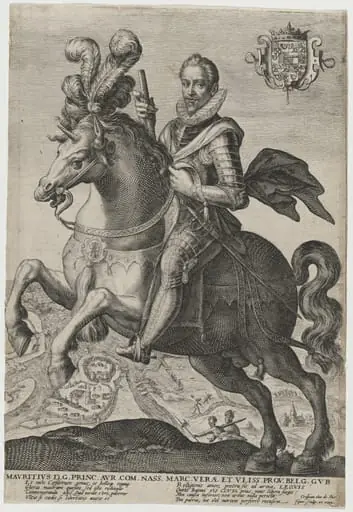
The scene is set against a detailed cityscape with buildings and water, suggesting a coastal or riverine urban environment.
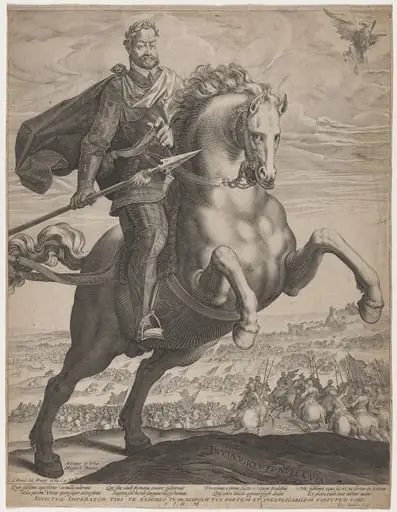
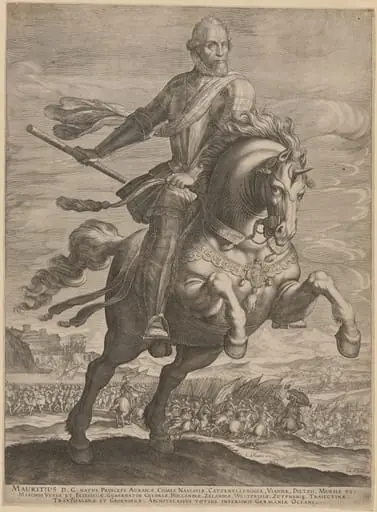
This engraving portrays William I, Prince of Orange, mounted on a rearing horse, sword raised, gazing leftward. The scene is set against a detailed cityscape with buildings and water, suggesting a coastal or riverine urban environment. Executed with fine linear precision, the print emphasizes movement and dramatic posture, characteristic of 17th-century reproductive engraving rather than Romanticism, which emerged later.
Subject & Meaning
William I, leader of the Dutch Revolt against Spanish rule, is depicted as a martial figure in motion, symbolizing resistance and leadership. The rearing horse conveys dynamism and defiance, while the cityscape likely represents the urban centers of the Netherlands under his influence. The image functions as a political emblem, reinforcing his role as a foundational figure in Dutch independence.
Technique & Style
The work employs fine-line engraving to render textures in fabric, horsehair, and architectural details. Shading and cross-hatching create depth and volume, typical of Northern European printmaking traditions. The composition is tightly controlled, with attention to anatomical accuracy and spatial recession, reflecting the technical rigor of early modern reproductive prints rather than the emotive excess of Romanticism.
History & Provenance
Produced in the late 16th or early 17th century, the engraving likely originated as part of a series commemorating Dutch leaders following William’s assassination in 1584. Such images circulated widely in the Netherlands and neighboring regions, serving both commemorative and propagandistic purposes. Its survival in collections today reflects its enduring historical significance in Dutch national memory.
Context
Created during the early years of the Dutch Revolt, the image aligns with a broader visual culture that used portraiture to legitimize political authority. Engravings of William were distributed to bolster morale and unify resistance against Habsburg rule. The inclusion of a cityscape situates him within the urban fabric of the Low Countries, reinforcing his connection to the people and places he led.
Legacy
The engraving contributed to the enduring iconography of William the Silent as a symbol of liberty and resilience. Its compositional elements—mounted figure, dynamic pose, urban backdrop—became templates for later depictions of national heroes. Though not Romantic in style, its emotional resonance influenced 19th-century historical imagery in the Netherlands.
Artist & collection

Artist