Artwork
Emperor Rudolph II on Rearing Horse
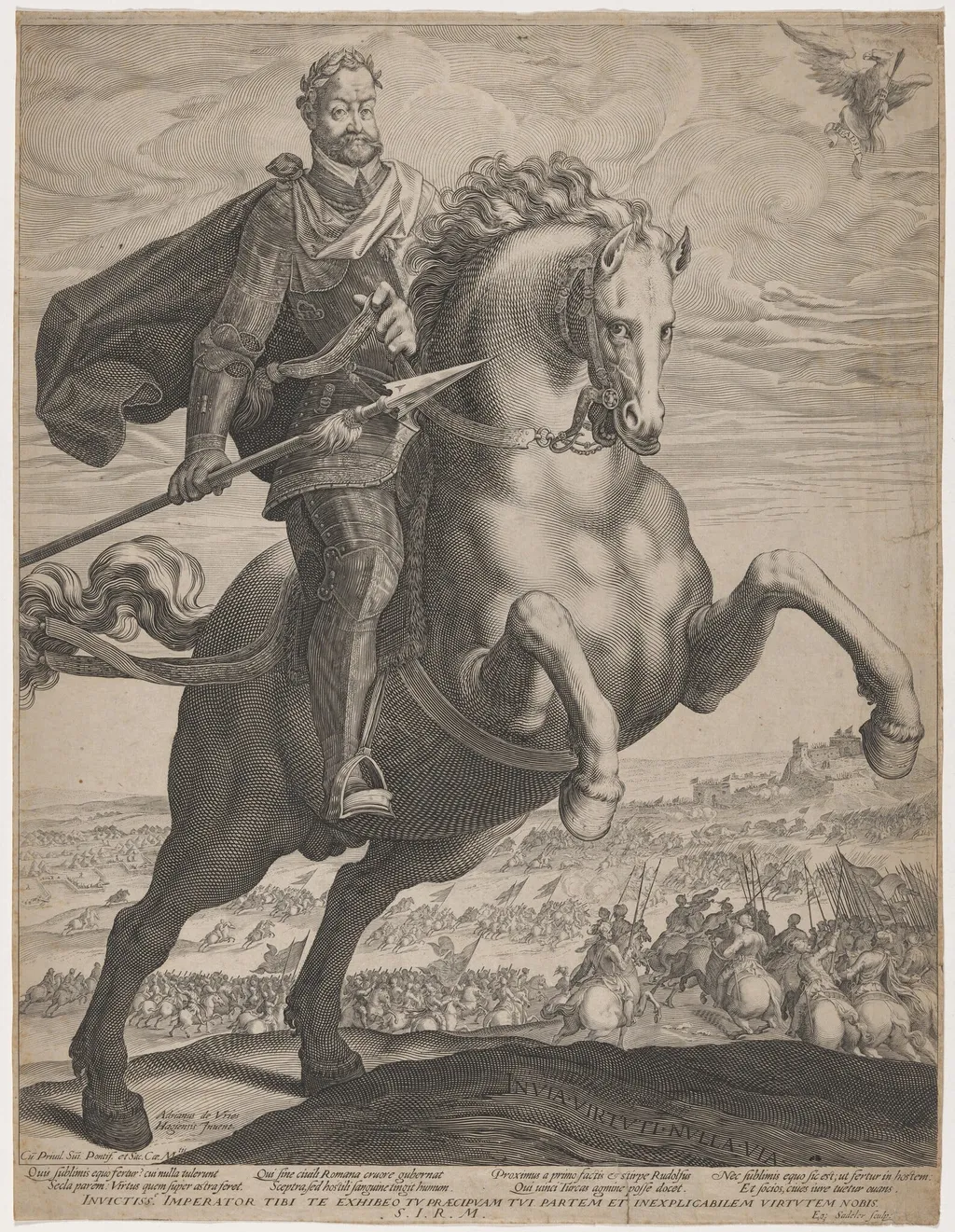
Emperor Rudolph II on Rearing Horse is an ink print by the Renaissance artist Aegidius Sadeler II. It dates from 1600 and is held in the collection of the National Gallery of Art.
About this work
Overview
The image was intended as a printed portrait, disseminated to reinforce the emperor’s authority through the widespread medium of print.
Created in 1600 by Aegidius Sadeler II, this engraving portrays Emperor Rudolf II mounted on a rearing horse. Sadeler, a Flemish artist active in Prague, produced the work under imperial patronage. The image was intended as a printed portrait, disseminated to reinforce the emperor’s authority through the widespread medium of print. Its intricate line work and controlled detail reflect the technical precision expected in courtly visual culture of the time.
Subject & Meaning
The emperor is depicted astride a horse in dynamic motion, symbolizing control over chaos and martial prowess. His ornate armor and elaborate attire convey status, while the elevated position emphasizes dominance. The distant cityscape behind him suggests imperial rule over a structured realm. The composition avoids overt allegory, instead relying on the dignity of the figure and the power of the animal to communicate authority without narrative embellishment.
Technique & Style
Sadeler employed fine-line engraving to render texture and depth, using cross-hatching to model the horse’s musculature and the sheen of armor. Delicate lines define the lace at the emperor’s collar and the subtle gradations of the skyline. The medium’s capacity for precision allowed for the reproduction of intricate details, aligning with the court’s preference for refined, lifelike representation. The print’s tonal range is achieved through controlled incisions rather than wash or tone.
History & Provenance
The engraving was made during Sadeler’s tenure at Rudolf II’s Prague court, where he produced numerous portraits and allegorical prints for the emperor’s collection. Rudolf, a noted patron of the arts, commissioned works that celebrated his image and intellectual pursuits. This print likely circulated among nobility and collectors, serving both as a political statement and a demonstration of artistic excellence within the Habsburg cultural sphere.
Context
In early 17th-century Prague, the imperial court fostered a unique blend of Mannerist aesthetics and scientific curiosity. Portraiture in print was a tool for projecting power beyond the palace walls. Sadeler’s work fits within a broader tradition of equestrian portraits, but its restrained composition and emphasis on technical mastery distinguish it from more theatrical Baroque examples emerging elsewhere in Europe.
Legacy
Sadeler’s engraving contributed to the standardization of imperial portraiture in print form across Central Europe. While not widely reproduced in later centuries, it remains a key example of how court artists translated authority into reproducible imagery. The work illustrates the role of engraving as both art and propaganda, preserving the visual language of Habsburg rule through meticulous craftsmanship.
Artist & collection
Artist
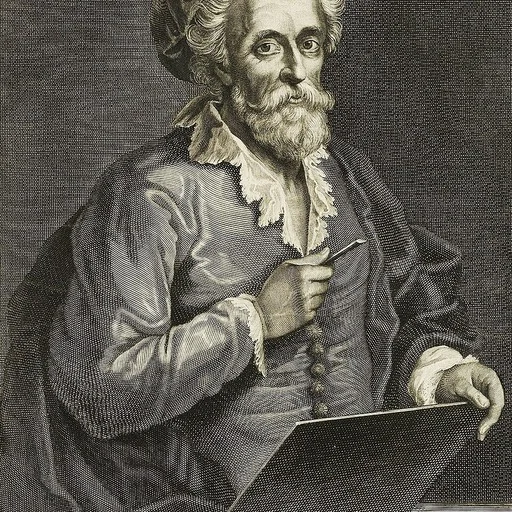
Aegidius Sadeler or Aegidius Sadeler II (1570–1629) was a Flemish engraver who was principally active at the Prague court of Rudolf II, Holy Roman Emperor and his successors.

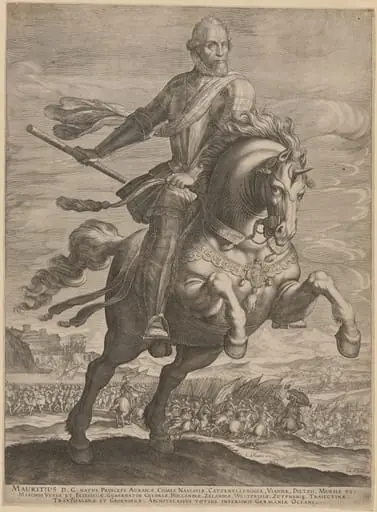 Maurice, Prince of Orange on Horseback
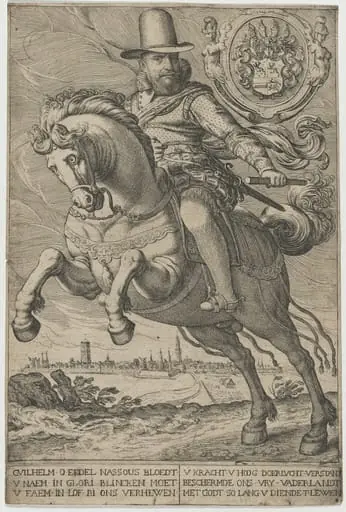 William I, Prince of Orange
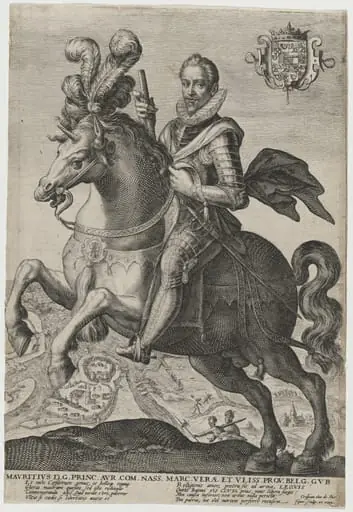 Maurice of Nassau, Prince of Orange
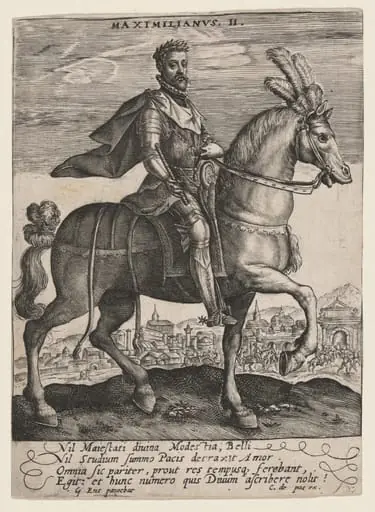 Maximilianus II
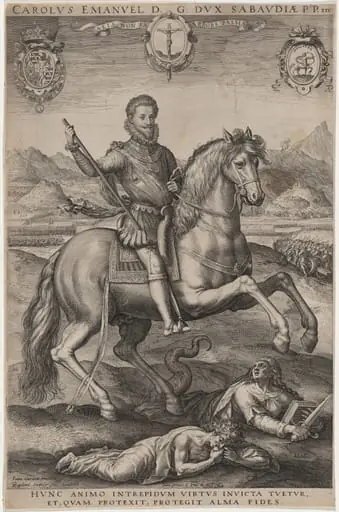 Charles Emmanuel, Prince of Piedmont
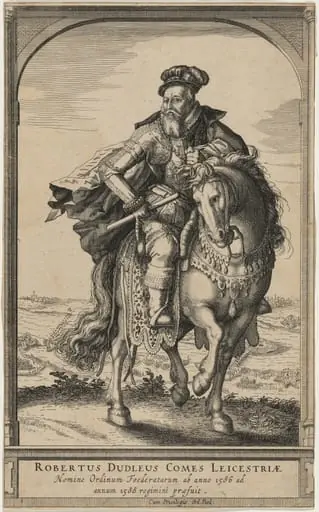 Robert Dudley, Earl of Leicester on Horseback
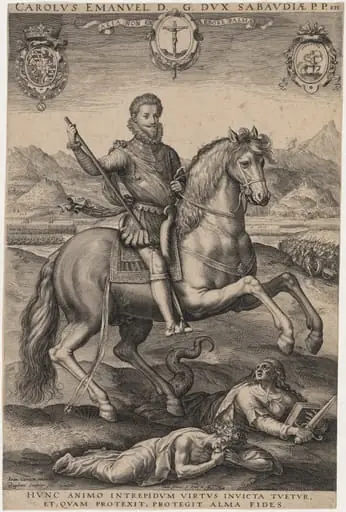 Charles Emmanuel, Prince of Piedmont
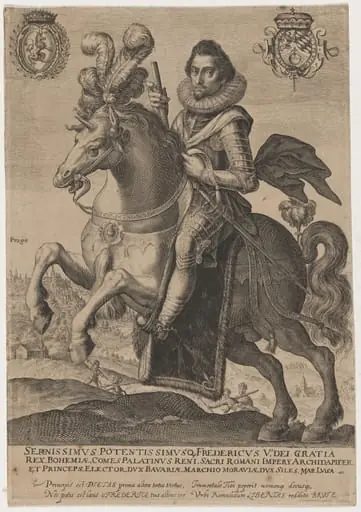 Frederick, King of Bohemia
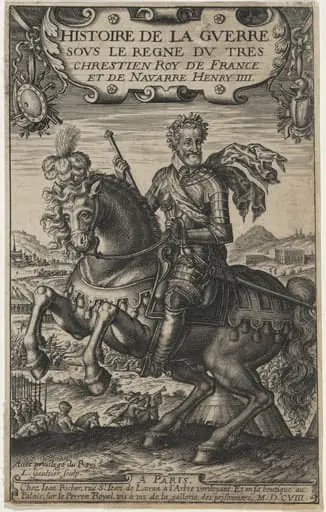 Henry IV
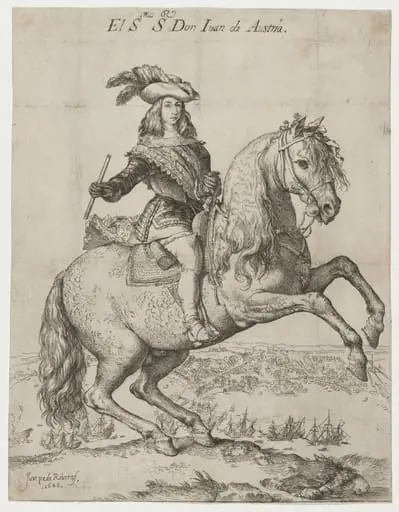 Equestrian Portrait of Don Juan de Austria
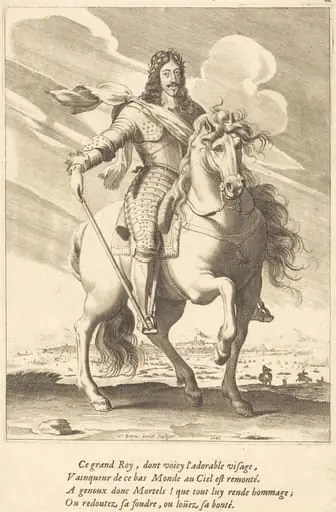 Louis XIII
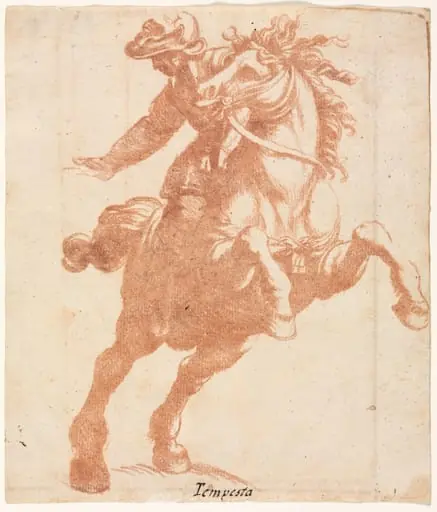 Rearing Horse and Rider