Artwork
A Bengali courtesan
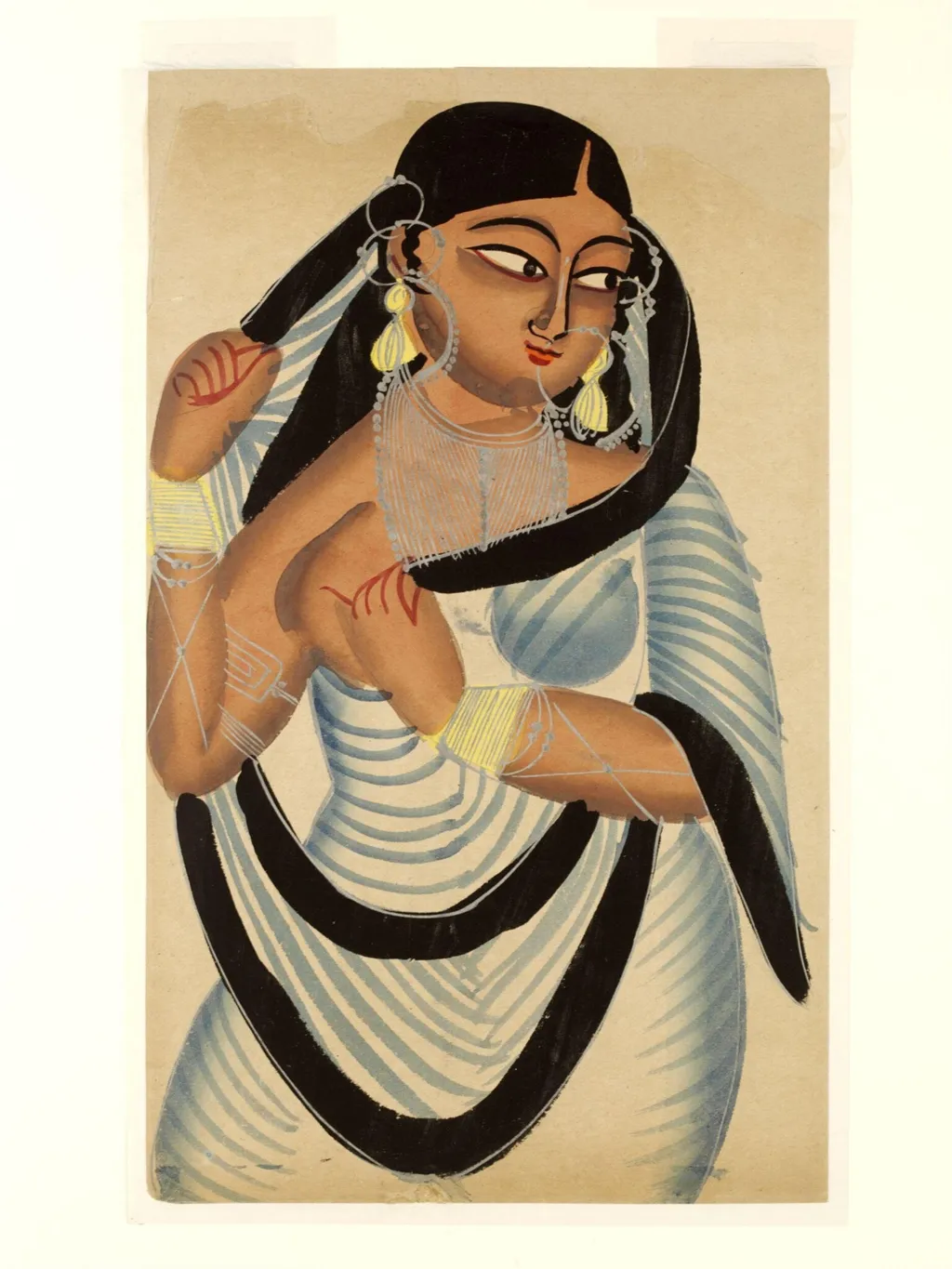
A Bengali courtesan is a paint painting by the Patna School of Painting artist Unknown. It dates from 1890 and is held in the collection of the Victoria and Albert Museum.
About this work
Overview
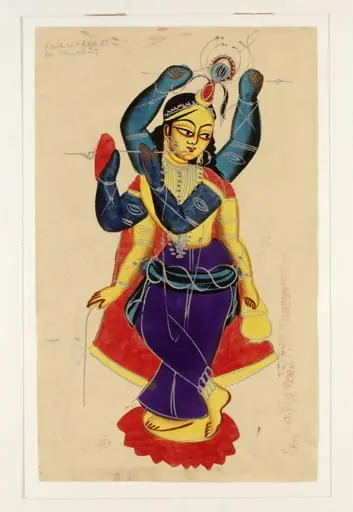
This watercolour on paper portrays a Bengali courtesan seated on a patterned rug, rendered in soft, muted tones with subtle brushwork.
This watercolour on paper portrays a Bengali courtesan seated on a patterned rug, rendered in soft, muted tones with subtle brushwork. The figure is depicted with a calm expression, her posture relaxed yet composed. The medium combines watercolour with minimal metallic accents, reflecting a regional style that emerged in 19th-century Calcutta. The painting’s delicate handling of light and form distinguishes it from more rigid academic traditions of the period.
Subject & Meaning
The figure, identified as a courtesan, is shown in a moment of quiet self-possession, her sari drawn across her upper body in a gesture that is neither overtly provocative nor concealed. Her steady gaze and composed demeanor suggest agency rather than objectification. The depiction aligns with Kalighat art’s tendency to portray urban social types with psychological nuance, capturing the complex roles of women in colonial Calcutta’s changing social landscape.
Technique & Style
The artist employed fluid, translucent watercolour washes to model the figure’s form, avoiding sharp outlines in favor of softly blended edges. Gold leaf or metallic pigment highlights the jewelry, while the sari’s folds are suggested with minimal, rhythmic strokes. Background details are deliberately muted, allowing the figure to emerge from a hazy, atmospheric space. This painterly ambiguity reflects the Kalighat tradition’s preference for expressive simplification over detailed realism.
History & Provenance
The painting entered the collection in 1955 through a donation by M N Varvill. It originates from the Kalighat school of painting, which flourished near the Kalighat temple in Calcutta during the 19th century. Artists, often former rural scroll painters, adapted their style to meet the demands of urban patrons and tourists, producing small, affordable works that documented contemporary life and social types.
Context
Kalighat paintings emerged as a response to colonial urbanization and the decline of traditional patronage. They captured the shifting moral and social codes of 19th-century Bengal, portraying figures from all classes — from priests to courtesans — with a blend of satire and sympathy. This work reflects the genre’s role as both cultural record and subtle commentary on the tensions between tradition and modernity in colonial India.
Legacy
Though initially dismissed as folk art, Kalighat paintings are now recognized for their visual innovation and social insight. This piece exemplifies how regional artists synthesized indigenous techniques with new urban subjects, influencing later modernist movements in Indian art. Its preservation in major collections underscores its value as a document of everyday life in a rapidly transforming society.
Artist & collection

 Domestic Scene
 Giacomo and Cardinal Marco, investing Andrea, Abbot of San Zeno, with his Benefice
 The Nymph of Fontainebleau
 Portrait of a Woman
 Madonna and Child with Saints in the Enclosed Garden
 Venus and Minerva
 Family Group of Four on Sofa
 Wall painting from Room H of the Villa of P. Fannius Synistor at Boscoreale
 Untitled
 Jasoda, Radha and Krishna
 Devi
Devi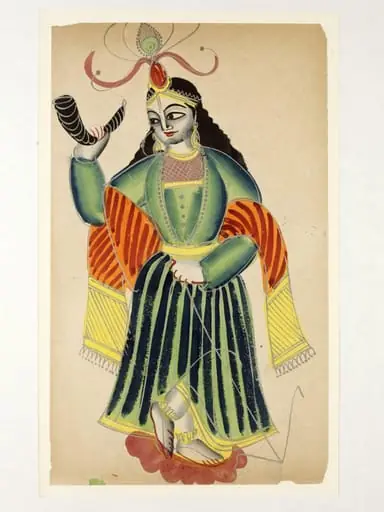 Balarama
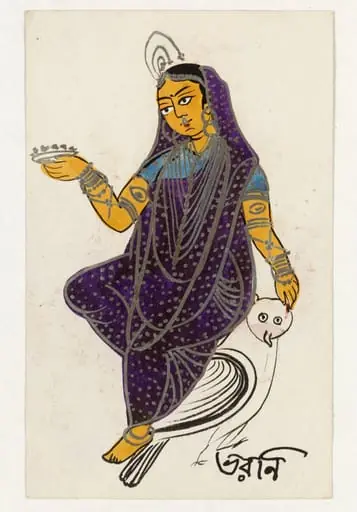 Varuni
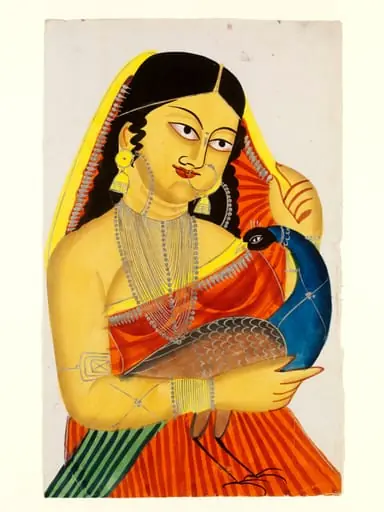 Untitled
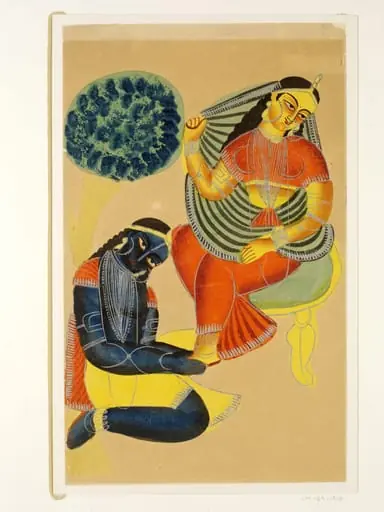 Krishna and Radha
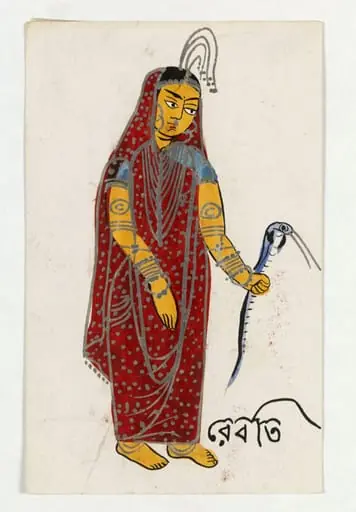 Revati
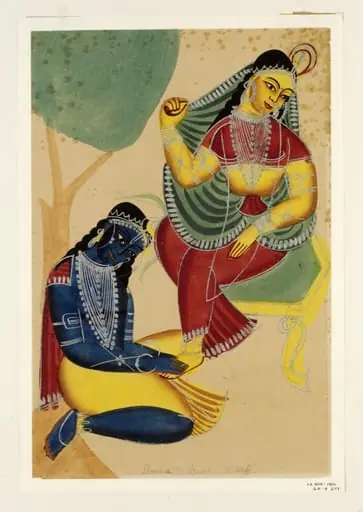 Krishna and Radha
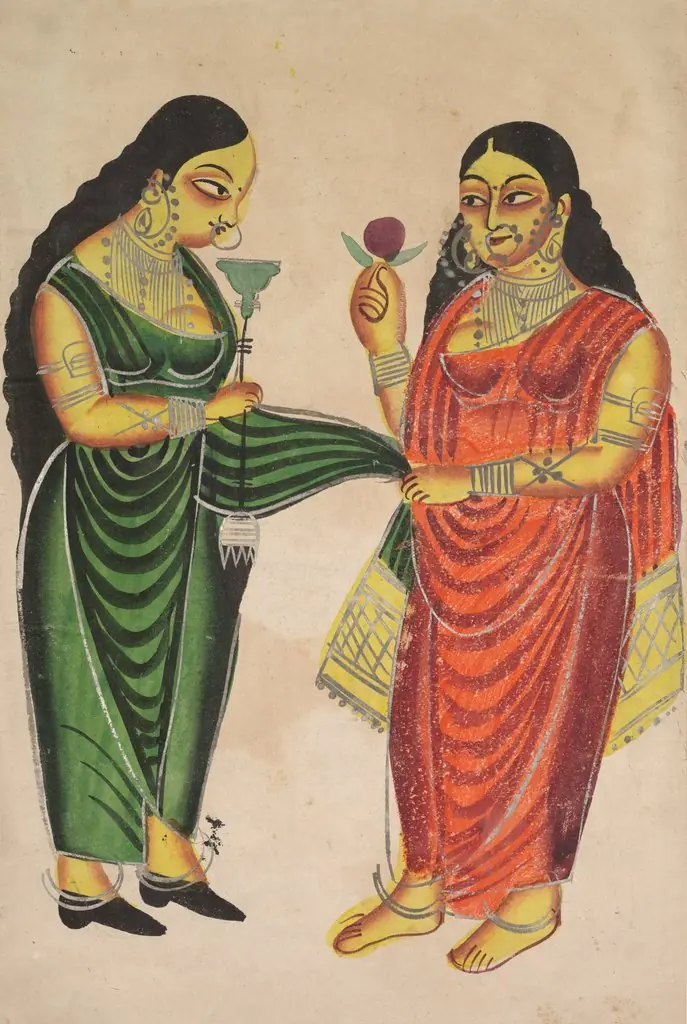 Leaf from a Kalighat album: Maid bringing a hookah to a lady (recto); Krishna weighed against precious objects(?) (verso)
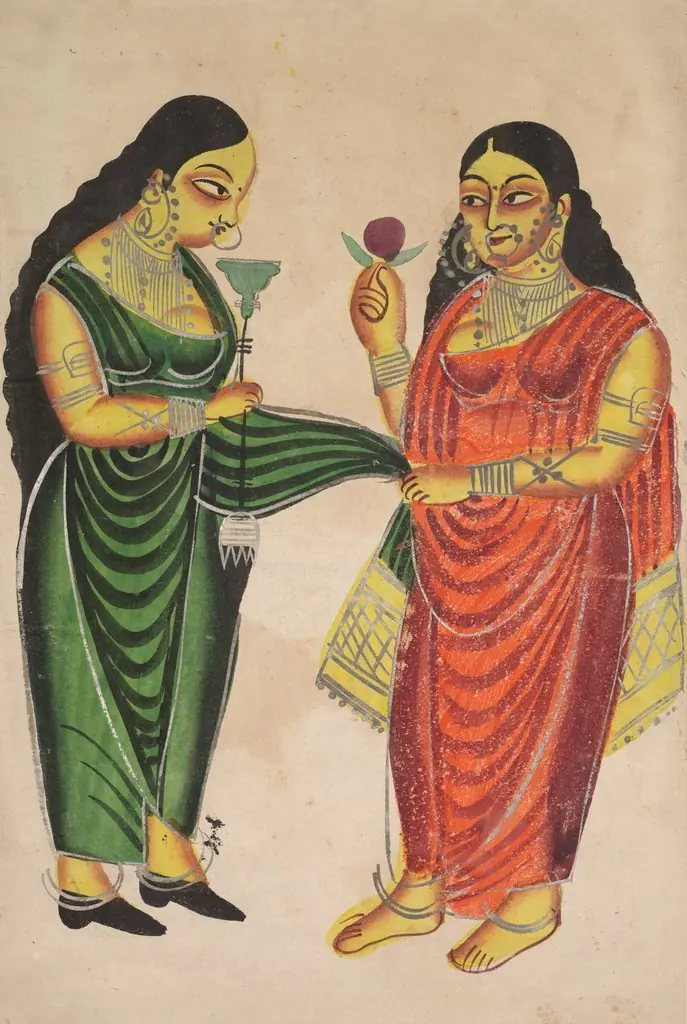 Maid bringing a hookah to a lady (recto), from a Kalighat album
 Chaitanya as Rama and Krishna