Artwork
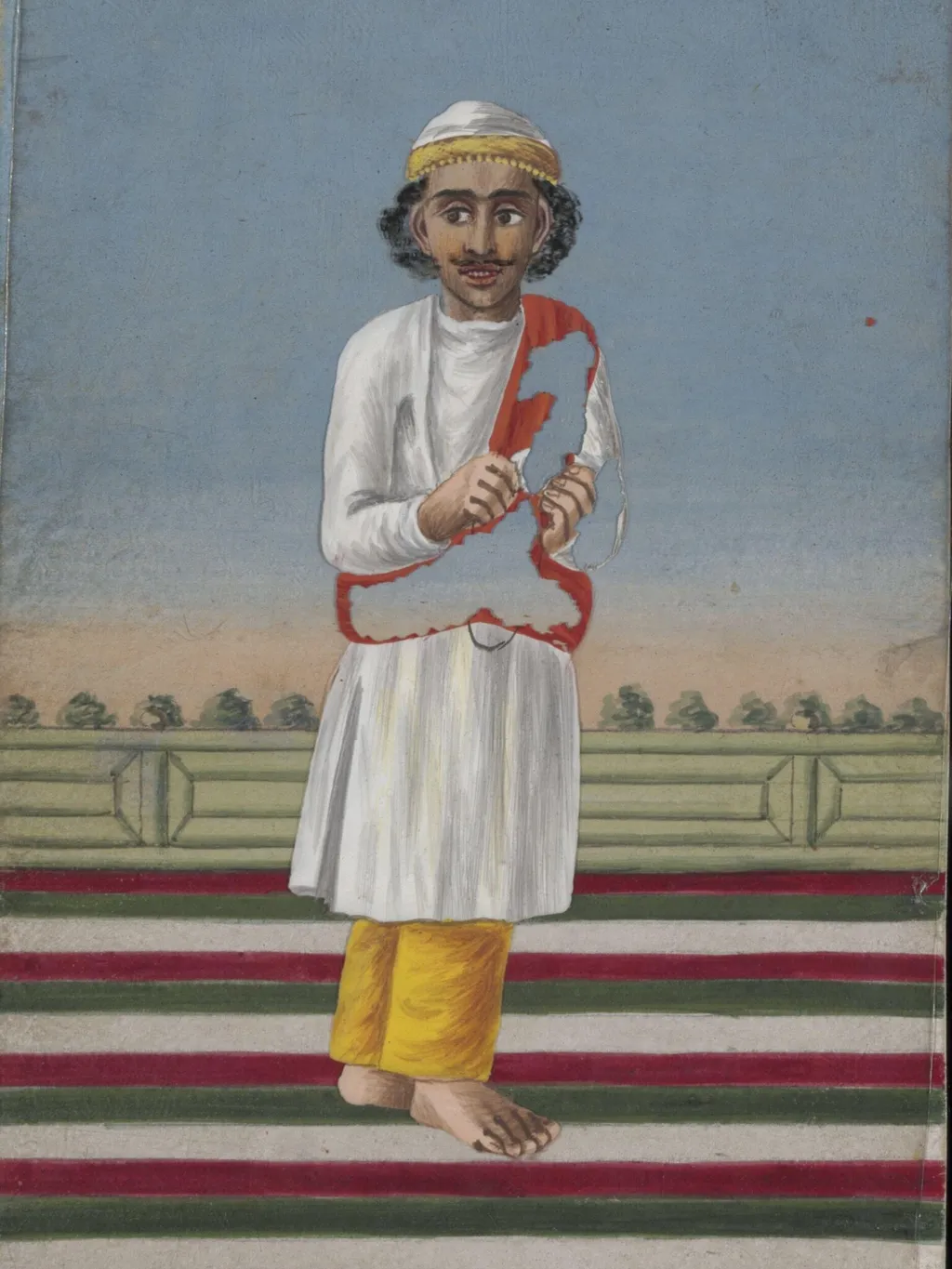
A Box covered and lined with brocade containing a card painted with a face, and with a verandah covered with a striped rug; also twelve mica overlays depicting dancers and musicians.
A Box covered and lined with brocade containing a card painted with a face, and with a verandah covered with a striped rug; also twelve mica overlays depicting dancers and musicians. is a paint painting by the Impressionist artist Unknown. It dates from 1860 and is held in the collection of the Victoria and Albert Museum.
About this work
Overview
The object is a decorative box lined with brocade that holds a painted card showing a smiling, barefoot figure on a striped rug beneath a blue sky.
The object is a decorative box lined with brocade that holds a painted card showing a smiling, barefoot figure on a striped rug beneath a blue sky. The figure wears a white shirt with red trim, a yellow headwrap, and a red sash, and holds a small object in his hands. Accompanying the card are twelve translucent mica sheets illustrating Indian dancers, singers and musicians, which can be layered over the scene.
Subject & Meaning
The central image presents a cheerful individual, his posture and bright attire suggesting a festive or ceremonial moment. The surrounding mica overlays, depicting costumed performers, expand the narrative to a broader celebration of music and dance, hinting at cultural exchange and the allure of Indian artistic traditions within a European collecting context.
Technique & Style
The painted card employs flat areas of vivid color and simplified forms, creating a lively, decorative effect. The mica overlays are translucent, allowing the underlying scene to be seen while adding detailed figures that can be rearranged. The combination of brocaded interior, painted surfaces, and interchangeable layers reflects a hybrid craft that merges painting, lacquer work, and early modular design.
History & Provenance
The box includes two additional painted card covers adorned with floral motifs and a handwritten inscription attributed to Queen Mary, indicating royal ownership or patronage at some point in its history. This provenance links the object to the British royal collection, suggesting it was valued as a diplomatic or exotic gift during the early twentieth century.
Context
Objects that combine painted panels with interchangeable mica sheets were popular in the late nineteenth and early twentieth centuries as portable, decorative curiosities. They often featured exotic subjects, catering to Western fascination with Indian culture. The inclusion of a royal note underscores the object's role as a collectible item within elite circles, bridging artistic craftsmanship and imperial curiosity.
Artist & collection

 Domestic Scene
 Giacomo and Cardinal Marco, investing Andrea, Abbot of San Zeno, with his Benefice
 The Nymph of Fontainebleau
 Portrait of a Woman
 Madonna and Child with Saints in the Enclosed Garden
 Venus and Minerva
 Family Group of Four on Sofa
 Wall painting from Room H of the Villa of P. Fannius Synistor at Boscoreale