Artwork
Peshwar Raghunath Rao
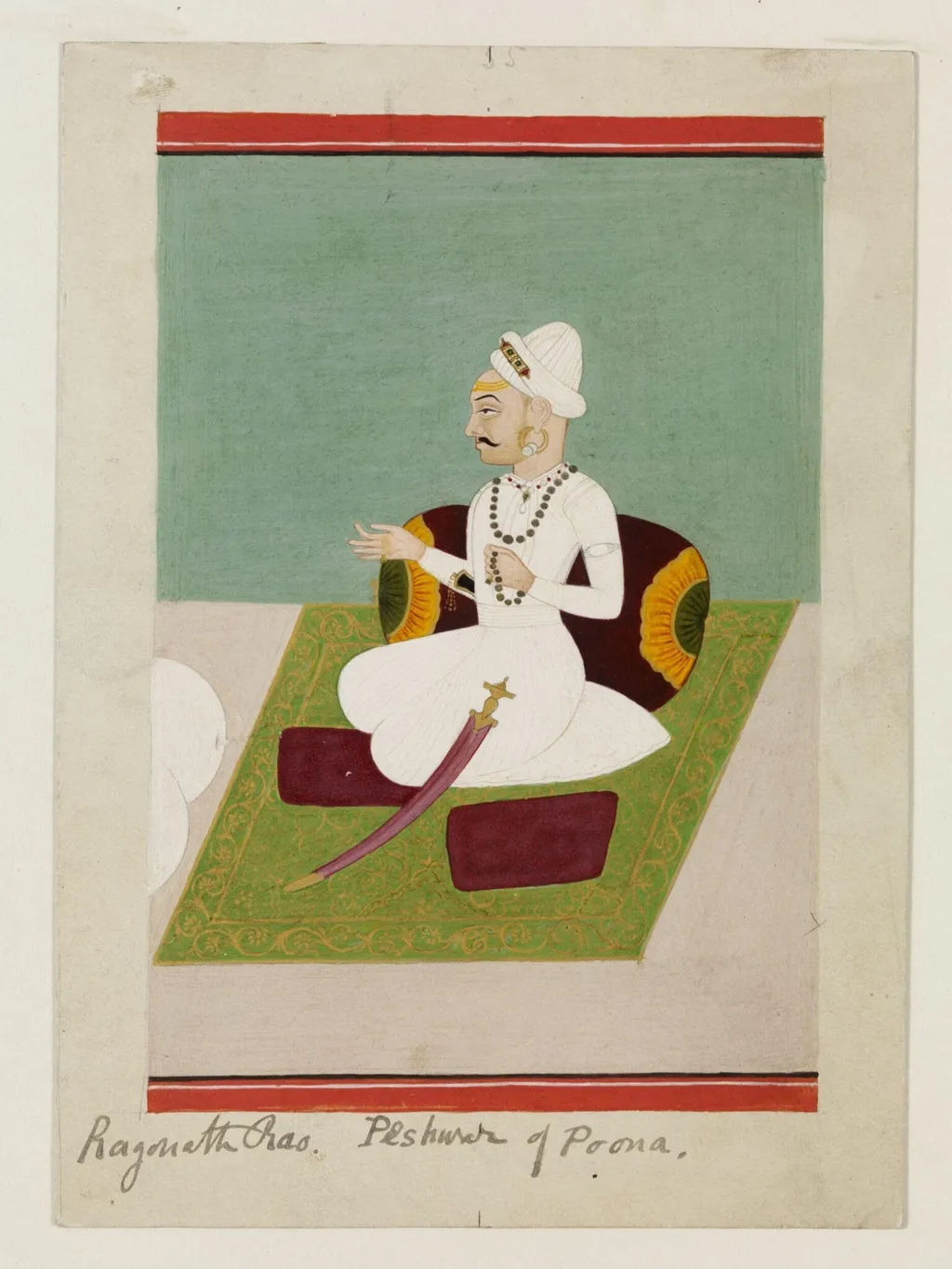
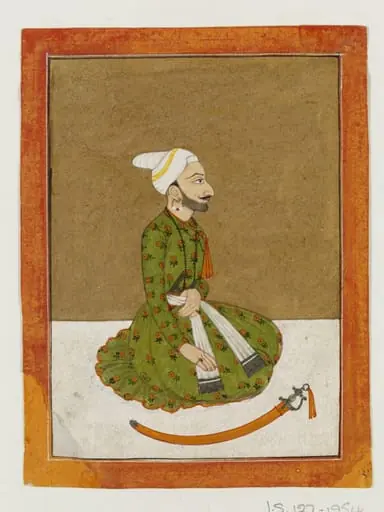
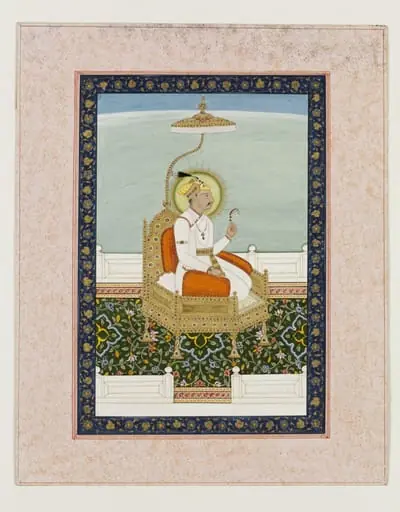
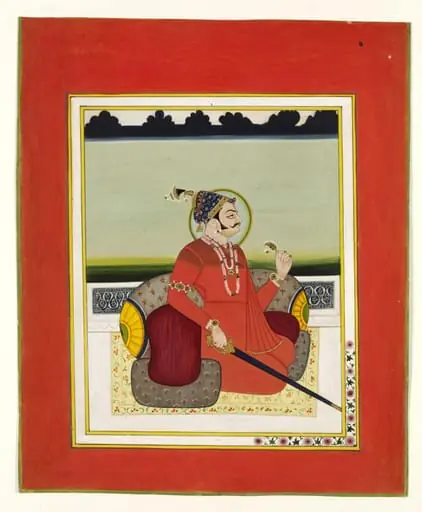
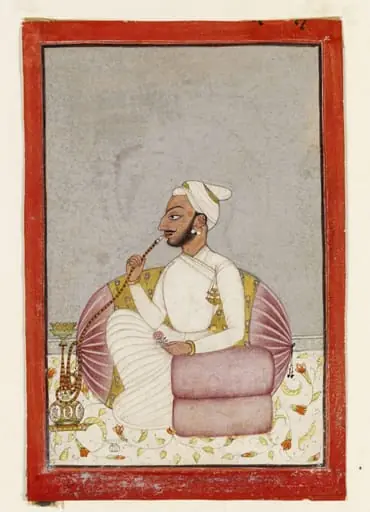
Peshwar Raghunath Rao is a paint painting by the Impressionist artist Unknown. It dates from 1890 and is held in the collection of the Victoria and Albert Museum.
About this work
Overview
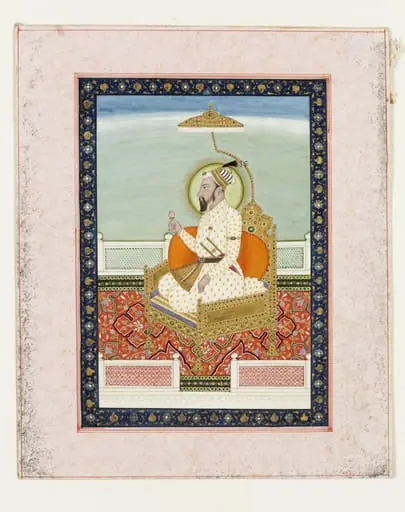
Created in 1890, this opaque watercolor and gold painting on paper portrays Peshwar Raghunath Rao, a regional noble, in a formal seated pose. The work combines delicate brushwork with metallic accents, typical of late 19th-century Indian portraiture. It captures the subject with quiet dignity against a softly colored background, emphasizing personal adornment and status through meticulous detail.
Subject & Meaning
The black beads he holds suggest spiritual or ritual practice, while his white garments and gold ornaments reflect both purity and high social standing.
Peshwar Raghunath Rao is depicted as a man of authority, seated on a richly patterned mat with a sword at his side, signifying his role and protection. The black beads he holds suggest spiritual or ritual practice, while his white garments and gold ornaments reflect both purity and high social standing. His composed expression conveys calm authority, aligning with ideals of noble conduct in his cultural context.
Technique & Style
The painting employs opaque watercolor with gold leaf accents to highlight textures in fabric, jewelry, and carpet patterns. Fine brushwork defines the black dots on his robe and the intricate weave of the mat. The background is rendered in a muted green, drawing focus to the figure. The style is rooted in regional Indian traditions rather than Western movements like Impressionism, favoring precision over atmospheric effect.
History & Provenance
The portrait was likely commissioned by or for Rao himself or a close associate, common among regional elites during British colonial rule. Its survival suggests it was preserved within a family or institutional collection. While specific ownership records are sparse, its craftsmanship indicates it originated in a courtly or aristocratic artistic environment in western India.
Context
In late 19th-century India, portraiture among local nobility blended indigenous techniques with subtle influences from colonial visual culture. Artists maintained traditional methods of pigment use and composition while responding to new expectations of individual representation. This work reflects a moment when regional identities were affirmed through visual culture, even as political power shifted under colonial administration.
Legacy
This painting contributes to the understanding of how Indian elites preserved cultural identity through art during colonial rule. It stands as an example of a broader tradition of courtly portraiture that valued symbolic detail and personal dignity over Western naturalism. Though not widely known outside specialized circles, it remains a valuable record of regional aesthetics and social hierarchy.
Artist & collection

 Domestic Scene
 Giacomo and Cardinal Marco, investing Andrea, Abbot of San Zeno, with his Benefice
 The Nymph of Fontainebleau
 Portrait of a Woman
 Madonna and Child with Saints in the Enclosed Garden
 Venus and Minerva
 Family Group of Four on Sofa
 Wall painting from Room H of the Villa of P. Fannius Synistor at Boscoreale