Artwork
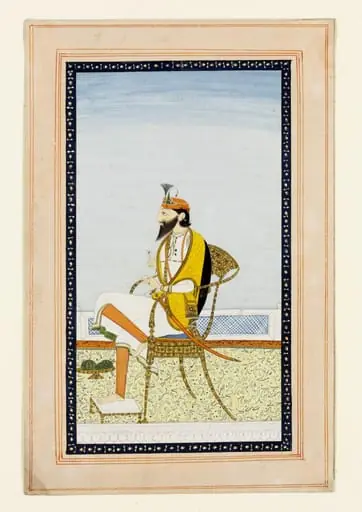
Portrait of Thakur Raja Bakhtawar Singh, standing in a European-style interior.
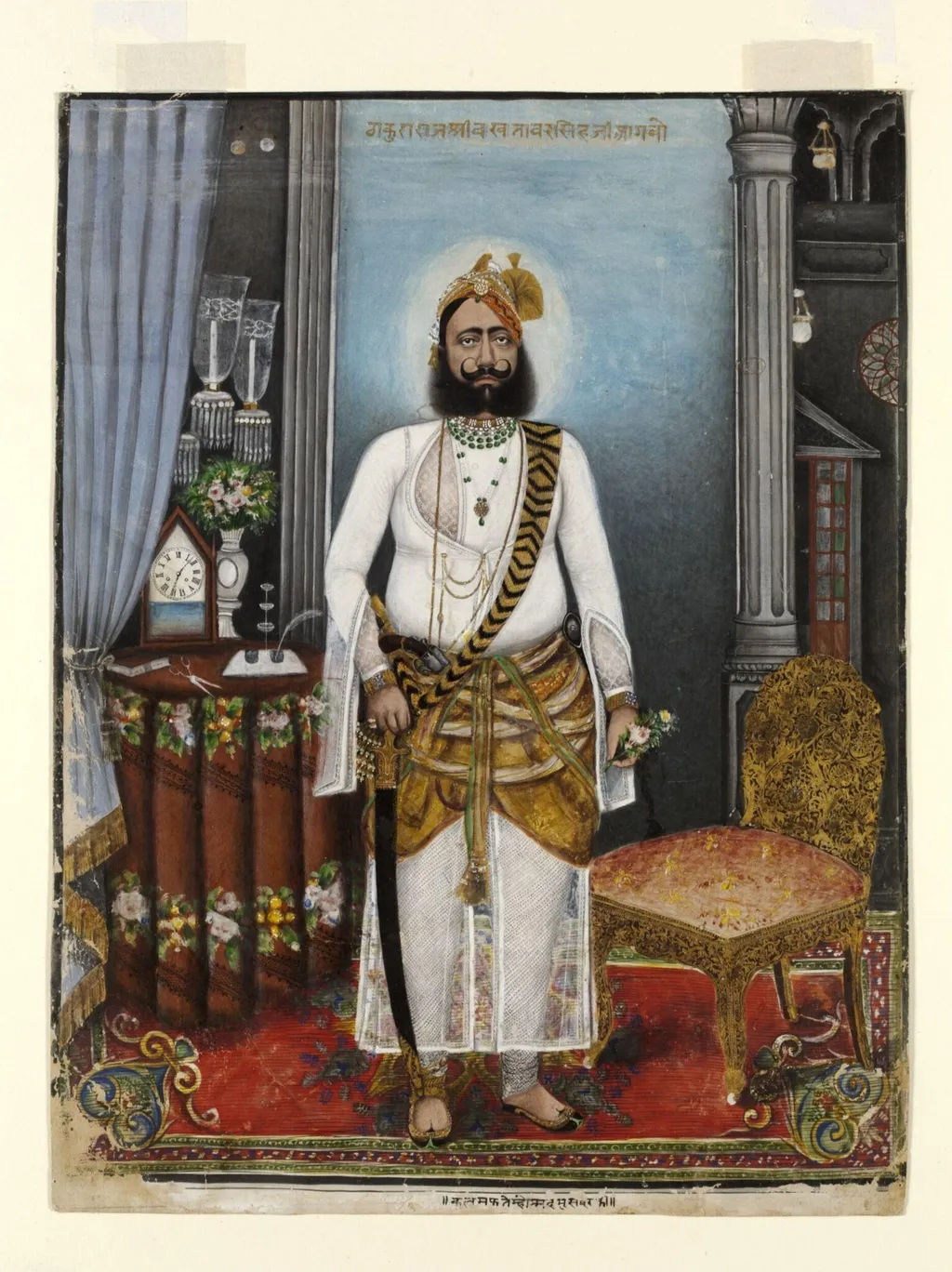
Portrait of Thakur Raja Bakhtawar Singh, standing in a European-style interior. is a paint painting by the Patna School of Painting artist Unknown. It dates from 1880 and is held in the collection of the Victoria and Albert Museum.
About this work
Overview
This portrait, executed circa 1880 by the Indian artist Fateh Muhammad, depicts Thakur Raja Bakhtawar Singh standing within an elaborately furnished interior. The work belongs to the genre of Company painting, a hybrid style that emerged when Indian painters catered to European patrons, especially those linked to the East India Company.
Subject & Meaning
The sitter is a Rajput noble from western Rajasthan, likely the Bikaner region. Dressed in traditional attire, he is presented in a pose and setting that echo European portrait conventions, suggesting both his status and the cross‑cultural expectations of the colonial audience.
Technique & Style
The composition combines Indian decorative detail with Western modeling of light and perspective. The interior’s architectural elements and the sitter’s pose reflect European influence, while the ornamental patterns on the clothing and the use of vivid pigments remain rooted in indigenous artistic practice.
History & Provenance
Company paintings were typically commissioned by British officials or sold in local markets. In Rajasthan, such works were relatively rare compared to other Indian regions, making this portrait an uncommon example of the style’s late‑nineteenth‑century diffusion into the Rajput courts.
Context
During the late 1800s, Rajput rulers continued a long tradition of patronizing the visual arts, yet the influx of European aesthetics—often mediated through photography—began to appear in court portraits. This painting illustrates that transitional moment, where local elite imagery adopted a European visual language while retaining native motifs.
Artist & collection

 Domestic Scene
 Giacomo and Cardinal Marco, investing Andrea, Abbot of San Zeno, with his Benefice
 The Nymph of Fontainebleau
 Portrait of a Woman
 Madonna and Child with Saints in the Enclosed Garden
 Venus and Minerva
 Family Group of Four on Sofa
 Wall painting from Room H of the Villa of P. Fannius Synistor at Boscoreale
 Raja Dalapat Singh
 Portrait of Tukoji II, the Maharaja Holkar of Indore, seated under a looped crimson curtain.
 Raja Ranbir Singh
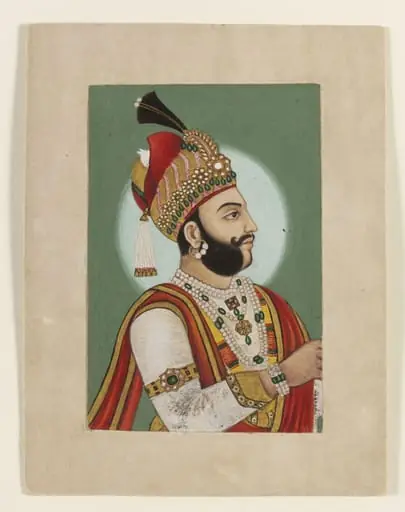 Maharaja Sawai Jagat Singh
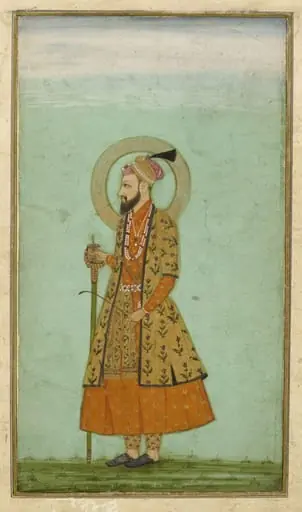 The emperor 'Alamgir (Aurangzeb)
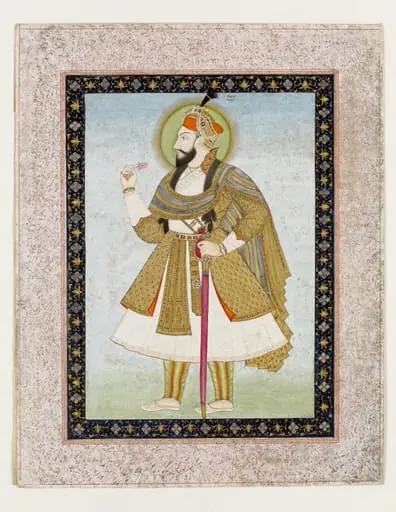 Abul-Hasan Qutb Shah
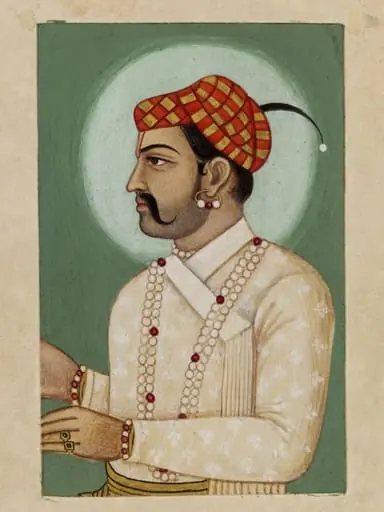 Maharaja Bhao Singh
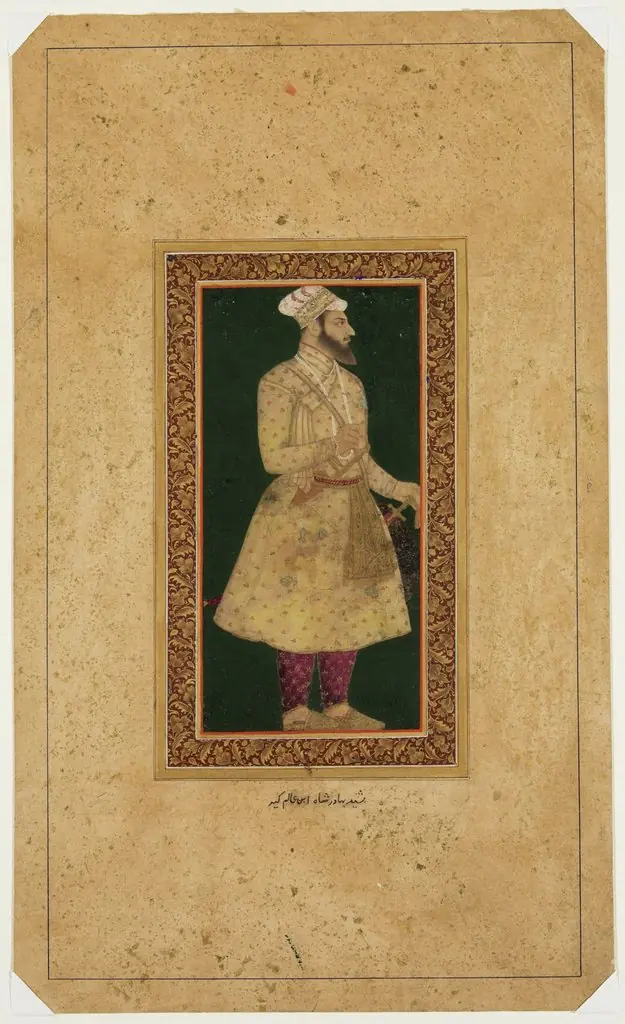 Portrait of a Prince
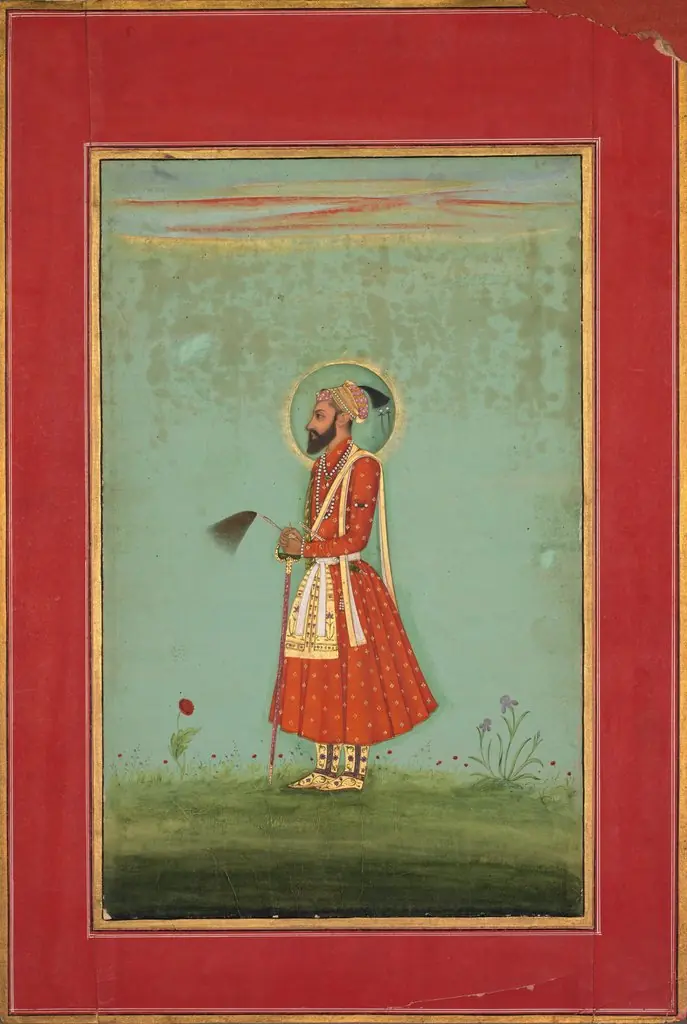 Aurangzeb
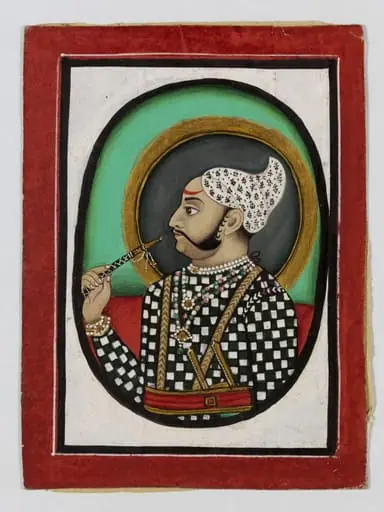 Rao Raja Budh Singh
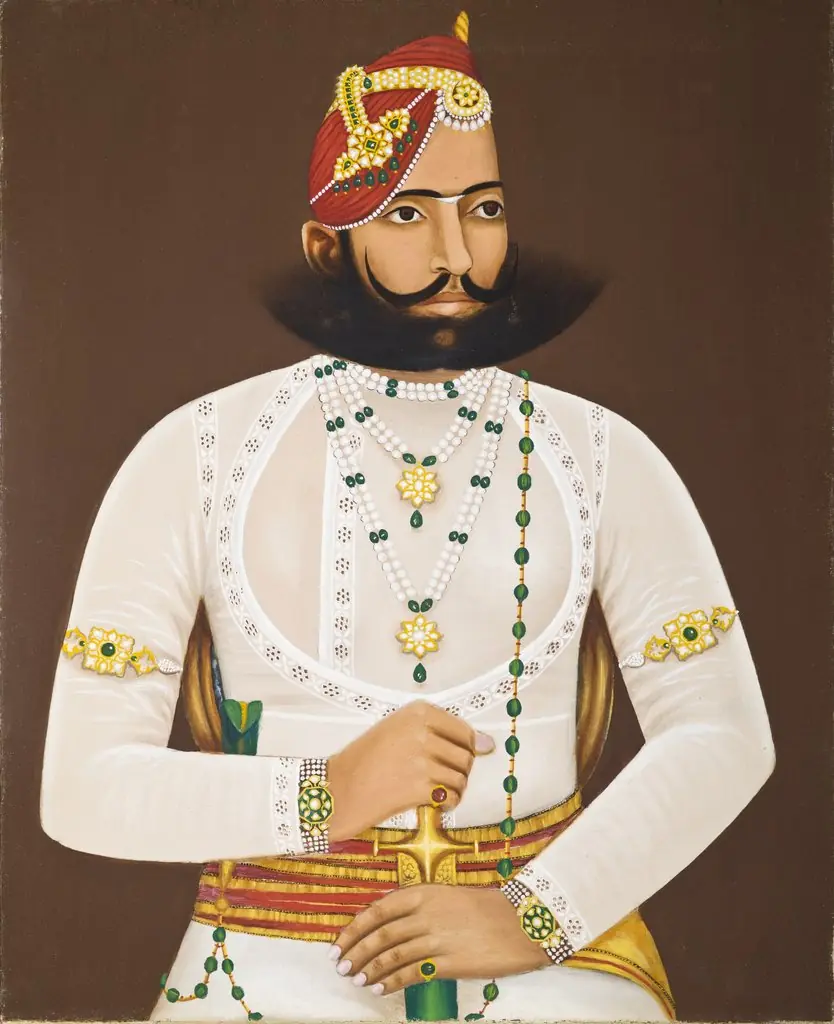 Kunwar Sabal Singhji (reigned 1848-1881)
 Raja Dhian Singh