Artwork
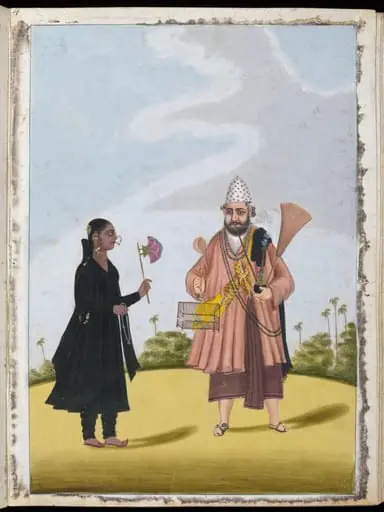
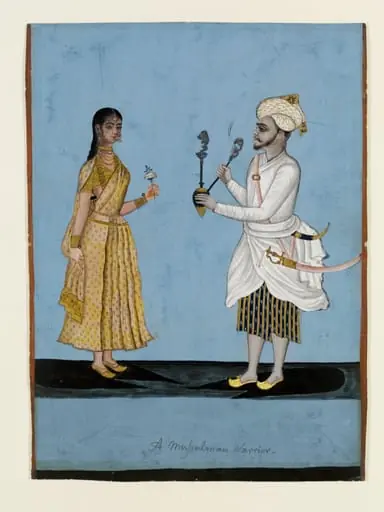
A fakir and his wife
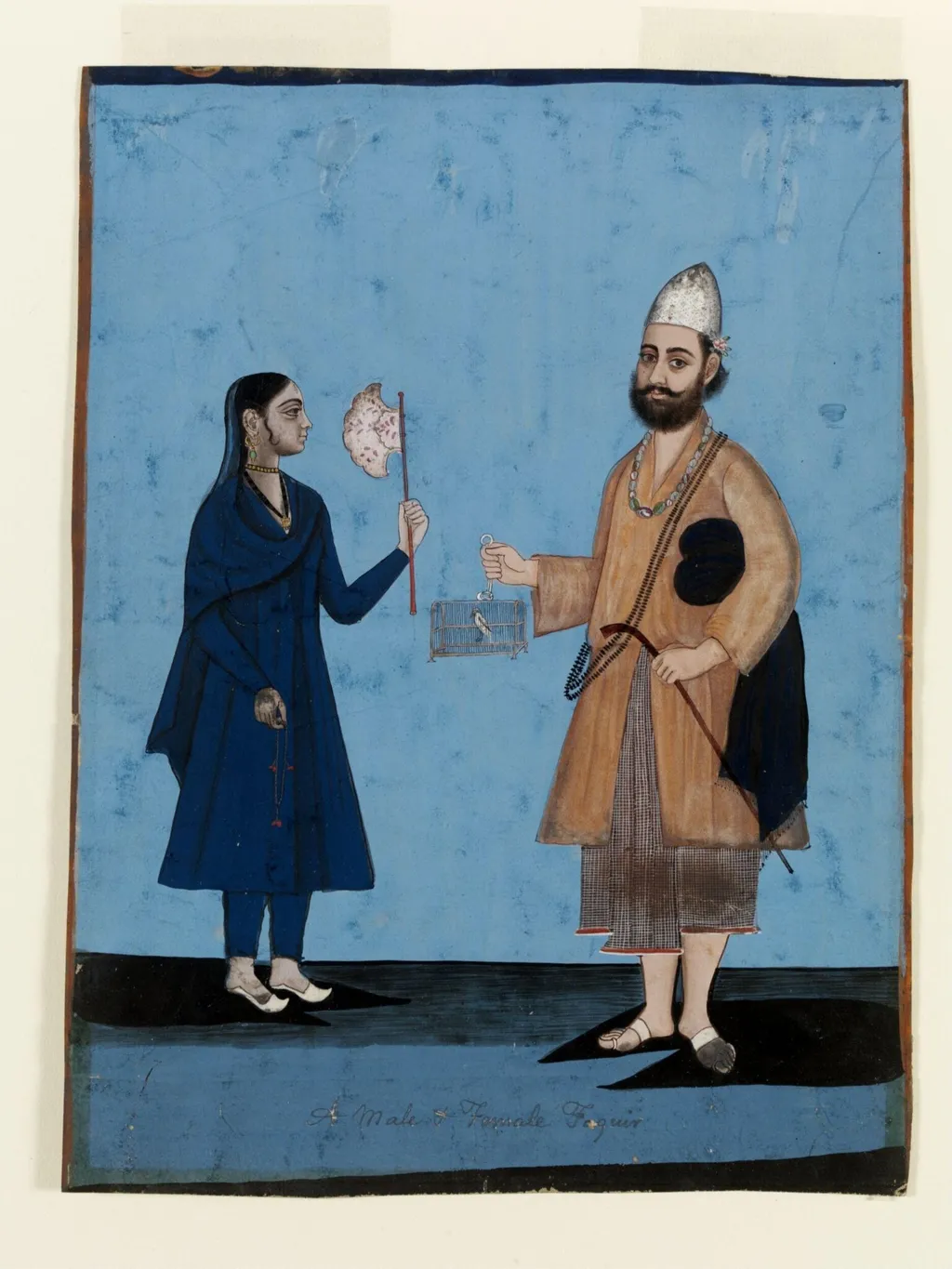
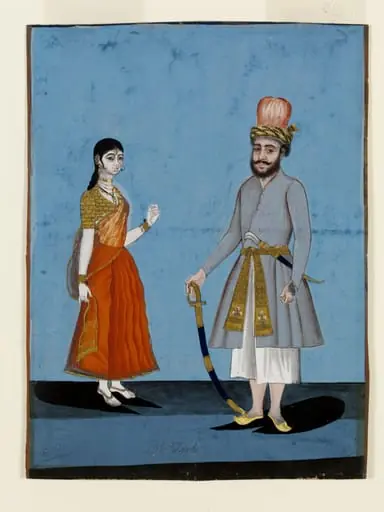
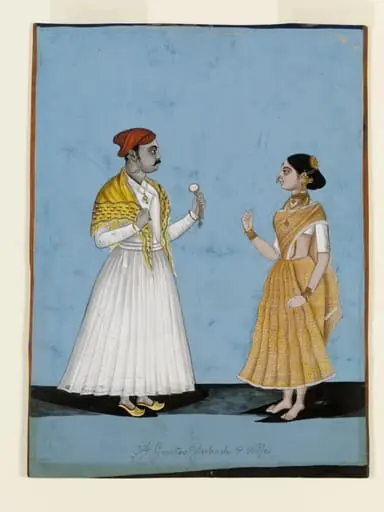
A fakir and his wife is a paint painting by the Romanticist artist Unknown. It dates from 1790 and is held in the collection of the Victoria and Albert Museum. This painting is one of sixteen in a series documenting Indian social roles, each rendered with minimal background detail.
About this work
Overview
The work was transferred to the Victoria and Albert Museum in 1879 from the India Museum, where it had been part of a grouped set of illustrated panels.
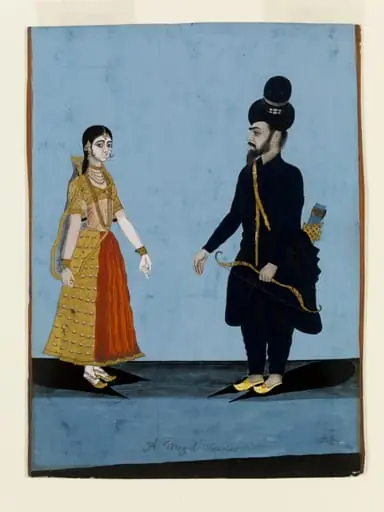
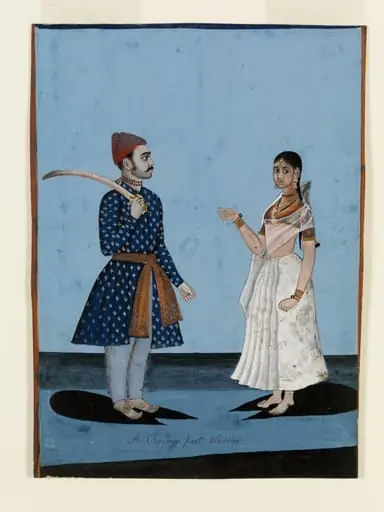
This painting is one of sixteen in a series documenting Indian social roles, each rendered with minimal background detail. It portrays a fakir and his wife standing side by side, their figures isolated against a solid blue field. The composition emphasizes clarity and typological representation, avoiding decorative elements like clouds or landscape. The work was transferred to the Victoria and Albert Museum in 1879 from the India Museum, where it had been part of a grouped set of illustrated panels.
Subject & Meaning
The figures represent a male and female fakir, ascetic religious practitioners often associated with renunciation and spiritual discipline. The man holds a birdcage and keys, symbols possibly indicating control over life or access to sacred spaces, while the woman holds a hand-held fan, a gesture of service or composure. Their paired depiction suggests a domestic or communal aspect to ascetic life, challenging stereotypes of solitary mendicancy.
Technique & Style
The painting employs flat, saturated colors and simplified forms, with no modeling or shading to suggest volume. Outlines are crisp, and patterns on the man’s robe are rendered with rhythmic precision. The uniform blue background eliminates spatial depth, focusing attention on the figures’ attire and posture. This stylistic restraint aligns with the series’ goal of cataloging social types through clear, emblematic representation.
History & Provenance
The work originated as part of a set of illustrated panels commissioned during the British colonial period in India, likely for administrative or ethnographic purposes. It was transferred to the Victoria and Albert Museum in 1879 from the India Museum, having previously been presented by P. F. Campbell-Johnston as a framed group of four glazed illustrations. Its survival reflects institutional interest in documenting Indian occupational identities.
Context
Created during the early 19th century, the series reflects colonial efforts to classify Indian society through visual taxonomy. The omission of naturalistic backgrounds and the emphasis on costume and object align with ethnographic conventions of the time. Similar works were produced by Indian artists for British patrons, blending local artistic traditions with Western documentary aims, often under ambiguous cultural authority.
Legacy
The painting remains a tangible record of how colonial institutions sought to systematize Indian social structures. While its original intent was classificatory, it now offers insight into the collaboration between Indian artists and British collectors. Its preservation allows ongoing study of visual representation, identity, and the complex dynamics of cross-cultural documentation in the 19th century.
Artist & collection

 Domestic Scene
 Giacomo and Cardinal Marco, investing Andrea, Abbot of San Zeno, with his Benefice
 The Nymph of Fontainebleau
 Portrait of a Woman
 Madonna and Child with Saints in the Enclosed Garden
 Venus and Minerva
 Family Group of Four on Sofa
 Wall painting from Room H of the Villa of P. Fannius Synistor at Boscoreale