Artwork
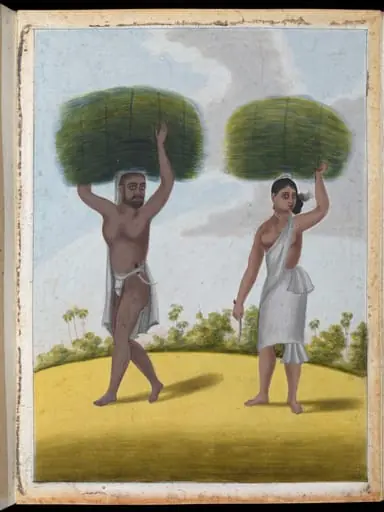
A grass-cutter and his wife
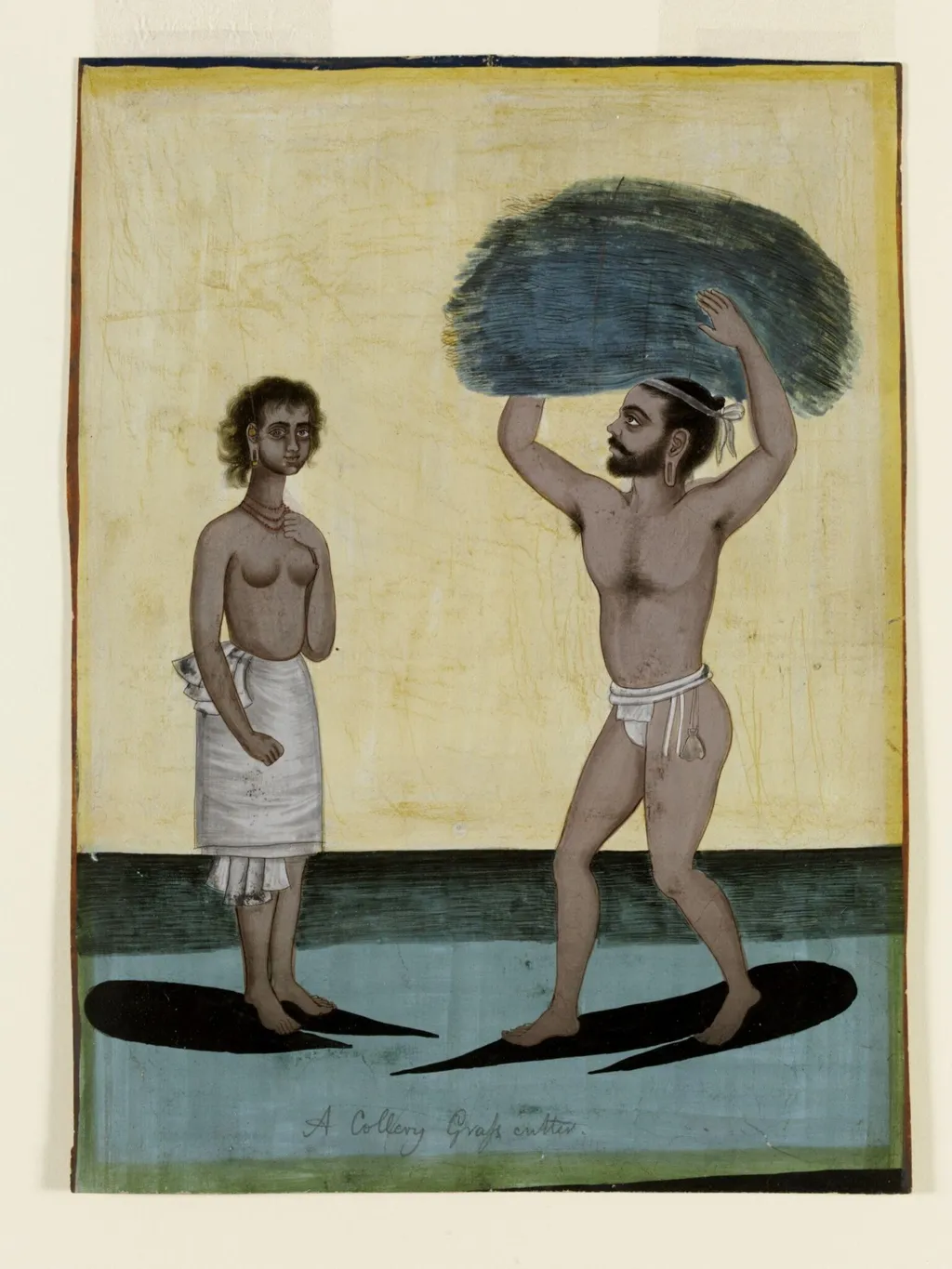
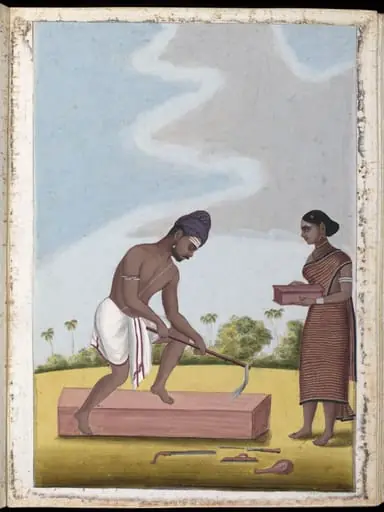
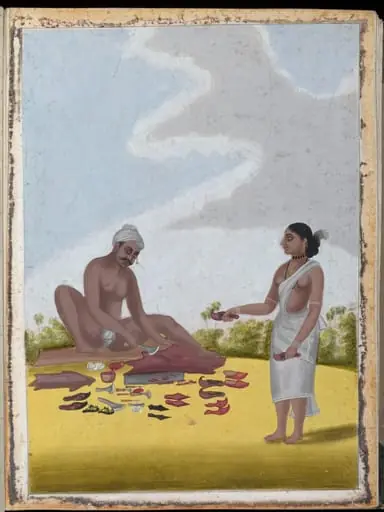
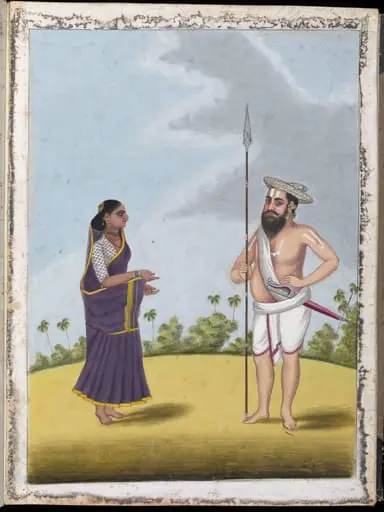
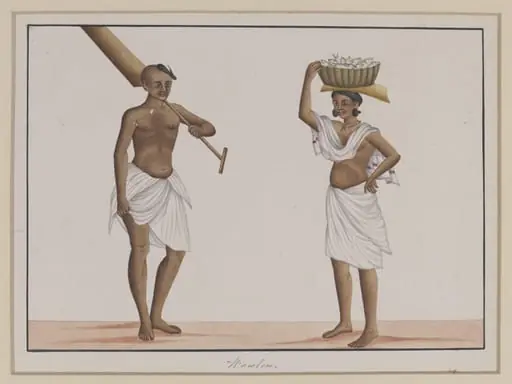
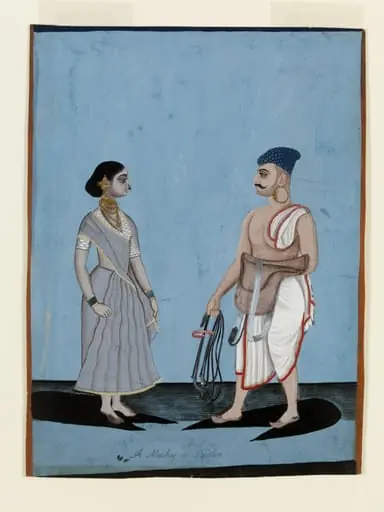
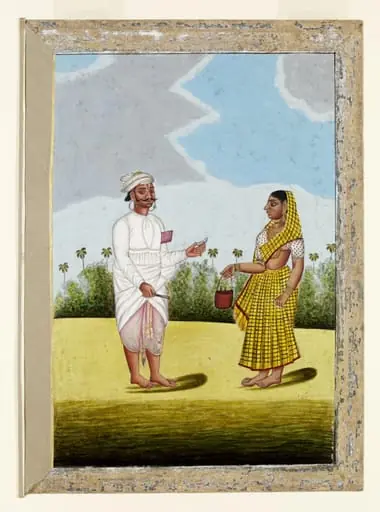
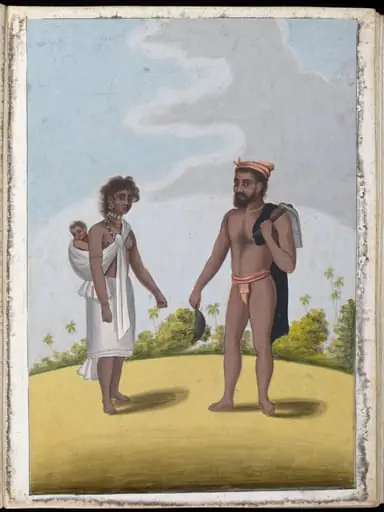
A grass-cutter and his wife is a paint painting by the Romanticist artist Unknown. It dates from 1790 and is held in the collection of the Victoria and Albert Museum. This painting is one of sixteen in a series documenting laborers and social roles in 19th-century India.
About this work
Overview
Its plain background and straightforward composition reflect its function as an observational study rather than a decorative piece.
This painting is one of sixteen in a series documenting laborers and social roles in 19th-century India. It portrays a grass-cutter and his wife in a moment of quiet labor, rendered with minimal environmental detail. The work was produced as part of a systematic visual record, likely commissioned for ethnographic documentation. Its plain background and straightforward composition reflect its function as an observational study rather than a decorative piece.
Subject & Meaning
The man, bare-chested and balanced under a heavy load of grass, embodies physical toil, while his wife, holding a fan, stands beside him in a posture of quiet support. Their pairing suggests domestic partnership rooted in shared labor. The absence of narrative or symbolic elements directs focus to their roles within a structured social hierarchy, emphasizing dignity in work rather than idealization or drama.
Technique & Style
The painting employs flat, unmodulated washes of yellow and blue for the background, with a dark, undefined ground beneath the figures. Brushwork is direct and unrefined, suggesting rapid execution. Details like fabric folds and facial features are suggested rather than meticulously rendered, indicating a focus on typology over individual portraiture. The style aligns with documentary illustration traditions of the period.
History & Provenance
The painting was part of a collection assembled in colonial India and later transferred to the India Museum in London in 1879. It was formally cataloged in the museum’s 1880 Register as one of a framed set of illustrations. Its movement into institutional custody reflects the British Empire’s interest in classifying Indian society through visual means, though the artists’ identities remain unrecorded.
Context
Created during a period when British administrators and ethnographers sought to catalog India’s diverse populations, this work belongs to a genre of visual ethnography. Similar series were produced by both Indian and European artists under colonial patronage. These images served as reference material, often stripped of cultural nuance, yet preserving glimpses of everyday life otherwise absent from official records.
Legacy
Though not widely exhibited today, the painting contributes to ongoing scholarly efforts to understand colonial-era visual documentation. Its presence in museum collections underscores the complex legacy of ethnographic collecting—simultaneously preserving cultural detail and reflecting imperial frameworks. It remains a quiet testament to laborers whose lives were recorded but rarely acknowledged beyond their function in a catalog.
Artist & collection

 Domestic Scene
 Giacomo and Cardinal Marco, investing Andrea, Abbot of San Zeno, with his Benefice
 The Nymph of Fontainebleau
 Portrait of a Woman
 Madonna and Child with Saints in the Enclosed Garden
 Venus and Minerva
 Family Group of Four on Sofa
 Wall painting from Room H of the Villa of P. Fannius Synistor at Boscoreale