Artwork
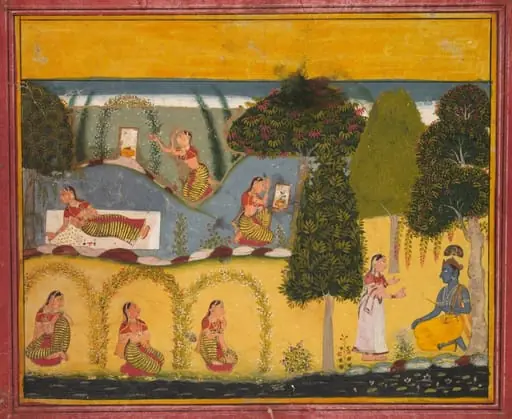
A group of women in ecstasy before Madhava, folio 4 from a Madhavanala-Kamakandala
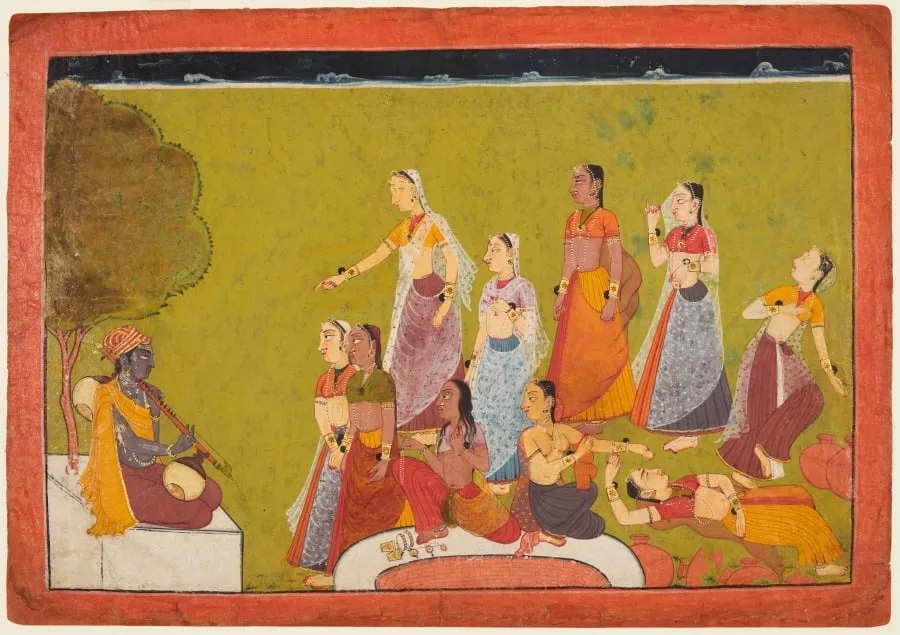
A group of women in ecstasy before Madhava, folio 4 from a Madhavanala-Kamakandala is an unspecified painting by the Baroque artist Unknown. It dates from 1720 and is held in the collection of the Cleveland Museum of Art. This Pahari painting depicts a scene of intense emotional and physical response among a group of women as they listen to Madhava play music.
About this work
Overview
This Pahari painting depicts a scene of intense emotional and physical response among a group of women as they listen to Madhava play music. The image captures a moment of collective ecstasy.
Subject & Meaning
The subject is rooted in a Sufi Muslim poet's story, where the women's reactions illustrate the depth of devotion to Allah. In the Pahari Hindu context, it reflects the bhakti movement's emphasis on passionate devotion, potentially drawing parallels with love for deities like Krishna or Rama.
Technique & Style
While specific artistic techniques are not detailed, the painting's small scale and detailed rendering of varied emotional states (swaying, fainting, removal of jewelry) suggest the intricate and expressive characteristics common to Pahari miniature paintings.
History & Provenance
Originating from the Pahari kingdoms in India, this folio (number 4) is part of a Madhavanala-Kamakandala manuscript. It was used for entertainment among the educated elite in Hindu courts, despite its Sufi literary origins.
Context
The painting intersects two cultural contexts: Sufi mysticism and Pahari Hindu patronage. It also aligns with the broader bhakti movement, which sought to evoke intense personal devotion through art and literature.
Legacy
As part of Pahari art, it contributes to the understanding of religious and literary interchange in Indian courtly life. Its themes of ecstatic devotion continue to offer insights into both Sufi and bhakti spiritual practices.
Artist & collection

 Domestic Scene
 Giacomo and Cardinal Marco, investing Andrea, Abbot of San Zeno, with his Benefice
 The Nymph of Fontainebleau
 Portrait of a Woman
 Madonna and Child with Saints in the Enclosed Garden
 Venus and Minerva
 Family Group of Four on Sofa
 Wall painting from Room H of the Villa of P. Fannius Synistor at Boscoreale
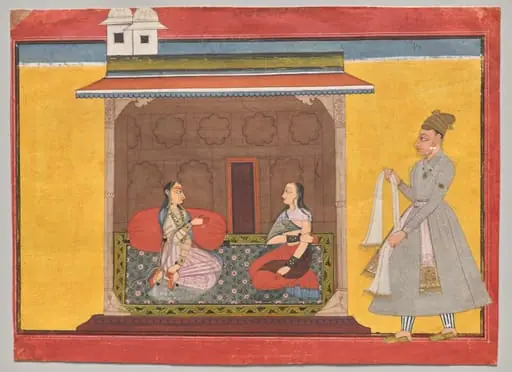 The Heroine Who is Faithfully Loved: Madhya Svadhinapatika Nayika, from a Rasamanjari of Bhanudatta
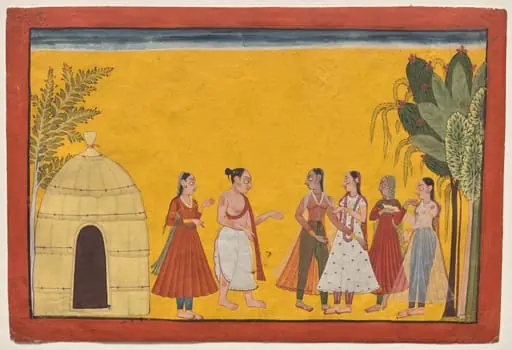 Rishyashringa addresses the courtesans, from the "Shangri" Ramayana
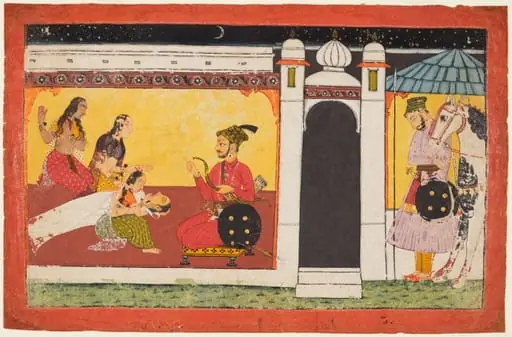 Kamakandala dies on hearing the news of Madhava’s death, folio 19 from a Madhavanala-Kamakandala of Alam
 Shri Raga, from a Ragamala
 Radha and Krishna
 Radha and Krishna seated on a balcony
 The Birth of Krishna, from a Sursagar of Surdas (Indian, c. 1480–1580)
 Radha Awaiting Reconciliation with Krishna, from a Gita Govinda of Jayadeva