Artwork
Kamakandala dies on hearing the news of Madhava’s death, folio 19 from a Madhavanala-Kamakandala of Alam
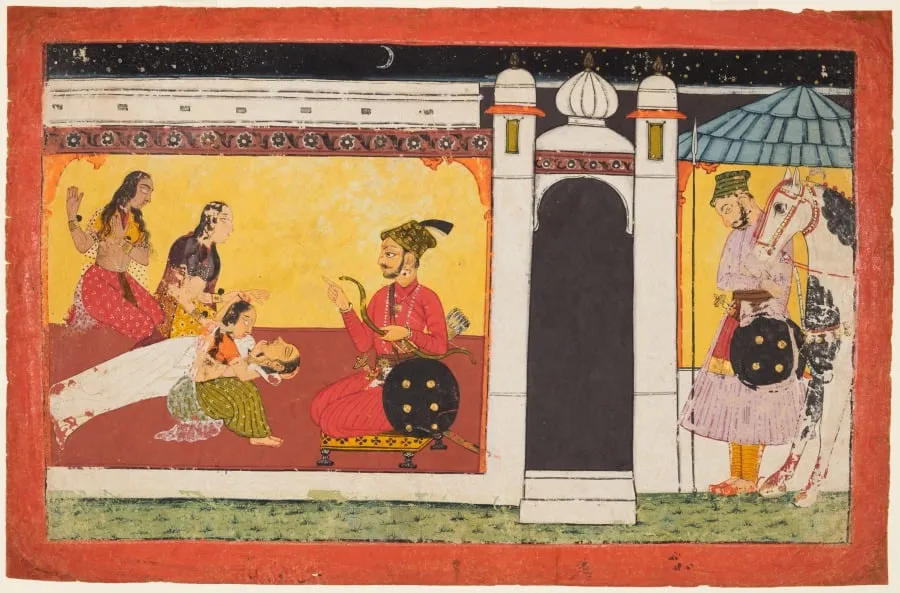
Kamakandala dies on hearing the news of Madhava’s death, folio 19 from a Madhavanala-Kamakandala of Alam is an unspecified painting by the Baroque artist Unknown. It dates from 1720 and is held in the collection of the Cleveland Museum of Art. This folio illustrates a pivotal moment from the poetic romance of Madhavanala and Kamakandala, painted in the Pahari style.
About this work
Overview
It captures the instant Kamakandala collapses upon hearing false news of her lover’s death, a scene designed to test the depth of her devotion.
This folio illustrates a pivotal moment from the poetic romance of Madhavanala and Kamakandala, painted in the Pahari style. It captures the instant Kamakandala collapses upon hearing false news of her lover’s death, a scene designed to test the depth of her devotion. The composition is dense with figures, each reacting to the tragedy with distinct gestures, rendered in vivid pigments and ornamental gold detailing characteristic of the region’s miniature tradition.
Subject & Meaning
The narrative centers on the intensity of romantic loyalty. King Vikrama, seeking to verify Kamakandala’s love, deceives her with the lie that Madhava perished from sorrow. Her immediate physical collapse and death signify an emotional bond so profound that life cannot endure without the beloved. The scene transforms personal grief into a moral testament, where love transcends the boundaries of the physical world.
Technique & Style
The artist employs fine, precise brushwork to convey subtle emotional shifts—trembling hands, downcast eyes, and the darkening of Kamakandala’s tongue, as described in the text. Rich mineral pigments and gold leaf accentuate the opulence of courtly attire and surroundings. The crowded composition, with figures arranged in layered planes, reflects the Pahari tradition’s focus on narrative clarity and decorative elegance within a compact space.
History & Provenance
This folio originates from a manuscript of the Madhavanala-Kamakandala story, likely produced in the early 18th century in the Pahari hills, possibly under the patronage of a local Rajput court. Such illustrated poems were commissioned for royal collections, blending literary culture with visual art. The work’s survival reflects its value as both a devotional object and a testament to regional artistic skill during a period of flourishing manuscript production.
Context
The story of Madhavanala and Kamakandala was part of a broader tradition of romantic poetry in North India, often adapted into visual form for elite audiences. These tales emphasized idealized love, sacrifice, and divine intervention. The Pahari painters, influenced by Mughal naturalism yet rooted in local aesthetics, translated such narratives into intimate, emotionally charged scenes that resonated with courtly ideals of fidelity and honor.
Legacy
This painting exemplifies how Pahari artists used miniature formats to convey complex emotional arcs with remarkable economy. Its influence can be traced in later regional styles that continued to depict literary themes through expressive figures and symbolic detail. Though the original manuscript is dispersed, surviving folios like this one remain key references for understanding the interplay of text, emotion, and visual culture in pre-modern Indian art.
Artist & collection

 Domestic Scene
 Giacomo and Cardinal Marco, investing Andrea, Abbot of San Zeno, with his Benefice
 The Nymph of Fontainebleau
 Portrait of a Woman
 Madonna and Child with Saints in the Enclosed Garden
 Venus and Minerva
 Family Group of Four on Sofa
 Wall painting from Room H of the Villa of P. Fannius Synistor at Boscoreale
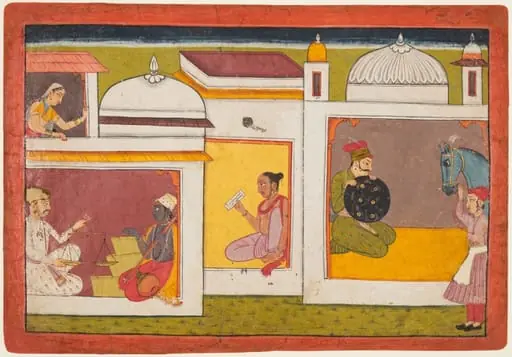 Madhava faces a man holding a scale, folio 1 from a Madhavanala-Kamakandala
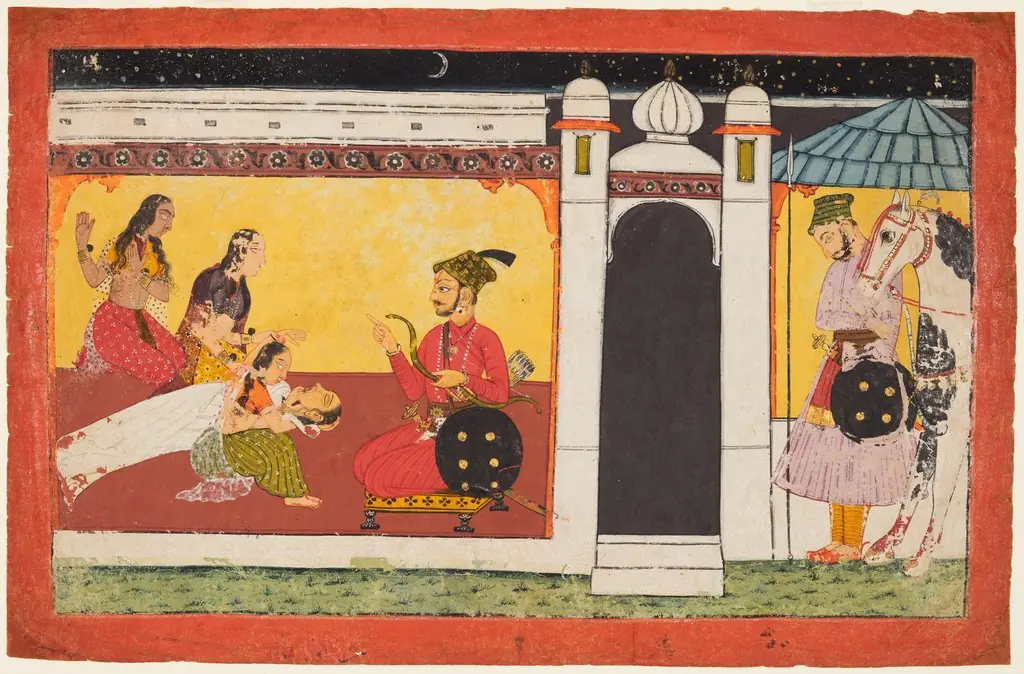 Kandala Dies on Hearing the News of Madhava’s Death, from a Madhavanala Kamakandala
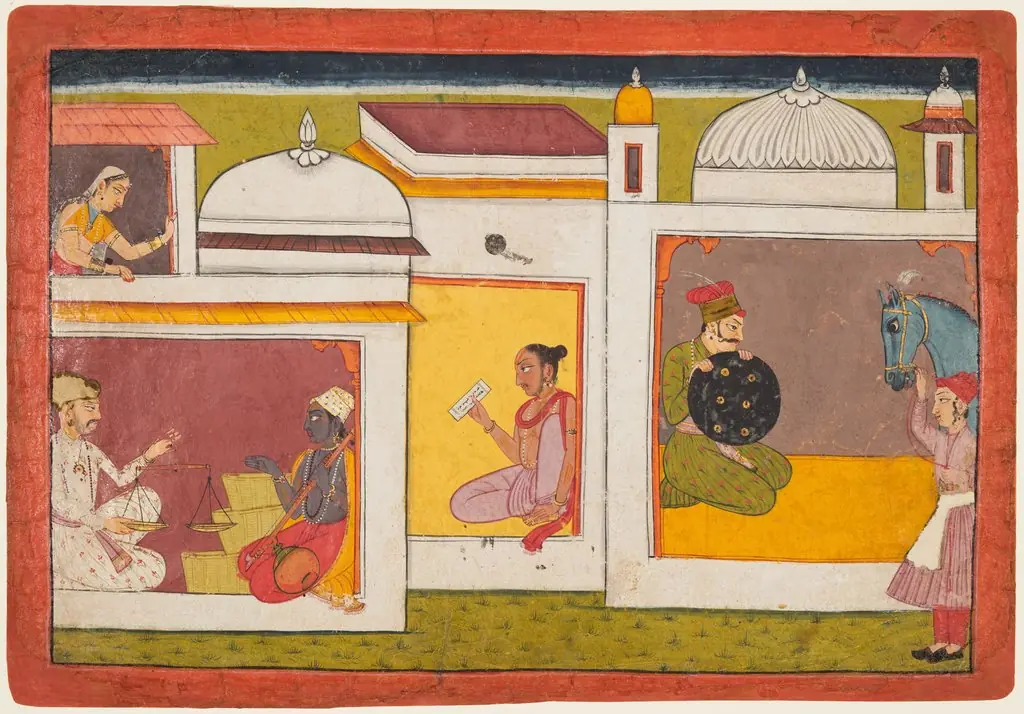 Madhava Faces a Man Holding a Scale, from a Madhavanala Kamakandala
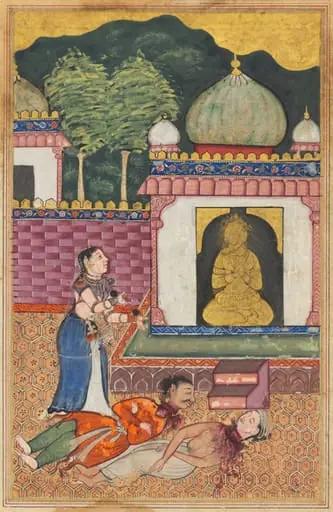 The princess discovers the dead bodies, with heads severed, of her husband and his Brahman friend, from a Tuti-nama (Tales of a Parrot): Thirty-fourth Night
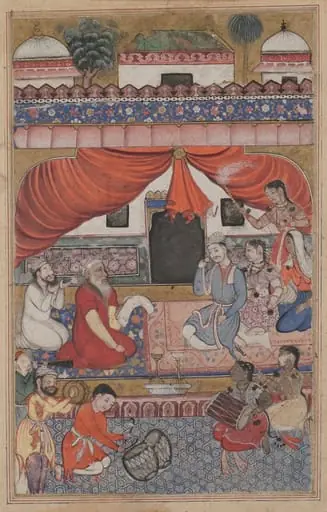 Preparation for the marriage of Mahmuda to the Young Vizier, from a Tuti-nama (Tales of a Parrot): Thirty-third Night
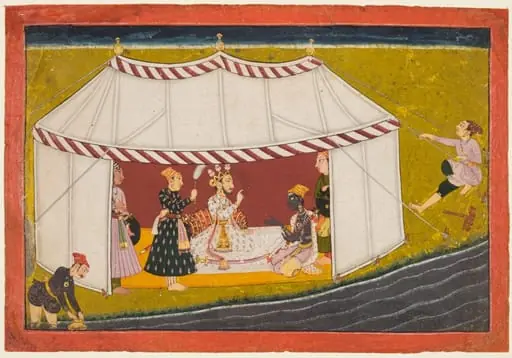 King Vikrama summons Madhava, folio 15 from a Madhavanala-Kamakandala