Artwork
The Birth of Krishna, from a Sursagar of Surdas (Indian, c. 1480–1580)
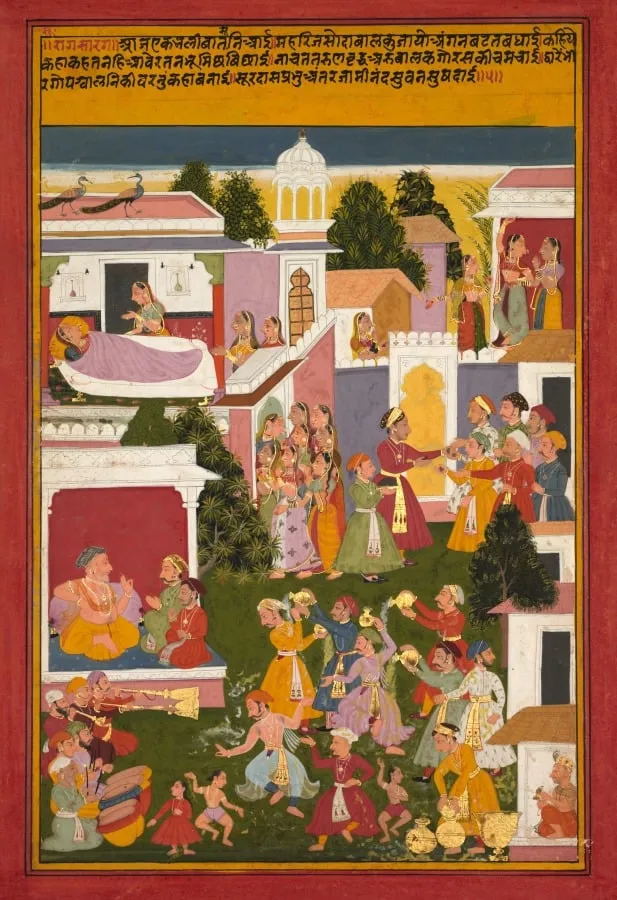
The Birth of Krishna, from a Sursagar of Surdas (Indian, c. 1480–1580) is an unspecified painting by the Baroque artist Unknown. It dates from 1708 and is held in the collection of the Cleveland Museum of Art. This painting illustrates a scene from the Sursagar, a collection of devotional verses composed by the blind saint Surdas.
About this work
Overview
Created in the Mewar region during the late 15th to late 16th century, it visually interprets the birth of Krishna as recounted in his poetry.
This painting illustrates a scene from the Sursagar, a collection of devotional verses composed by the blind saint Surdas. Created in the Mewar region during the late 15th to late 16th century, it visually interprets the birth of Krishna as recounted in his poetry. The composition is densely populated with figures engaged in celebration, arranged to mirror the rhythm and emotion of the sung verses. The text of Verse 5 appears at the top, anchoring the imagery to its literary source.
Subject & Meaning
The painting captures the moment of Krishna’s birth, a pivotal event in Vaishnavite tradition. His adoptive mother, Yashoda, rests with the infant in an upper chamber, his blue skin symbolizing his divine nature and the meaning of his name, 'dark one.' Around her, villagers gather in joyous anticipation, while Nanda, the village elder, distributes coins to guests. The scene reflects both earthly celebration and spiritual significance, portraying Krishna’s arrival as a blessing to the community.
Technique & Style
Rendered in vibrant mineral pigments, the painting employs bold outlines and flat, saturated colors typical of Rajput manuscript illustration. Figures are arranged in overlapping planes to suggest depth without perspective, creating a rhythmic, almost musical composition. The dense clustering of bodies and dynamic gestures convey movement and communal energy. Calligraphy at the top integrates text and image, reinforcing the painting’s function as a visual accompaniment to devotional song.
History & Provenance
The work originates from the courtly ateliers of Mewar, where illustrated manuscripts of Surdas’s poetry were commissioned by royal patrons as expressions of religious devotion. Such manuscripts were likely used in private devotional settings or ceremonial readings. Though the exact provenance of this sheet is undocumented, its style aligns with other surviving folios from Mewar’s 16th-century manuscript tradition, suggesting it was part of a larger, now-dispersed volume.
Context
Surdas’s verses, composed in Braj Bhasha, were central to the Bhakti movement’s emphasis on personal devotion to Krishna. In Mewar, royal support for such texts reflected both spiritual piety and cultural prestige. The painting’s inclusion of Surdas himself, playing cymbals in the corner, underscores the interplay between oral performance and visual art. This fusion of poetry, music, and imagery was characteristic of devotional culture in North Indian courts during this period.
Legacy
This painting exemplifies how devotional literature was made tangible through visual art in early modern India. Its enduring presence in museum collections highlights the continued scholarly interest in Rajput manuscript painting as a medium for religious narrative. While the original manuscript is no longer intact, surviving folios like this one preserve the aesthetic and spiritual values of a tradition that linked poetry, performance, and pictorial storytelling in enduring form.
Artist & collection

 Domestic Scene
 Giacomo and Cardinal Marco, investing Andrea, Abbot of San Zeno, with his Benefice
 The Nymph of Fontainebleau
 Portrait of a Woman
 Madonna and Child with Saints in the Enclosed Garden
 Venus and Minerva
 Family Group of Four on Sofa
 Wall painting from Room H of the Villa of P. Fannius Synistor at Boscoreale
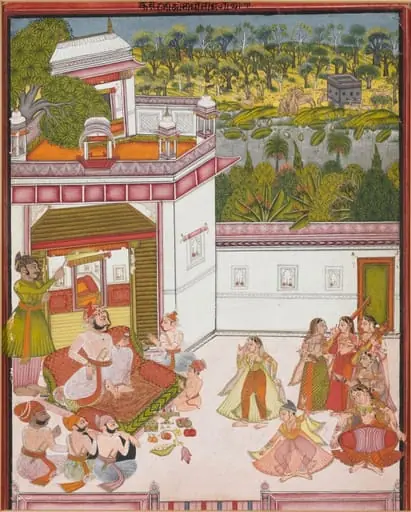 Maharaja of Kotah Listening to Music and Watching Dancers
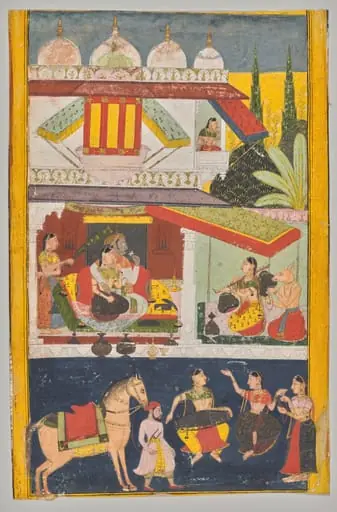 Shri Raga, from a Ragamala
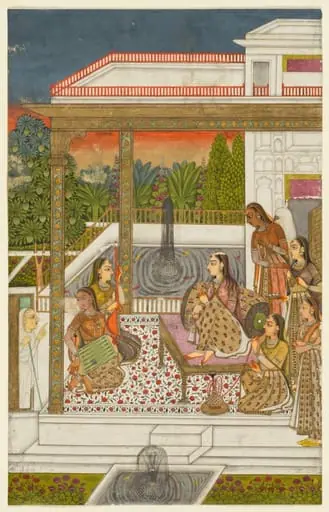 A princess with attendants on a terrace
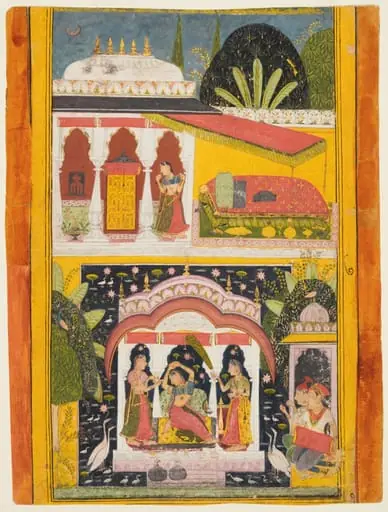 A Royal Woman in a Pavilion: Desavarari Ragini of Dipak, from a Ragamala
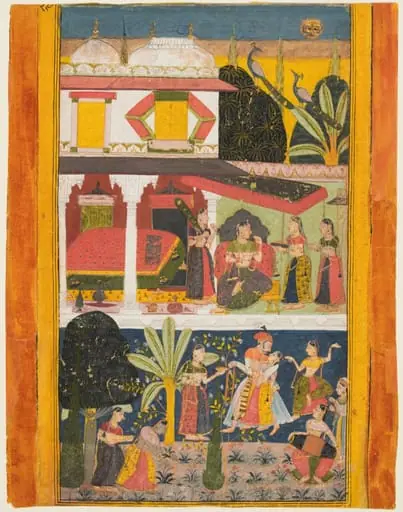 A Heroine and Her Paramour: Malavi Ragini, from a Ragamala
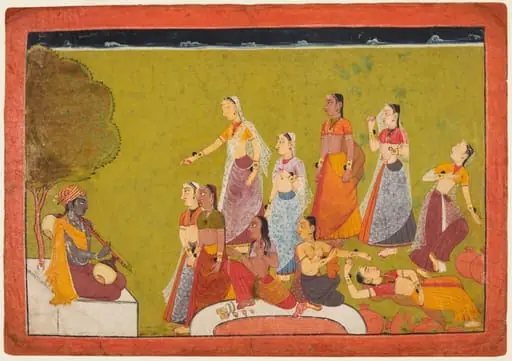 A group of women in ecstasy before Madhava, folio 4 from a Madhavanala-Kamakandala
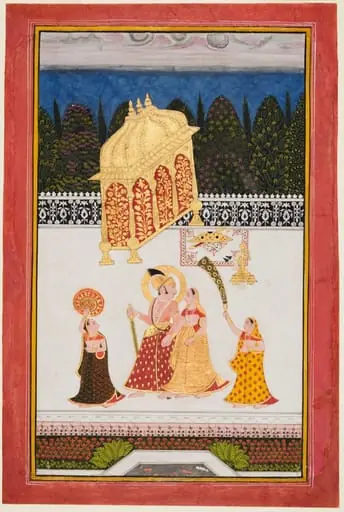 Maharana Ari Singh II of Mewar (r. 1761–73) with His Consort on a Terrace
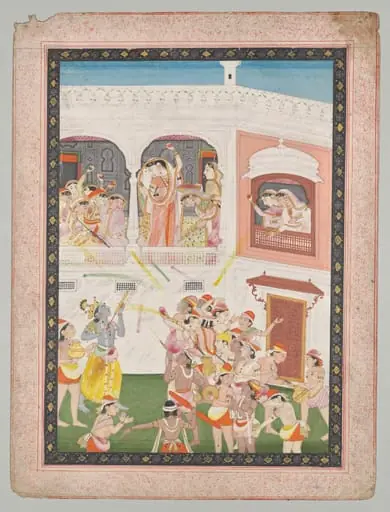 Radha and Hindu God Krishna celebrating the festival Holi
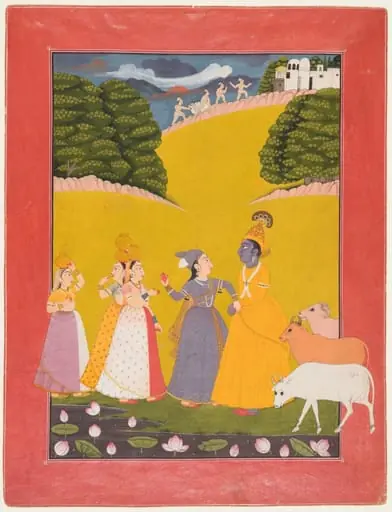 Taking of the toll, Dana-Lila