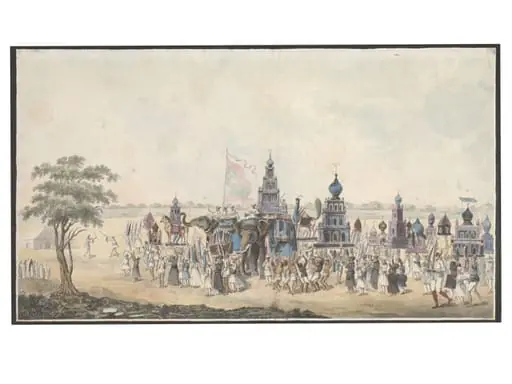
Artwork
A Muslim wedding
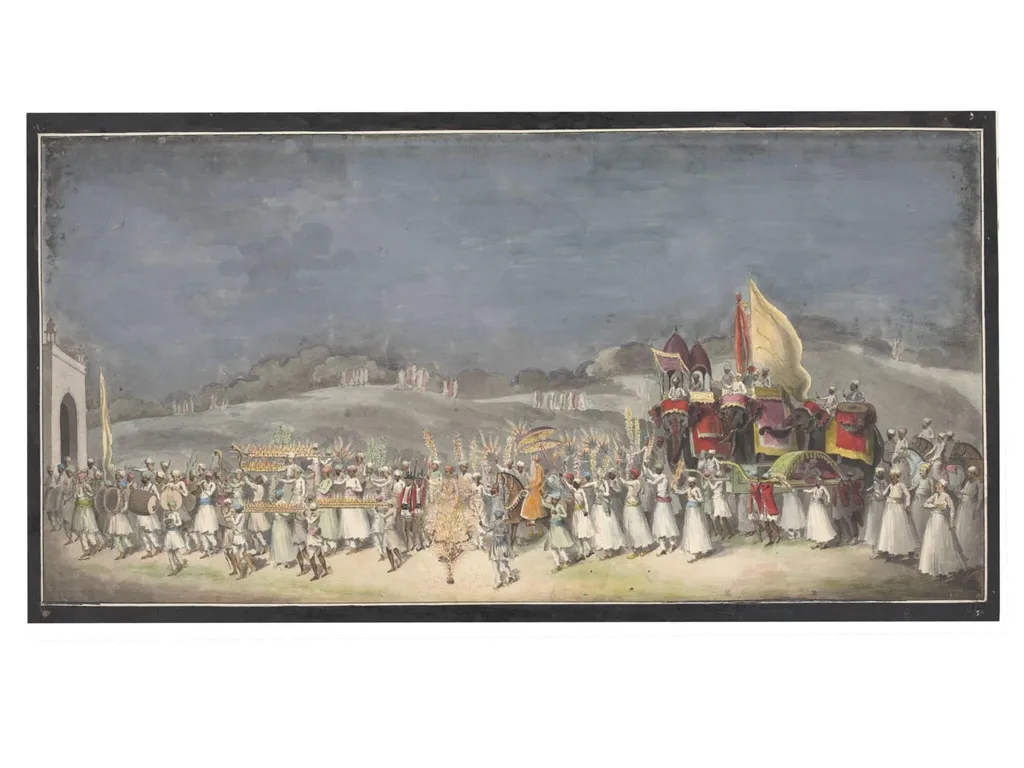
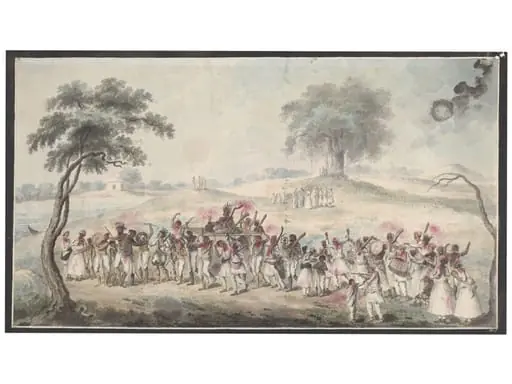
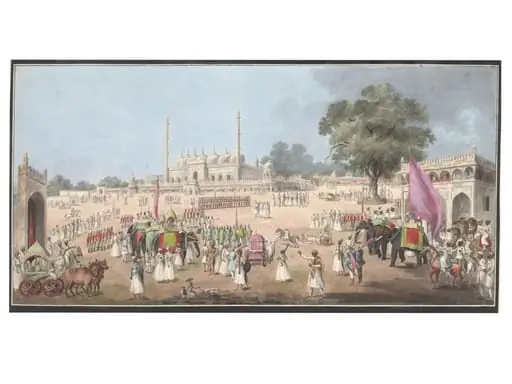
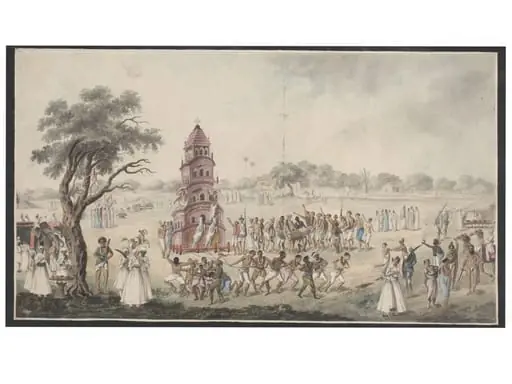
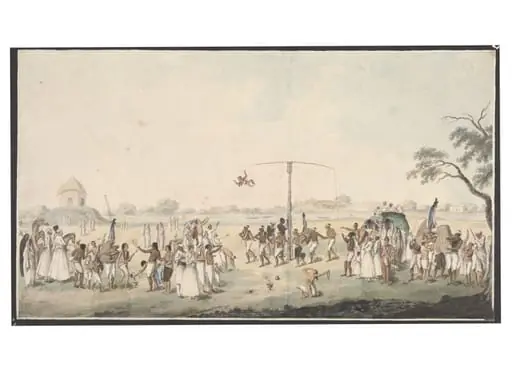
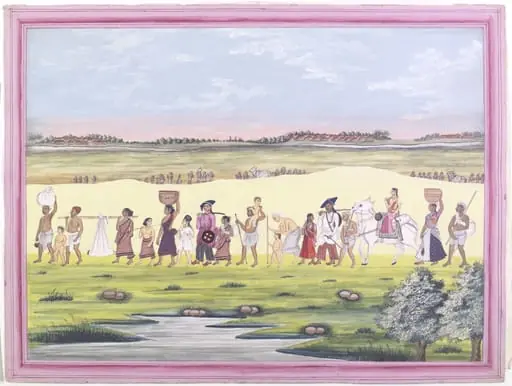
A Muslim wedding is a paint painting by the Orientalist artist Unknown. It dates from 1795 and is held in the collection of the Victoria and Albert Museum. This 1795 watercolor depicts a nocturnal Muslim wedding procession, capturing the movement of the groom toward the bride’s residence.
About this work
Overview
Its composition emphasizes scale and atmosphere, with a dense crowd, illuminated torches, and architectural elements framing the ceremonial journey.
This 1795 watercolor depicts a nocturnal Muslim wedding procession, capturing the movement of the groom toward the bride’s residence. Executed as part of a larger collection titled *Views in India*, the painting reflects the visual documentation of South Asian customs during the late 18th century. Its composition emphasizes scale and atmosphere, with a dense crowd, illuminated torches, and architectural elements framing the ceremonial journey.
Subject & Meaning
The scene centers on the groom’s procession, a key ritual in Muslim wedding traditions, where the bridegroom is escorted to the bride’s home amid communal celebration. Figures carry banners and torches, while elephants and horses signify status. A tall, ornate pole near the center may represent a ceremonial standard or symbolic object tied to the occasion, reinforcing the event’s religious and social significance through public display.
Technique & Style
Rendered in watercolor, the painting employs vivid hues against a subdued night sky to highlight movement and detail. Figures are arranged in layered groups, creating depth without strict perspective. The artist uses loose brushwork for crowds and more defined lines for architecture and animals, balancing spontaneity with clarity. Lighting is suggested through torches and lanterns, enhancing the nocturnal setting.
History & Provenance
The painting belonged to a bound volume of 49 watercolors compiled as *Views in India*, likely produced for British patrons interested in Indian life. It entered a museum collection in 1887 after being acquired from Mr. T. Toon for £50, a transaction recorded in institutional archives. The volume’s origin remains tied to colonial-era artistic commissions, though the artist’s identity is unconfirmed.
Context
Created during the late Mughal decline and rising British influence, the work reflects a period when Indian customs were being visually cataloged for European audiences. While the scene is rooted in local tradition, its production as part of a commercial series suggests it was shaped by both indigenous practice and colonial curiosity, serving as ethnographic record and aesthetic object.
Legacy
As one of 49 works in a documented collection, this painting contributes to a broader archive of South Asian visual culture from the colonial era. It remains a reference for understanding how weddings and public rituals were perceived and recorded by artists working between local traditions and foreign patronage. Its preservation allows ongoing study of cross-cultural representation in 18th-century Indian art.
Artist & collection

 Domestic Scene
 Giacomo and Cardinal Marco, investing Andrea, Abbot of San Zeno, with his Benefice
 The Nymph of Fontainebleau
 Portrait of a Woman
 Madonna and Child with Saints in the Enclosed Garden
 Venus and Minerva
 Family Group of Four on Sofa
 Wall painting from Room H of the Villa of P. Fannius Synistor at Boscoreale