Artwork
Hook-swinging festival
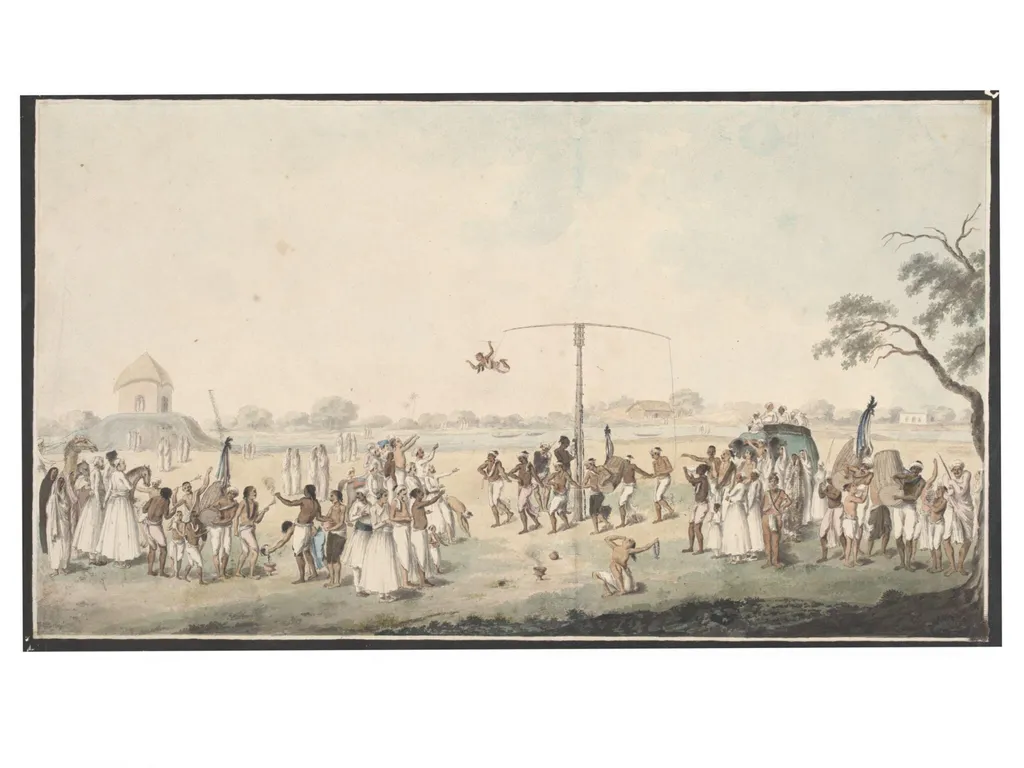
Hook-swinging festival is a paint painting by the Romanticist artist Unknown. It dates from 1795 and is held in the collection of the Victoria and Albert Museum. This watercolor painting captures a regional festival known as charak puja, held along a riverbank in eastern India.
About this work
Overview
This watercolor painting captures a regional festival known as charak puja, held along a riverbank in eastern India.
This watercolor painting captures a regional festival known as charak puja, held along a riverbank in eastern India. It belongs to a series of nine illustrations documenting courtly and religious life at the Murshidabad court, created as part of a larger collection titled *Views in India*. The work was acquired by the Victoria and Albert Museum in 1887 from T. Toon, contributing to a broader 19th-century effort to visually record Indian cultural practices.
Subject & Meaning
The scene portrays charak puja, a devotional rite involving participants swinging from tall poles suspended with hooks, symbolizing endurance and devotion. The gathering includes spectators, children, and animals, suggesting a communal celebration tied to local Hindu traditions. The presence of flags and staffs implies ritual significance, while the calm river and modest architecture frame the event as both sacred and rooted in everyday life.
Technique & Style
Executed in delicate watercolors, the painting employs soft, muted tones to convey a tranquil atmosphere despite the dynamic activity. Figures are rendered with loose, fluid lines that emphasize motion—swingers mid-arc, children darting, a dog in motion. The composition balances crowded foreground energy with a serene, receding landscape, reflecting an observational approach common in colonial-era Indian topographical art.
History & Provenance
The painting originated as part of a commissioned series documenting the Murshidabad court’s cultural landscape during the late 18th or early 19th century. It entered the Victoria and Albert Museum’s collection in 1887 after being acquired from T. Toon, a British collector. The full set of 49 watercolors formed a visual archive intended to preserve regional customs for European audiences, though executed by local artists.
Context
Created during a period of British colonial administration, the painting reflects an interest in cataloging Indian festivals alongside courtly scenes. Charak puja, though rooted in Hindu tradition, was documented here alongside Muslim observances, suggesting an attempt to present religious pluralism. Such works were often produced for colonial patrons seeking ethnographic records, blending local practice with foreign aesthetic expectations.
Legacy
As part of the *Views in India* collection, this painting contributes to a historical record of regional rituals now rarely practiced in their original form. It remains a valuable resource for understanding how Indian festivals were perceived and preserved through colonial-era art. The work continues to inform scholarly study of cross-cultural representation and the intersection of religion, performance, and visual documentation in South Asia.
Artist & collection

 Domestic Scene
 Giacomo and Cardinal Marco, investing Andrea, Abbot of San Zeno, with his Benefice
 The Nymph of Fontainebleau
 Portrait of a Woman
 Madonna and Child with Saints in the Enclosed Garden
 Venus and Minerva
 Family Group of Four on Sofa
 Wall painting from Room H of the Villa of P. Fannius Synistor at Boscoreale
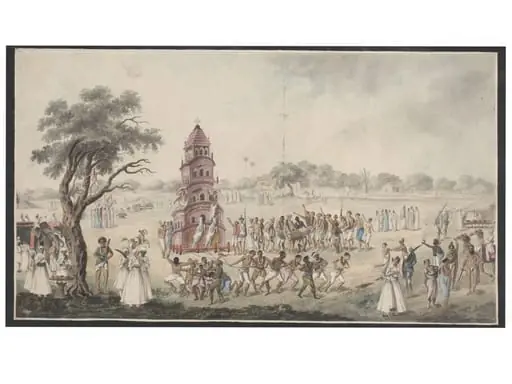 The Jagannath festival
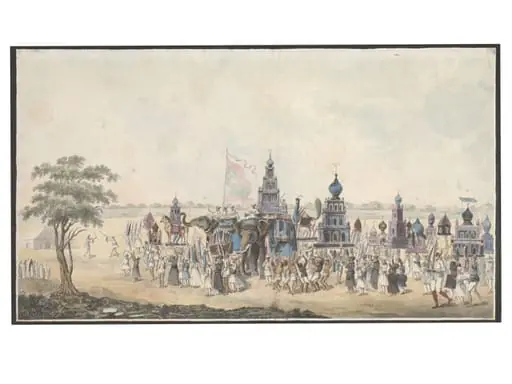 The Muharram procession
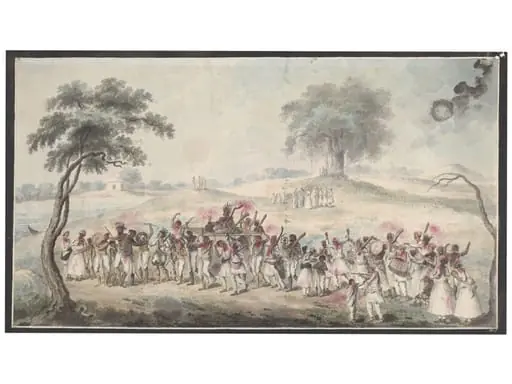 The Holi festival
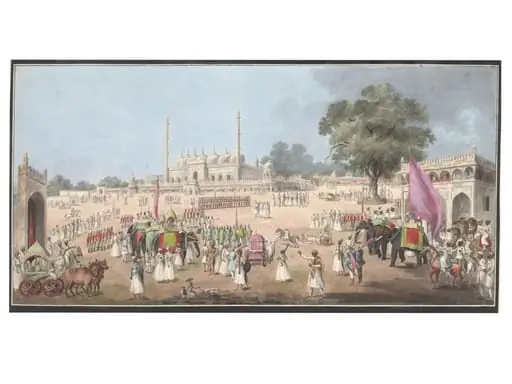 Mubarak ud-Daula, Nawab of Murshidabad, ca .1795 - ca. 1805
![Women greeting travellers by throwing barley to them, observed near the village of Ciala Kavak [Kawak] in Bulgaria, by Luigi Mayer](https://artifactworldgallery.com/img/luigi-mayer--women-greeting-travellers-by-throwing-barley-to-them-observe--983c1a6622c69e6c-w320.webp) Women greeting travellers by throwing barley to them, observed near the village of Ciala Kavak [Kawak] in Bulgaria
Women greeting travellers by throwing barley to them, observed near the village of Ciala Kavak [Kawak] in Bulgaria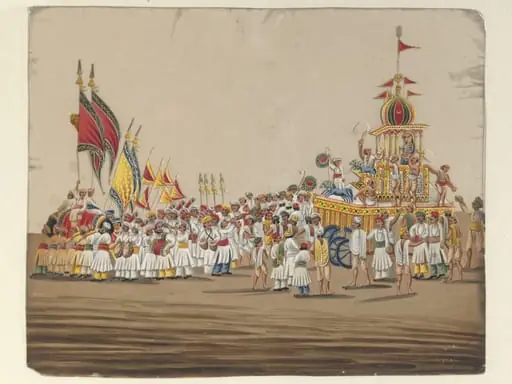 One of two drawings depicting procession scenes in Patna.
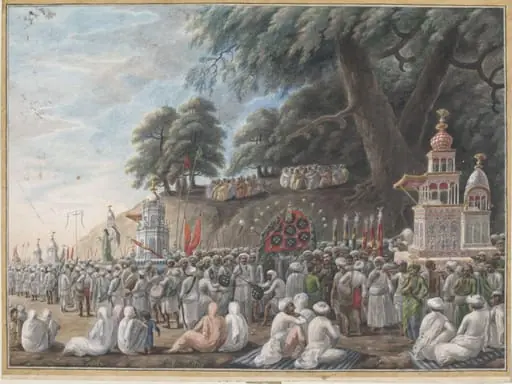 A Muharram scene
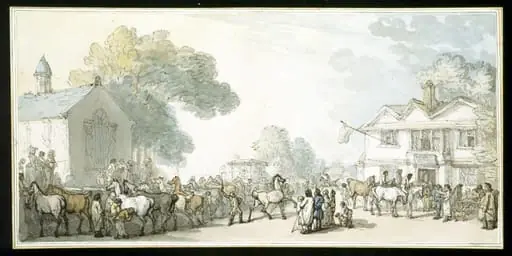 A Horse Fair at Southampton
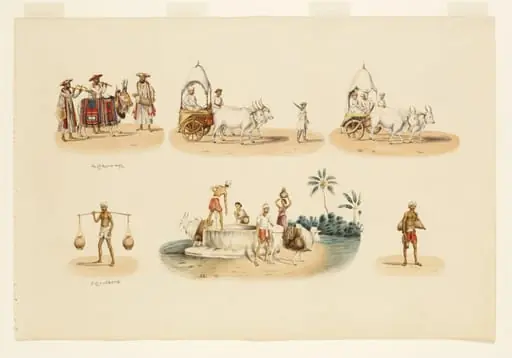 Three modes of transport and three methods of obtaining water
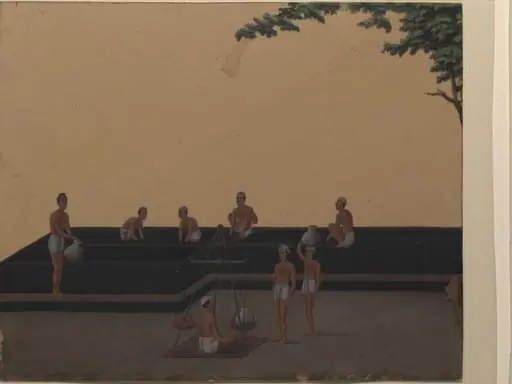 One of nineteen drawings illustrating processes in the manufacture of opium at the Opium Factory at Gulzarbagh, Patna, in Bihar.
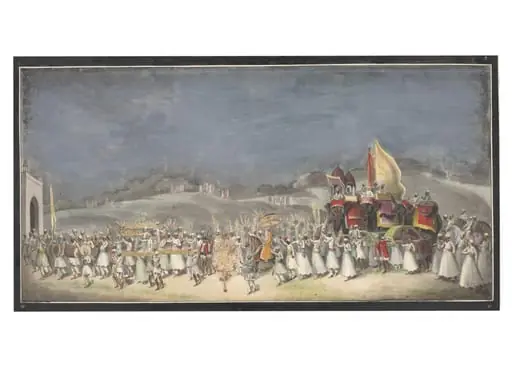 A Muslim wedding
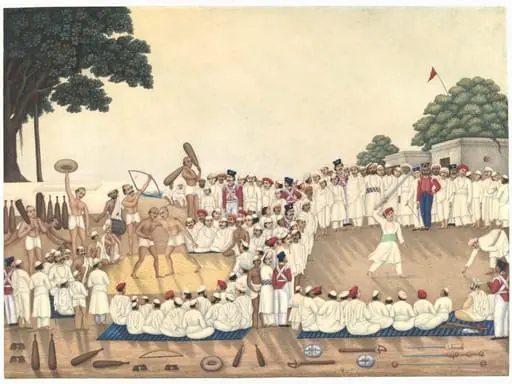 Indian sports