Artwork
Mubarak ud-Daula, Nawab of Murshidabad, ca .1795 - ca. 1805
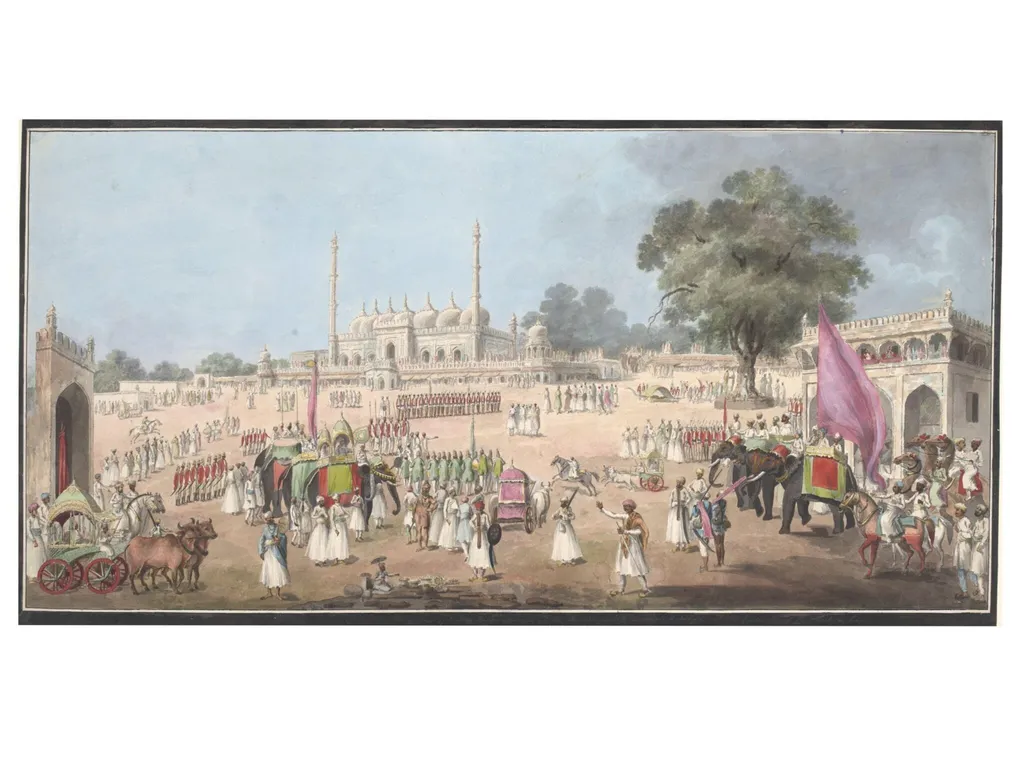
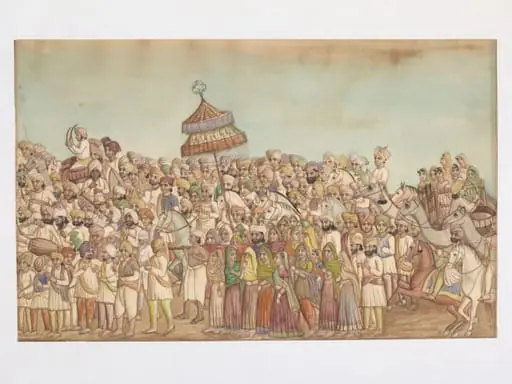
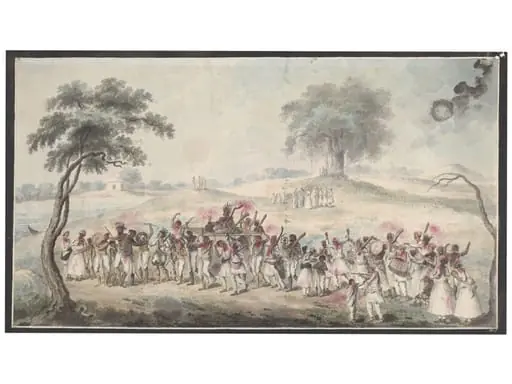
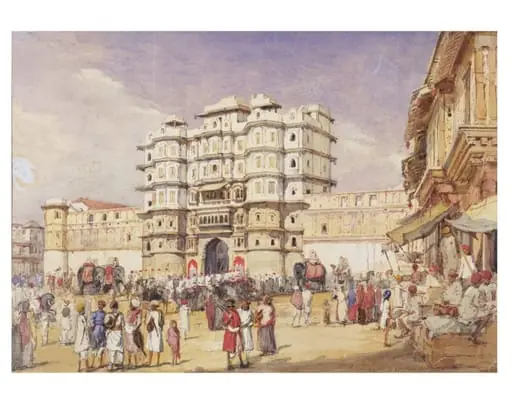
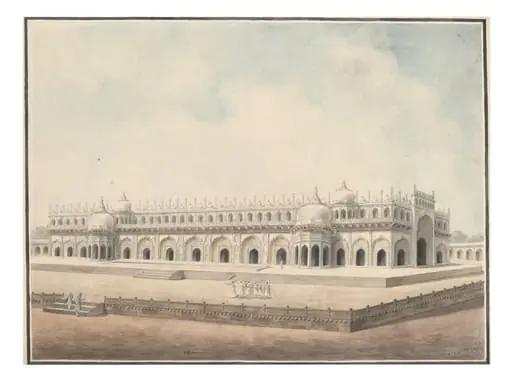
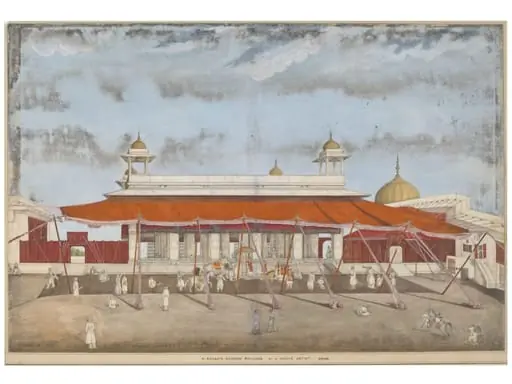
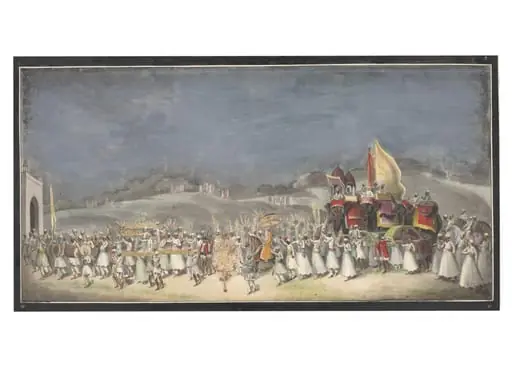
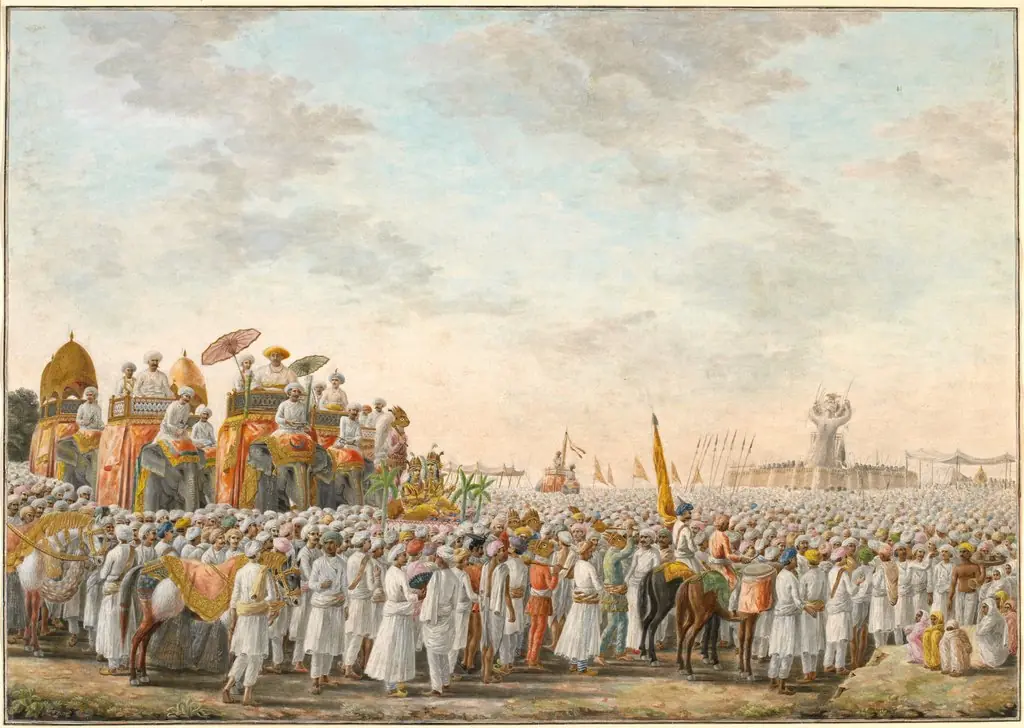
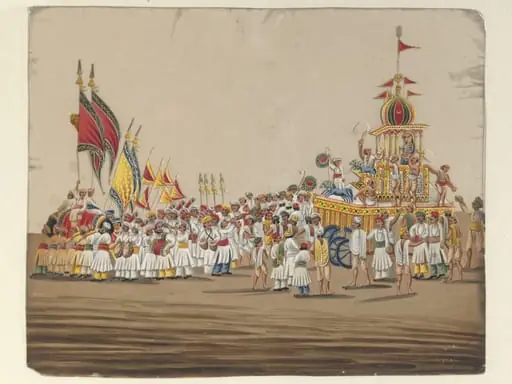
Mubarak ud-Daula, Nawab of Murshidabad, ca .1795 - ca. 1805 is a paint painting by the Patna School of Painting artist Unknown. It dates from 1795 and is held in the collection of the Victoria and Albert Museum. This painting is one of nine works documenting courtly and religious life in Murshidabad during the late 18th century.
About this work
Overview
This painting is one of nine works documenting courtly and religious life in Murshidabad during the late 18th century.
This painting is one of nine works documenting courtly and religious life in Murshidabad during the late 18th century. It depicts the Muslim festival of Bakr Id, or Eid al-Adha, centered on the ritual sacrifice of an animal. The composition reflects a hybrid style, likely derived from an earlier oil painting by the British artist George Farington, who worked in the region before his death in 1788. The original by Farington is no longer extant.
Subject & Meaning
The scene captures the observance of Bakr Id, commemorating the biblical story of Abraham’s willingness to sacrifice his son, interrupted by divine intervention that substituted a ram. The gathering of worshippers, animals, and court officials underscores the festival’s communal and spiritual significance. Its inclusion among Hindu and Muslim observances in the series reflects the pluralistic character of the Nawab’s court and its patronage of diverse traditions.
Technique & Style
The painting blends Indian miniature traditions with European naturalism, particularly in its use of chiaroscuro to model forms and suggest depth. The figures are rendered with attention to individual expression and costume, while the spatial arrangement remains flatter than Western oil painting conventions. This synthesis suggests adaptation by a local artist working from a lost European prototype, merging observational detail with indigenous compositional norms.
History & Provenance
The series was likely commissioned by the Nawab’s court between 1795 and 1805, following the death of George Farington, who had introduced European painting techniques during his time in Murshidabad from 1785 to 1788. The works were produced by local artists copying or reinterpreting his lost oil paintings. Their survival offers rare insight into cross-cultural artistic exchange in late Mughal-era Bengal under British colonial influence.
Context
Murshidabad, once the capital of Bengal, remained a center of cultural patronage even as political power shifted to Calcutta. The Nawab’s court maintained elaborate rituals and public ceremonies, which artists documented to affirm legitimacy and cultural sophistication. The inclusion of both Hindu and Muslim festivals in the series reflects a deliberate effort to represent the region’s religious diversity under a single ruling authority.
Legacy
These nine paintings stand as a unique record of artistic adaptation during a period of transition in Indian court culture. They illustrate how local artists absorbed and transformed European techniques without fully abandoning indigenous aesthetics. As such, they contribute to understanding the evolution of hybrid visual languages in colonial India, beyond the dominant narratives of British artistic dominance.
Artist & collection

 Domestic Scene
 Giacomo and Cardinal Marco, investing Andrea, Abbot of San Zeno, with his Benefice
 The Nymph of Fontainebleau
 Portrait of a Woman
 Madonna and Child with Saints in the Enclosed Garden
 Venus and Minerva
 Family Group of Four on Sofa
 Wall painting from Room H of the Villa of P. Fannius Synistor at Boscoreale