Artwork
A pair of Brahminy ducks
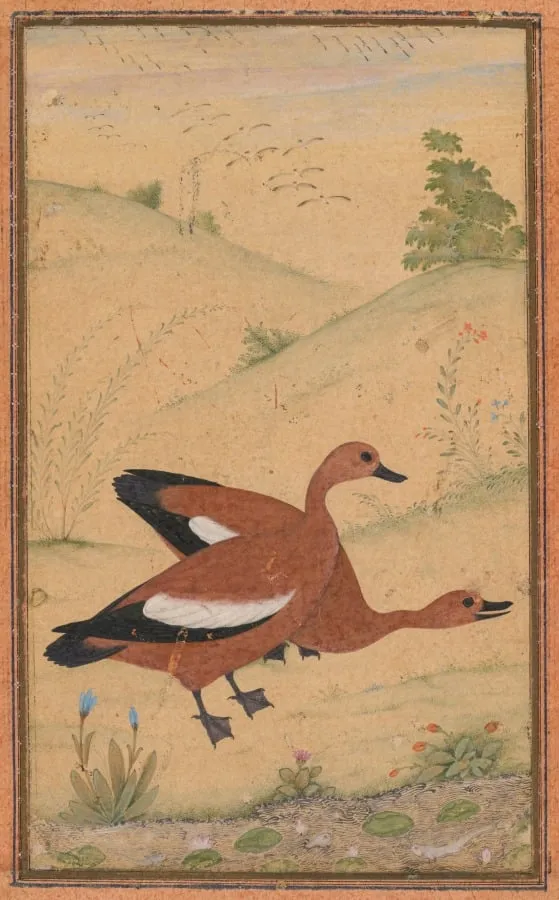
A pair of Brahminy ducks is an unspecified painting by the Mughal Painting artist Unknown. It dates from 1804 and is held in the collection of the Cleveland Museum of Art. This 16th-century Mughal painting depicts two ruddy shelducks, commonly called Brahminy ducks, rendered with precise observation.
About this work
This painting comes from the Mughal court in 16th-century India, where artists often worked from real animals kept in palace gardens.
Two ducks stand side by side on a plain background, their orange feathers and white wing patches painted with tiny, careful strokes.
This painting comes from the Mughal court in 16th-century India, where artists often worked from real animals kept in palace gardens. The ducks’ long legs and short bills are shown exactly as they appear in life, not from memory or imagination.
To see more paintings like this, look up 16th century.
Overview
This 16th-century Mughal painting depicts two ruddy shelducks, commonly called Brahminy ducks, rendered with precise observation. The birds stand side by side against an unadorned background, their forms isolated to emphasize anatomical accuracy. The work reflects the Mughal court’s interest in natural history, where artists documented live specimens kept in imperial gardens rather than relying on conventional or symbolic representations.
Subject & Meaning
The ducks are portrayed without narrative or allegorical context, focusing instead on biological fidelity. Their orange plumage and distinct white wing markings are rendered with clinical clarity, suggesting the intent was not symbolic but documentary. This approach aligns with Mughal imperial projects that sought to catalog the natural world as a reflection of ordered knowledge and imperial control over nature.
Technique & Style
The artist applied fine, controlled brushwork to capture individual feathers and subtle tonal shifts in the ducks’ plumage. The absence of landscape or decorative elements directs attention entirely to form and texture. This method—meticulous, incremental, and grounded in direct observation—distinguishes Mughal naturalist painting from more stylized traditions of the period.
History & Provenance
Created in the Mughal imperial atelier during the late 1500s, the painting likely originated as part of a larger zoological manuscript or album. Such works were commissioned by emperors like Akbar, who encouraged systematic study of flora and fauna. The ducks may have been observed in the palace gardens of Agra or Fatehpur Sikri, where exotic waterfowl were maintained for study and display.
Context
Mughal artists operated within a culture that valued empirical observation, influenced by Persian, Indian, and later European traditions of natural illustration. Unlike earlier Indian painting, which often favored symbolic representation, Mughal naturalism prioritized lifelike accuracy. This shift coincided with broader courtly interests in science, botany, and zoology as expressions of sovereign wisdom.
Legacy
These detailed avian studies contributed to a lasting tradition of natural history illustration in South Asia. While later Mughal art evolved toward more decorative and narrative styles, early works like this one preserved a moment of scientific curiosity. They remain valuable records of species as they appeared in the Indian subcontinent during the 16th century, offering insight into both artistic practice and ecological history.
Artist & collection

 Domestic Scene
 Giacomo and Cardinal Marco, investing Andrea, Abbot of San Zeno, with his Benefice
 The Nymph of Fontainebleau
 Portrait of a Woman
 Madonna and Child with Saints in the Enclosed Garden
 Venus and Minerva
 Family Group of Four on Sofa
 Wall painting from Room H of the Villa of P. Fannius Synistor at Boscoreale
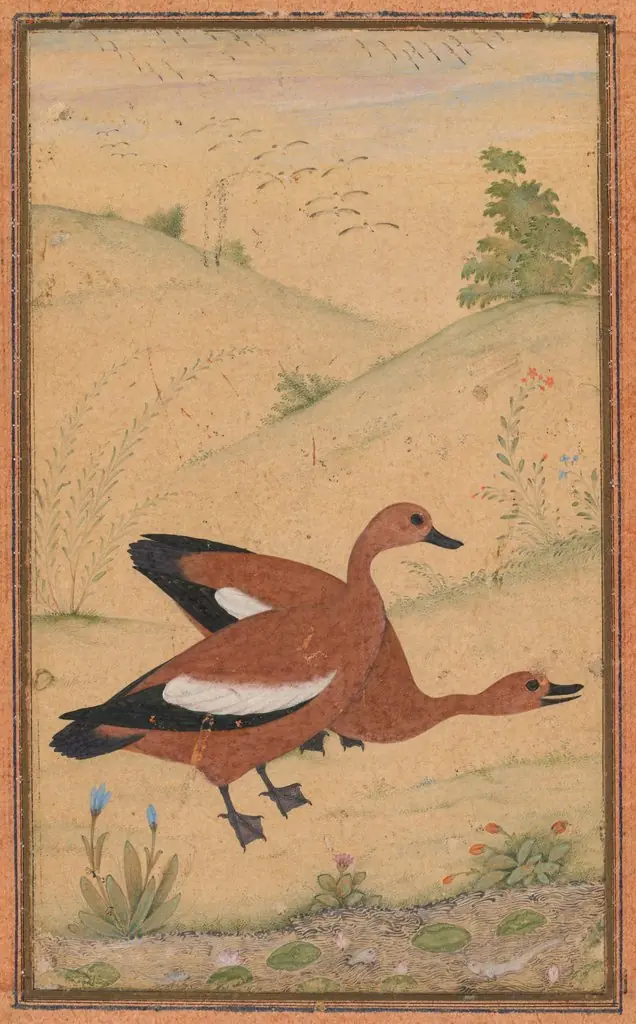 A pair of Brahminy ducks
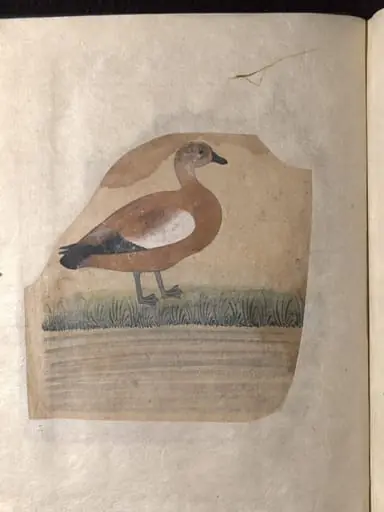 Depictions of a White wagtail and a Brahminy duck of Northern India
 Rooster
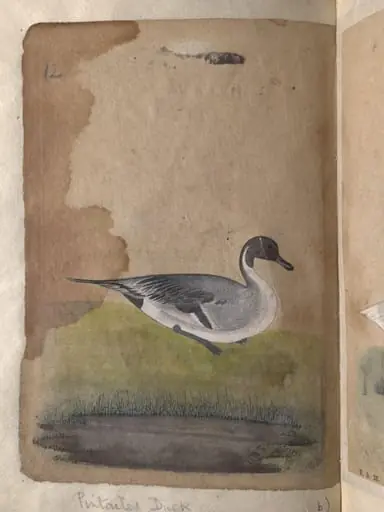 Depictions of a Gadwall duck and Pintailed duck of Northern India
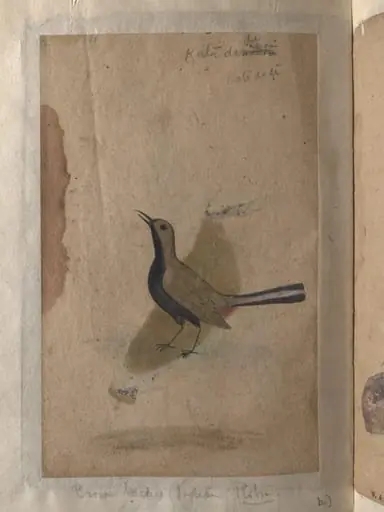 Depictions of a India pitta and Brown-backed Indian robin of Northern India
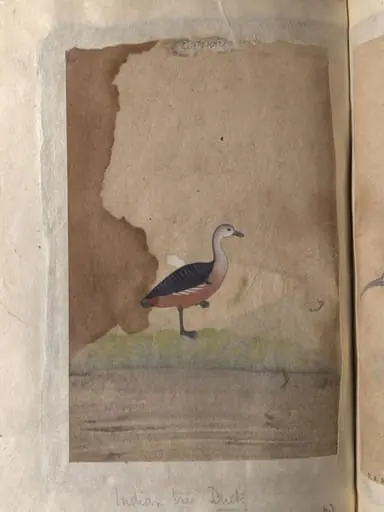 Depictions of a spot-bill duck and an Indian tree duck of Northern India