Artwork
Depictions of a spot-bill duck and an Indian tree duck of Northern India
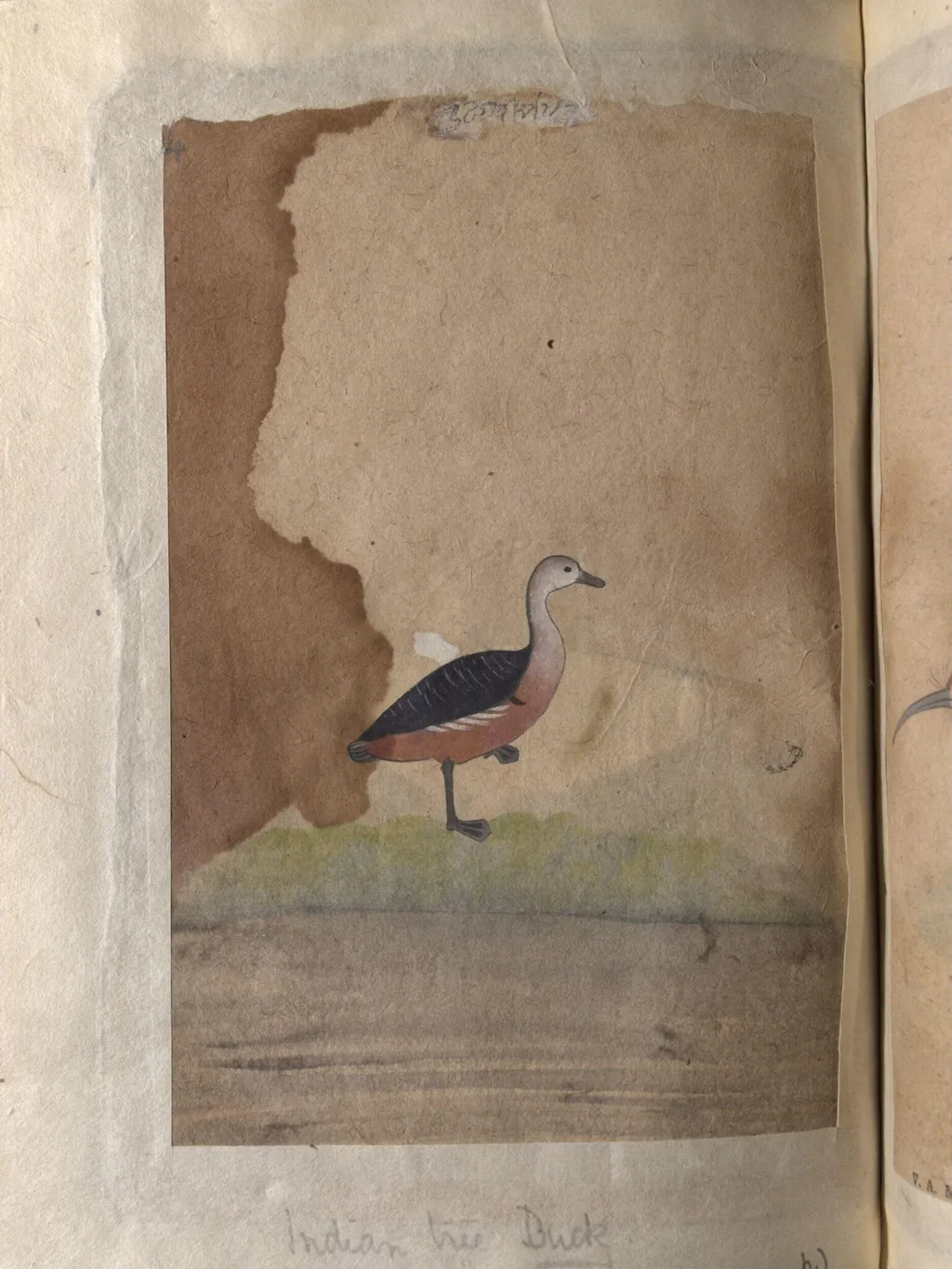
Depictions of a spot-bill duck and an Indian tree duck of Northern India is a paint painting by the Patna School of Painting artist Unknown. It dates from 1820 and is held in the collection of the Victoria and Albert Museum. Two small watercolour studies on aged, stained paper occupy opposite sides of a single album leaf.
About this work
Overview
Two small watercolour studies on aged, stained paper occupy opposite sides of a single album leaf. One depicts a spot‑bill duck, the other an Indian tree duck, both species native to northern India. The works are dated to 1820 and were created by an unknown hand.
Subject & Meaning
Each illustration presents a solitary duck standing on grassy ground near water. The bird is rendered with a white head, dark neck, and vivid orange legs, set against a muted brown background with a faint blue suggestion of water at the base. Labels beneath identify the subjects, with the Indian tree duck noted as “Indian the Duck.”
Technique & Style
Executed in watercolor, the paintings employ a limited palette and loose washes that convey texture of plumage and foliage. The paper’s stained, torn condition reveals the work’s age, while the faint background tones suggest a modest, naturalistic approach typical of early nineteenth‑century field sketches.
History & Provenance
The studies were produced in 1820, though the artist remains unidentified. In 1929 they entered the collection of the Victoria and Albert Museum as a donation from Robert Scott Greenshields, a former officer of the Indian Civil Service who served in Bengal and Assam between 1879 and 1910.
Context
During the early nineteenth century, British officials and naturalists in India frequently commissioned or created watercolours of local fauna for scientific and documentary purposes. These duck studies fit within that tradition, providing visual records of species encountered in the northern Indian wetlands.
Artist & collection

 Domestic Scene
 Giacomo and Cardinal Marco, investing Andrea, Abbot of San Zeno, with his Benefice
 The Nymph of Fontainebleau
 Portrait of a Woman
 Madonna and Child with Saints in the Enclosed Garden
 Venus and Minerva
 Family Group of Four on Sofa
 Wall painting from Room H of the Villa of P. Fannius Synistor at Boscoreale
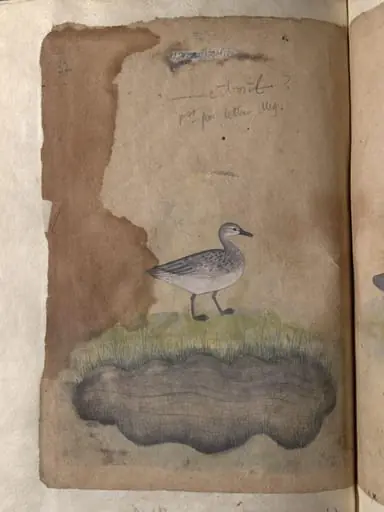 Depictions of an Indian darter and Duck (unidentified) of Northern India
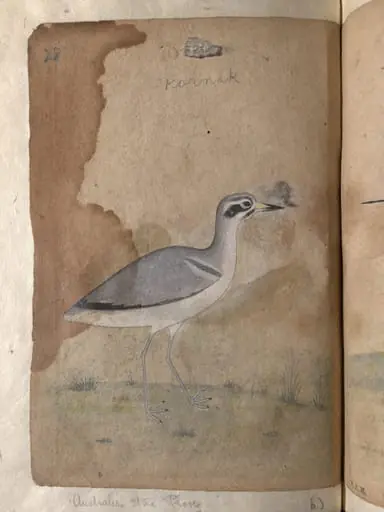 Depictions of a Mallard and Australian black-fronted plover of Northern India
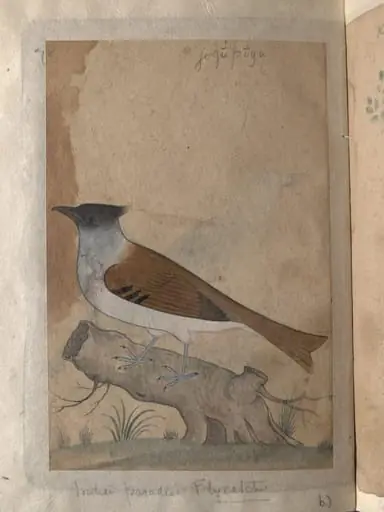 Depictions of Indian house crow and a Indian paradise flycatcher of Northern India
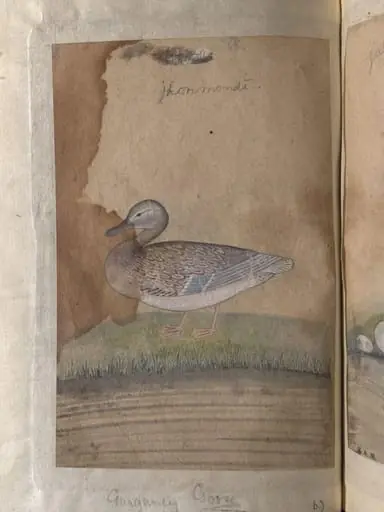 Depictions of a sandpiper and Garganey goose of Northern India
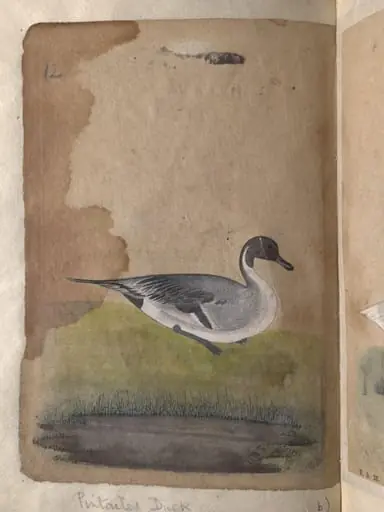 Depictions of a Gadwall duck and Pintailed duck of Northern India
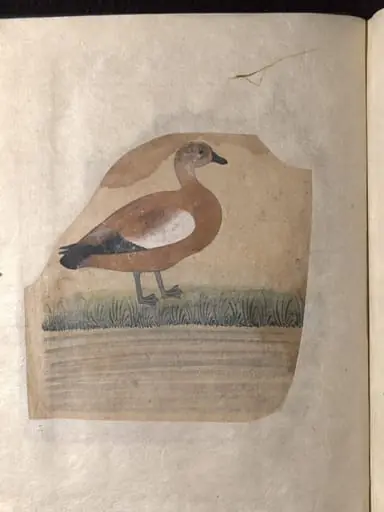 Depictions of a White wagtail and a Brahminy duck of Northern India
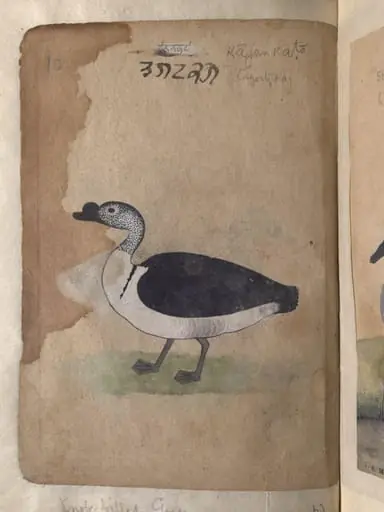 Depictions of a Grey lag goose and Knob-billed goose, of Northern India
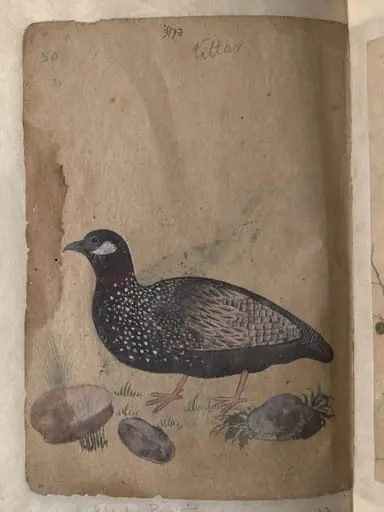 Depictions of Common (or grey) quail and a Black partridge of Northern India
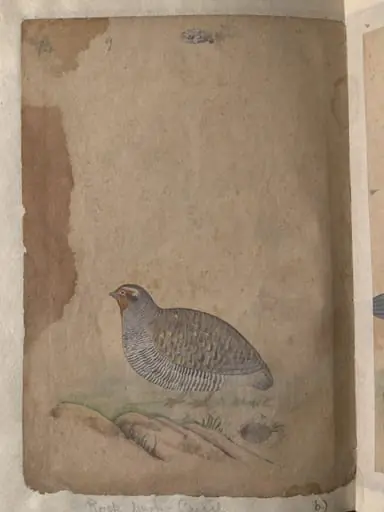 Depictions of a (unfinished drawing) and a Rock bush-quail of Northern India
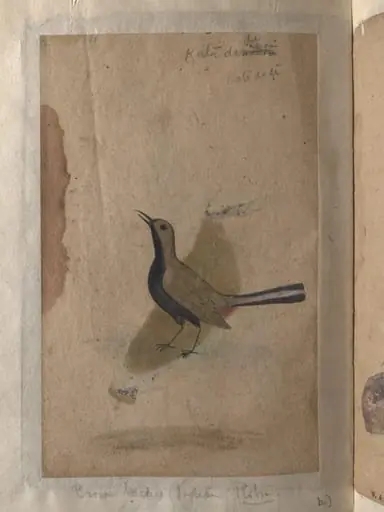 Depictions of a India pitta and Brown-backed Indian robin of Northern India
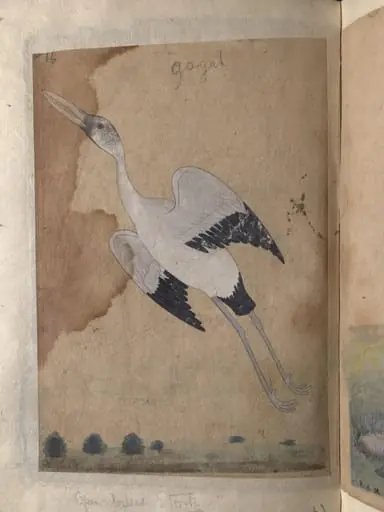 Depictions of a Spur-winged plover and Open-billed stork of Northern India,
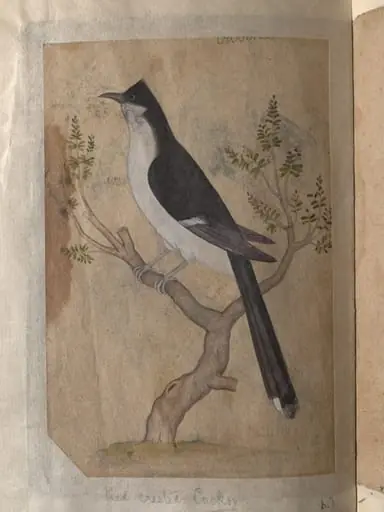 Depictions of a Indian fruit-bat and Pied crested cuckoo of Northern India