Artwork
Depictions of a White wagtail and a Brahminy duck of Northern India
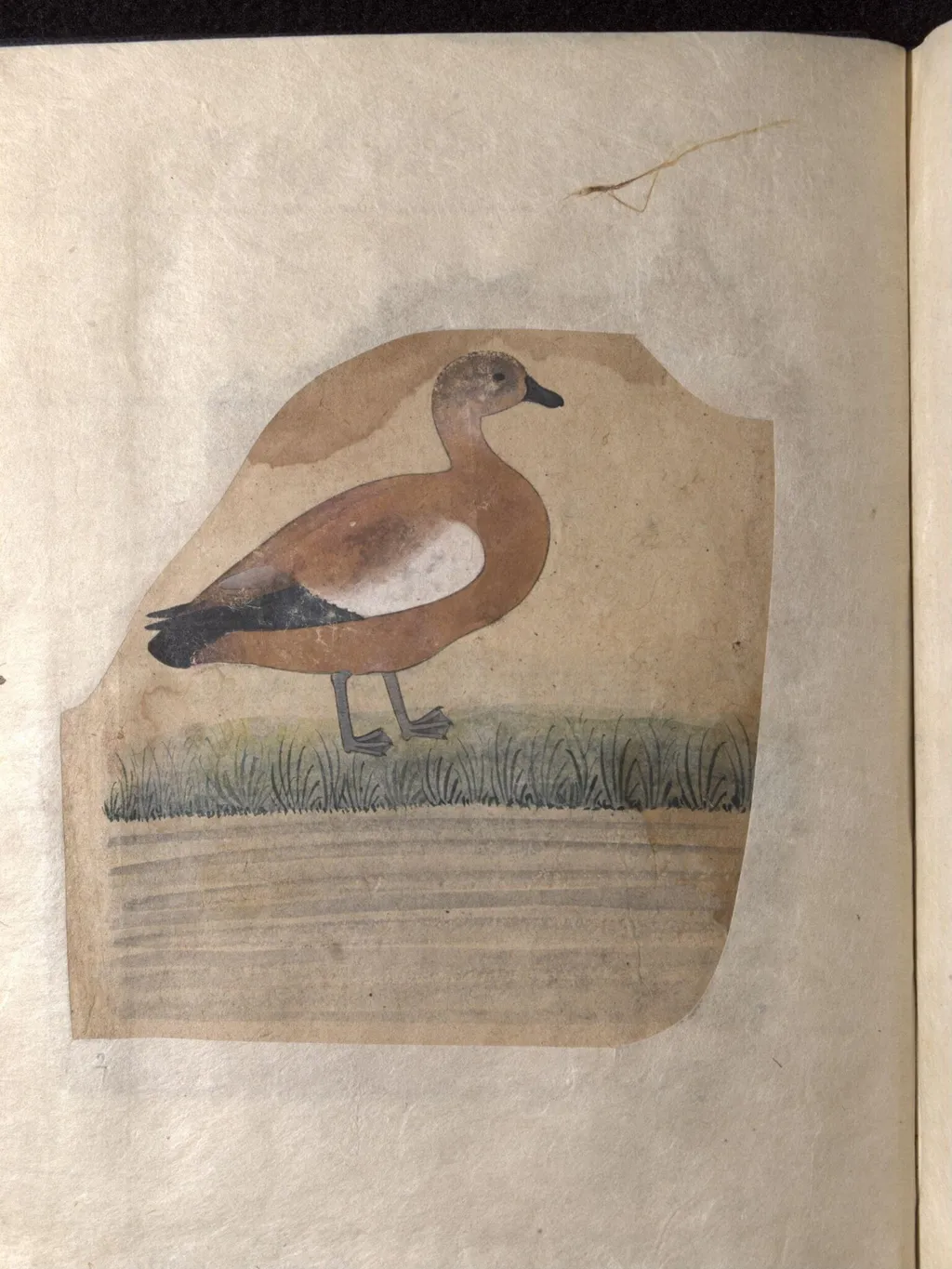
Depictions of a White wagtail and a Brahminy duck of Northern India is a paint painting by the Patna School of Painting artist Unknown. It dates from 1820 and is held in the collection of the Victoria and Albert Museum.
About this work
Overview
This folio, created around 1820 in Northern India, presents two bird studies on a single sheet of paper that has been repaired and mounted onto an album page. The surfaces show signs of age—tears and stains—indicating use and handling before preservation. Each bird is depicted in isolation, framed by an unadorned background, emphasizing observational clarity over decorative context.
Subject & Meaning
The white wagtail and the Brahminy duck are rendered as distinct natural specimens, likely intended for scientific or curatorial documentation rather than symbolic narrative. Their placement side by side suggests a comparative approach, common in colonial-era natural history records. Neither bird is idealized; their forms are presented with attention to anatomical accuracy and plumage variation.
Technique & Style
Fine brushwork outlines individual feathers without excessive detail, balancing precision with atmospheric restraint.
The artist employed delicate watercolor washes to capture subtle feather textures and tonal gradations. Light pigments define the wagtail’s pale plumage, while deeper, earthy tones model the duck’s chestnut breast. Fine brushwork outlines individual feathers without excessive detail, balancing precision with atmospheric restraint. The absence of landscape or context directs focus entirely to the birds’ form.
History & Provenance
The folio was acquired by Robert Scott Greenshields during his service in the Indian Civil Service and later donated to a public collection in 1929. Its journey from a working study to a preserved artifact reflects the broader collection practices of British officials in India, who often assembled natural history materials as part of cultural and scientific curiosity.
Context
Created during a period when British administrators and naturalists systematically documented Indian flora and fauna, this work aligns with a tradition of regional naturalist painting. Such studies, often produced by local artists under colonial patronage, served both scientific and aesthetic purposes, bridging indigenous artistic methods with European taxonomic interests.
Legacy
The folio remains part of a larger corpus of South Asian natural history illustrations, valued for their quiet precision and historical record. It contributes to ongoing scholarship on cross-cultural scientific visualization, illustrating how local artistic skills were mobilized to meet colonial documentation needs without overt stylistic assimilation.
Artist & collection

 Domestic Scene
 Giacomo and Cardinal Marco, investing Andrea, Abbot of San Zeno, with his Benefice
 The Nymph of Fontainebleau
 Portrait of a Woman
 Madonna and Child with Saints in the Enclosed Garden
 Venus and Minerva
 Family Group of Four on Sofa
 Wall painting from Room H of the Villa of P. Fannius Synistor at Boscoreale
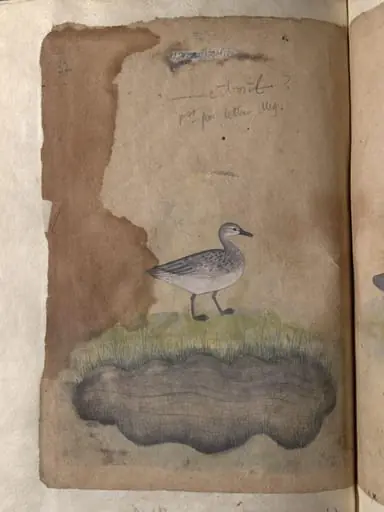 Depictions of an Indian darter and Duck (unidentified) of Northern India
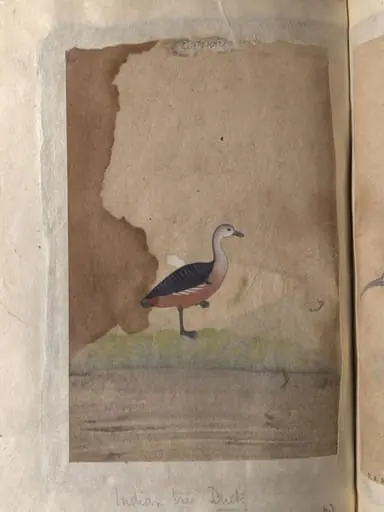 Depictions of a spot-bill duck and an Indian tree duck of Northern India
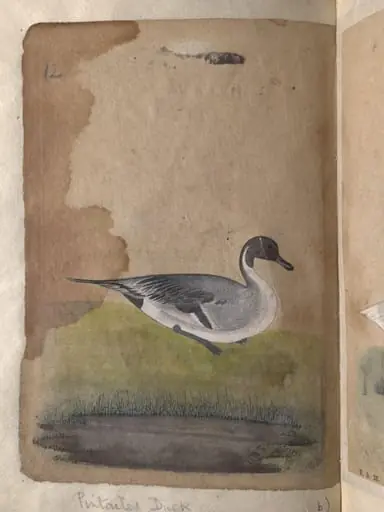 Depictions of a Gadwall duck and Pintailed duck of Northern India
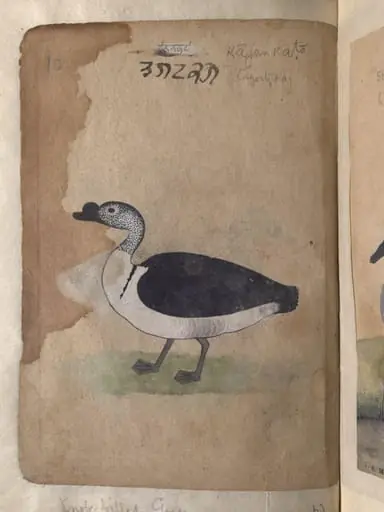 Depictions of a Grey lag goose and Knob-billed goose, of Northern India
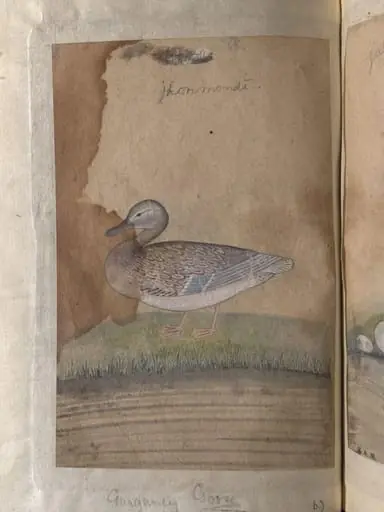 Depictions of a sandpiper and Garganey goose of Northern India
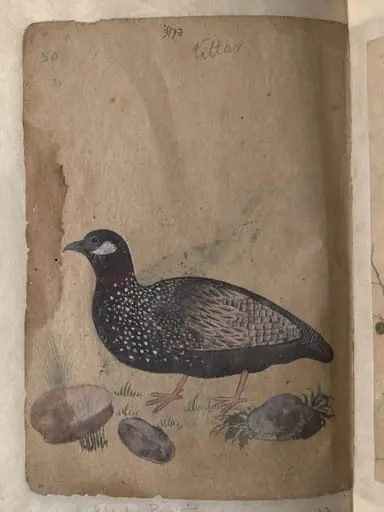 Depictions of Common (or grey) quail and a Black partridge of Northern India
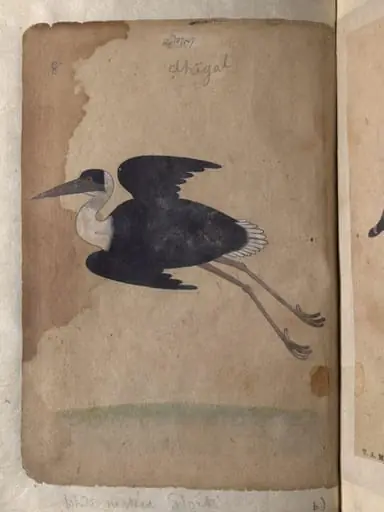 Depictions of a Demoiselle crane and a White-necked stork, of Northern India
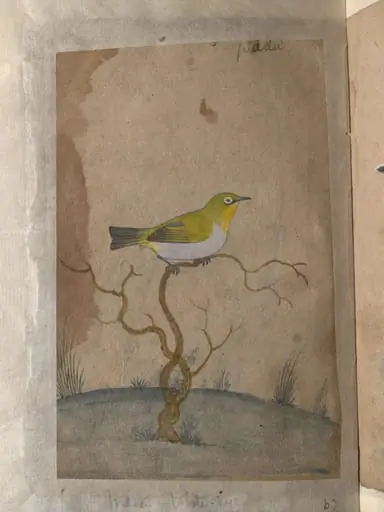 Depictions of a Indian spotted owlet and a Indian white-eye of Northern India
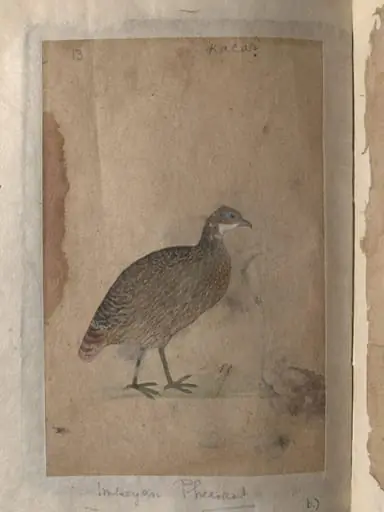 Depictions of Chukor partridge and Impeyan pheasant of Northern India
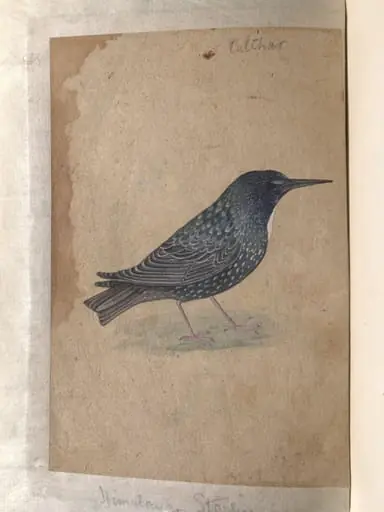 Depictions of white-cheeked bulbul and a Himalayan starling of Northern India
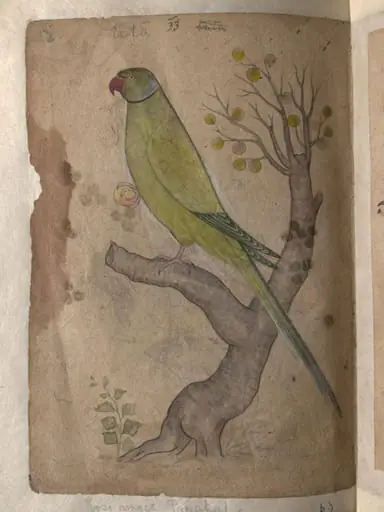 Depictions of Striated scops owl and Rose-ringed parakeet of Northern India
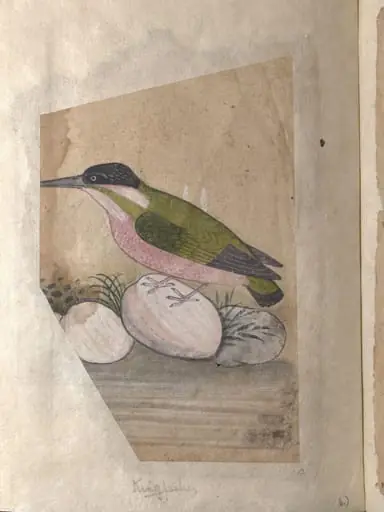 Depictions of a Plumbeous redstart and a Kingfisher of Northern India