Artwork
A procession
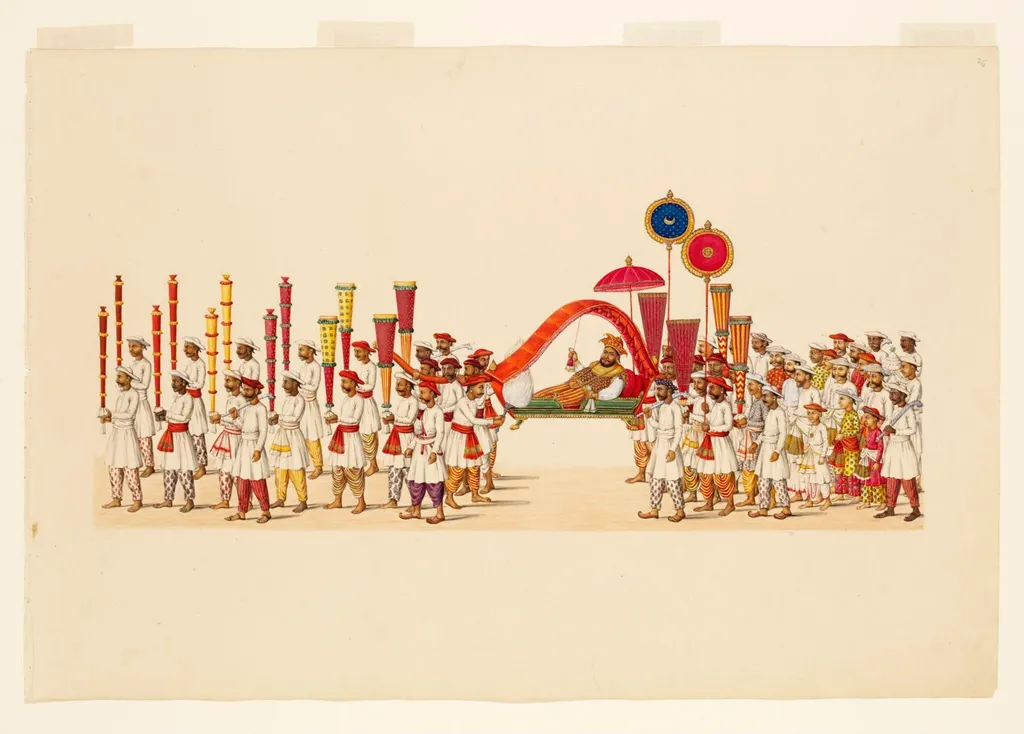
A procession is a paint painting by the Romanticist artist Unknown. It dates from 1830 and is held in the collection of the Victoria and Albert Museum. This painting is one of thirty folios in a manuscript documenting social and cultural life in late 18th-century Sri Lanka.
About this work
Overview
It captures a ceremonial procession centered on a reclining Sinhalese Mudaliyar, a local noble, transported in an ornate palanquin.
This painting is one of thirty folios in a manuscript documenting social and cultural life in late 18th-century Sri Lanka. It captures a ceremonial procession centered on a reclining Sinhalese Mudaliyar, a local noble, transported in an ornate palanquin. The scene is part of a broader ethnographic collection that records caste, occupation, and ritual practices, likely commissioned by British colonial officials to catalog local customs.
Subject & Meaning
The procession honors a Mudaliyar, a high-ranking official in the Kandyan kingdom, whose elevated position is signaled by his placement in a gilded palanquin. He is flanked by attendants bearing ceremonial standards, fans, and staffs, symbols of authority. The presence of multiple flag-bearers and chobdars—staff-wielding guards—emphasizes the ritualized nature of his movement, reflecting both status and the structured hierarchy of Kandyan court life.
Technique & Style
Rendered in watercolor on paper, the painting employs vivid pigments and fine linear detail to distinguish textures and garments. Figures are arranged in a shallow, rhythmic procession, with attention to patterned textiles and decorative elements on the palanquin. The style blends indigenous Sinhalese conventions with European-influenced naturalism, likely shaped by colonial artistic demands for clarity and documentation.
History & Provenance
The manuscript was acquired by the British collector G. Goolden, who inherited it from his cousin Richard Goolden, a colonial administrator in Sri Lanka. Its journey from Kandy to a British private collection reflects the movement of cultural artifacts during the colonial era. The volume’s survival as a coherent set is rare, offering a preserved record of Kandyan ceremonial life at a time of political transition.
Context
Created around the 1790s, the painting emerges during British efforts to consolidate control over the Kandyan Kingdom. Such illustrated volumes served administrative and ethnographic purposes, aiming to systematize local knowledge. The procession depicted may reflect an actual ceremonial event, recorded to affirm colonial understanding of indigenous power structures while subtly documenting their persistence under foreign rule.
Legacy
The folio remains a key visual source for understanding Kandyan elite culture in the late 18th century. Its detailed depiction of dress, regalia, and ritual order provides scholars with material for reconstructing social hierarchies and ceremonial practices. Though produced under colonial patronage, it preserves indigenous visual traditions that might otherwise have been lost amid political upheaval.
Artist & collection

 Domestic Scene
 Giacomo and Cardinal Marco, investing Andrea, Abbot of San Zeno, with his Benefice
 The Nymph of Fontainebleau
 Portrait of a Woman
 Madonna and Child with Saints in the Enclosed Garden
 Venus and Minerva
 Family Group of Four on Sofa
 Wall painting from Room H of the Villa of P. Fannius Synistor at Boscoreale
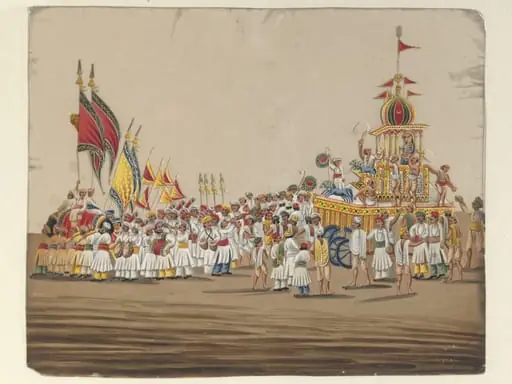 One of two drawings depicting procession scenes in Patna.
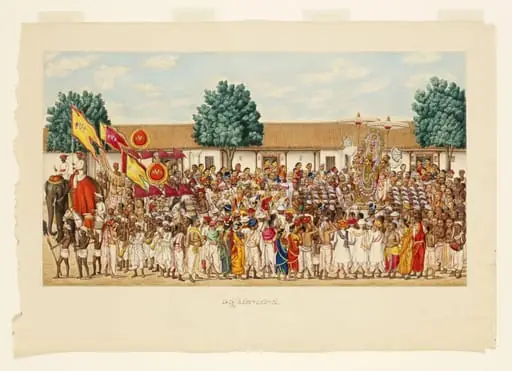 Vishnu on Garuda
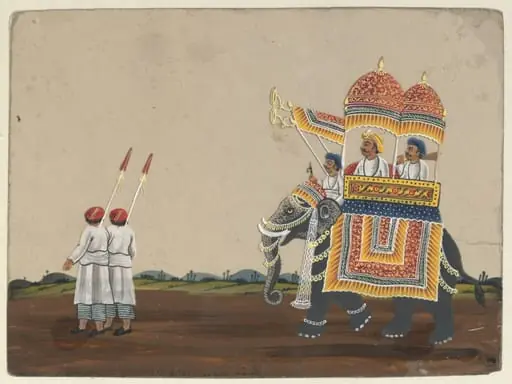 An elephant with a howdah
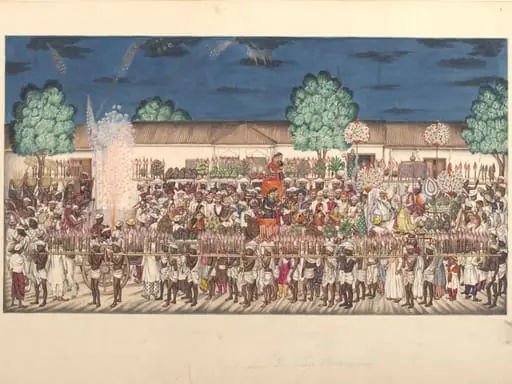 Northern Indian marriage procession
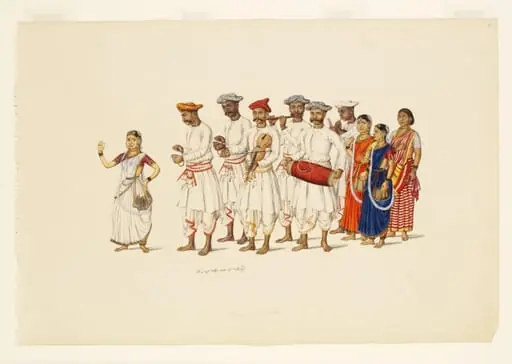 Nautch party
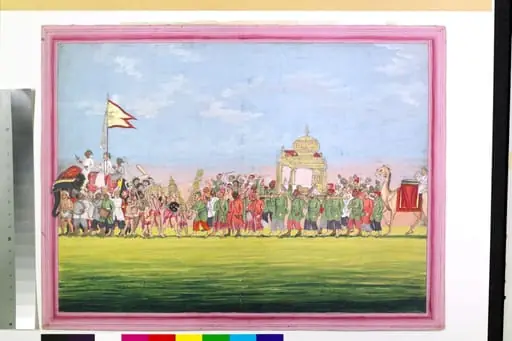 Muslim festival scene
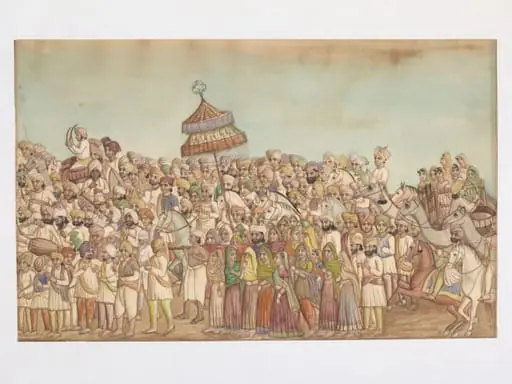 Sikh marriage procession
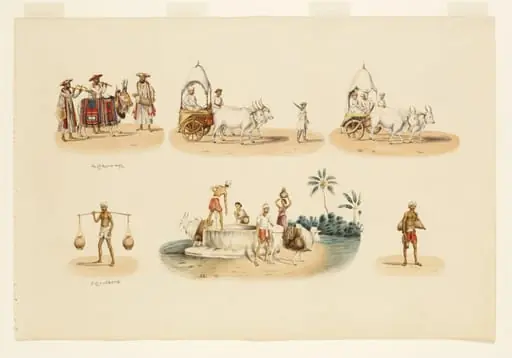 Three modes of transport and three methods of obtaining water
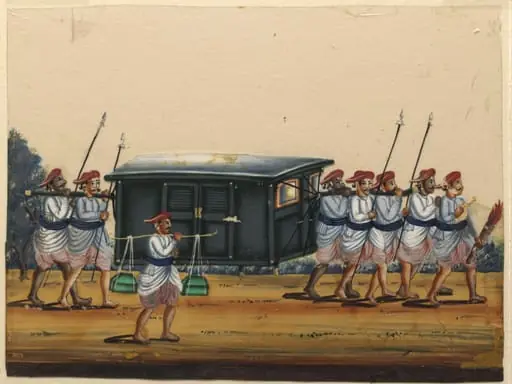 A palanquin with six carriers
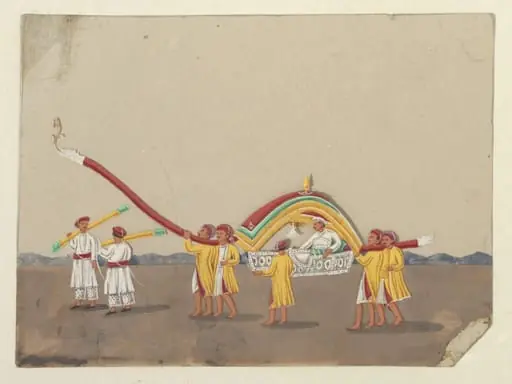 One of eight paintings illustrating modes of transport.