Artwork
Vishnu on Garuda
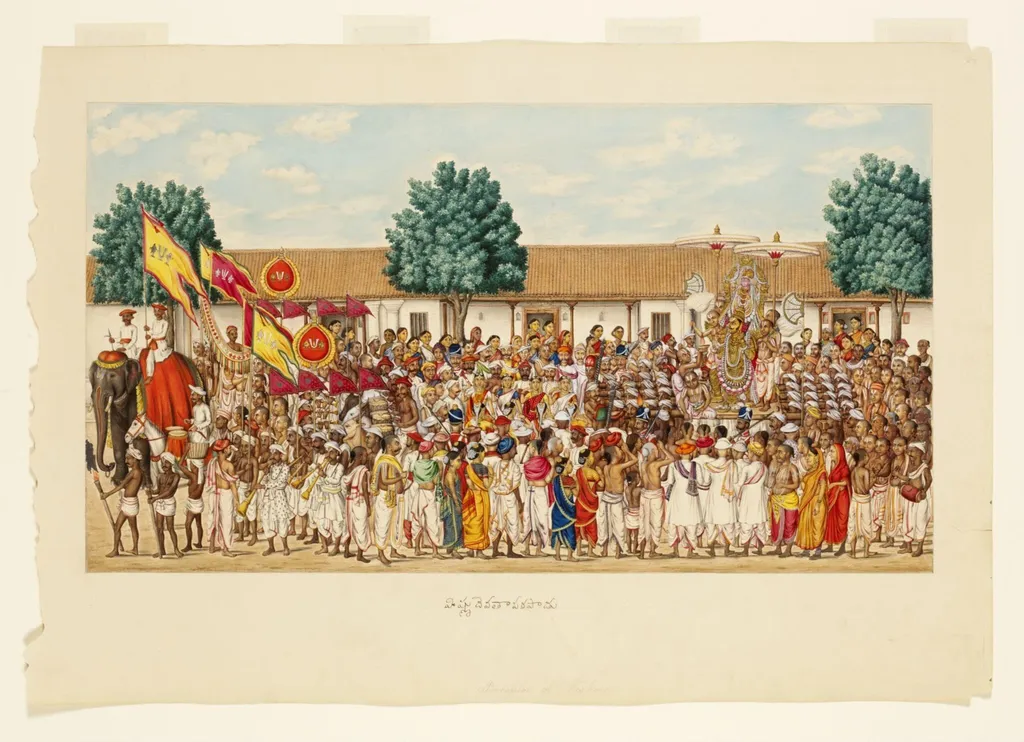
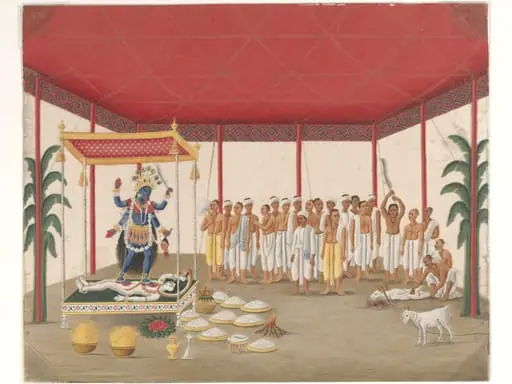
Vishnu on Garuda is a paint painting by the Romanticist artist Unknown. It dates from 1830 and is held in the collection of the Victoria and Albert Museum. This painting is one of thirty folios from a manuscript documenting Indian social and ceremonial life.
About this work
Overview
The work belongs to a broader tradition of illustrated manuscripts that recorded regional customs during the late Mughal and early colonial periods.
This painting is one of thirty folios from a manuscript documenting Indian social and ceremonial life. It depicts a religious procession featuring Vishnu seated on Garuda, a divine bird-human hybrid, carried on a litter by devotees. The scene includes musicians, ascetics, and villagers, all rendered with attention to costume and gesture. The work belongs to a broader tradition of illustrated manuscripts that recorded regional customs during the late Mughal and early colonial periods.
Subject & Meaning
The image illustrates Vishnu, the preserver deity, mounted on Garuda, his celestial vehicle, as part of a public procession. Such processions were central to temple rituals, reinforcing divine presence among the community. The crowd—comprising devotees, musicians, and ascetics—reflects the social fabric of the time, blending religious devotion with civic participation. The staff held by Vishnu symbolizes authority, while Garuda’s hybrid form signifies the union of earthly and divine realms.
Technique & Style
Executed in opaque watercolor on paper, the painting employs fine brushwork to render textures in fabric, feathers, and architecture. Figures are arranged in layered planes, with detailed turbans, jewelry, and banners adding depth. The sky, rendered in soft washes of blue with cloud forms, contrasts with the richly colored foreground. The style reflects a synthesis of Mughal precision and regional Rajput traditions, emphasizing narrative clarity over idealized form.
History & Provenance
The folio was part of a larger manuscript compiled in northern India, likely in the early 19th century. It passed through private hands, eventually entering the collection of Richard Goolden, a British colonial official. After his death, it was inherited by his cousin G. Goolden, who later sold it to a public institution. The manuscript’s journey reflects the movement of Indian artworks into European collections during the colonial era.
Context
This painting emerged during a period when Indian artists were documenting local customs under British patronage. Manuscripts like this one served ethnographic purposes, capturing caste roles, festivals, and daily life for colonial administrators and curious collectors. While influenced by earlier Mughal styles, the work retains regional characteristics, particularly in costume and composition, distinguishing it from purely courtly traditions.
Legacy
The folio contributes to a small but significant corpus of illustrated manuscripts that preserve pre-colonial social structures. Unlike grand imperial commissions, these works offer intimate glimpses into community rituals. Today, they are studied as historical records rather than purely aesthetic objects, providing insight into how Indian society perceived itself through religious ceremony and visual representation.
Artist & collection

 Domestic Scene
 Giacomo and Cardinal Marco, investing Andrea, Abbot of San Zeno, with his Benefice
 The Nymph of Fontainebleau
 Portrait of a Woman
 Madonna and Child with Saints in the Enclosed Garden
 Venus and Minerva
 Family Group of Four on Sofa
 Wall painting from Room H of the Villa of P. Fannius Synistor at Boscoreale
 Shaivite procession at night
 Northern Indian marriage procession
 Marriage procession
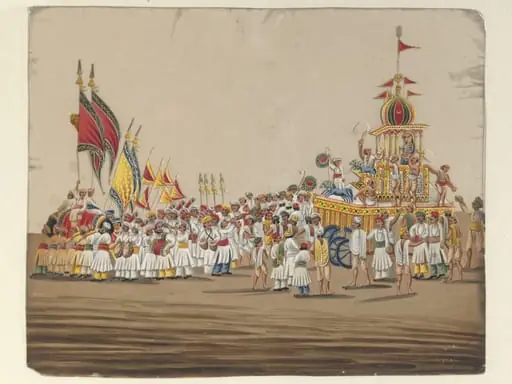 One of two drawings depicting procession scenes in Patna.
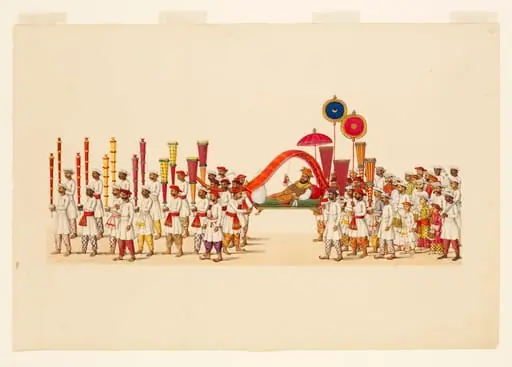 A procession
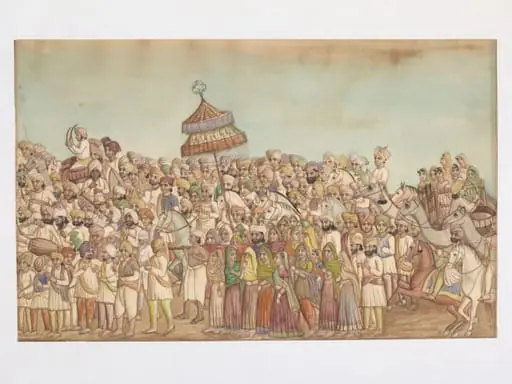 Sikh marriage procession
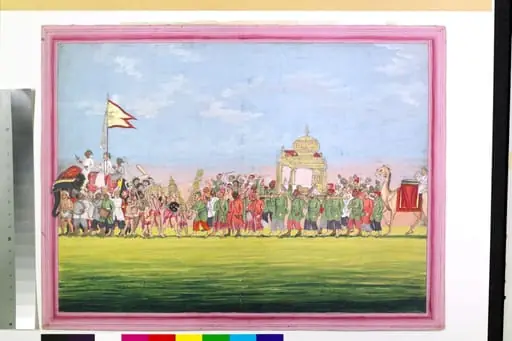 Muslim festival scene
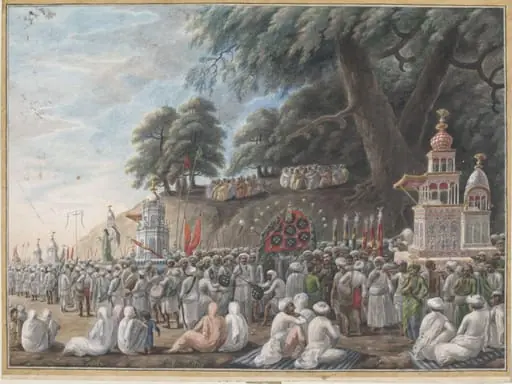 A Muharram scene
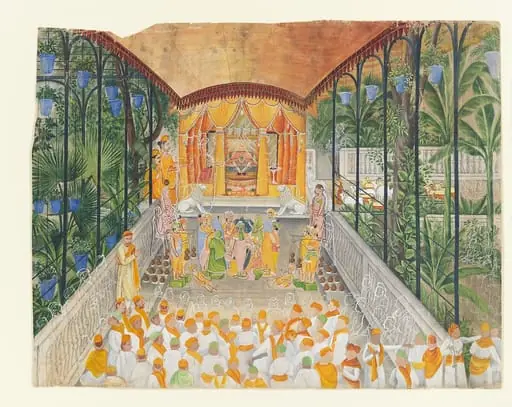 Untitled
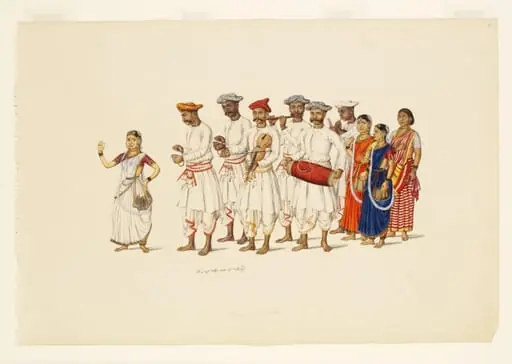 Nautch party
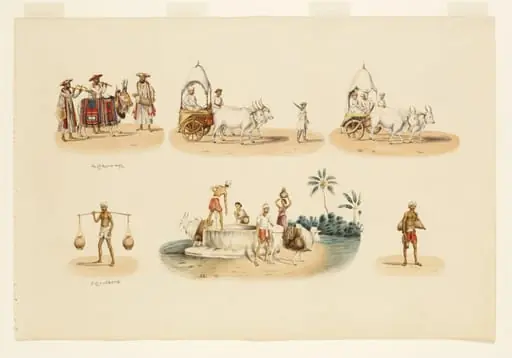 Three modes of transport and three methods of obtaining water
 Kali puja