Artwork
Three modes of transport and three methods of obtaining water
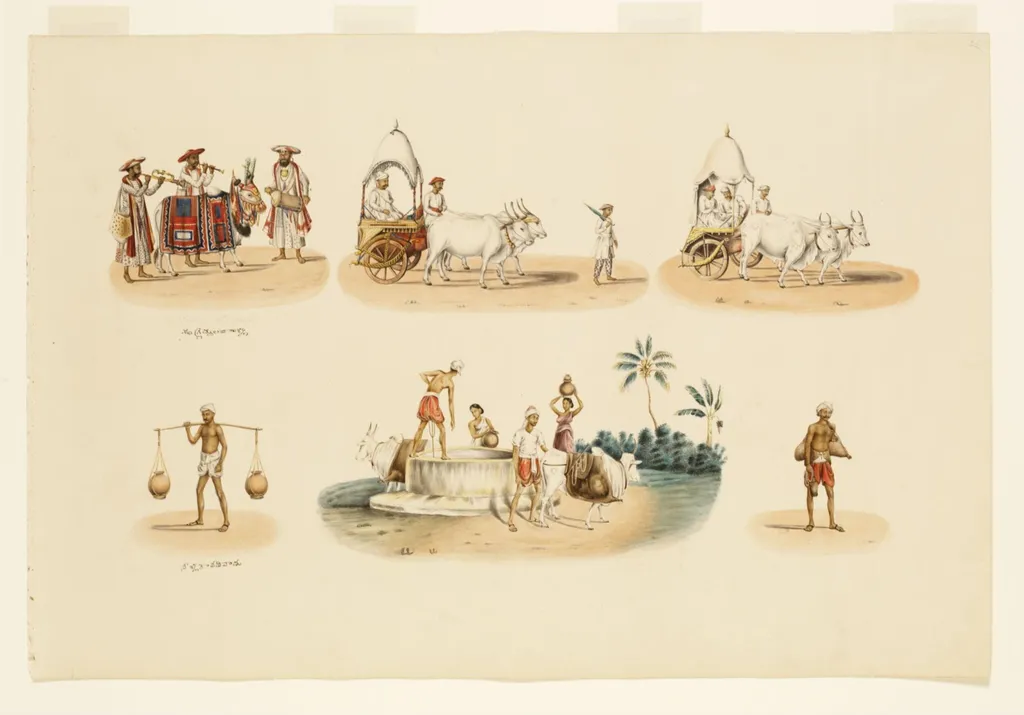
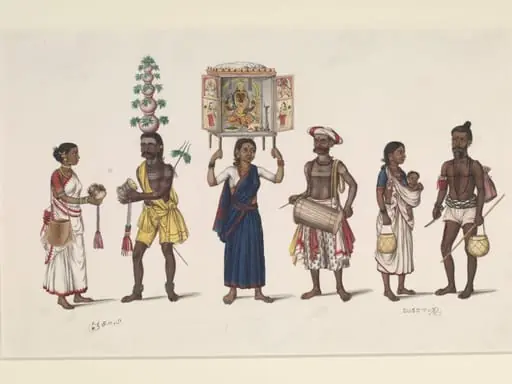
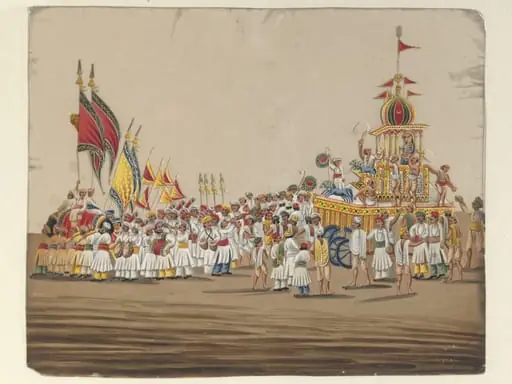
Three modes of transport and three methods of obtaining water is a paint painting by the Romanticist artist Unknown. It dates from 1830 and is held in the collection of the Victoria and Albert Museum. The painting presents a lively procession that illustrates several modes of transport and methods of obtaining water.
About this work
Overview
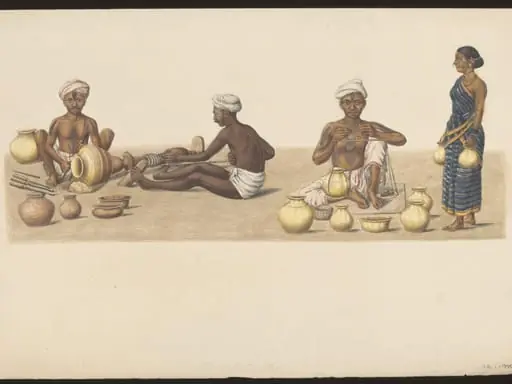
The composition also records various ways water is carried and collected, from shoulder‑borne pots to well‑drawing and water‑selling activities.
The painting presents a lively procession that illustrates several modes of transport and methods of obtaining water. A bullock, richly decorated with appliqué ornaments, leads a group that includes three musicians playing trumpets and a drum, followed by two covered two‑wheel carts drawn by pairs of bullocks. The composition also records various ways water is carried and collected, from shoulder‑borne pots to well‑drawing and water‑selling activities.
Subject & Meaning
The work functions as a visual catalogue of everyday labor, highlighting the interdependence of transport and water procurement in a rural setting. By juxtaposing the procession with scenes of water carriers, well‑drawers, and a water seller, the artist underscores the centrality of these activities to community life and the rhythm of daily routines.
Technique & Style
Rendered in bright, flat colors and simplified forms, the painting employs clear outlines and decorative detailing, especially on the bullock’s trappings and the carts’ canopies. The composition is divided into distinct panels, each focusing on a specific activity, which enhances readability and emphasizes the instructional purpose of the image.
History & Provenance
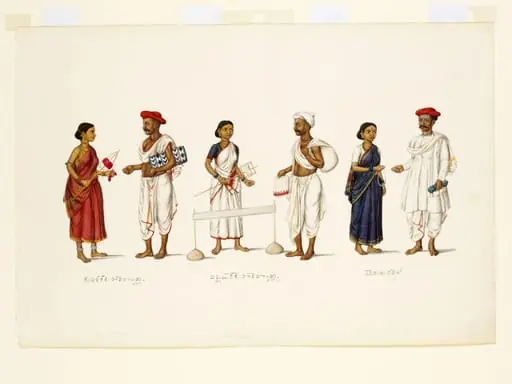
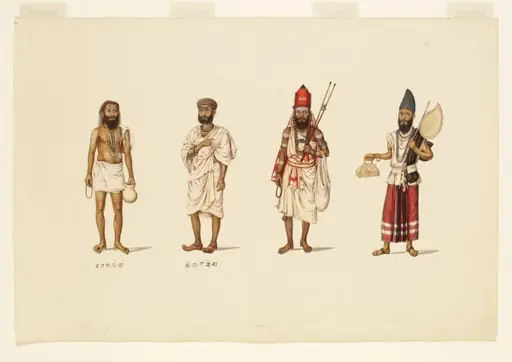
The image forms part of a thirty‑folio manuscript that documents castes, occupations, agricultural practices, and ceremonial processions. Created as an illustrative record, the painting was likely intended for a scholarly or administrative audience interested in cataloguing social and economic functions.
Context
Within the broader manuscript, the scene serves as a visual complement to textual descriptions of transport methods and water‑related tasks. Such illustrated volumes were common in pre‑modern societies for preserving knowledge about the organization of labor and the diversity of communal roles.
Artist & collection

 Domestic Scene
 Giacomo and Cardinal Marco, investing Andrea, Abbot of San Zeno, with his Benefice
 The Nymph of Fontainebleau
 Portrait of a Woman
 Madonna and Child with Saints in the Enclosed Garden
 Venus and Minerva
 Family Group of Four on Sofa
 Wall painting from Room H of the Villa of P. Fannius Synistor at Boscoreale