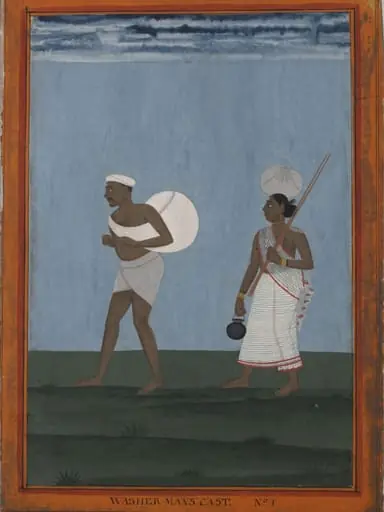
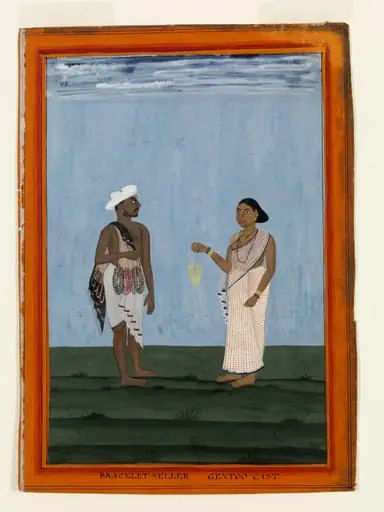
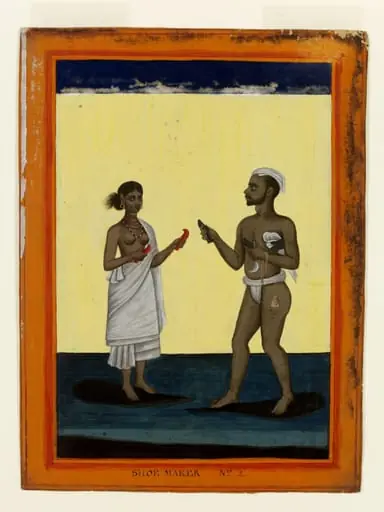
Artwork
A rat-catcher and his wife
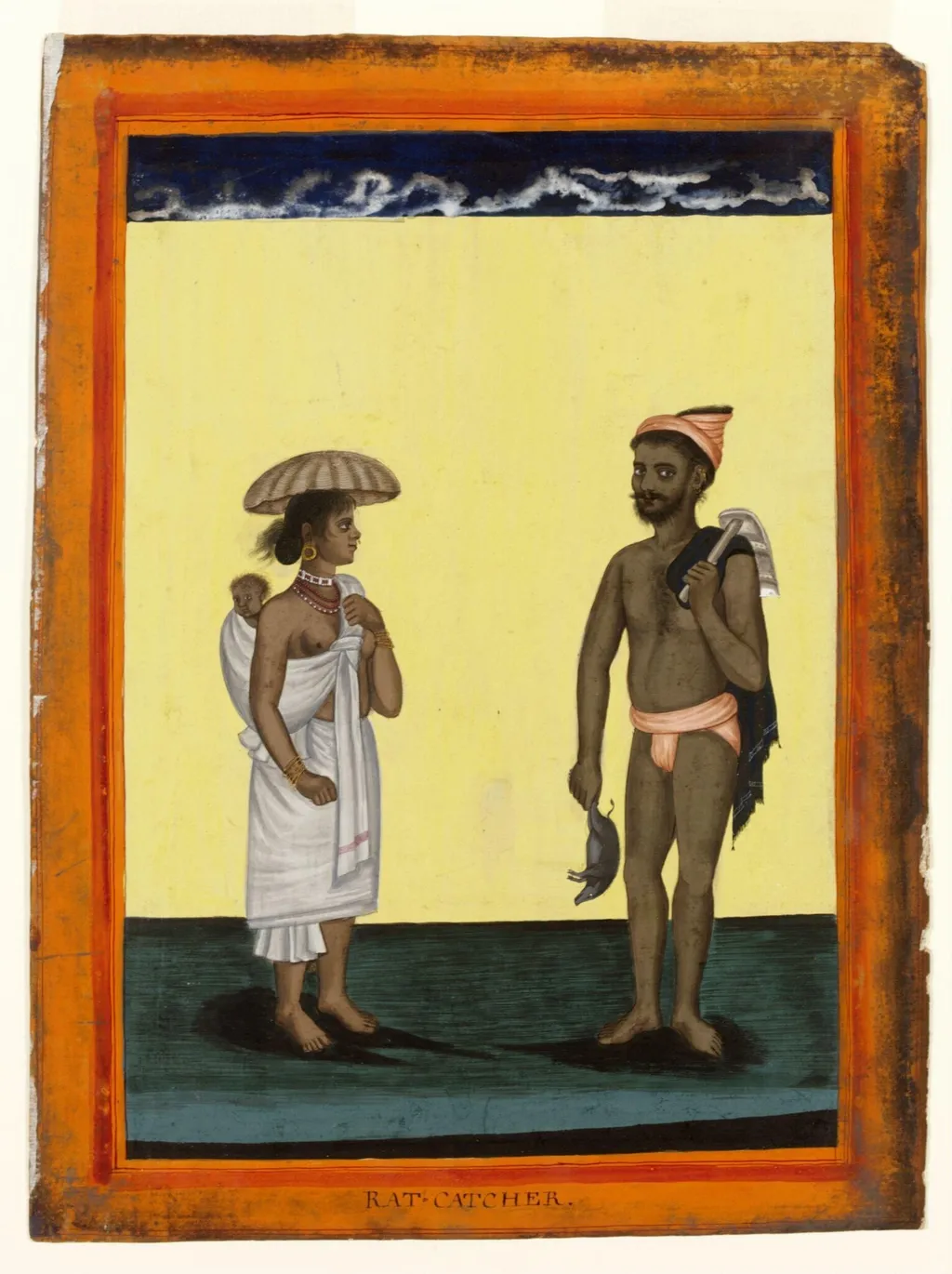
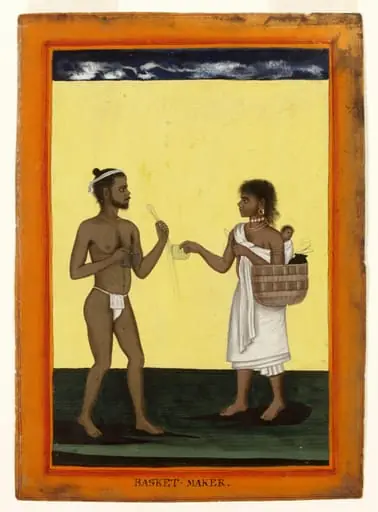
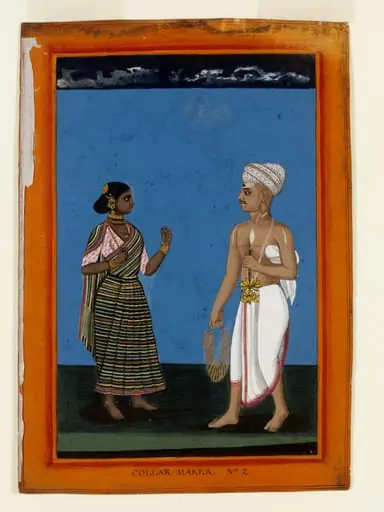
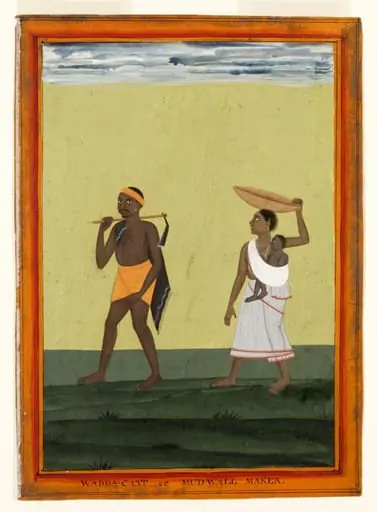
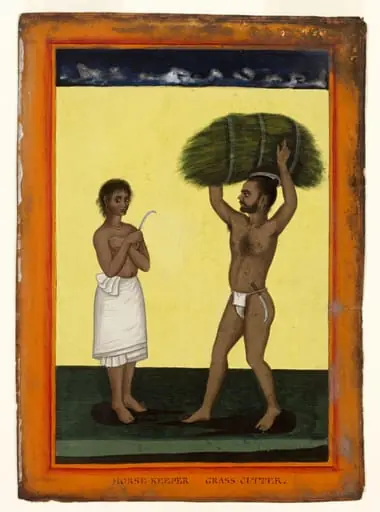
A rat-catcher and his wife is a paint painting by the Rococo painting artist Unknown. It dates from 1770 and is held in the collection of the Victoria and Albert Museum. This small panel depicts a South Indian rat‑catcher alongside his wife, each holding the implements of their work.
About this work
Overview
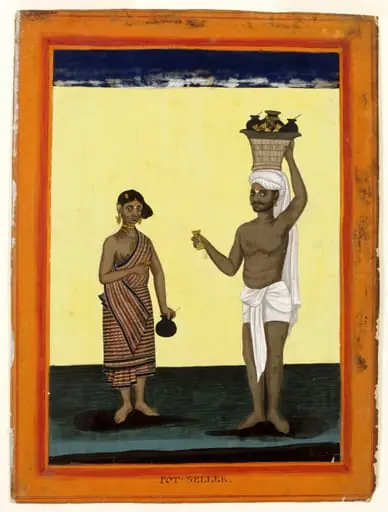
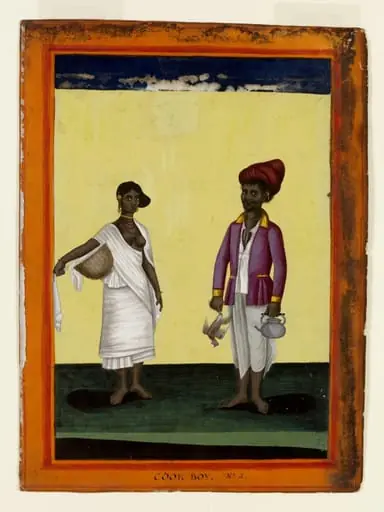
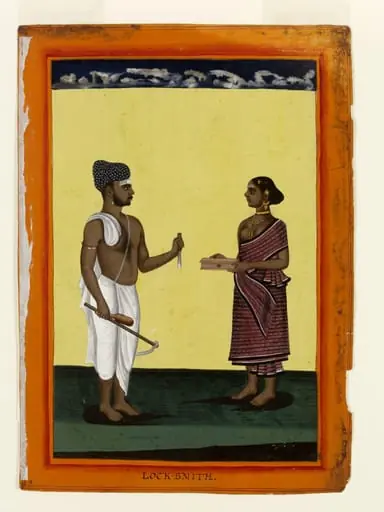
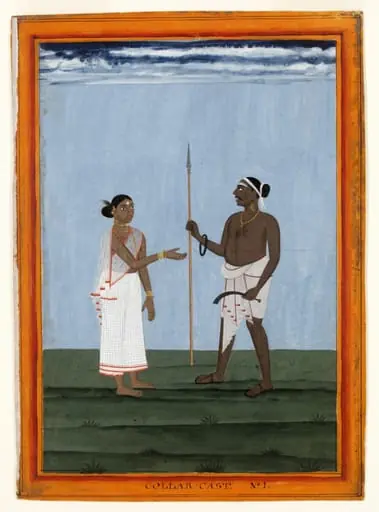
This small panel depicts a South Indian rat‑catcher alongside his wife, each holding the implements of their work. The figures stand on a dark green floor, framed by a red border and a cloud‑like strip at the top. Their expressions are sober, and their clothing is plain, offering a straightforward visual record of a specific occupational caste.
Subject & Meaning
The composition presents the rat‑catcher with a trap and rod, while his spouse holds a basket, emphasizing the collaborative nature of their livelihood. By portraying both partners, the image underscores the family‑based transmission of caste‑linked trades and provides a rare glimpse into the everyday responsibilities of lower‑status workers in historic South India.
Technique & Style
Rendered with heavy, looped shadows at the feet and a chiaroscuro contrast between the dark ground and the illuminated figures, the work employs a limited palette of reds, greens, and a muted background. Variations in line quality and background hue suggest the hand of one of three artists who contributed to the larger series, each distinguished by differing detail and color choices.
History & Provenance
The panel is one of thirty‑six in a series documenting South Indian castes and occupations. All were bound in an album bearing the 1799 watermark "J. Ruse" and a bookplate of Joseph Whatley, inscribed with the Latin motto "Pelle Timorem" (banish fear). The English label on the lower border identifies the depicted caste, linking the work to colonial-era ethnographic collections.
Context
Created during a period of intensified British interest in cataloguing Indian society, the series served both administrative and scholarly purposes. By visually recording occupational groups, the images complemented textual surveys and reinforced contemporary notions of a rigid caste hierarchy, while also preserving visual details of everyday material culture.
Artist & collection

 Domestic Scene
 Giacomo and Cardinal Marco, investing Andrea, Abbot of San Zeno, with his Benefice
 The Nymph of Fontainebleau
 Portrait of a Woman
 Madonna and Child with Saints in the Enclosed Garden
 Venus and Minerva
 Family Group of Four on Sofa
 Wall painting from Room H of the Villa of P. Fannius Synistor at Boscoreale