Artwork
A bracelet-seller and his wife
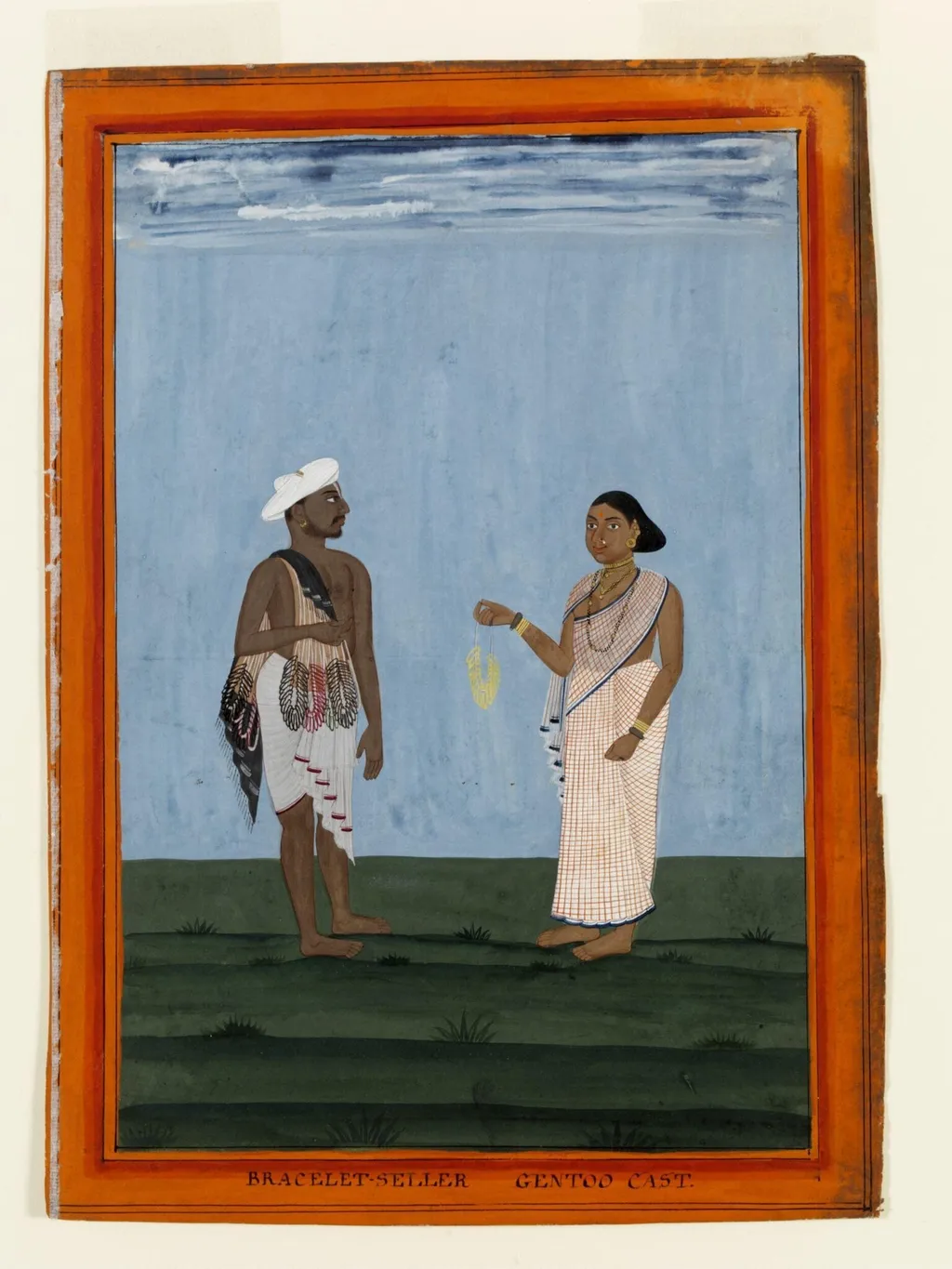
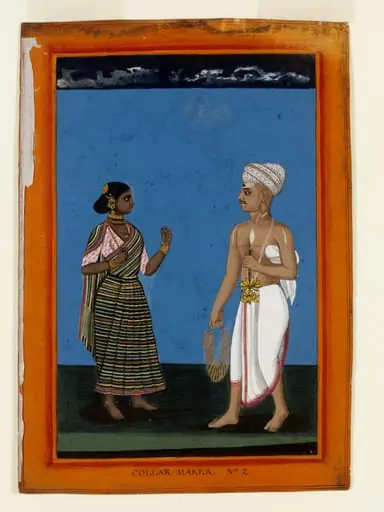
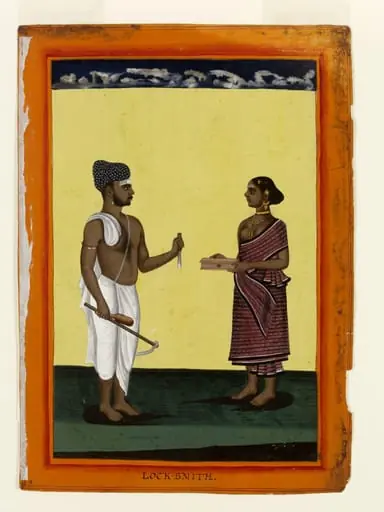
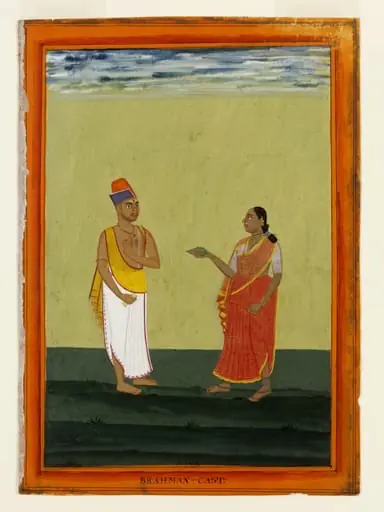
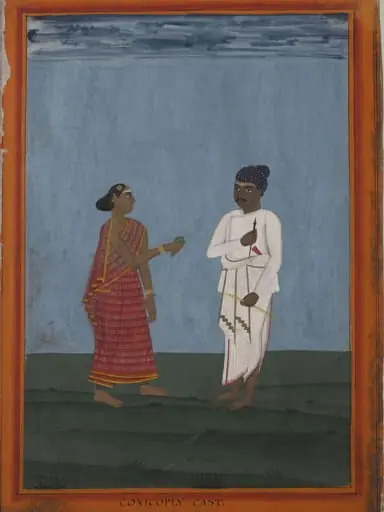
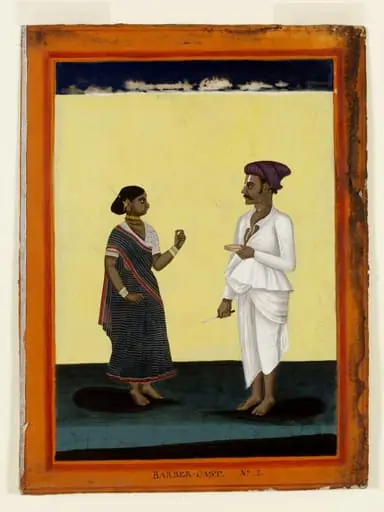
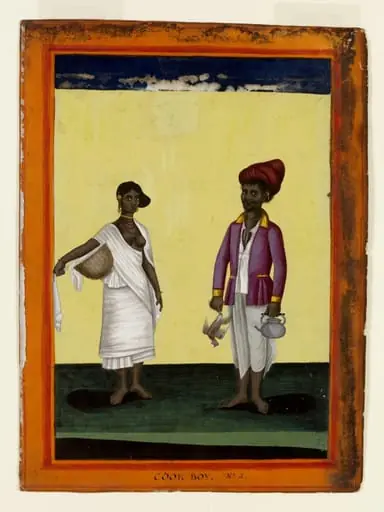
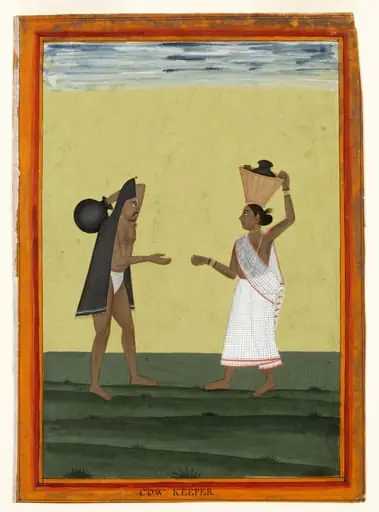
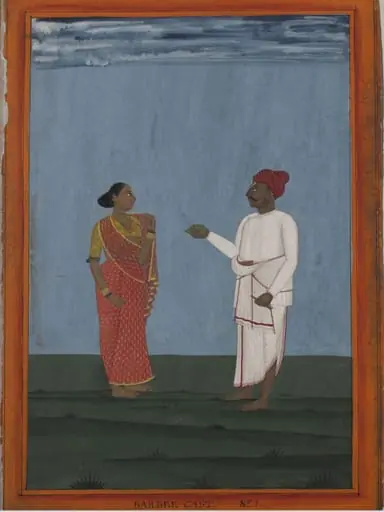
A bracelet-seller and his wife is a paint painting by the Rococo painting artist Unknown. It dates from 1770 and is held in the collection of the Victoria and Albert Museum. This work forms part of a series of thirty‑six small paintings that document the various castes and occupations of South India.
About this work
Overview
Each image presents a male and female figure identified by the tools and objects of their trade, in this case a bracelet‑seller and his wife.
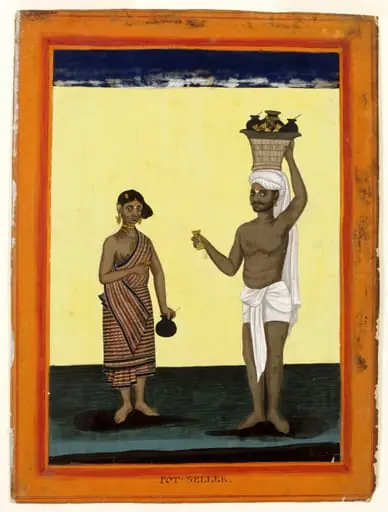
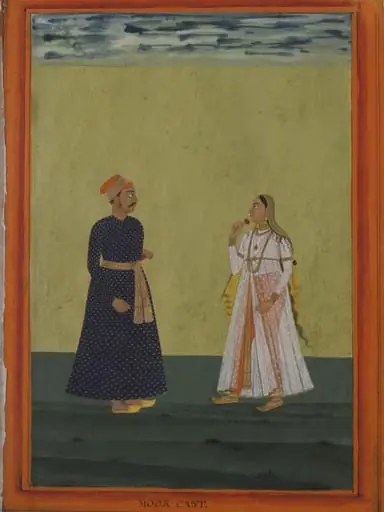
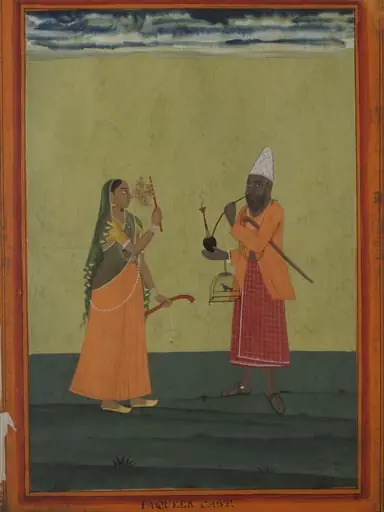
This work forms part of a series of thirty‑six small paintings that document the various castes and occupations of South India. Each image presents a male and female figure identified by the tools and objects of their trade, in this case a bracelet‑seller and his wife. The compositions share a uniform red frame, a cloud‑like band at the top, and a dark green floor, yet subtle variations suggest multiple artists contributed to the set.
Subject & Meaning
The couple is shown surrounded by bracelets, necklaces and other ornaments, indicating their role as vendors of personal adornments. Their attire and the displayed wares serve as visual cues to identify the specific occupational group within the broader social hierarchy of the region, providing a didactic snapshot of everyday commerce in South Indian society.
Technique & Style
The painting employs pronounced chiaroscuro, with deep shadows anchoring the figures’ feet and a strong contrast between illuminated surfaces and the darker background. While some figures in the series are rendered with bold outlines against a yellow field, others display finer detailing on a deep blue ground; this particular piece uses a green‑blue palette with softer modeling, reflecting the hand of a distinct artist within the collection.
History & Provenance
All thirty‑six images were bound together in an album bearing the watermark "J. Ruse 1799" and a bookplate inscribed with the name Joseph Whatley and the Latin motto "Pelle Timorem" (banish fear). The English inscription along the lower border names the depicted caste or occupation, linking the work to an early European effort to catalogue Indian social groups for scholarly or commercial audiences.
Artist & collection

 Domestic Scene
 Giacomo and Cardinal Marco, investing Andrea, Abbot of San Zeno, with his Benefice
 The Nymph of Fontainebleau
 Portrait of a Woman
 Madonna and Child with Saints in the Enclosed Garden
 Venus and Minerva
 Family Group of Four on Sofa
 Wall painting from Room H of the Villa of P. Fannius Synistor at Boscoreale