Artwork
A necklace-seller and his wife
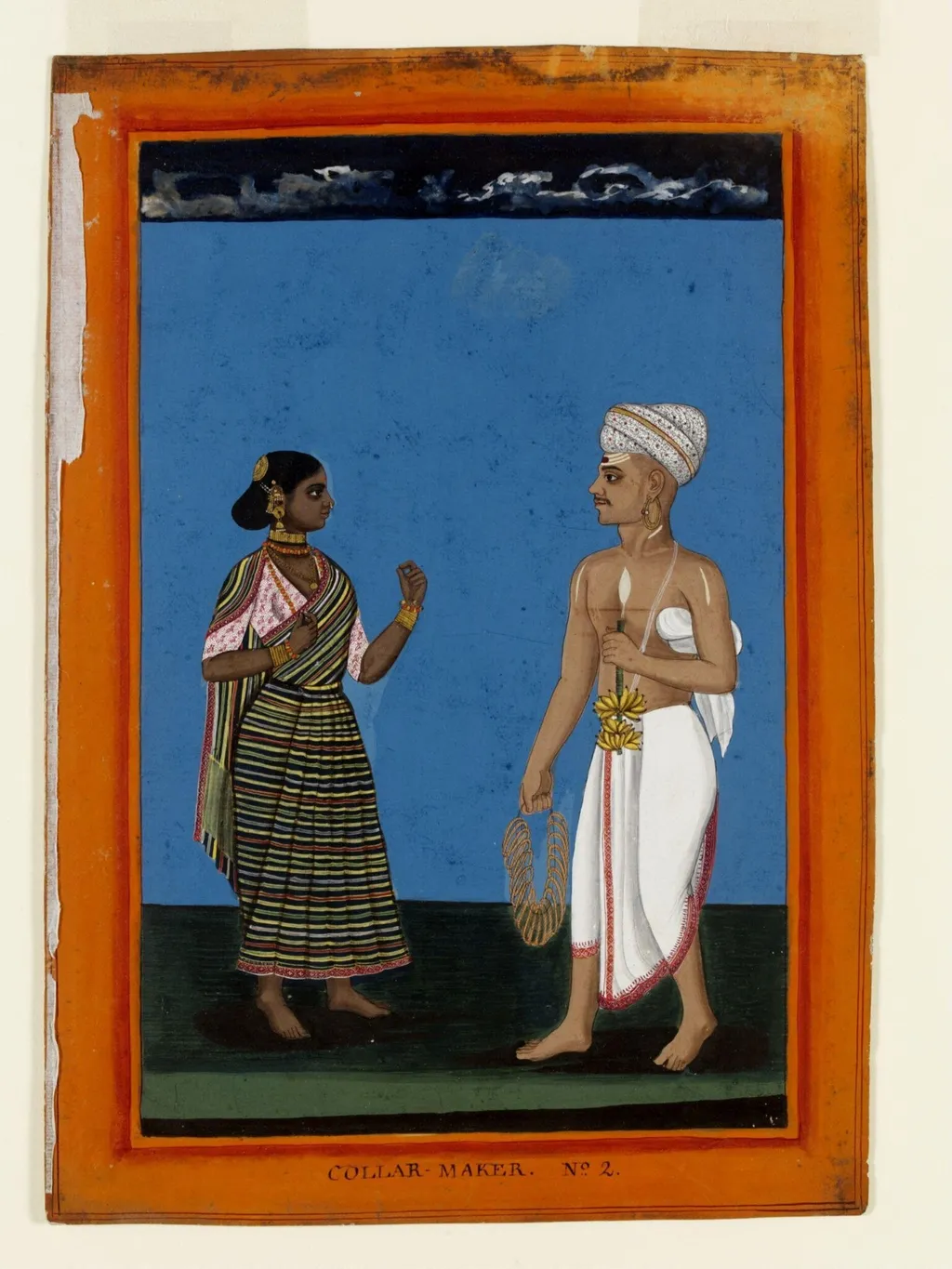
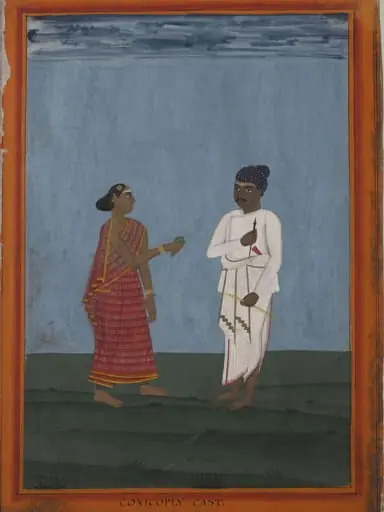
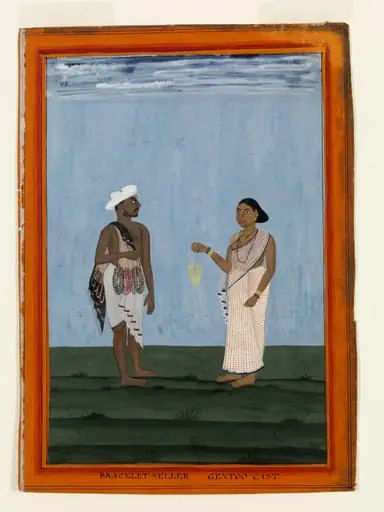
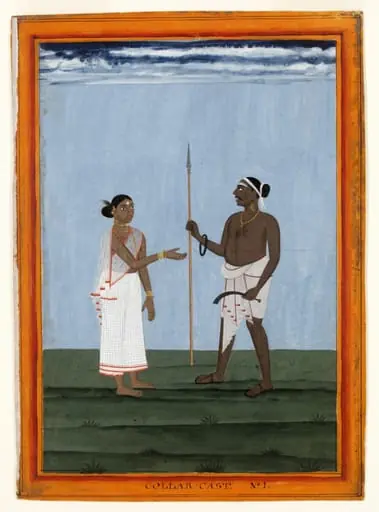
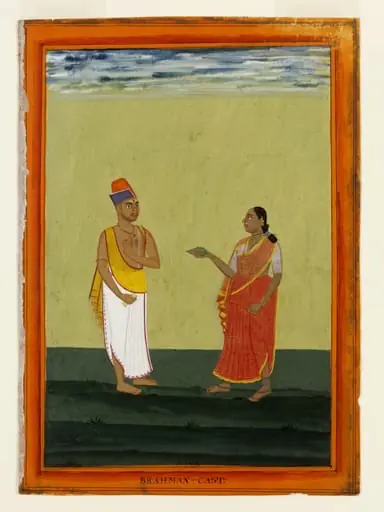
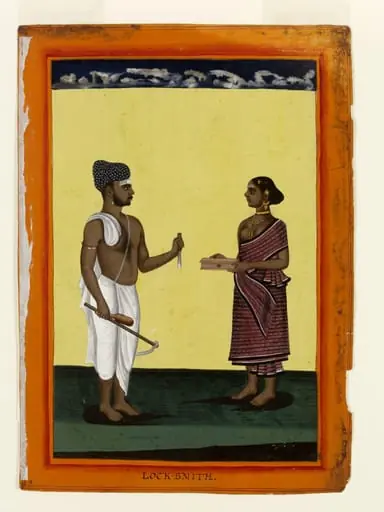
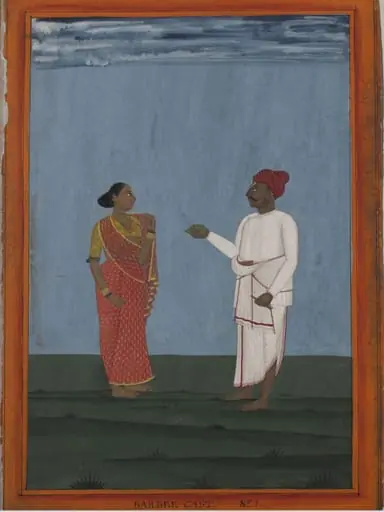
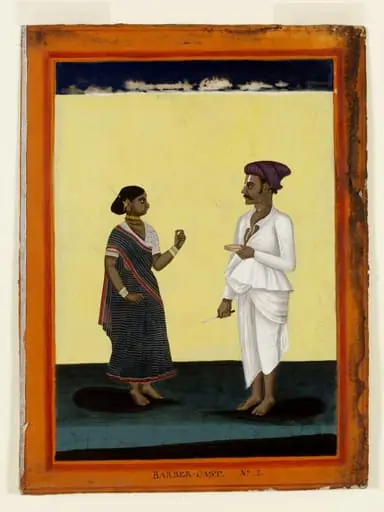
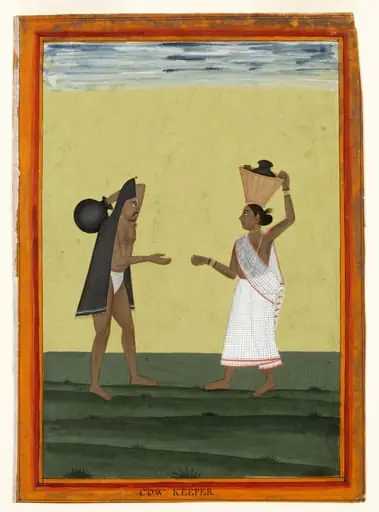
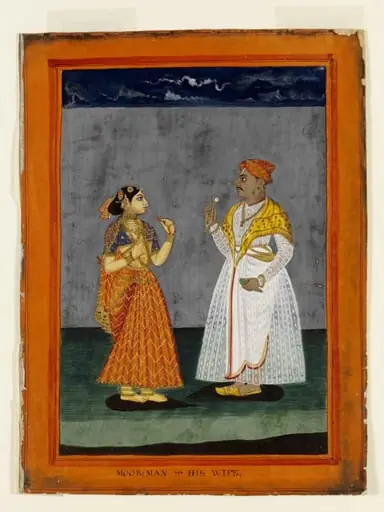
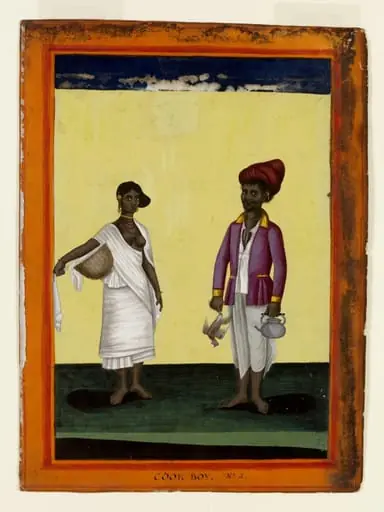
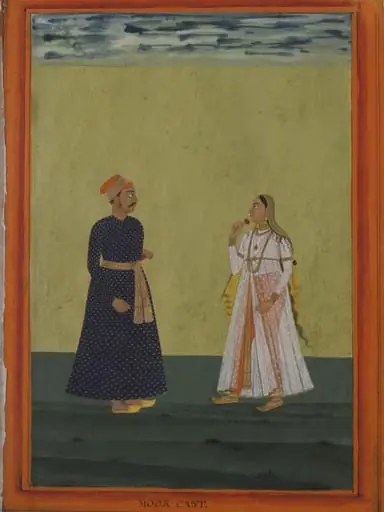
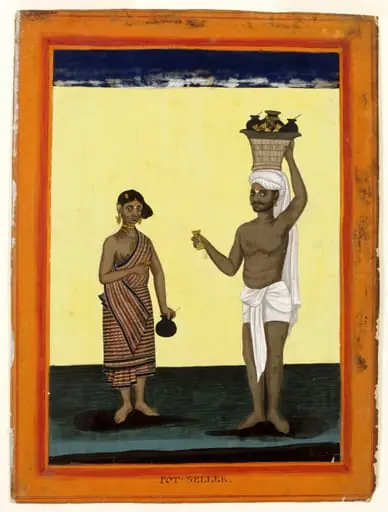
A necklace-seller and his wife is a paint painting by the Rococo painting artist Unknown. It dates from 1770 and is held in the collection of the Victoria and Albert Museum. This small panel forms part of a series of thirty‑six illustrations that document the diverse castes and occupations of South India.
About this work
Overview
Each image portrays a married couple identified by their trade, here a necklace‑seller and his wife, surrounded by the wares they market.
This small panel forms part of a series of thirty‑six illustrations that document the diverse castes and occupations of South India. Each image portrays a married couple identified by their trade, here a necklace‑seller and his wife, surrounded by the wares they market. The work is executed on paper, mounted in an album bearing a 1799 watermark and a bookplate belonging to Joseph Whatley, whose Latin motto, “Pelle Timorem,” translates as “banish fear.”
Subject & Meaning
The couple is seated together at a low table laden with necklaces, beads and other ornaments, indicating their role as jewelers. Their posture and the presence of both partners underscore the familial nature of many traditional Indian trades, where husband and wife jointly manage the business and its clientele.
Technique & Style
All panels share a red border, a cloud‑like motif at the top, and a dark green ground, while the figures rest upon heavy, looped shadows that ground them in space. The series exhibits three distinct hands: one uses bold outlines against a yellow field, another renders finer details on a deep blue background, and a third presents softer figures on mixed green‑blue tones. The chiaroscuro effect of the shadows contributes to a modest three‑dimensionality.
History & Provenance
The album containing these paintings was watermarked in 1799, suggesting a late‑eighteenth‑century origin, possibly linked to British collectors in India. The presence of Joseph Whatley’s bookplate indicates that the set entered a private European collection, where it was likely used as a reference for the social hierarchy and occupational diversity of the subcontinent.
Context
Created during a period of intensified British interest in cataloguing Indian society, the series reflects colonial attempts to systematise and visualise caste and profession. Such visual inventories served both scholarly and administrative purposes, providing a pictorial guide to the myriad trades that comprised the economic fabric of South Indian towns.
Artist & collection

 Domestic Scene
 Giacomo and Cardinal Marco, investing Andrea, Abbot of San Zeno, with his Benefice
 The Nymph of Fontainebleau
 Portrait of a Woman
 Madonna and Child with Saints in the Enclosed Garden
 Venus and Minerva
 Family Group of Four on Sofa
 Wall painting from Room H of the Villa of P. Fannius Synistor at Boscoreale