Artwork
A mud-wall-maker and his wife
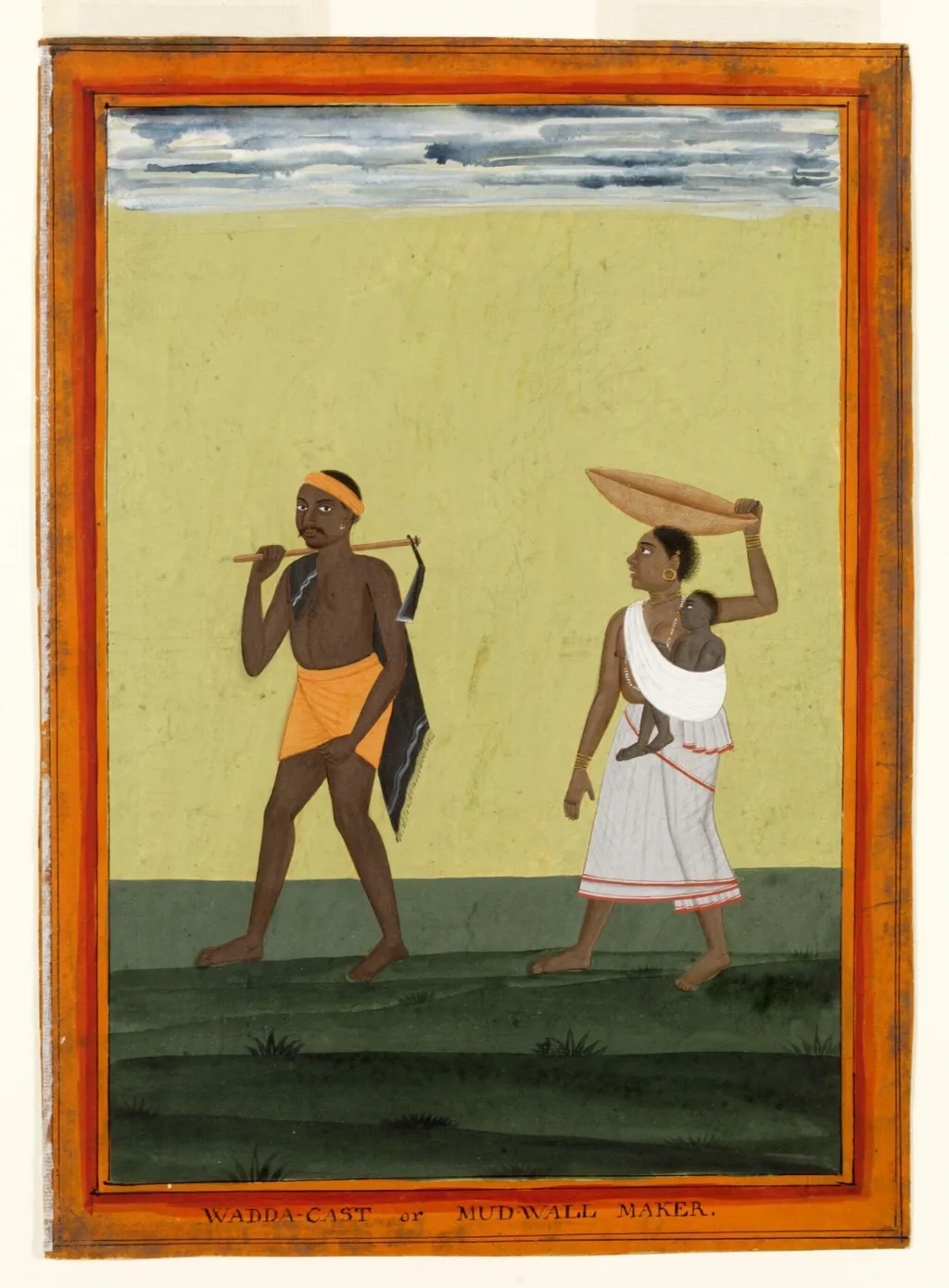
A mud-wall-maker and his wife is a paint painting by the Rococo painting artist Unknown. It dates from 1770 and is held in the collection of the Victoria and Albert Museum. This painting is one of thirty-six works documenting South Indian castes and occupations, created around the late 18th century.
About this work
Overview
The album was bound with a watermark dated 1799 and bore the bookplate of Joseph Whatley, suggesting a colonial-era compilation for ethnographic record.
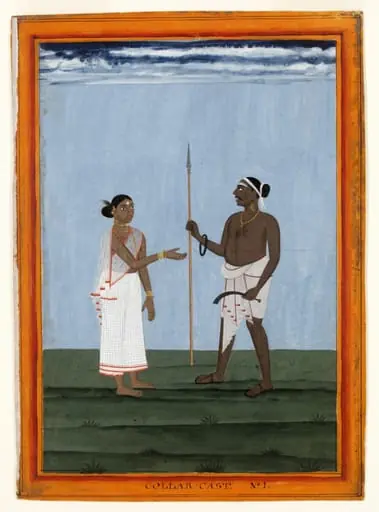
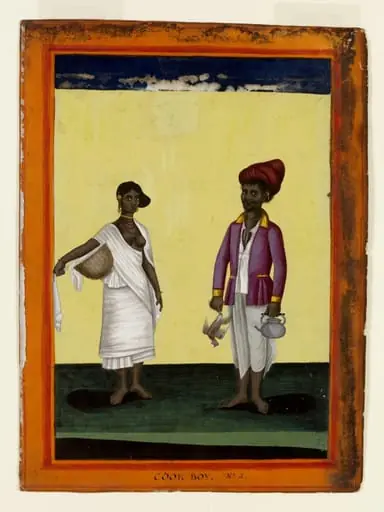
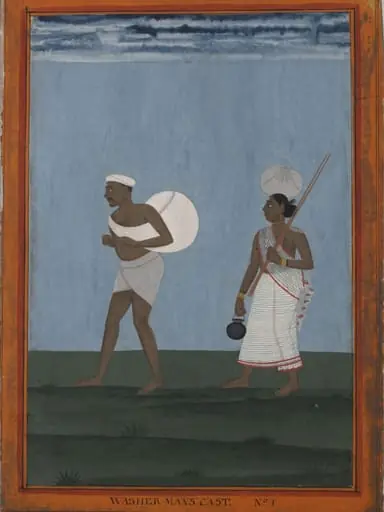
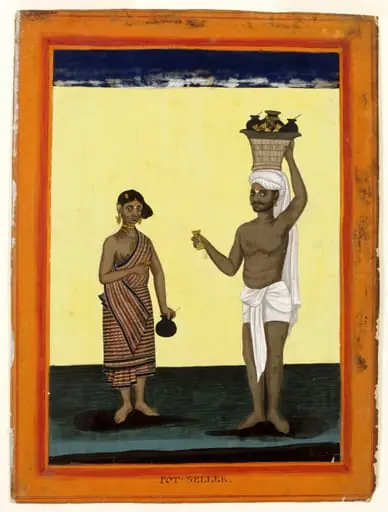
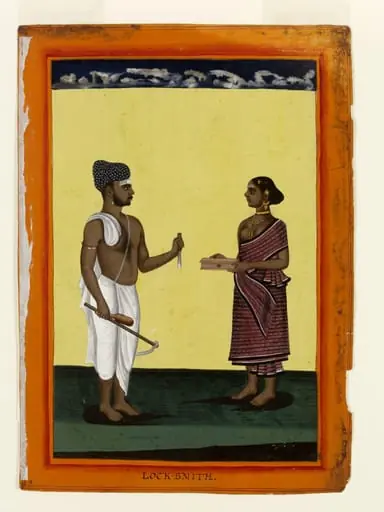
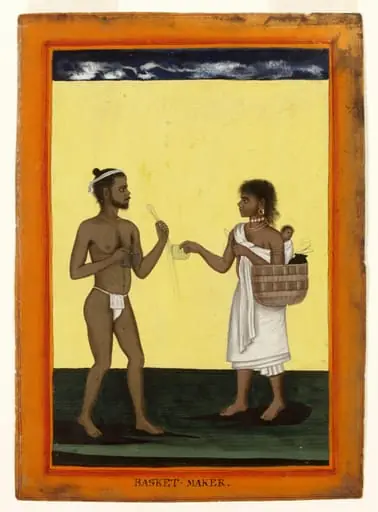
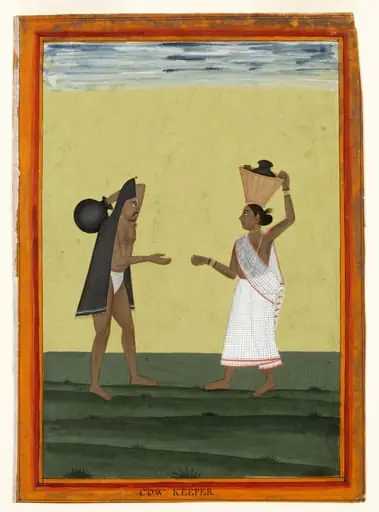
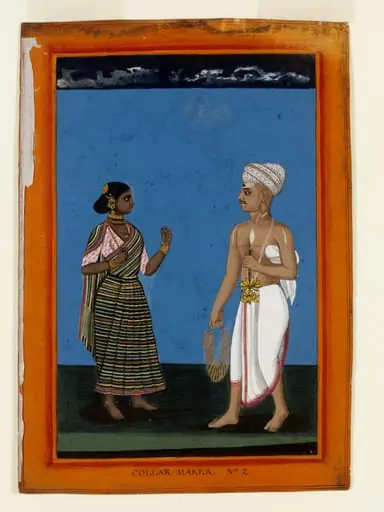
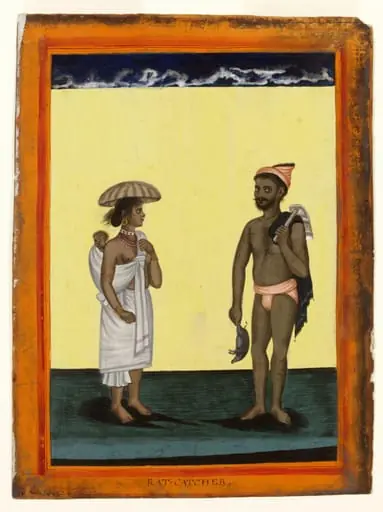
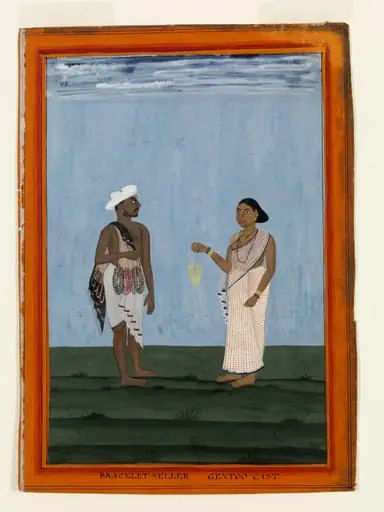
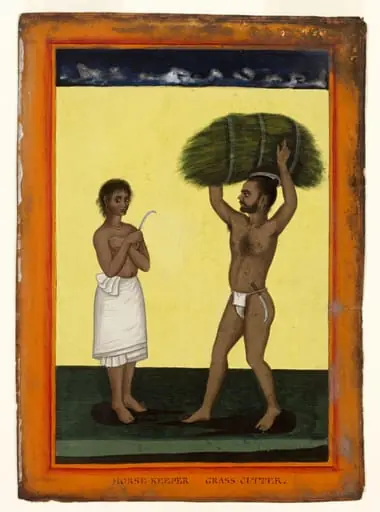
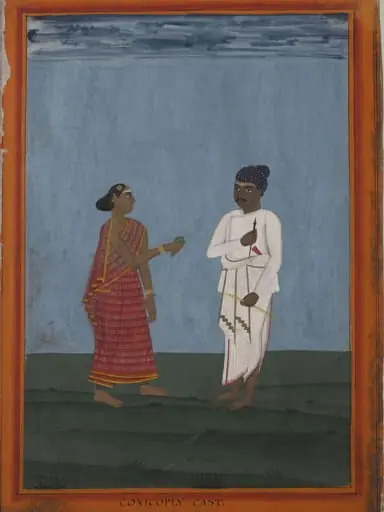
This painting is one of thirty-six works documenting South Indian castes and occupations, created around the late 18th century. It depicts a man and woman engaged in the construction of mud walls, surrounded by their tools and materials. Each piece in the series shares a consistent visual framework: a red border, cloud-like patterns at the top, heavy shadows beneath the figures, and a dark green base. The album was bound with a watermark dated 1799 and bore the bookplate of Joseph Whatley, suggesting a colonial-era compilation for ethnographic record.
Subject & Meaning
The figures are identified by their labor: the man shapes wet mud with a wooden mold, while the woman prepares or transports material. Their attire and posture reflect daily work routines, not ceremonial roles. The inclusion of tools and materials serves as a visual lexicon of occupation, emphasizing function over symbolism. This focus on occupational identity aligns with colonial ethnographic interests, aiming to catalog social roles through observable detail rather than narrative or myth.
Technique & Style
The painting employs flat, opaque pigments with minimal modeling, contrasting with the chiaroscuro tradition. Figures are outlined clearly against a muted green ground, with shadows rendered as solid, looped forms beneath the feet rather than gradated tones. Backgrounds vary across the series—yellow, blue, or green—suggesting multiple hands. Details like tool handles and fabric folds are rendered with precision, yet the overall approach remains decorative and systematic, prioritizing clarity over atmospheric depth.
History & Provenance
The painting was part of a bound album compiled around 1799, bearing the watermark of J. Ruse and the bookplate of Joseph Whatley, a British colonial official. The Latin motto 'Pelle Timorem' (banish fear) may reflect an Enlightenment-era impulse to demystify unfamiliar cultures. The album’s uniform structure and inscriptions indicate a deliberate effort to systematize regional labor practices, likely for administrative or scholarly use in British India.
Context
These works emerged during a period when British administrators and collectors sought to classify Indian society through visual documentation. Similar series were produced in other regions, often commissioned by East India Company officials. The emphasis on occupational roles reflects colonial priorities: mapping social hierarchies, recording economic functions, and reducing cultural complexity to observable traits. The paintings function less as art and more as ethnographic records shaped by colonial frameworks.
Legacy
Though not widely exhibited today, the album remains a valuable resource for understanding 18th-century South Indian labor and colonial documentation practices. The series provides insight into how indigenous trades were perceived and recorded by outsiders. Its standardized format and repetitive structure reveal the limitations of colonial ethnography, even as it preserves details of daily life otherwise absent from written records.
Artist & collection

 Domestic Scene
 Giacomo and Cardinal Marco, investing Andrea, Abbot of San Zeno, with his Benefice
 The Nymph of Fontainebleau
 Portrait of a Woman
 Madonna and Child with Saints in the Enclosed Garden
 Venus and Minerva
 Family Group of Four on Sofa
 Wall painting from Room H of the Villa of P. Fannius Synistor at Boscoreale