Artwork
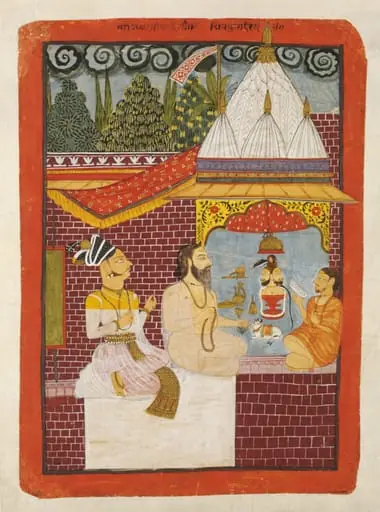
A Rathor Noble Visiting a Holy Man at a Vishnu Shrine
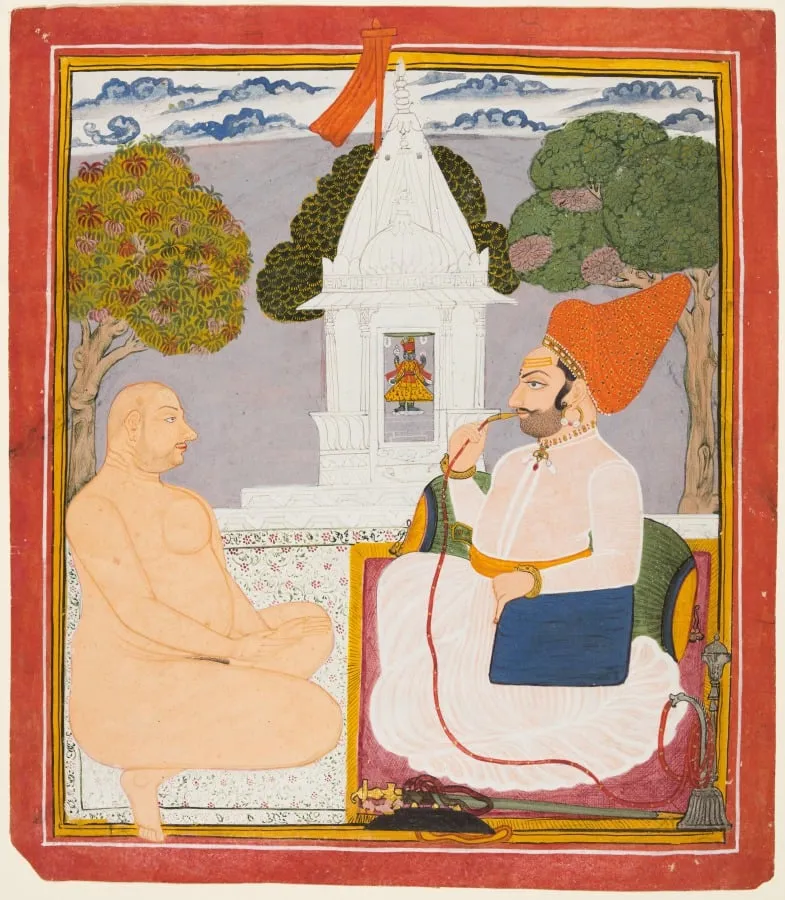
A Rathor Noble Visiting a Holy Man at a Vishnu Shrine is an unspecified painting by the Mughal Painting artist Unknown. It dates from 1760 and is held in the collection of the Cleveland Museum of Art. The painting depicts a Rajput noble seated on the ground, smoking a hookah, while a nude Jain monk engages him in conversation.
About this work
Overview
The painting depicts a Rajput noble seated on the ground, smoking a hookah, while a nude Jain monk engages him in conversation. Behind them a temple dedicated to Vishnu rises, bathed in gentle light. The noble’s forehead bears the three white marks identifying him as a devotee of Shiva, creating a tableau that brings together three distinct religious traditions in a single, tranquil setting.
Subject & Meaning
The work presents a moment of peaceful dialogue between a Hindu warrior and a Jain ascetic, underscoring a theme of religious tolerance. By placing the Shiva‑worshipping noble, the Jain monk, and the Vishnu shrine together, the artist suggests a harmonious coexistence of Hinduism, Jainism, and the broader spiritual landscape of the region.
Technique & Style
Rendered in the vibrant palette typical of northwestern Indian court painting, the composition balances detailed figure work with a softly illuminated architectural backdrop. The noble’s relaxed posture and the monk’s bare form are delineated with fine brushstrokes, while the temple’s glow is achieved through subtle washes that suggest a serene atmosphere.
History & Provenance
The scene reflects artistic conventions of Rajasthan’s Marwar region, where court painters often recorded episodes of inter‑faith interaction. Though the exact date and patron remain uncertain, the painting aligns with a tradition of 18th‑century works that celebrated the pluralistic character of Rajput kingdoms.
Context
During the period when Rajput states governed a mosaic of religious communities, visual art frequently served to reinforce political messages of unity. By depicting a noble laying aside his sword and shield, the image conveys the ruler’s willingness to engage in intellectual exchange beyond martial duties.
Artist & collection

 Domestic Scene
 Giacomo and Cardinal Marco, investing Andrea, Abbot of San Zeno, with his Benefice
 The Nymph of Fontainebleau
 Portrait of a Woman
 Madonna and Child with Saints in the Enclosed Garden
 Venus and Minerva
 Family Group of Four on Sofa
 Wall painting from Room H of the Villa of P. Fannius Synistor at Boscoreale
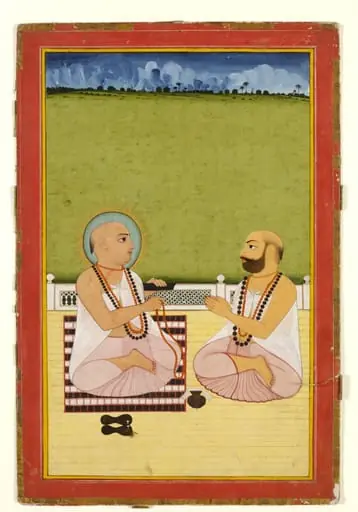 Holy man and pupil on a terrace
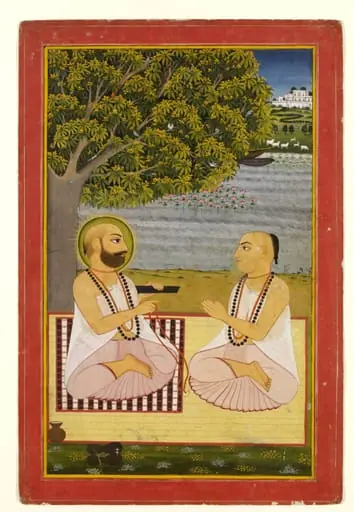 Holy man and pupil
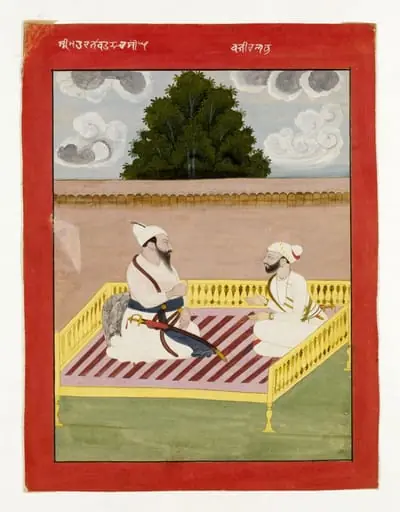 Raja Bahadur Singh of Bhoti and Wazir Labh
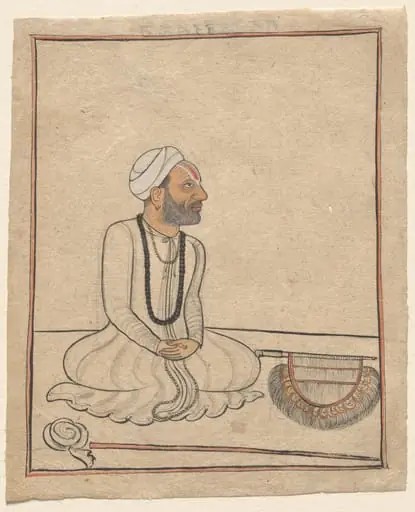 Gosain Narottam Das
 Raja Viram Dev
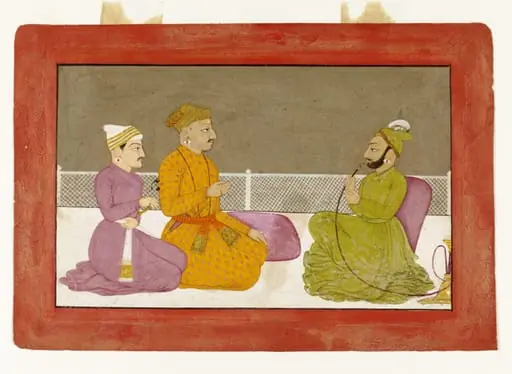 Raja Bhupal Dev of Jasrota, Raja Dalip Singh and Raja Daya Dhat
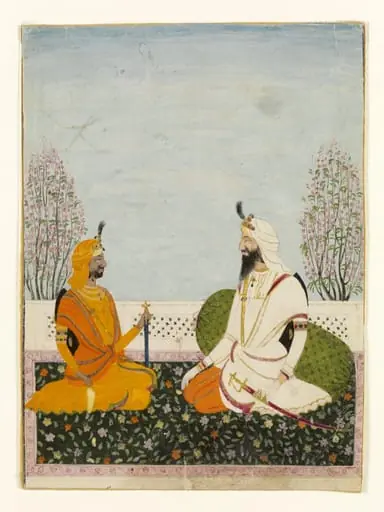 Raja Suchet Singh and Raja Dhian Singh
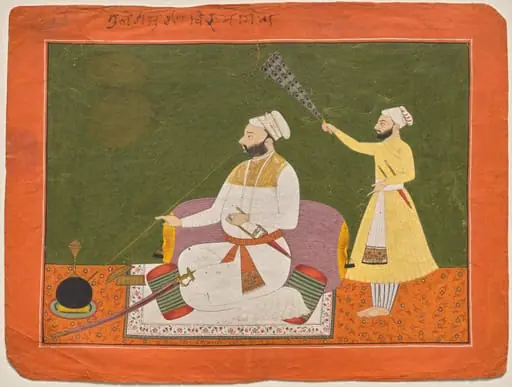 Raja Bikram Singh of Guler smoking a hookah
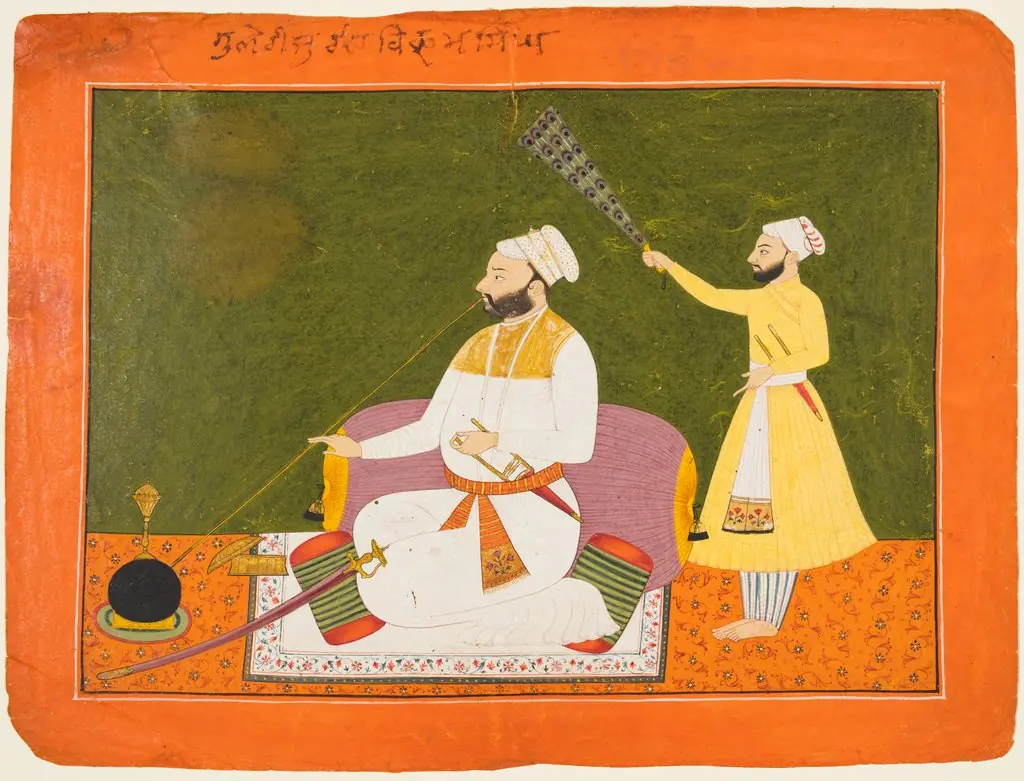 Raja Bikram Singh of Guler (r. 1661–75) Smoking a Hookah
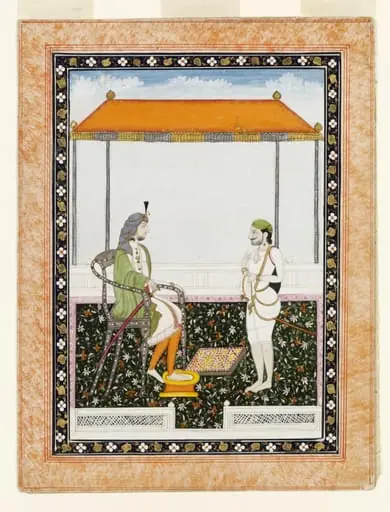 Raja Hira Singh