Artwork
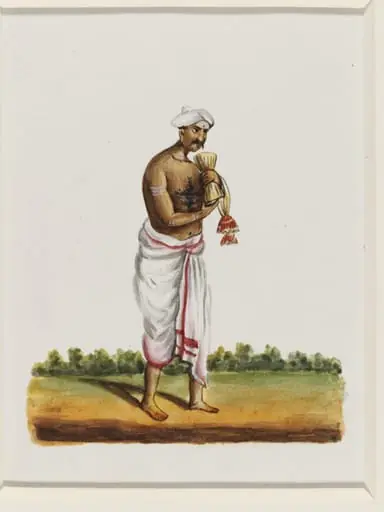
A toddy-tapper
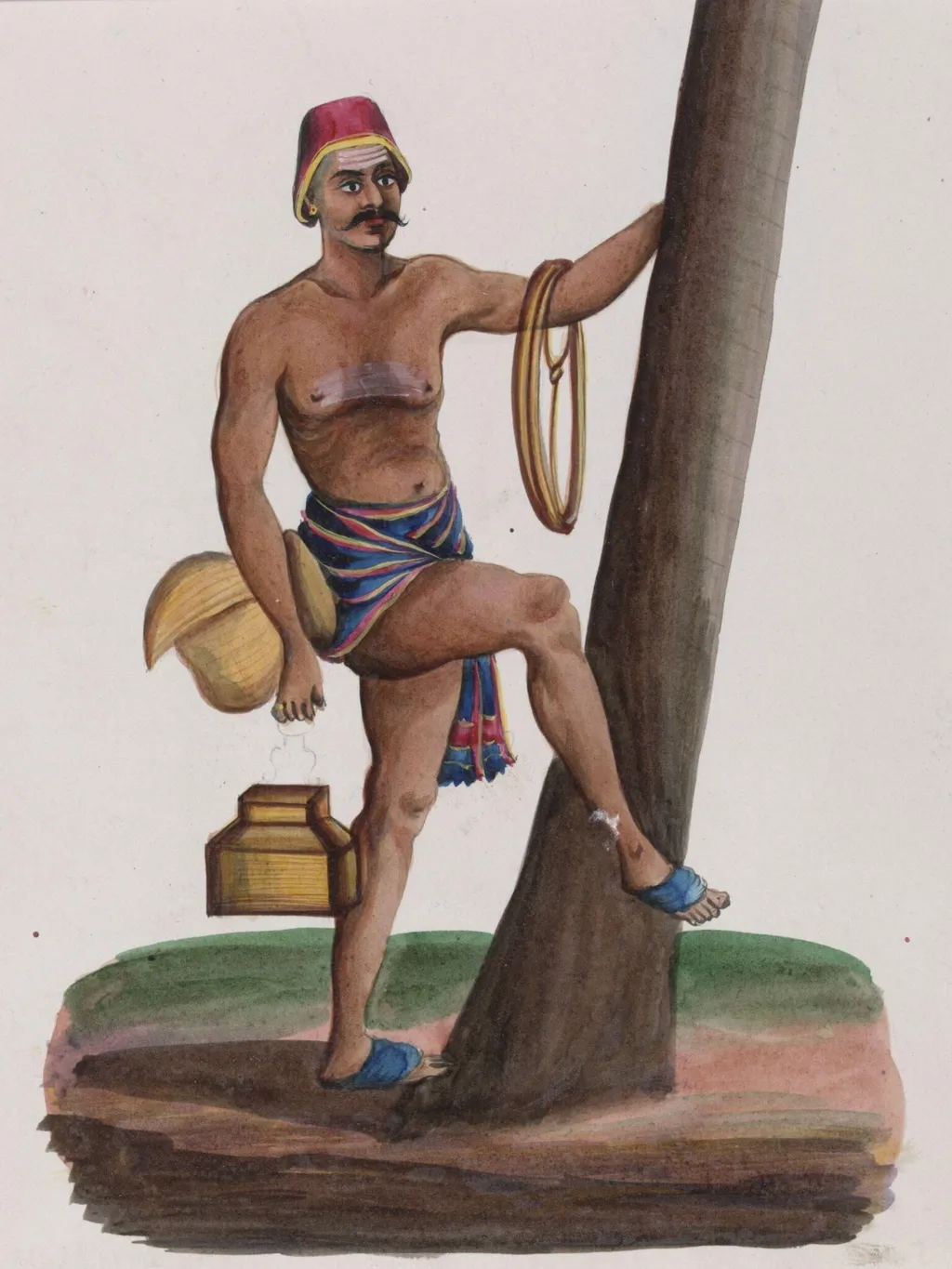
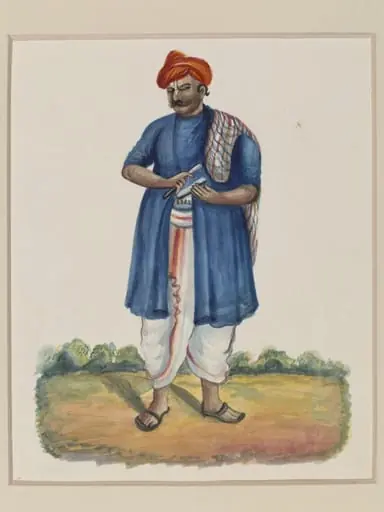
A toddy-tapper is a paint painting by the Impressionist artist Unknown. It dates from 1870 and is held in the collection of the Victoria and Albert Museum.
About this work
Overview
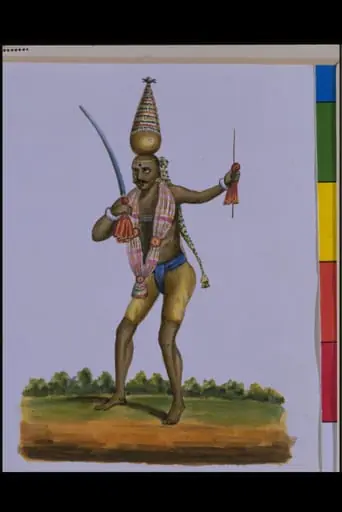
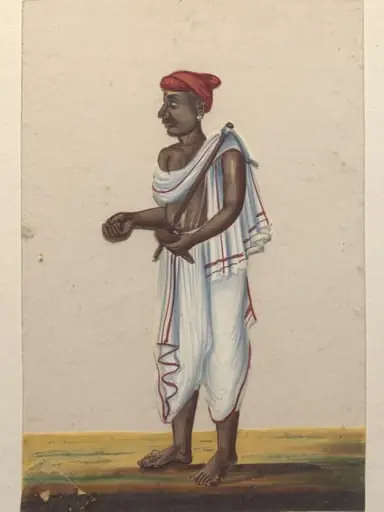
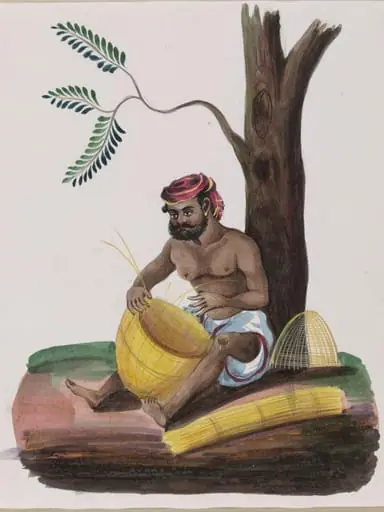
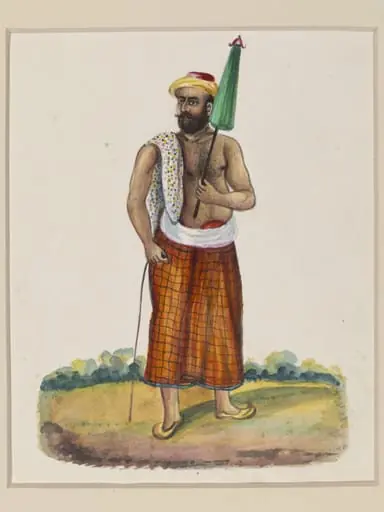
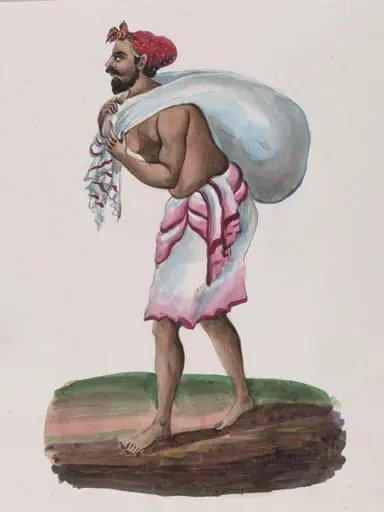
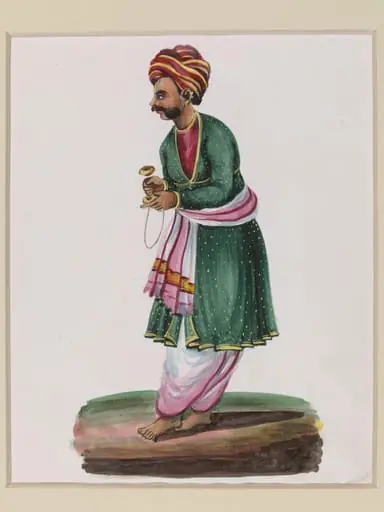
This painting is one of twelve works documenting occupational roles in South India, capturing a toddy-tapper in the act of climbing a palm tree.
This painting is one of twelve works documenting occupational roles in South India, capturing a toddy-tapper in the act of climbing a palm tree. The figure is rendered with attention to daily labor, emphasizing posture and attire rather than narrative drama. The plain white background isolates the subject, directing focus to the physicality of the task and the precision of the figure’s positioning.
Subject & Meaning
The subject is a laborer engaged in collecting sap from palm trees, a traditional practice in South India. His focused expression and deliberate stance suggest the skill and discipline required for the work. The depiction avoids romanticization, presenting the tapper as a figure of quiet competence within a structured social hierarchy, reflecting the ethnographic intent of the series.
Technique & Style
The artist employs flat, saturated colors and clean outlines to define form, characteristic of regional manuscript traditions. The contrast between the bright turban and striped loincloth anchors the figure visually, while the absence of landscape or shadow enhances the sense of immediacy. The thin rope wrapped around the trunk implies motion, suggesting the climb without depicting it fully.
History & Provenance
Created in the late 18th or early 19th century, this work belongs to a set commissioned by British officials to document Indian social structures. Likely produced by local artists in Madras or nearby courts, the series was intended as ethnographic record rather than fine art. Its survival reflects colonial interest in categorizing regional life through visual means.
Context
These paintings emerged during a period when colonial administrators sought systematic knowledge of Indian society. The depiction of caste-based occupations aligned with broader efforts to map labor and social hierarchy. While rooted in indigenous artistic conventions, the series was shaped by European expectations of classification and observation.
Legacy
The set remains a valuable resource for understanding how Indian labor was visually recorded during colonial rule. Though originally produced for administrative purposes, the works now offer insight into the dignity of everyday work and the artistic adaptability of regional painters responding to new patronage demands.
Artist & collection

 Domestic Scene
 Giacomo and Cardinal Marco, investing Andrea, Abbot of San Zeno, with his Benefice
 The Nymph of Fontainebleau
 Portrait of a Woman
 Madonna and Child with Saints in the Enclosed Garden
 Venus and Minerva
 Family Group of Four on Sofa
 Wall painting from Room H of the Villa of P. Fannius Synistor at Boscoreale