Artwork
Acrobats
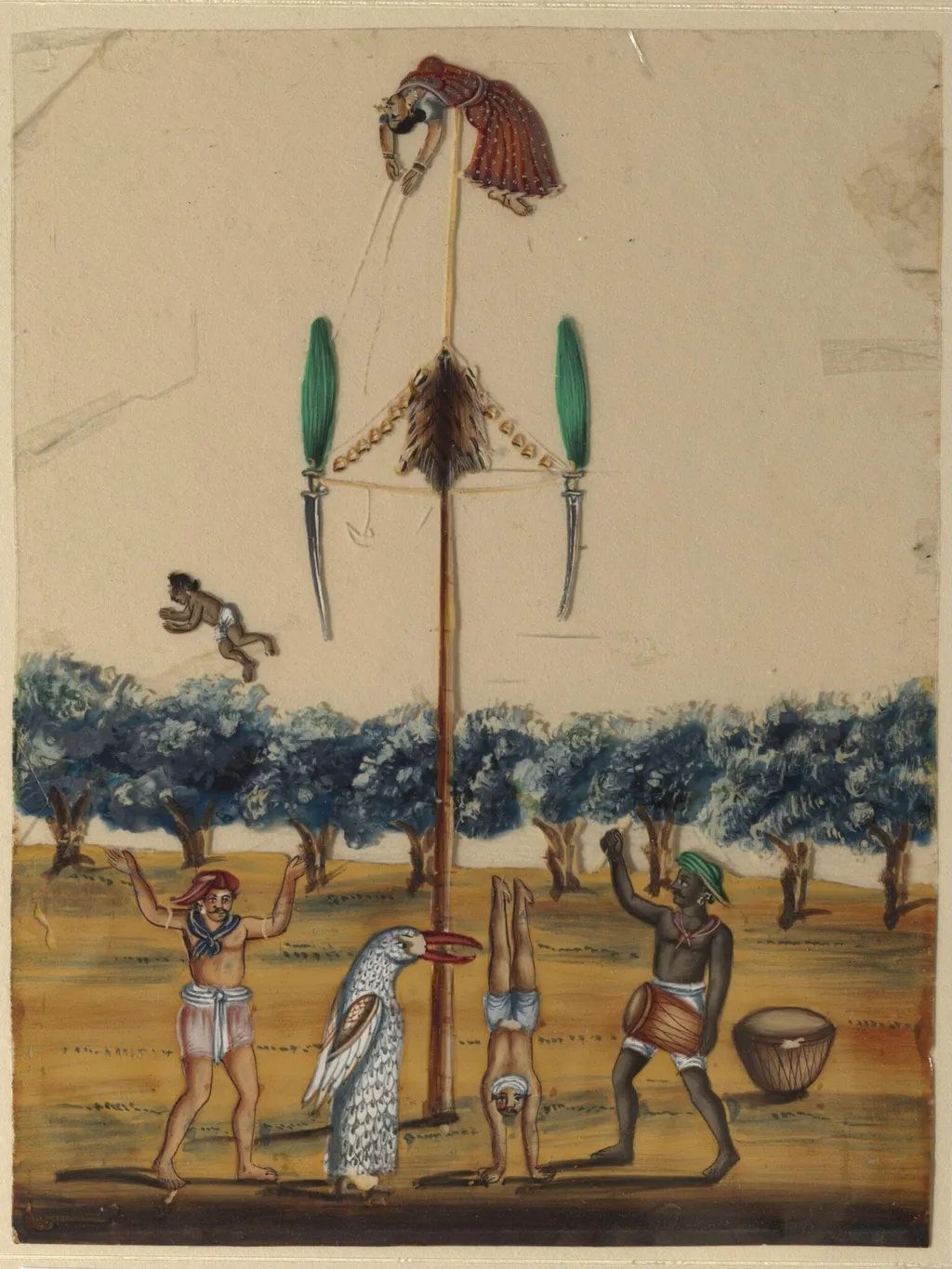
Acrobats is a paint painting by the Impressionist artist Unknown. It dates from 1860 and is held in the collection of the Victoria and Albert Museum. This oil painting captures a group of itinerant performers engaged in acrobatics near Trichinopoly, India, circa 1860.
About this work
Overview
This oil painting captures a group of itinerant performers engaged in acrobatics near Trichinopoly, India, circa 1860.
This oil painting captures a group of itinerant performers engaged in acrobatics near Trichinopoly, India, circa 1860. The scene unfolds in an open field under an open sky, with figures arranged dynamically to suggest motion and balance. The artist records a moment of public entertainment, likely drawn from direct observation, emphasizing physical exertion and communal activity rather than theatrical spectacle.
Subject & Meaning
The figures include a climber ascending a vertical pole, others performing handstands, and musicians providing rhythm. These roles reflect the traditional structure of traveling troupes in 19th-century South India. The painting does not idealize the performers but presents them as active participants in a transient cultural practice, hinting at the everyday reality of itinerant arts in colonial-era India.
Technique & Style
The artist employs loose brushwork and a restrained palette to convey movement and light. Forms are suggested rather than meticulously outlined, with attention to posture and gesture over fine detail. The composition directs focus toward the central figure on the pole through diagonal lines and spatial depth, creating a sense of upward momentum without dramatic contrast or theatrical lighting.
History & Provenance
The painting originates from the mid-19th century, likely created by a European artist stationed in or visiting southern India during British colonial rule. Its survival suggests it was retained as a personal record or commissioned by a colonial official. No documented exhibition history or early ownership is known, but its subject matter aligns with contemporary ethnographic interests of the period.
Context
During the 1860s, European artists in India often documented local customs as part of colonial curiosity or administrative record-keeping. While not aligned with formal academic traditions, this work reflects a shift toward observing everyday life, paralleling emerging realist tendencies in European art. The absence of overt colonial symbolism positions the performers as subjects rather than exoticized figures.
Legacy
The painting contributes to a modest but significant body of 19th-century South Indian genre scenes by foreign artists. It offers a rare visual record of non-elite performance culture during a period of rapid social change. Though not widely exhibited, it remains a quiet testament to the intersection of colonial observation and indigenous practice, valued for its unembellished documentation.
Artist & collection

 Domestic Scene
 Giacomo and Cardinal Marco, investing Andrea, Abbot of San Zeno, with his Benefice
 The Nymph of Fontainebleau
 Portrait of a Woman
 Madonna and Child with Saints in the Enclosed Garden
 Venus and Minerva
 Family Group of Four on Sofa
 Wall painting from Room H of the Villa of P. Fannius Synistor at Boscoreale
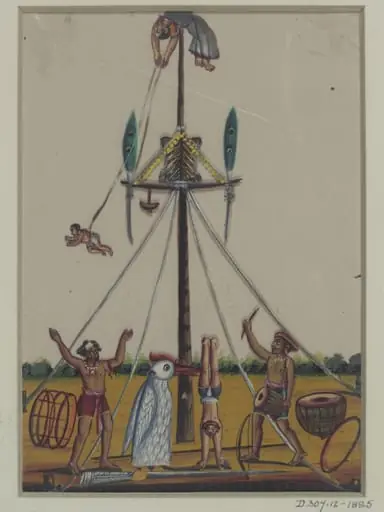 One of twenty-four paintings of South Indian castes and occupations.
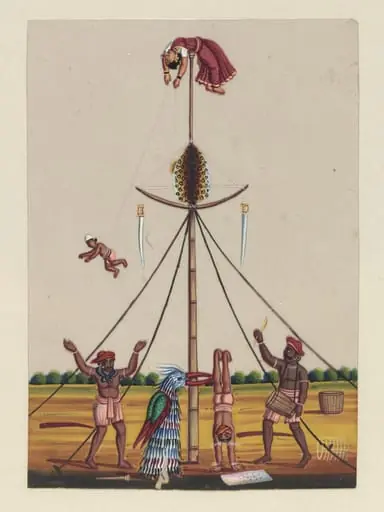 One of eleven paintings of trades and occupations
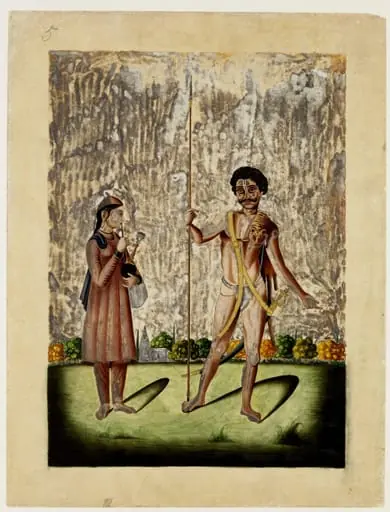 A naked hunter
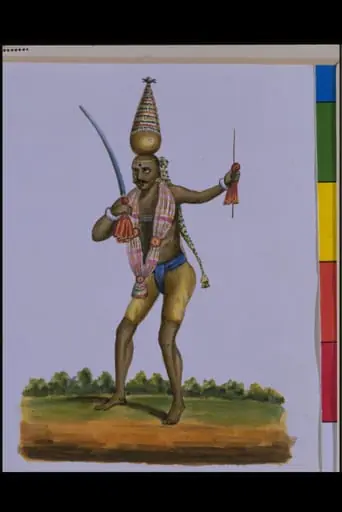 A garlanded Shaivite, ascetic
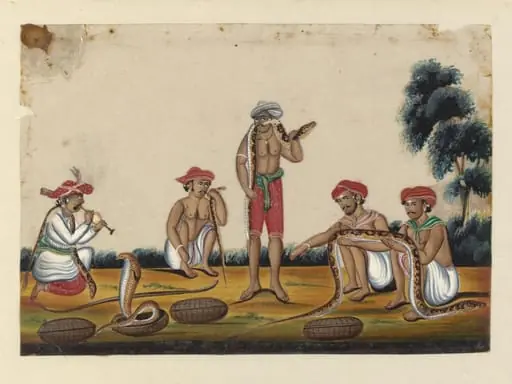 A snake-charmer
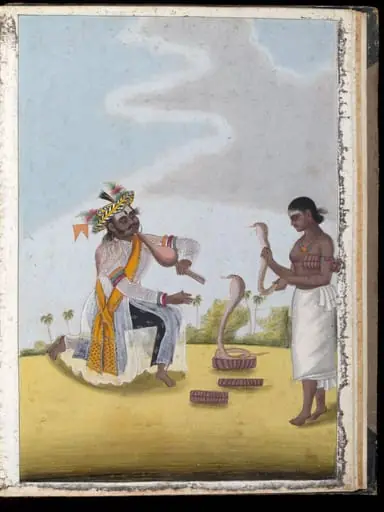 Jugglers with snake
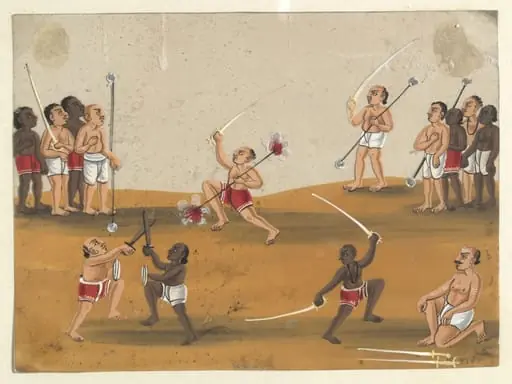 One of eleven paintings depicting schools.
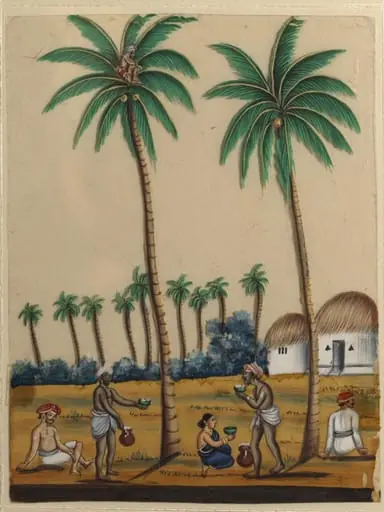 A toddy-tapper
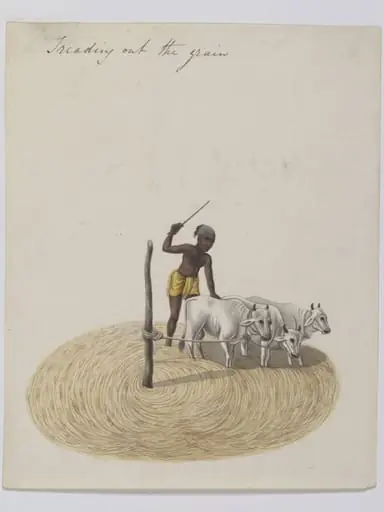 Threshing paddy
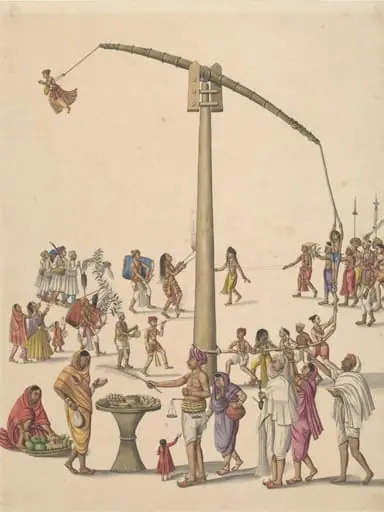 The Hook-swinging Festival (Chadak parvan)
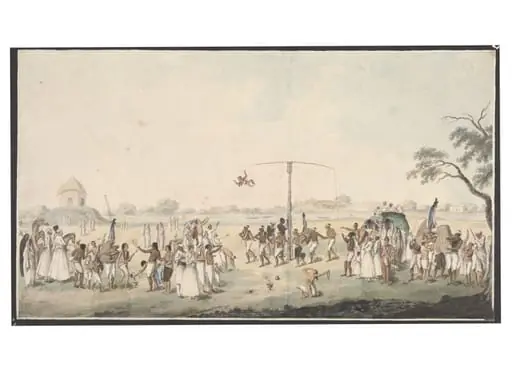 Hook-swinging festival
 Twelve drawings of unidentified ascetics and mendicants.