Artwork
Adoration of the Shepherds
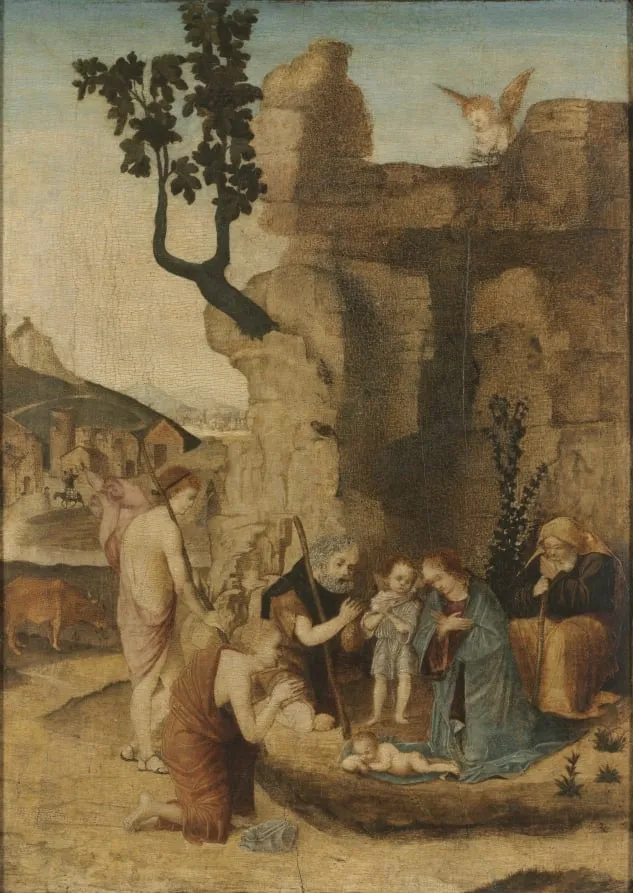
Adoration of the Shepherds is an unspecified painting by the Northern Renaissance artist Unknown. It dates from 1500 and is held in the collection of the Cleveland Museum of Art. This painting depicts the biblical moment when shepherds arrive to witness the newborn Christ.
About this work
Overview
This painting depicts the biblical moment when shepherds arrive to witness the newborn Christ. Set within a dim, rocky cave, the scene centers on a child lying in a manger, surrounded by figures in quiet reverence. The composition draws attention to the infant through focused illumination, contrasting the darkness of the interior with a luminous sky beyond.
Subject & Meaning
The figures represent shepherds and possibly Mary and Joseph, responding to the divine revelation of Christ’s birth. The kneeling woman embodies devotion, while the man cradling the child signifies protective care. The presence of the sky and distant landscape suggests divine presence extending beyond the humble setting, reinforcing the theological theme of humility and revelation.
Technique & Style
Strong contrasts of light and shadow—chiaroscuro—define the figures, isolating them against the cave’s gloom. The light falls precisely on faces and hands, enhancing emotional intensity and three-dimensionality. Brushwork is controlled, with minimal detail in the background, directing focus to the central group and their gestures of awe and tenderness.
History & Provenance
The painting’s origins are tied to late medieval or early Renaissance devotional traditions, likely commissioned for private or ecclesiastical use.
The painting’s origins are tied to late medieval or early Renaissance devotional traditions, likely commissioned for private or ecclesiastical use. Its style aligns with regional workshops in Italy or the Low Countries, where such scenes were common in altarpieces and prayer aids. No definitive record of its early ownership survives, but its composition reflects widely circulated iconographic models.
Context
During the period, depictions of the Adoration of the Shepherds emphasized the Incarnation’s accessibility to ordinary people. Unlike royal or celestial portrayals of Christ’s birth, this version highlights rural witnesses, reinforcing the theological value of humility. The cave setting, common in Western art, symbolized both the physical reality of Bethlehem and the mystery of divine entry into the world.
Legacy
The painting exemplifies how early religious art used lighting and composition to guide spiritual contemplation. Its emphasis on naturalism and emotional restraint influenced later devotional works, particularly in Northern Renaissance circles. Though not widely attributed to a major master, it remains a representative example of how faith was visually mediated for lay audiences.
Artist & collection

 Domestic Scene
 Giacomo and Cardinal Marco, investing Andrea, Abbot of San Zeno, with his Benefice
 The Nymph of Fontainebleau
 Portrait of a Woman
 Madonna and Child with Saints in the Enclosed Garden
 Venus and Minerva
 Family Group of Four on Sofa
 Wall painting from Room H of the Villa of P. Fannius Synistor at Boscoreale
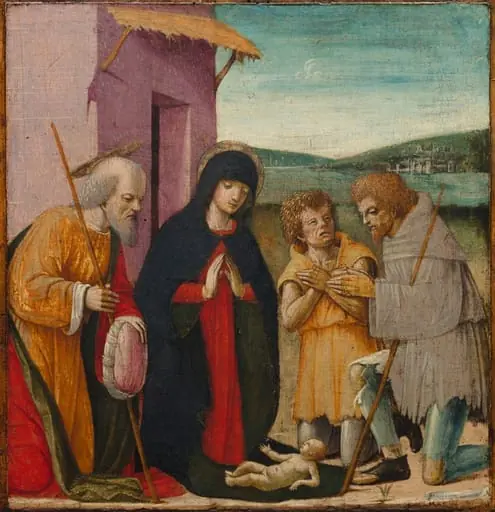 Adoration of the Shepherds
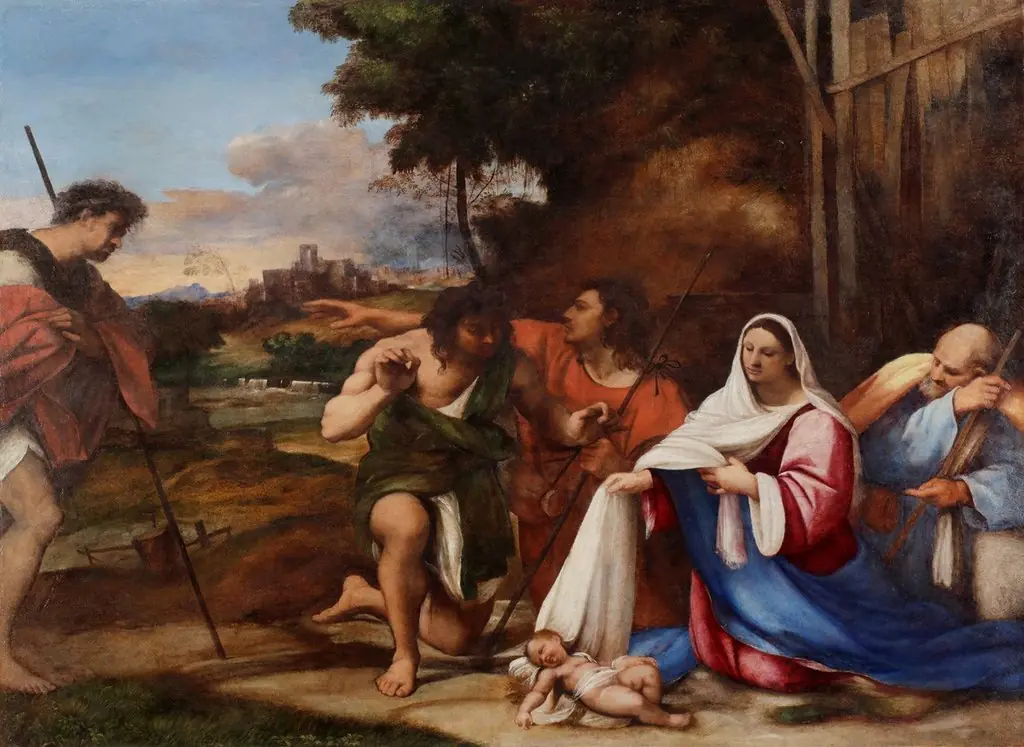 Adoration of the Shepherds
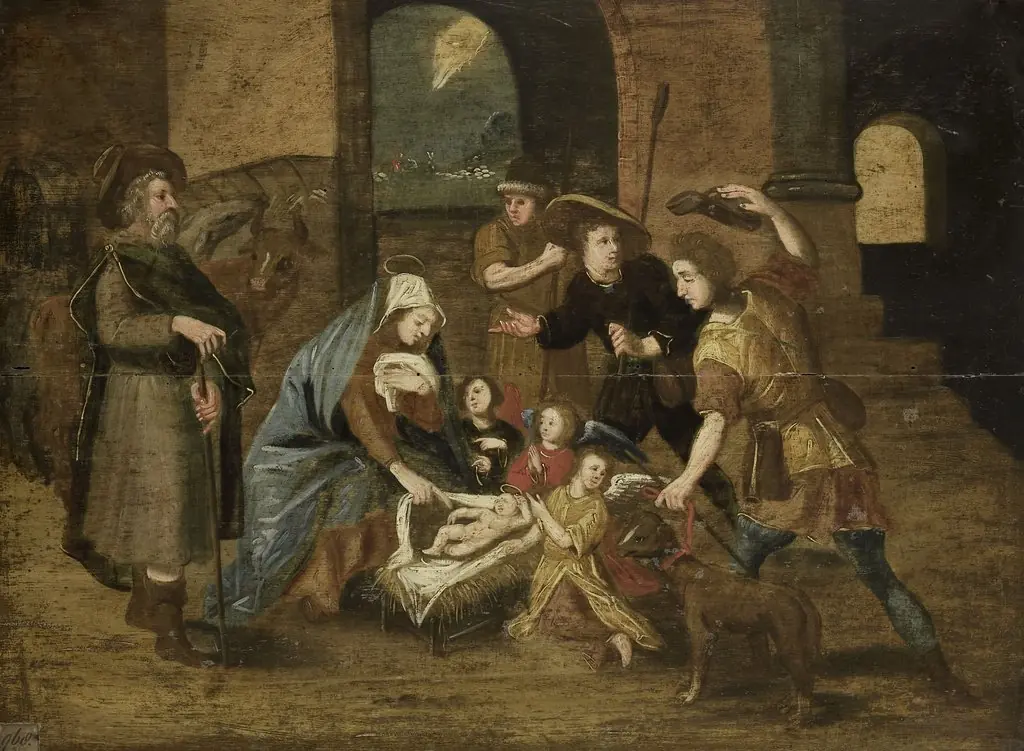 Adoration of the Shepherds
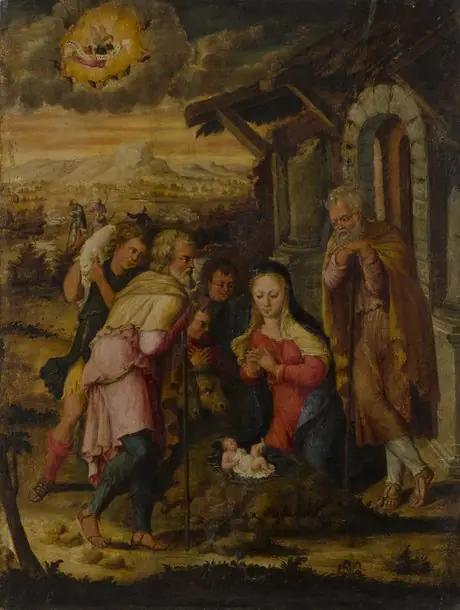 The birth of Christ
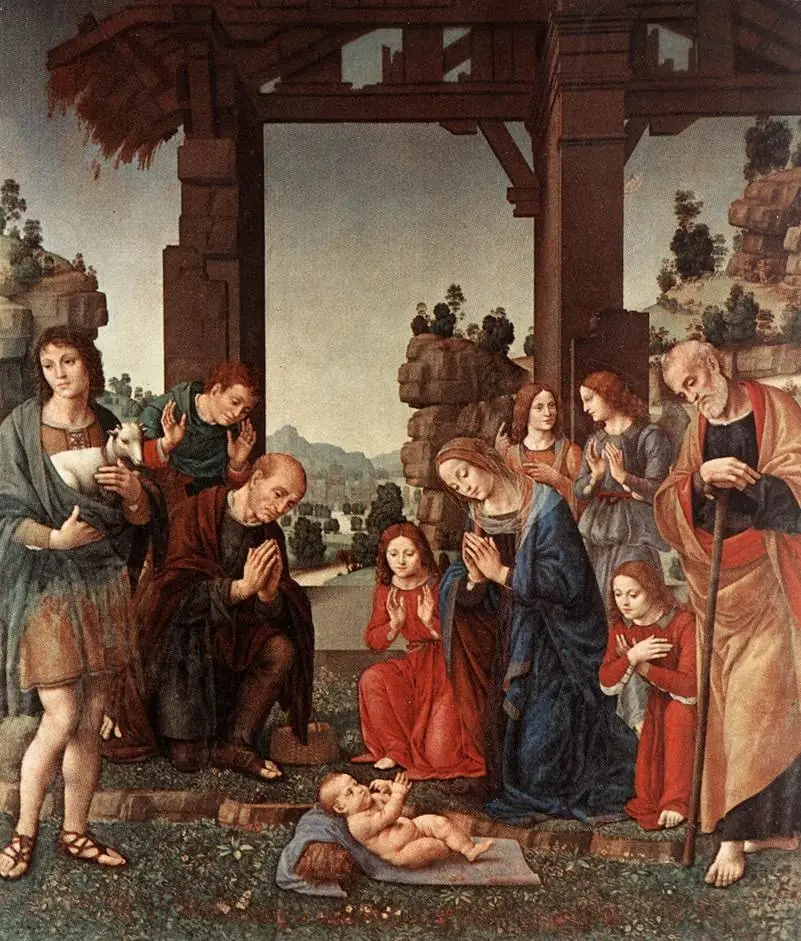 Adoration of the Shepherds
 Holy Family with a Shepherd
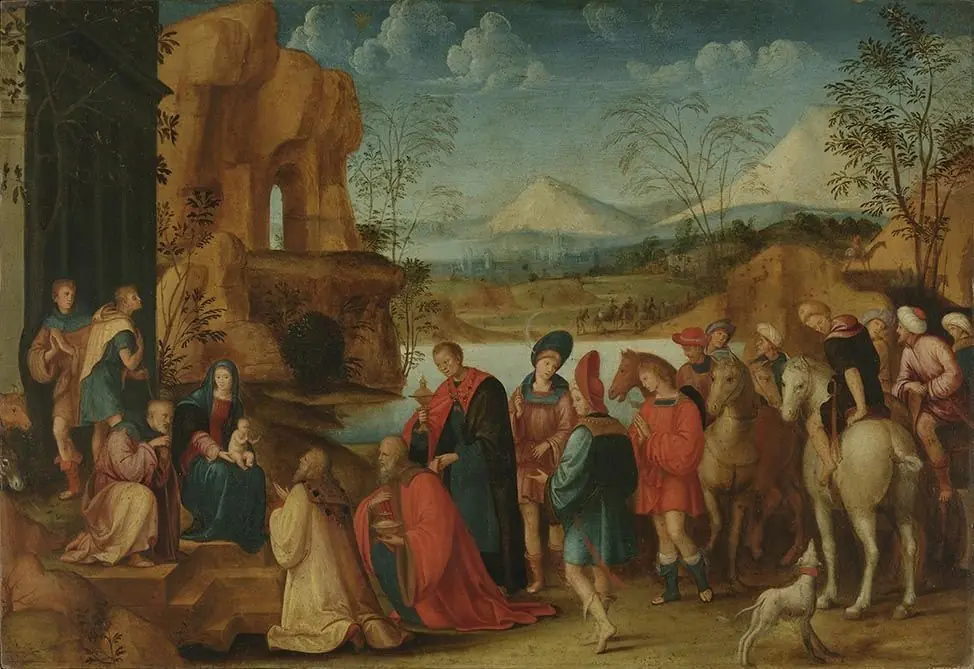 Anbetung der Könige
 The Holy Family with the Infant St John
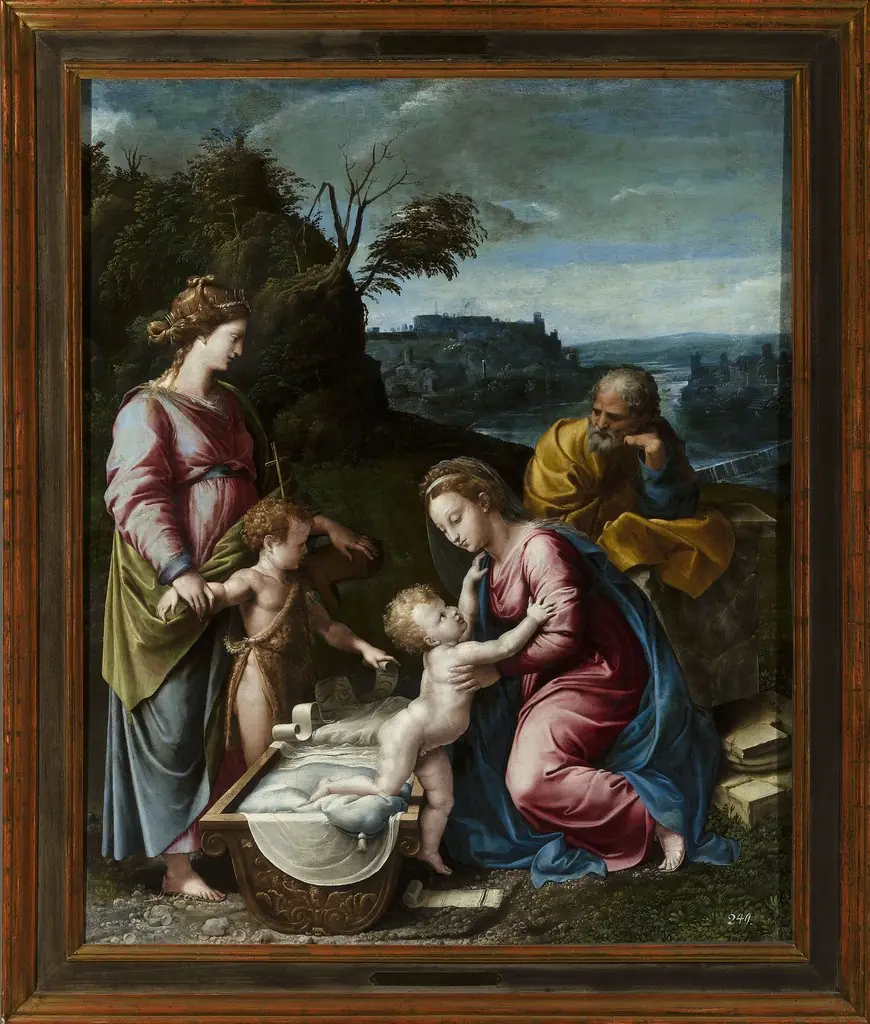 Holy Family with St. John the Baptist and St. Catherine of Alexandria
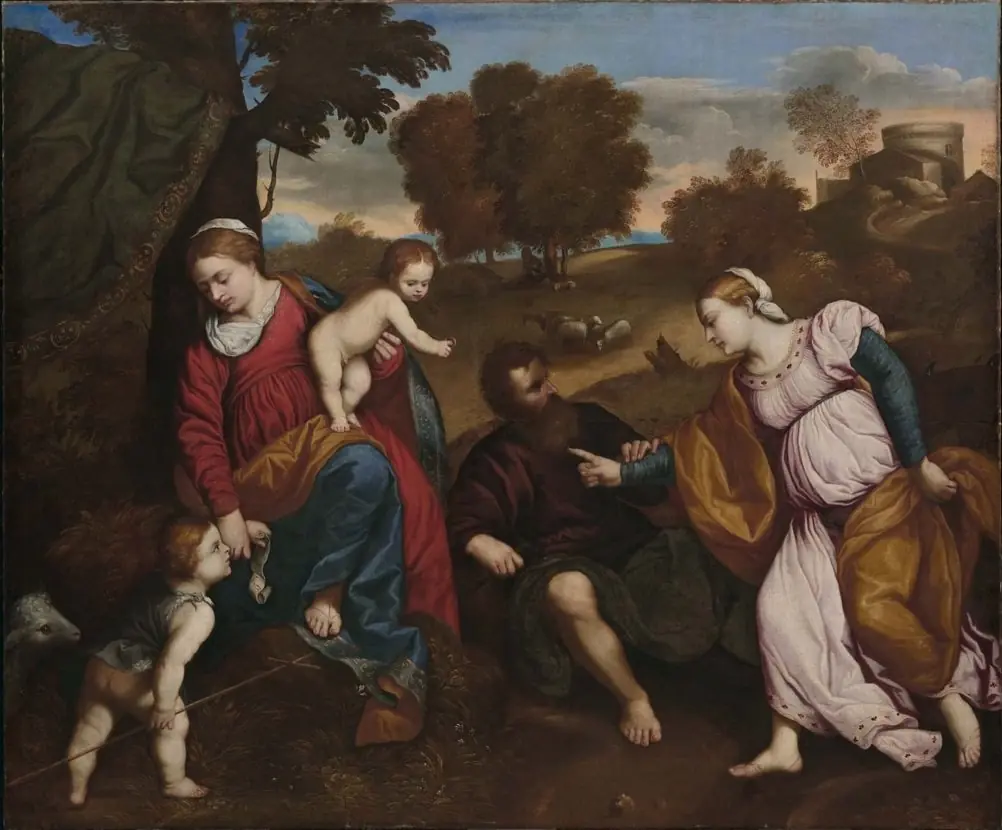 The Mystic Marriage of Saint Catherine
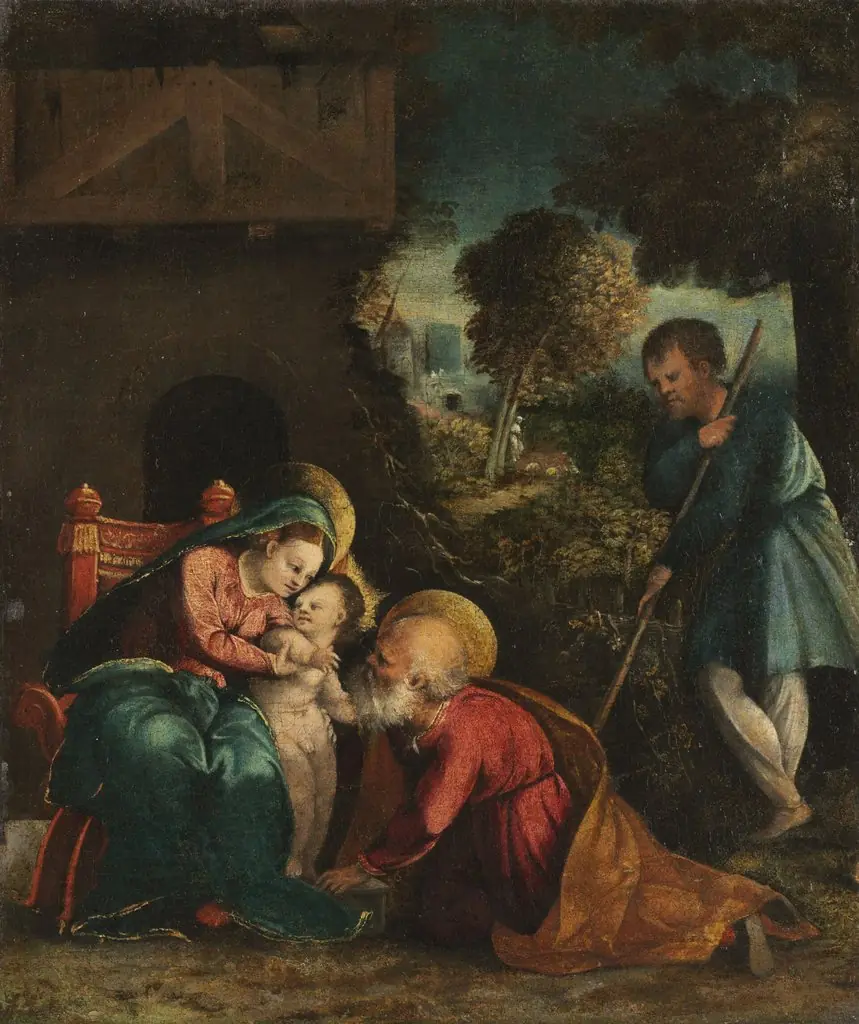 Holy Family with a Shepherd
 Adoration of the Magi