Artwork
The Holy Family with the Infant St John
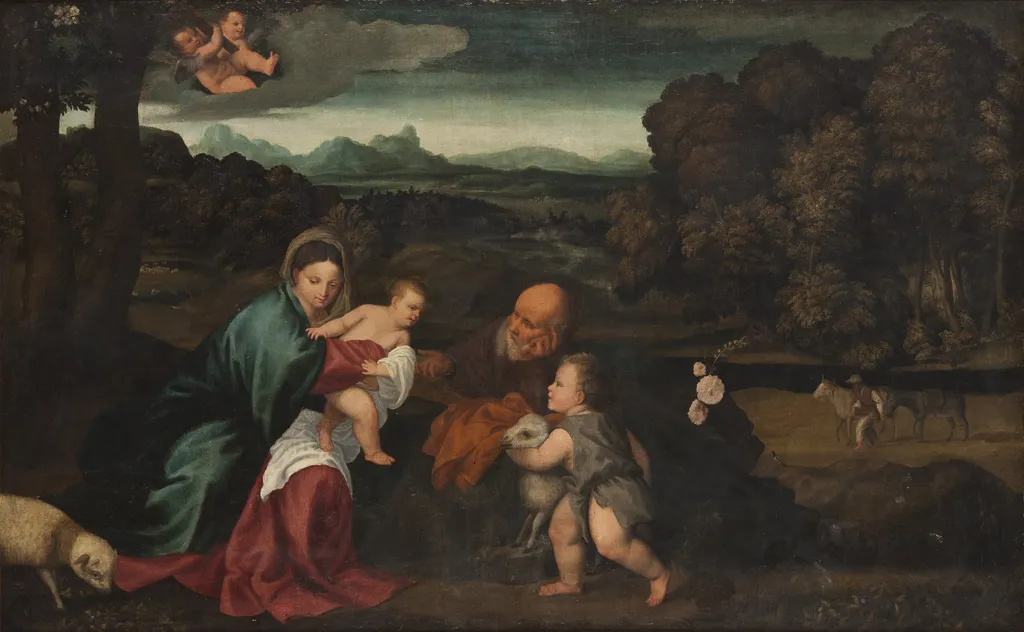
The Holy Family with the Infant St John is an oil painting by Unknown. It is held in the collection of the Nationalmuseum. This oil painting depicts the Holy Family—Mary, Joseph, and the infant Jesus—alongside the young Saint John the Baptist.
About this work
Overview
This oil painting depicts the Holy Family—Mary, Joseph, and the infant Jesus—alongside the young Saint John the Baptist. The composition centers on a quiet, intimate moment between the figures, set against a soft, naturalistic landscape. The scene avoids dramatic tension, instead emphasizing stillness and familial tenderness through gentle gestures and subdued lighting.
Subject & Meaning
Joseph’s attentive gaze toward John suggests a symbolic passing of spiritual responsibility, while Mary’s calm demeanor reflects her role as protector.
The painting portrays a moment of quiet communion between the Holy Family and the infant John, who would later baptize Jesus. Joseph’s attentive gaze toward John suggests a symbolic passing of spiritual responsibility, while Mary’s calm demeanor reflects her role as protector. The inclusion of John, though not a blood relative, underscores the theological connection between the two infants as foretold in scripture.
Technique & Style
The artist employs soft brushwork and muted tones to create a harmonious atmosphere. Light falls gently across the figures, modeling their forms without harsh contrast. The landscape behind them is rendered with delicate detail—trees, distant hills, and a hazy sky—enhancing the sense of depth while maintaining a serene, almost dreamlike quality that supports the painting’s contemplative mood.
History & Provenance
The painting’s early ownership is undocumented, but its style aligns with early 16th-century Italian devotional works. It likely originated in a private chapel or noble household, where such images served as aids to personal prayer. Its survival through centuries suggests it was carefully preserved, possibly due to its emotional resonance and religious significance to its owners.
Context
Created during a period when domestic depictions of sacred figures gained popularity, this work reflects a shift toward humanizing biblical narratives. Artists moved away from rigid iconography, favoring tender, everyday interactions to foster emotional engagement. The inclusion of John the Baptist as a child, rather than a prophet, aligns with contemporary devotional trends emphasizing familial bonds within sacred stories.
Legacy
Though not widely exhibited, the painting remains an example of quiet Renaissance piety. Its influence lies in its understated emotional depth, inspiring later artists to explore sacred themes through intimacy rather than grandeur. It continues to be studied for its balance of naturalism and spiritual serenity, offering insight into how faith was visually cultivated in private settings.
Artist & collection

 Domestic Scene
 Giacomo and Cardinal Marco, investing Andrea, Abbot of San Zeno, with his Benefice
 The Nymph of Fontainebleau
 Portrait of a Woman
 Madonna and Child with Saints in the Enclosed Garden
 Venus and Minerva
 Family Group of Four on Sofa
 Wall painting from Room H of the Villa of P. Fannius Synistor at Boscoreale
 The Holy Family with Saint John the Baptist
 Virgin and Child with young John the Baptist, Saints Peter and Antony Abbot
 The Adoration of the Shepherds
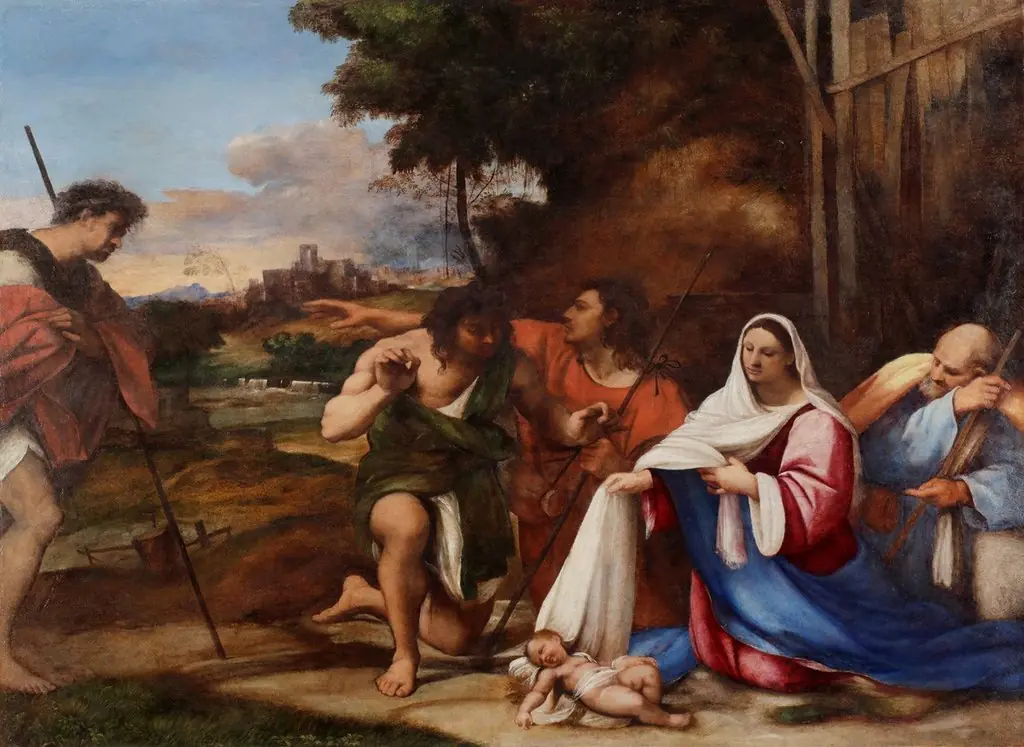 Adoration of the Shepherds
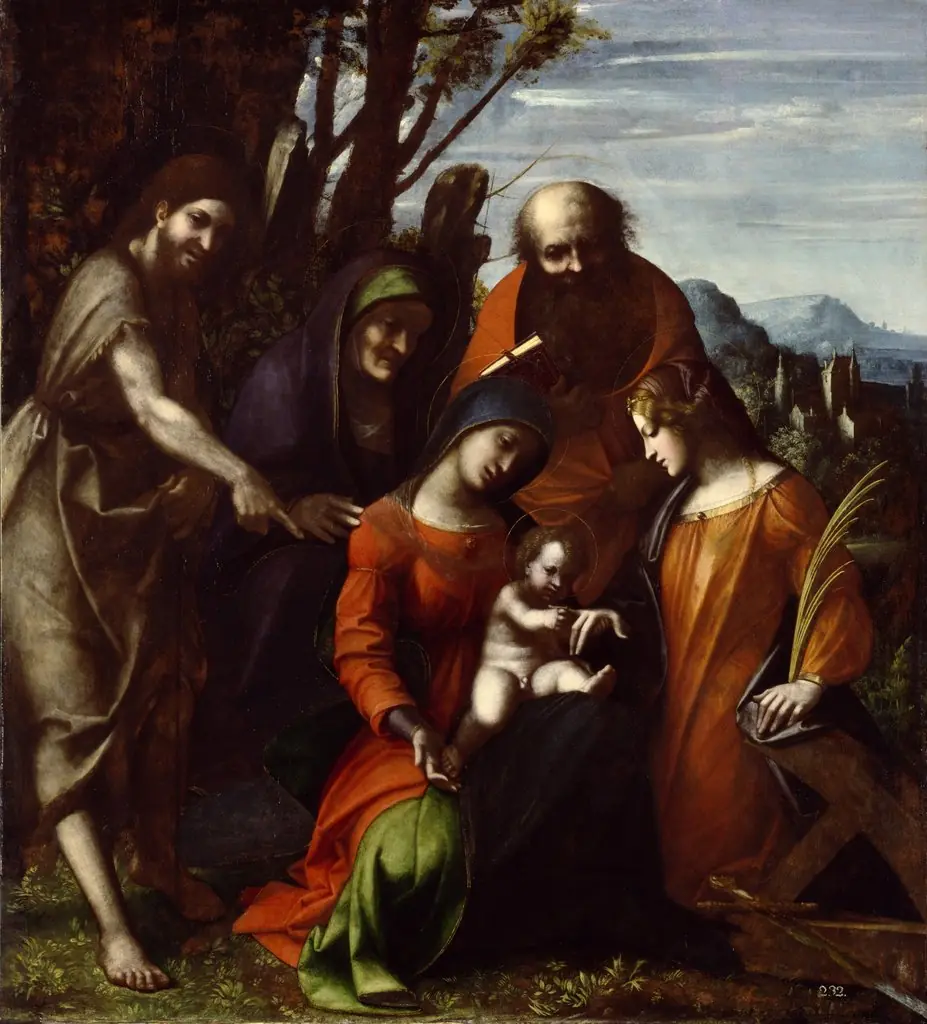 The Mystic Marriage of Saint Catherine
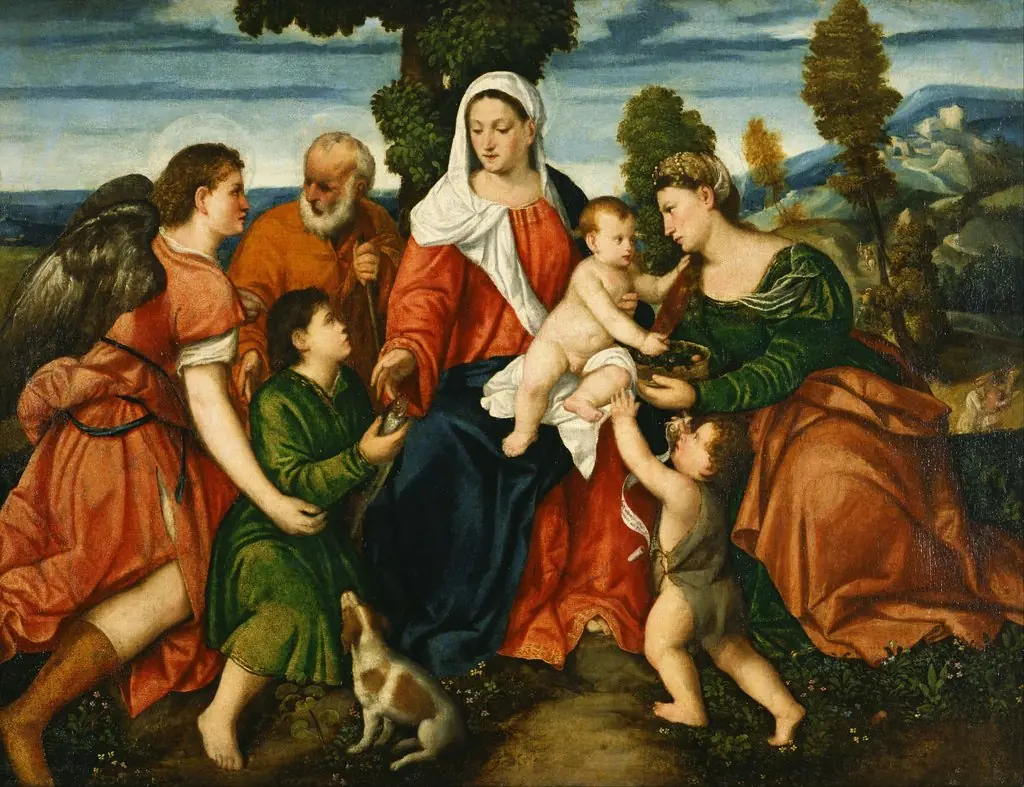 The Holy Family with Tobias and the Angel, Saint Dorothy, Giovannino, and the Miracle of the Corn beyond
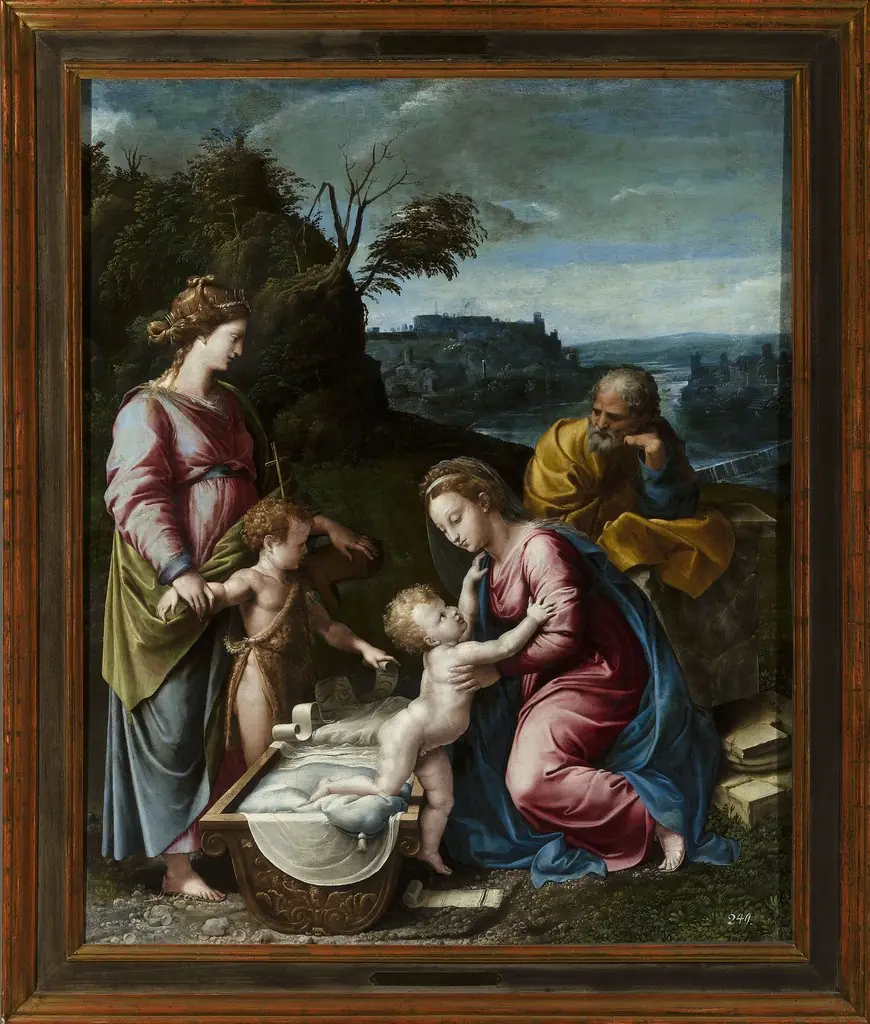 Holy Family with St. John the Baptist and St. Catherine of Alexandria
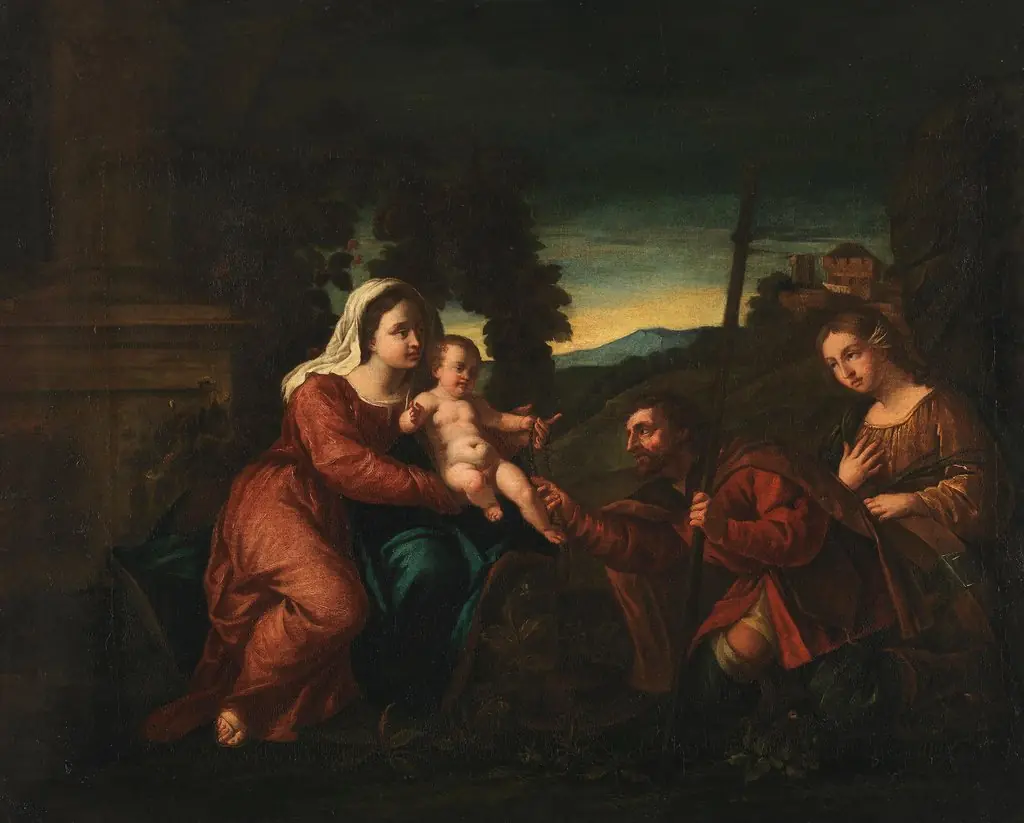 Madonna and Child with Saints Roche and Mary Magdalene
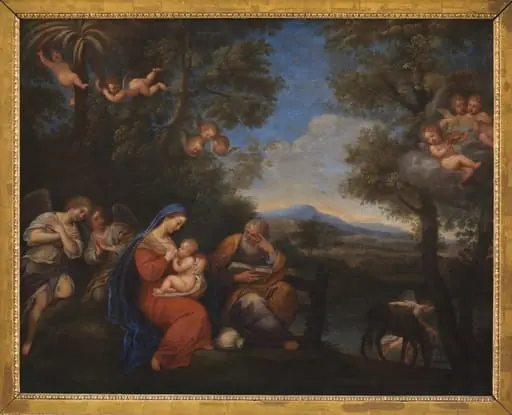 The Rest on the Flight into Egypt
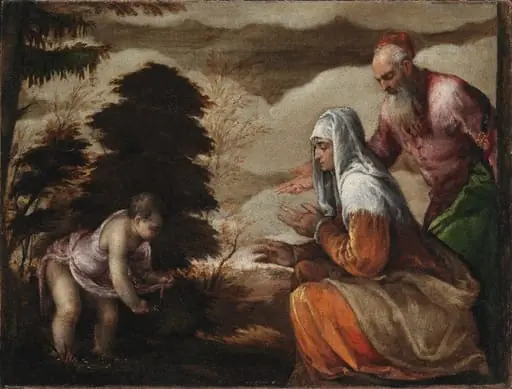 Johannes Kastaja kerää kukkia vanhemmilleen