Artwork
Adormirea Maicii Domnului
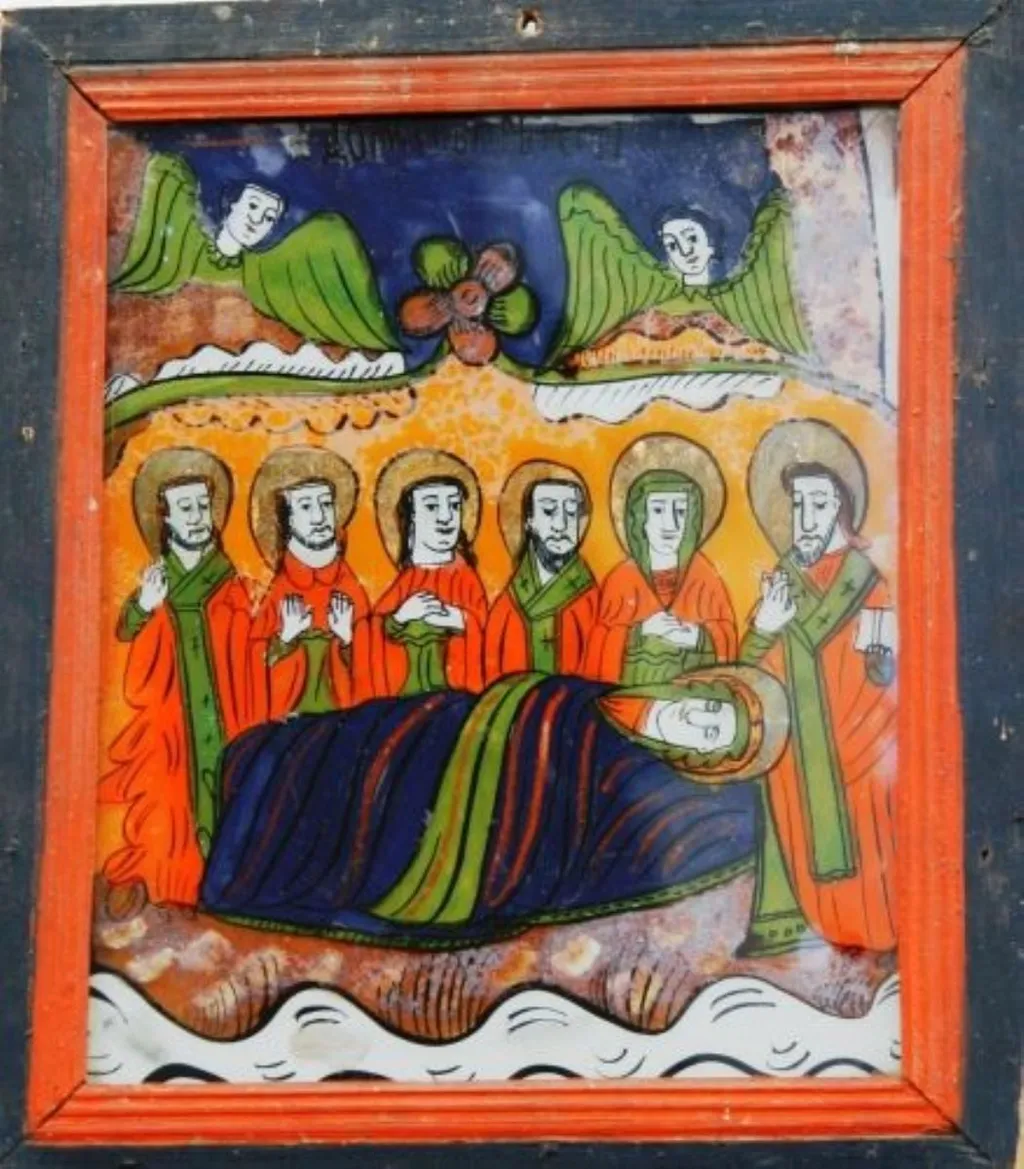
Adormirea Maicii Domnului is a drawing by Unknown. It dates from 1850 and is held in the collection of the Romanian Peasant Museum.
About this work
Overview
The palette is dominated by saturated hues of green, orange, and blue, reinforcing symbolic rather than observational intent.
This work depicts the Dormition of the Virgin, a scene from Christian tradition in which the Mother of Christ is surrounded by apostles at the moment of her passing. Rendered in a stylized, non-naturalistic manner, the composition emphasizes spiritual presence over physical realism. Figures are arranged symmetrically around a central recumbent form, with angels above suggesting divine transition. The palette is dominated by saturated hues of green, orange, and blue, reinforcing symbolic rather than observational intent.
Subject & Meaning
The central figure represents the Virgin Mary in repose, surrounded by seven apostles who witness her transition from earthly life to heavenly rest. The halos identify holy figures, while the hovering angels signify divine intervention. The absence of mourning gestures and the calm posture suggest not death, but a peaceful passage into eternal life. The flatness and lack of perspective reinforce the scene’s theological nature, prioritizing sacred narrative over temporal realism.
Technique & Style
The painting employs a flat, two-dimensional space with no attempt at linear perspective or chiaroscuro. Figures are outlined clearly, their robes rendered in bold, unmodulated colors—greens, oranges, and blues—that carry symbolic weight rather than mimic natural light. Facial features are simplified, and halos are rendered as simple golden rings. The overall approach aligns with Byzantine and early Eastern Orthodox iconography, where form serves devotion over illusion.
History & Provenance
Though the exact origin and artist are undocumented, the style and iconography suggest a production within the Byzantine or post-Byzantine tradition, likely from the Balkans or Anatolia between the 13th and 16th centuries. Such images were commonly used in liturgical settings or private devotion. The painting’s survival indicates its continued veneration, though its path from creation to current location remains unrecorded in public archives.
Context
This image belongs to a broader tradition of Eastern Christian iconography that standardized religious narratives through consistent composition and symbolism. The Dormition was a widely depicted theme in Orthodox churches, often placed above altars or in narthexes. Its visual language—flat space, symbolic color, frontal figures—was designed to facilitate prayer and meditation, not to emulate the visible world.
Legacy
The work reflects enduring conventions of Eastern Christian art that persisted for centuries, influencing regional painting traditions across Orthodox communities. Its emphasis on spiritual presence over naturalism contrasts with later Western developments in realism. Today, such images remain important for understanding how religious belief shaped visual culture beyond the Renaissance canon.
Artist & collection

 Domestic Scene
 Giacomo and Cardinal Marco, investing Andrea, Abbot of San Zeno, with his Benefice
 The Nymph of Fontainebleau
 Portrait of a Woman
 Madonna and Child with Saints in the Enclosed Garden
 Venus and Minerva
 Family Group of Four on Sofa
 Wall painting from Room H of the Villa of P. Fannius Synistor at Boscoreale
 Înălțarea la cer a Maicii Domnului
 Plângerea lui Iisus (Prohodul)
 Plângerea lui Iisus
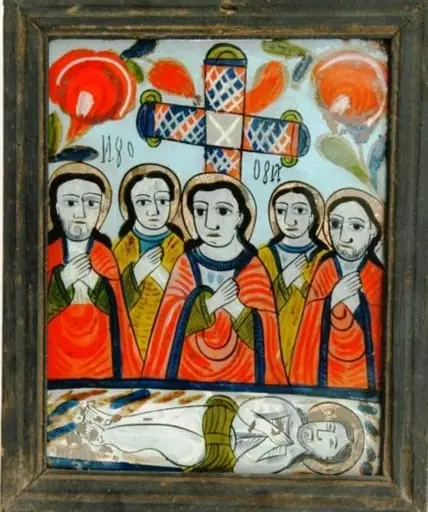 Plângerea lui Iisus Hristos (Prohodul)
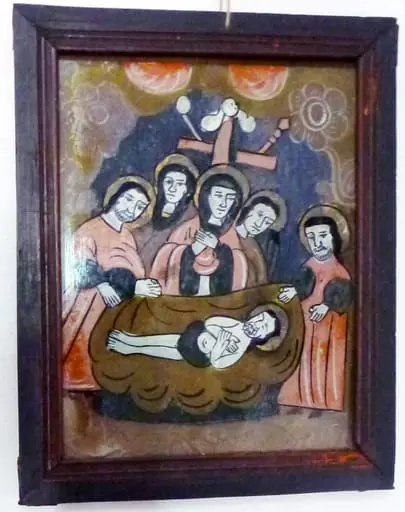 Prohodul Domnului
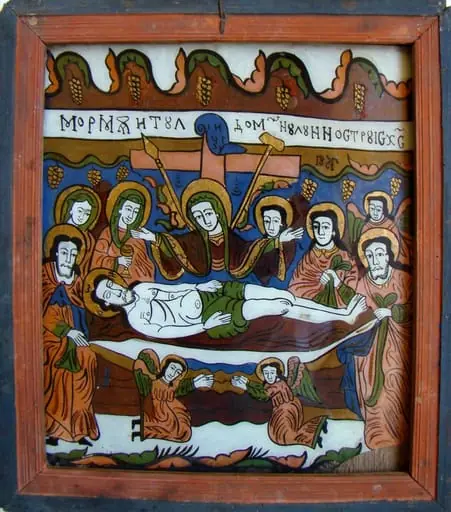 Prohodul lui Iisus
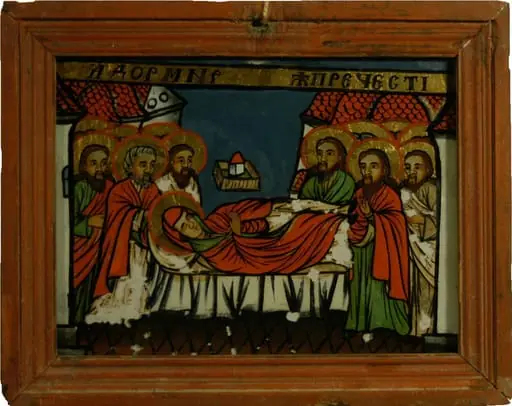 Adormirea Maicii Domnului
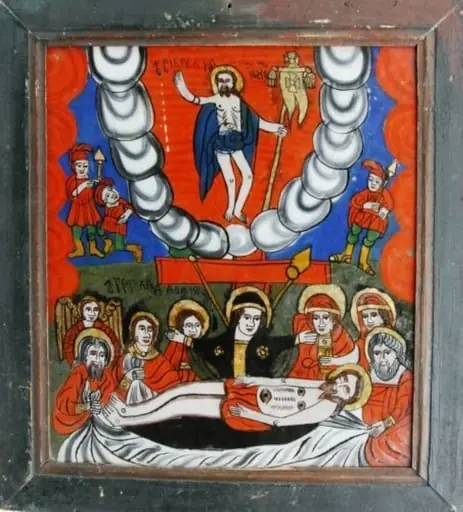 Îngroparea lui Iisus Hristos; Înălțarea lui Iisus Hristos la ceruri (Plângerea, Prohodul)
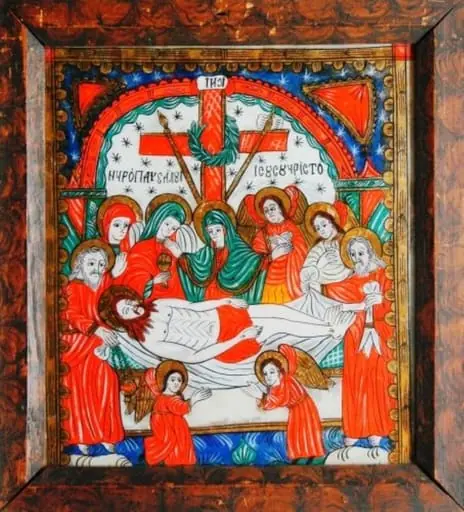 Îngroparea lui Iisus Hristos (Plângerea; Prohodul)
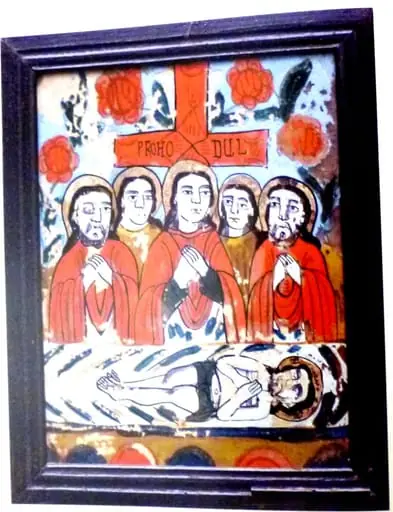 Prohodul