Artwork
Prohodul lui Iisus
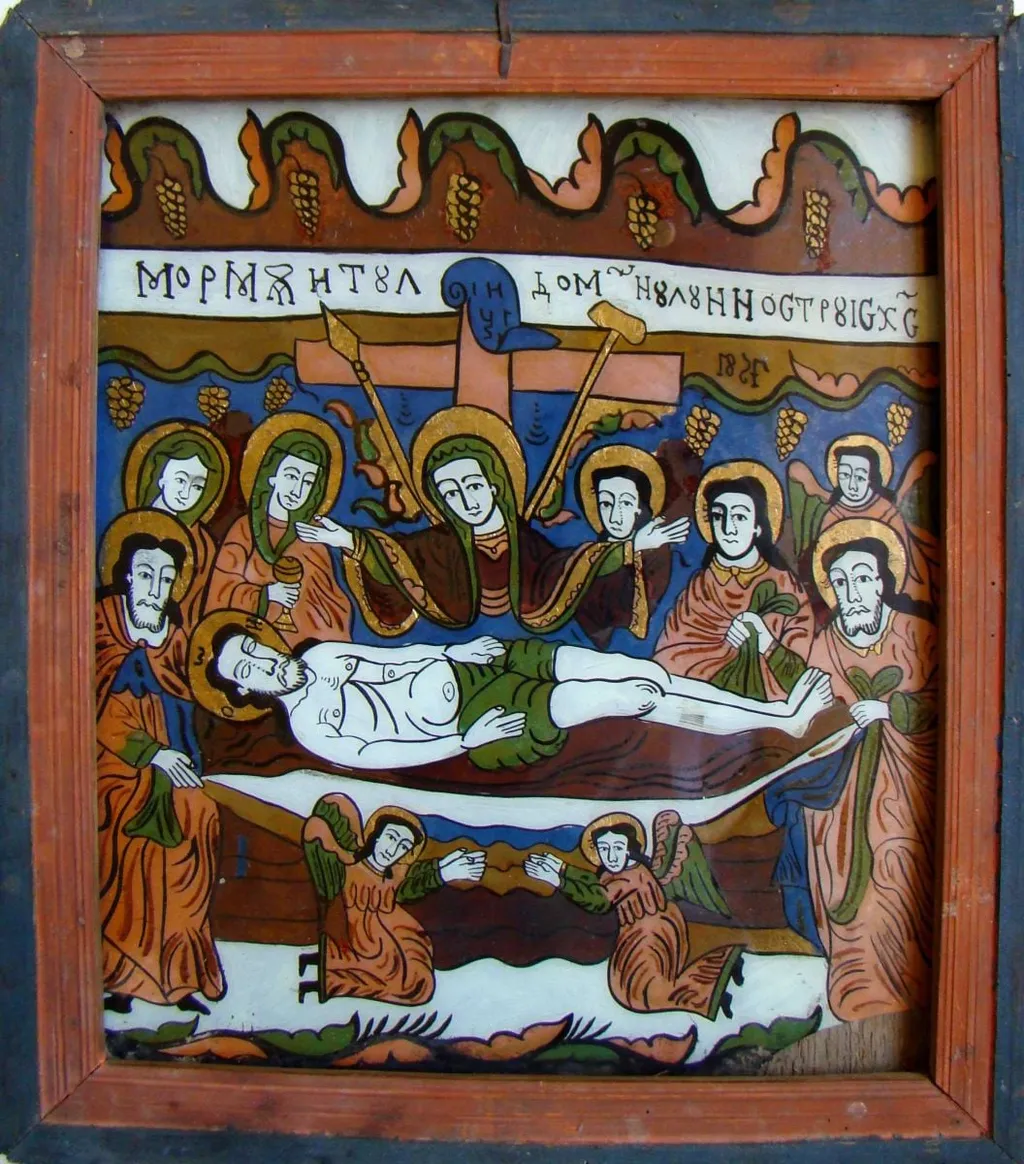
Prohodul lui Iisus is an unspecified painting by the Byzantine icon painting artist Unknown. It dates from 1827 and is held in the collection of the Alba Iulia Unification National Museum. This work depicts a religious scene centered on a recumbent figure surrounded by robed onlookers, one of whom hovers above.
About this work
Overview
A border of grape clusters and an inscribed band in an unfamiliar script frame the image, suggesting liturgical or devotional use.
This work depicts a religious scene centered on a recumbent figure surrounded by robed onlookers, one of whom hovers above. The composition is static and symmetrical, emphasizing stillness over motion. Flat, saturated hues—greens, browns, and blues—create a decorative surface, while gold halos mark sacred status. A border of grape clusters and an inscribed band in an unfamiliar script frame the image, suggesting liturgical or devotional use.
Subject & Meaning
The central figure, likely Christ, lies in a state resembling sleep or trance, with hands raised as if receiving divine presence. The hovering figure may represent an angel or a spiritual manifestation. The gathered attendants, in varied postures, convey reverence and witness. Grape clusters along the border allude to the Eucharist, reinforcing the scene’s sacramental significance within a ritual context.
Technique & Style
The painting employs a flattened perspective and unmodulated color, rejecting naturalistic depth in favor of symbolic clarity. Figures are outlined sharply, with minimal shading, enhancing their iconic quality. Gold halos are applied as solid bands, not modeled forms. The decorative border and script band suggest influence from illuminated manuscripts or liturgical textiles, prioritizing spiritual symbolism over realism.
History & Provenance
The work’s origin is unclear, but its visual language aligns with Byzantine or Eastern Christian traditions, possibly from a monastic or regional workshop. The use of non-Latin script and grape motifs points to a cultural context where liturgical imagery was closely tied to communal worship. No documented ownership history is available, but its format suggests it was created for private devotion or church use.
Context
This image belongs to a broader tradition of sacred scenes rendered in stylized, non-naturalistic forms, common in medieval and early Renaissance religious art. The floating figure and trance-like central pose reflect theological concepts of divine intervention and spiritual ecstasy. Such works were often used in liturgical settings or personal prayer, where visual cues guided meditation rather than narrative storytelling.
Legacy
Though not widely known outside specialized circles, the painting exemplifies how religious communities used visual symbolism to convey theological ideas beyond textual literacy. Its stylistic choices—flatness, symbolic color, and decorative framing—echo enduring practices in Eastern Christian iconography, preserving a visual language that prioritized spiritual presence over physical realism.
Artist & collection
Museum
Alba Iulia Unification National Museum
Continue through works from the same source collection.
 Domestic Scene
 Giacomo and Cardinal Marco, investing Andrea, Abbot of San Zeno, with his Benefice
 The Nymph of Fontainebleau
 Portrait of a Woman
 Madonna and Child with Saints in the Enclosed Garden
 Venus and Minerva
 Family Group of Four on Sofa
 Wall painting from Room H of the Villa of P. Fannius Synistor at Boscoreale
 Prohodul lui Iisus
 Punerea în mormânt; (Îngroparea lui Iisus, Prohodul)
 Coborârea de pe cruce
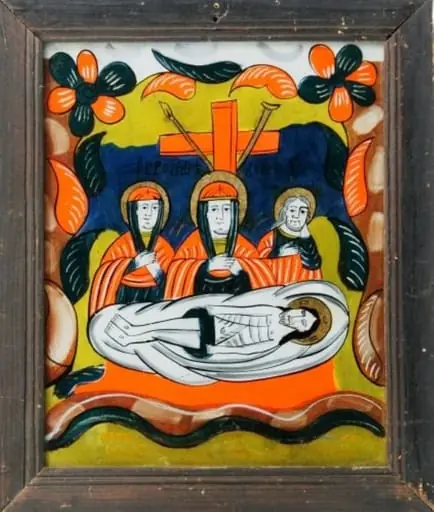 Plângerea lui Iisus (Prohodul)
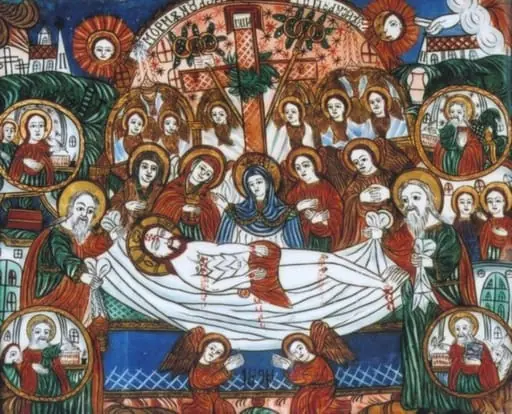 Îngroparea lui Iisus (Prohodul Domnului)
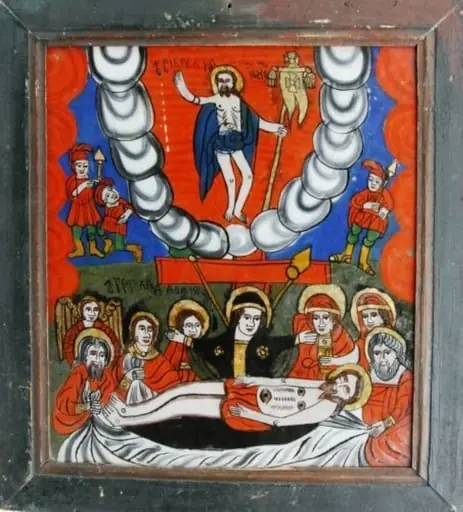 Îngroparea lui Iisus Hristos; Înălțarea lui Iisus Hristos la ceruri (Plângerea, Prohodul)
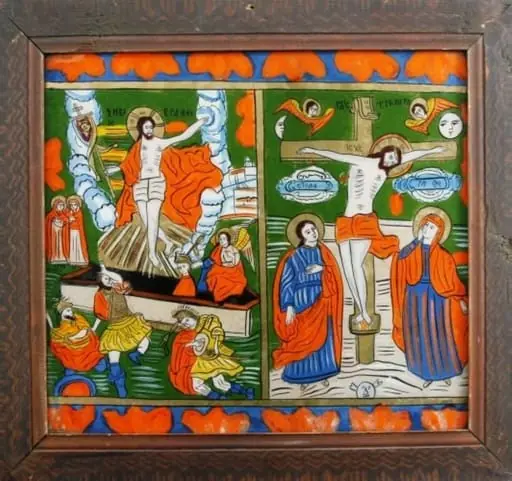 Înălțarea lui Iisus Hristos la ceruri; Răstignirea lui Iisus Hristos
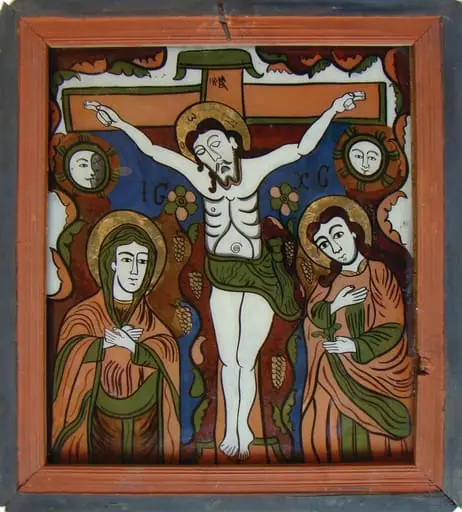 Răstignirea lui Iisus
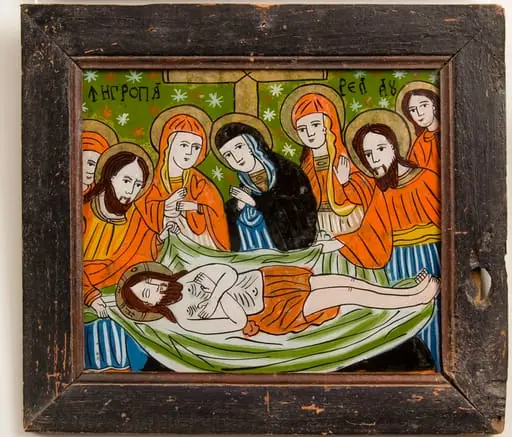 Punerea în mormânt; Îngroparea lui Iisus
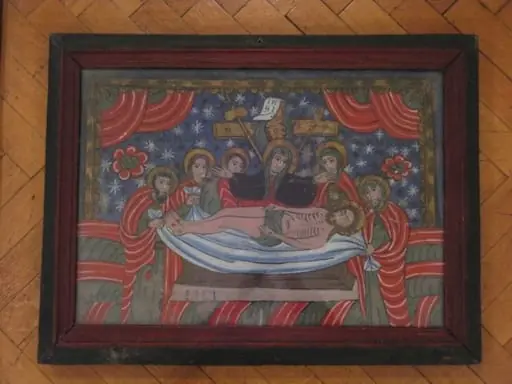 Plângerea lui Iisus Hristos (Prohodul)
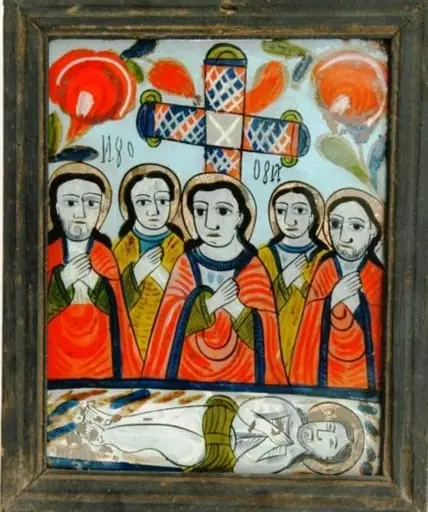 Plângerea lui Iisus Hristos (Prohodul)