Artwork
Album of Daoist and Buddhist Themes: Procession of Daoist Deities: Leaf 21
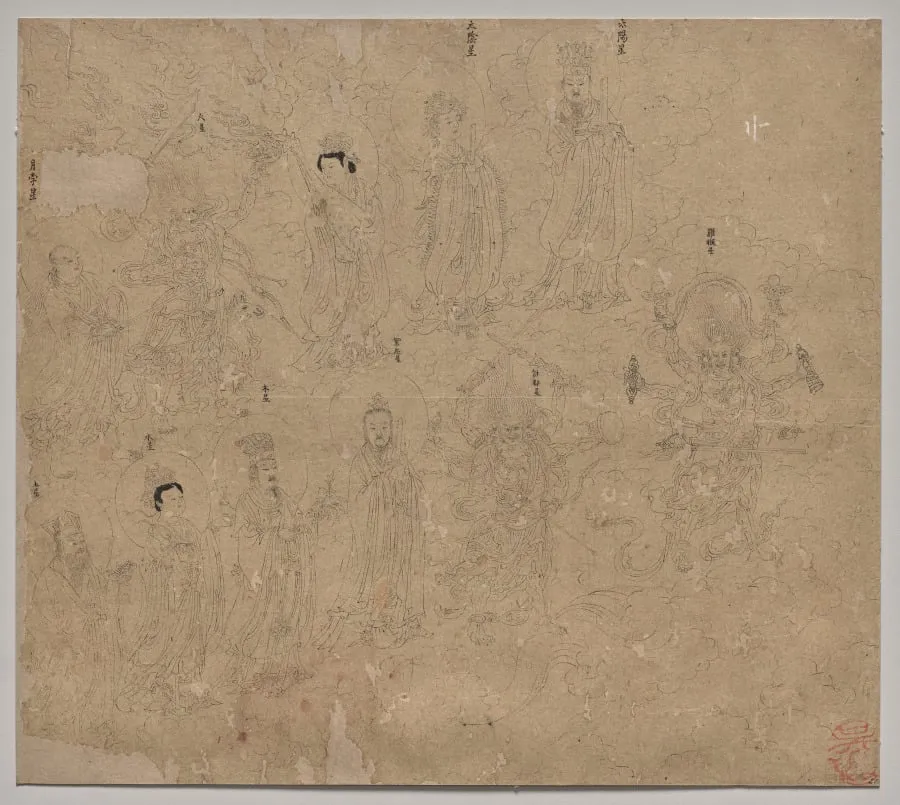
Album of Daoist and Buddhist Themes: Procession of Daoist Deities: Leaf 21 is an unspecified painting by the Ming dynasty painting artist Unknown. It dates from 1204 and is held in the collection of the Cleveland Museum of Art. The work is a single leaf from a larger album of fifty drawings created during the Southern Song period (1127‑1279).
About this work
You see a line of nine figures in flowing robes, each holding a different object—a sword, a fan, a scroll—marching across a blank page.
You see a line of nine figures in flowing robes, each holding a different object—a sword, a fan, a scroll—marching across a blank page.
These are the Nine Brilliant Constellations, gods from Daoist belief. The artist drew them to guide rituals or teach stories, not just to decorate. The same gods later appeared in Buddhist art, showing how ideas traveled between faiths.
Look up *china, southern song dynasty (1127-1279)* to see more works from this time.
Overview
The work is a single leaf from a larger album of fifty drawings created during the Southern Song period (1127‑1279). The album is divided into three thematic groups: celestial processions of Daoist deities, illustrations of the Ten Kings of the Underworld, and scenes from Erlang’s campaign against the monsters of Mount Guankou. This particular leaf belongs to the Daoist procession series.
Subject & Meaning
The image portrays the Nine Brilliant Constellations, a set of celestial deities in Daoist tradition. Arranged in two rows, the figures represent the sun, moon, Venus, Mars, the lunar mansion Yuebei, Luohou, the comet Jidu, Ziqu, Jupiter, Mercury (shown as female), and Saturn. Their procession likely served as a visual guide for ritual practice and mythic storytelling.
Technique & Style
Rendered in fine brushwork on paper, the figures are depicted in flowing robes and each holds a distinctive attribute—a sword, a fan, a scroll, among others—emphasizing their individual identities. The composition is linear, with the nine figures marching across an otherwise empty background, a common convention for didactic religious illustrations of the period.
History & Provenance
The album, of which this leaf is a part, has been recognized as an important source for the transmission of Daoist iconography into later Chinese Buddhist art. The manuscript’s provenance traces back to private collections before entering a museum holding, where it is studied for its role in cross‑religious visual exchange.
Context
During the Southern Song, Daoist and Buddhist visual cultures frequently intersected, and artists often borrowed motifs across traditions. The Nine Brilliant Constellations, originally Daoist celestial figures, appear repeatedly in Buddhist iconography, illustrating the fluidity of religious symbolism in medieval China.
Artist & collection

 Domestic Scene
 Giacomo and Cardinal Marco, investing Andrea, Abbot of San Zeno, with his Benefice
 The Nymph of Fontainebleau
 Portrait of a Woman
 Madonna and Child with Saints in the Enclosed Garden
 Venus and Minerva
 Family Group of Four on Sofa
 Wall painting from Room H of the Villa of P. Fannius Synistor at Boscoreale
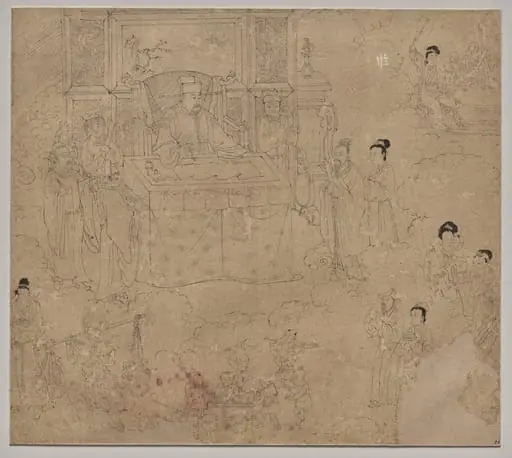 Album of Daoist and Buddhist Themes: Kings of Hells: Leaf 28
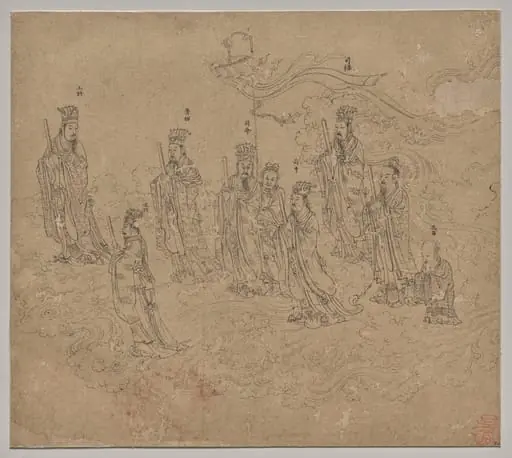 Album of Daoist and Buddhist Themes: Procession of Daoist Deities: Leaf 26
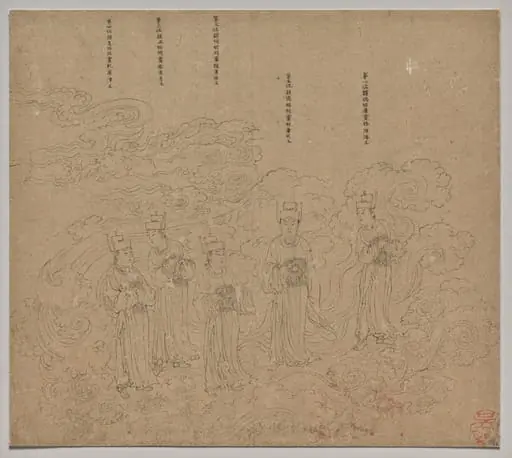 Album of Daoist and Buddhist Themes: Procession of Daoist Deities: Leaf 22
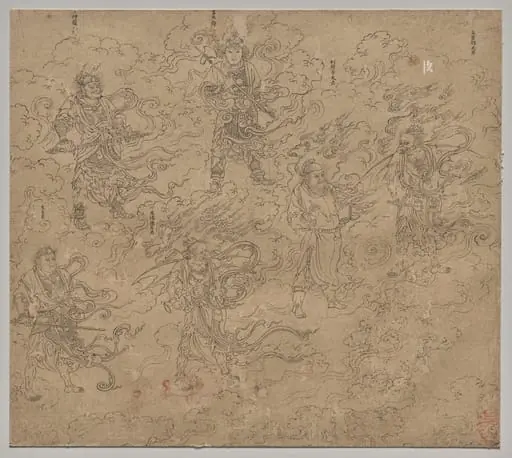 Album of Daoist and Buddhist Themes: Procession of Daoist Deities: Leaf 19
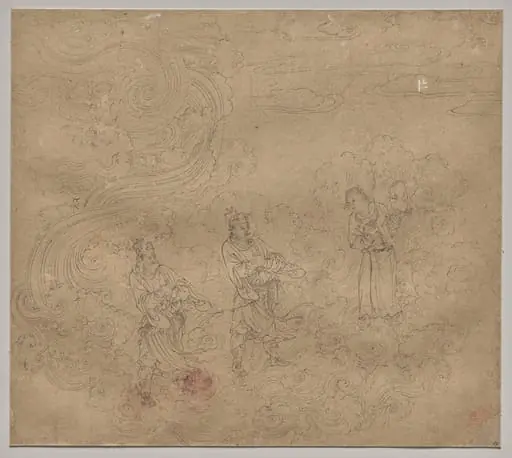 Album of Daoist and Buddhist Themes: Procession of Daoist Deities: Leaf 17
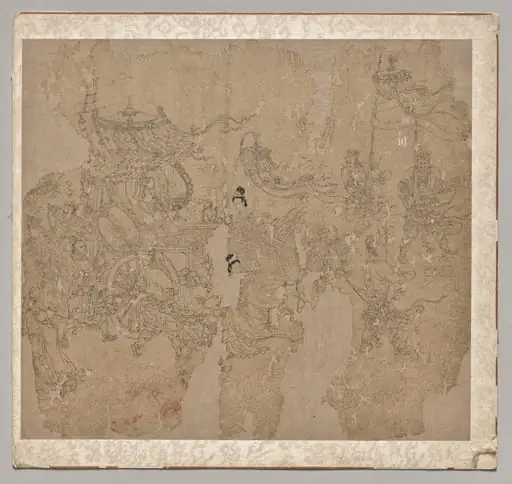 Album of Daoist and Buddhist Themes: Procession of Daoist Deities: Leaf 3
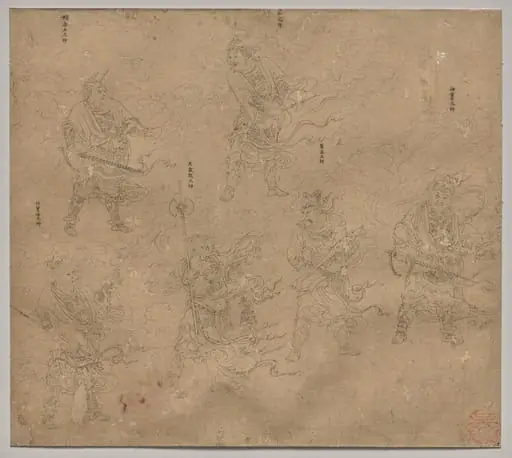 Album of Daoist and Buddhist Themes: Procession of Daoist Deities: Leaf 13