Artwork
Album of Daoist and Buddhist Themes: Kings of Hells: Leaf 27
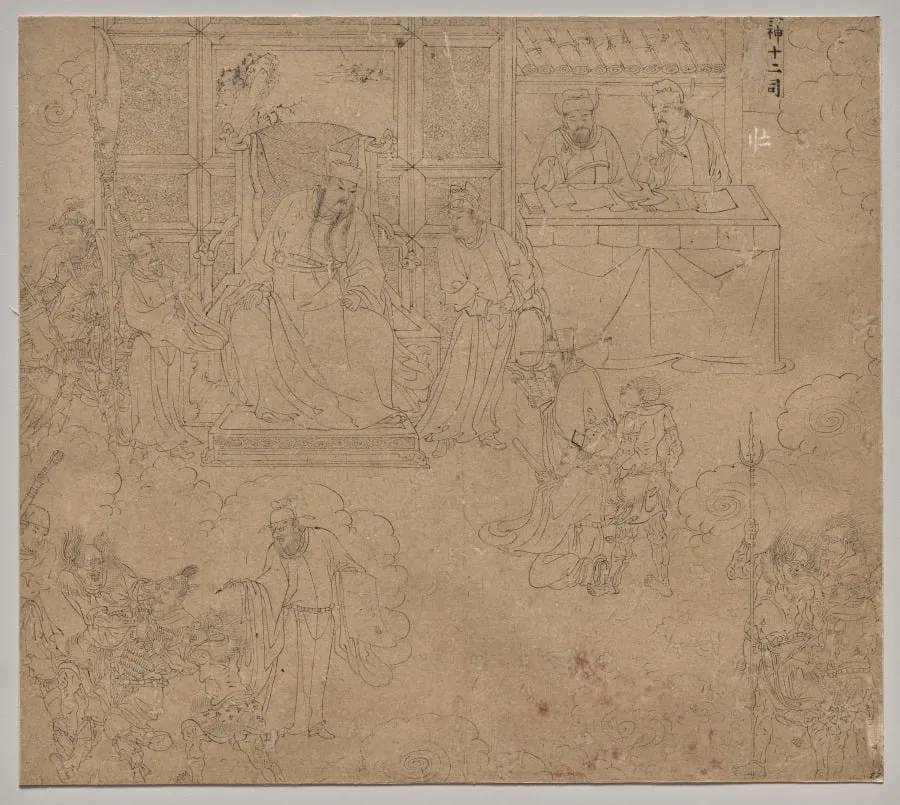
Album of Daoist and Buddhist Themes: Kings of Hells: Leaf 27 is an unspecified painting by the Ming dynasty painting artist Unknown. It dates from 1204 and is held in the collection of the Cleveland Museum of Art.
About this work
The scene mixes Buddhist ideas with Chinese bureaucracy—like a government office, but for the afterlife.
You see a crowded courtroom in hell. A king sits on a throne while demons drag souls forward. Scribes record deeds in ledgers, and tortured figures twist in the foreground.
This painting is one page from a set of ten. Each king judges a soul before it can be reborn. The scene mixes Buddhist ideas with Chinese bureaucracy—like a government office, but for the afterlife.
To see more of these hell courts, look up *china, southern song dynasty (1127-1279)*.
Overview
The work is a single leaf from a series illustrating the Ten Kings of Hell, a visual narrative that adapts Indian Buddhist concepts of post‑mortem judgment to a Chinese bureaucratic framework. In the scene a king presides over a courtroom in the underworld, surrounded by demons, scribes, and officials who record the deeds of the condemned before a verdict is rendered.
Subject & Meaning
Each of the ten kings oversees a three‑year trial in which a soul’s merits and faults are examined. The painting depicts the moment when demons bring the accused before the throne, while clerks note their actions in ledgers. The inscription on the leaf mentions twelve functionaries assisting the king, underscoring the administrative nature of the afterlife judgment.
Technique & Style
Executed in the traditional Chinese painting medium of ink and color on paper, the composition employs a crowded, linear arrangement that mirrors a governmental office. Figures are rendered with fine brushwork, allowing the chaotic activity of demons and tormented souls to be distinguished within the confined space of the court.
History & Provenance
The leaf originates from a Southern Song dynasty (1127‑1279) series, a period when Buddhist ideas were frequently integrated into Chinese visual culture. The complete set comprised ten panels, each dedicated to one of the underworld judges, and would have been displayed as a didactic ensemble for monastic or elite audiences.
Context
During the Song era, the concept of hell evolved to reflect contemporary administrative structures, portraying the afterlife as a bureaucratic institution. This visual synthesis served both religious instruction and moral reinforcement, illustrating that earthly conduct would be scrutinized by an orderly, hierarchical system beyond death.
Legacy
The series influenced later Chinese depictions of the underworld, establishing a template for portraying cosmic justice as a civil service. Its blend of Buddhist doctrine with Chinese officialdom continued to appear in temple murals and printed illustrations throughout subsequent dynasties.
Artist & collection

 Domestic Scene
 Giacomo and Cardinal Marco, investing Andrea, Abbot of San Zeno, with his Benefice
 The Nymph of Fontainebleau
 Portrait of a Woman
 Madonna and Child with Saints in the Enclosed Garden
 Venus and Minerva
 Family Group of Four on Sofa
 Wall painting from Room H of the Villa of P. Fannius Synistor at Boscoreale
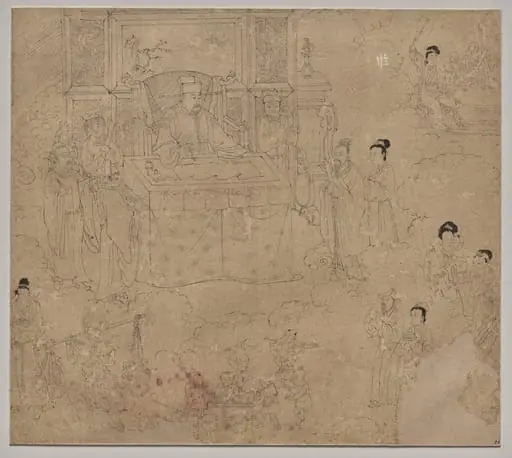 Album of Daoist and Buddhist Themes: Kings of Hells: Leaf 28
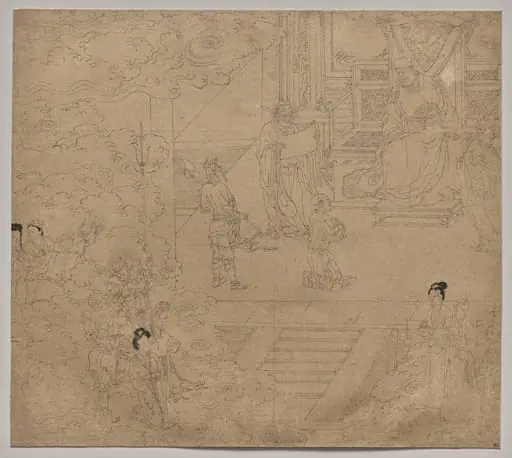 Album of Daoist and Buddhist Themes: Kings of Hells: Leaf 32
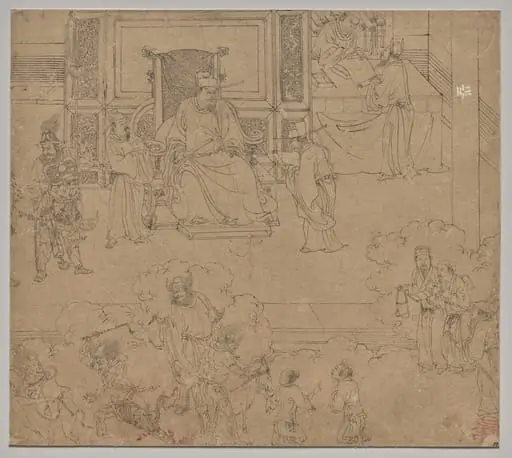 Album of Daoist and Buddhist Themes: Kings of Hells: Leaf 33
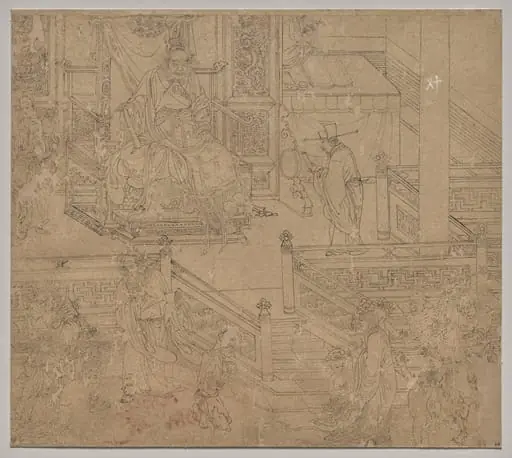 Album of Daoist and Buddhist Themes: Kings of Hells: Leaf 40
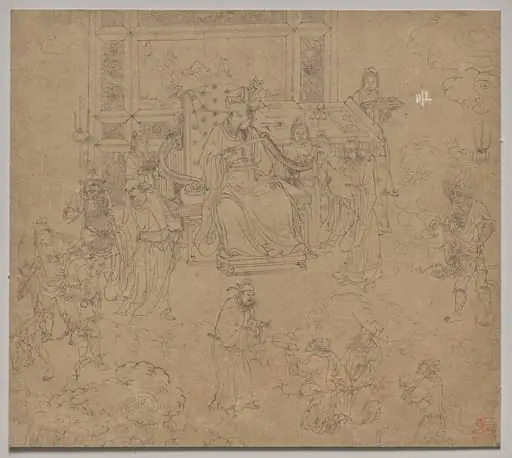 Album of Daoist and Buddhist Themes: Kings of Hells: Leaf 36
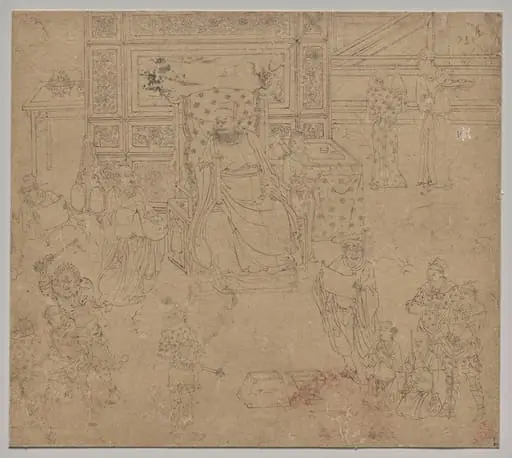 Album of Daoist and Buddhist Themes: Kings of Hells: Leaf 34
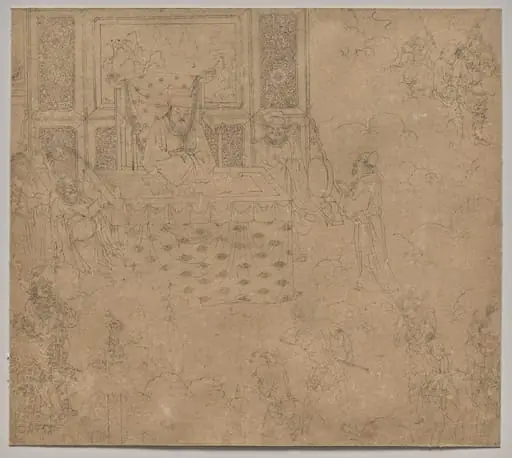 Album of Daoist and Buddhist Themes: Kings of Hells: Leaf 31