Artwork
Album of Precious Works from Famous Early Modern Calligraphers and Painters (Volume 2)
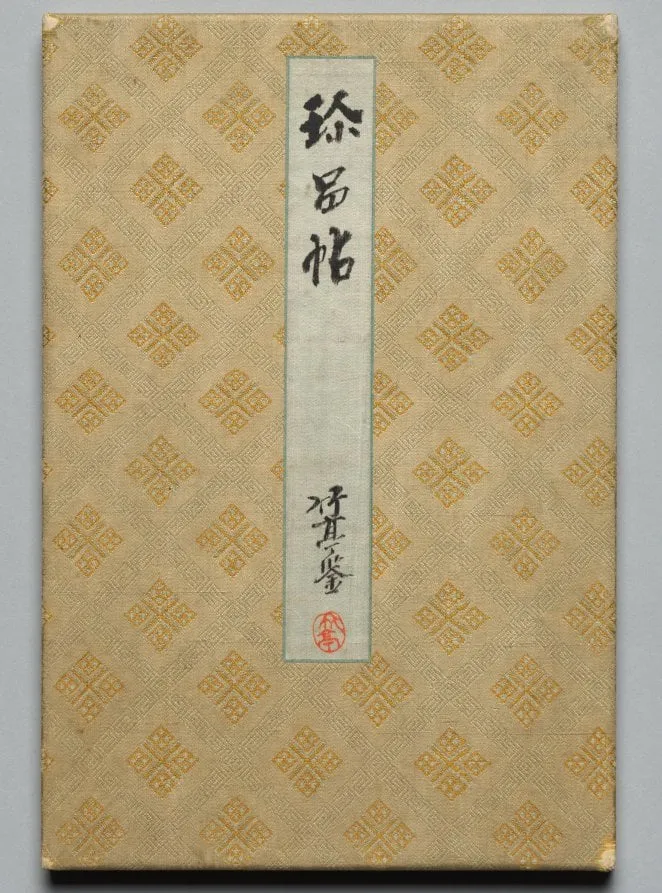
Album of Precious Works from Famous Early Modern Calligraphers and Painters (Volume 2) is a work on paper by the Romanticist artist Unknown. It dates from 1819 and is held in the collection of the Cleveland Museum of Art.
About this work
Each page shows a quiet scene—plum blossoms, bamboo, a traveler on a path—paired with handwritten verses.
You see a slim album of small paintings and poems by different Japanese artists from the 1800s. Each page shows a quiet scene—plum blossoms, bamboo, a traveler on a path—paired with handwritten verses.
What’s special is how the book mixes art and words. The painters and poets knew each other, trading work like letters. The album feels like a conversation across years, not just a gallery.
If you like this, look up Japan, Edo period (1615–1868) to see more of these quiet, personal works.
Overview
This album is the second volume of a curated collection featuring small-scale paintings and calligraphic inscriptions by Japanese literati of the early 19th century. Compiled over more than four decades, it includes works by twelve artists and poets, beginning with Tanomura Chikuden’s 1818 plum and bamboo painting and concluding with Okada Hankō’s undated traveler scene. The pages reflect a shared cultural language rooted in Chinese traditions, assembled not as a commercial product but as a personal exchange among friends.
Subject & Meaning
Each page presents a quiet, contemplative scene—plum blossoms, mountain paths, isolated figures on bridges—paired with poetic verses. These images and texts evoke ideals of scholarly retreat, friendship, and quiet reflection. The subjects draw from Chinese literati traditions, where nature symbolized moral integrity and personal harmony. The album functions as a visual correspondence, capturing moments of shared thought among a circle of educated individuals who valued intellectual companionship over public acclaim.
Technique & Style
The works employ ink wash and light color, following Chinese brush techniques transmitted through printed manuals and direct study. Landscapes are rendered with restrained brushwork, emphasizing atmosphere over detail. Calligraphy varies in style but maintains a deliberate, personal cadence. Most pieces are unsigned or minimally inscribed, reflecting the literati preference for humility. The integration of image and text is seamless, with poems often responding visually or emotionally to the accompanying scene, reinforcing the dialogue between artist and viewer.
History & Provenance
The album was assembled gradually between 1789 and 1833, with contributions added over time by a network of artists and poets who knew one another personally. Nagamachi Chikuseki’s 1789 bridge scene and Nukina Kaikoku’s 1833 island painting anchor the timeline. The inclusion of Rai San’yō and Rai Shunsui’s inscriptions suggests the album was circulated among literary circles in Kyoto and Osaka. Its compilation reflects a private, non-commercial tradition, likely intended for intimate viewing rather than public display.
Context
Created during the Edo period, the album reflects the influence of Chinese literati culture on Japanese intellectuals who rejected official artistic institutions. These artists, though not professional painters, embraced the Chinese model of the scholar-artist who expressed inner life through poetry and brushwork. Their gatherings and exchanges mirrored the Song and Yuan dynasty ideals of intellectual camaraderie. The album stands as a testament to a subculture that prized personal expression and mutual artistic dialogue over institutional recognition.
Legacy
This album exemplifies the enduring Japanese literati tradition, preserving the voices and hands of a generation who saw art as a form of personal and communal communication. It offers insight into how Chinese cultural models were adapted to local contexts, emphasizing intimacy over spectacle. Today, such albums are valued not for their rarity or technical brilliance, but for the quiet, enduring human connections they document—letters in ink and brush, exchanged across years and spaces.
Artist & collection

 Domestic Scene
 Giacomo and Cardinal Marco, investing Andrea, Abbot of San Zeno, with his Benefice
 The Nymph of Fontainebleau
 Portrait of a Woman
 Madonna and Child with Saints in the Enclosed Garden
 Venus and Minerva
 Family Group of Four on Sofa
 Wall painting from Room H of the Villa of P. Fannius Synistor at Boscoreale
 Ten Bamboo Studio Painting and Calligraphy Handbook (Shizhuzhai shuhua pu): Birds
 Ten Bamboo Studio Painting and Calligraphy Handbook (Shizhuzhai shuhua pu): Fruit
 Ten Bamboo Studio Collection of Calligraphy and Painting: Miscellaneous
 Ten Bamboo Studio Painting and Calligraphy Handbook (Shizhuzhai shuhua pu): Rocks
 Album of Miscellaneous Subjects
 Ten Bamboo Studio Painting and Calligraphy Handbook (Shizhuzhai shuhua pu): Bamboo
 Reverberations of Taiga (Volume 2)
 Reverberations of Taiga (Volume 1)
 Wzornik malarstwa z pracowni Senryū: (tom) trawy, kwiaty i robaki