Artwork
方便法身尊影|Amida Manifesting in the Dharma-body of Expedient Means
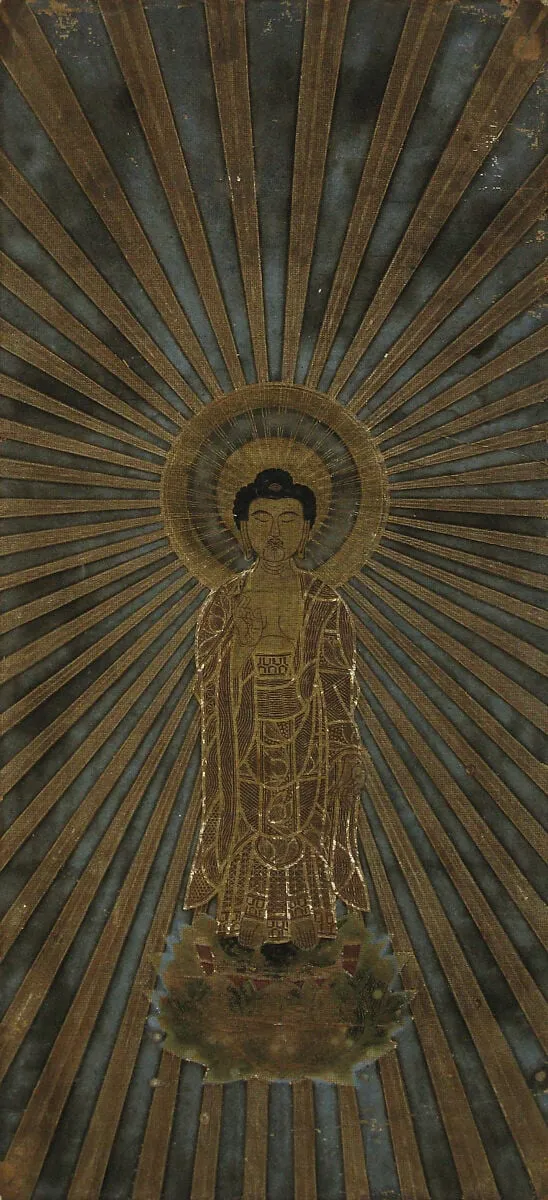
方便法身尊影|Amida Manifesting in the Dharma-body of Expedient Means is an ink painting. It dates from 1749 and is held in the collection of the Metropolitan Museum of Art.
About this work
Overview
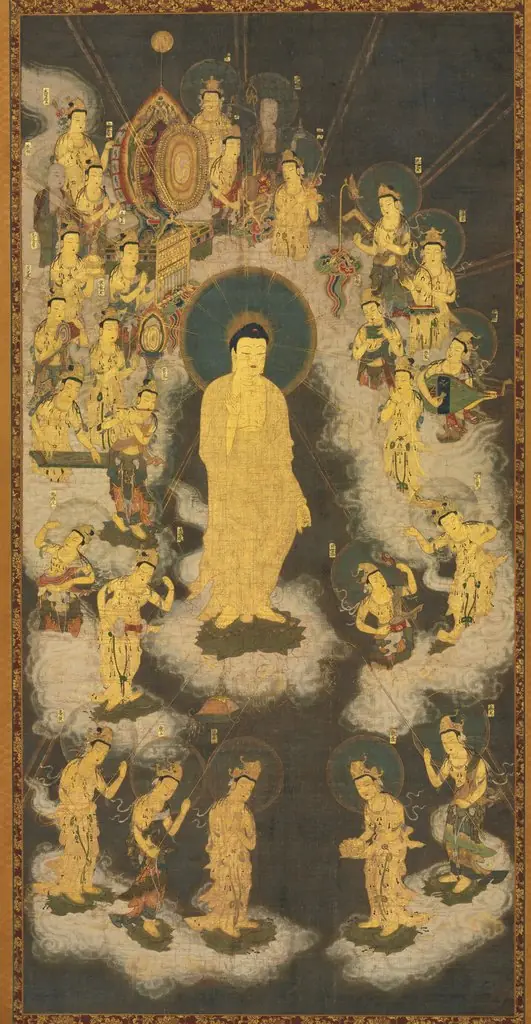
The painting, titled Amida Manifesting in the Dharma-body of Expedient Means, depicts a golden Buddha figure suspended in a dark, cloud-filled sky.
The painting, titled Amida Manifesting in the Dharma-body of Expedient Means, depicts a golden Buddha figure suspended in a dark, cloud-filled sky. Tiny attendant figures surround the central deity, which is rendered with ink and color on silk. The artwork's surface incorporates delicate cut silver, adding a unique visual dimension to the composition. This piece exemplifies a form of devotional painting intended for personal contemplation rather than public display.
Subject & Meaning
This artwork portrays Amida Buddha, a central figure in Pure Land Buddhism, appearing in a "Dharma-body of Expedient Means." This concept suggests a compassionate manifestation of the Buddha accessible to practitioners. The imagery of a radiant Buddha floating amidst clouds and small figures likely symbolizes a divine descent or vision, intended to inspire spiritual connection and devotion in the viewer during private contemplation.
Technique & Style
Crafted with ink and color on silk, the painting distinguishes itself through the intricate application of cut silver leaf. This metallic element, meticulously affixed to the silk, creates a shimmering effect, particularly noticeable on the Buddha's robe. Unlike many contemporary works that relied solely on pigments, the incorporation of delicate metalwork on silk was an uncommon and specialized technique, enhancing the visual richness and spiritual presence of the depicted deity.
Context
Created for private devotion, this painting was designed to be experienced intimately rather than displayed in a public setting. The subtle glow produced by the cut silver, especially when viewed under flickering candlelight, would have imbued the Buddha figure with a sense of vitality and immediacy. This intended interaction fostered a personal and profound connection between the artwork and the individual practitioner, making the divine presence feel tangible and close.
Artist & collection