Artwork
十一面観音像下絵|Drawing of Eleven-headed Kannon
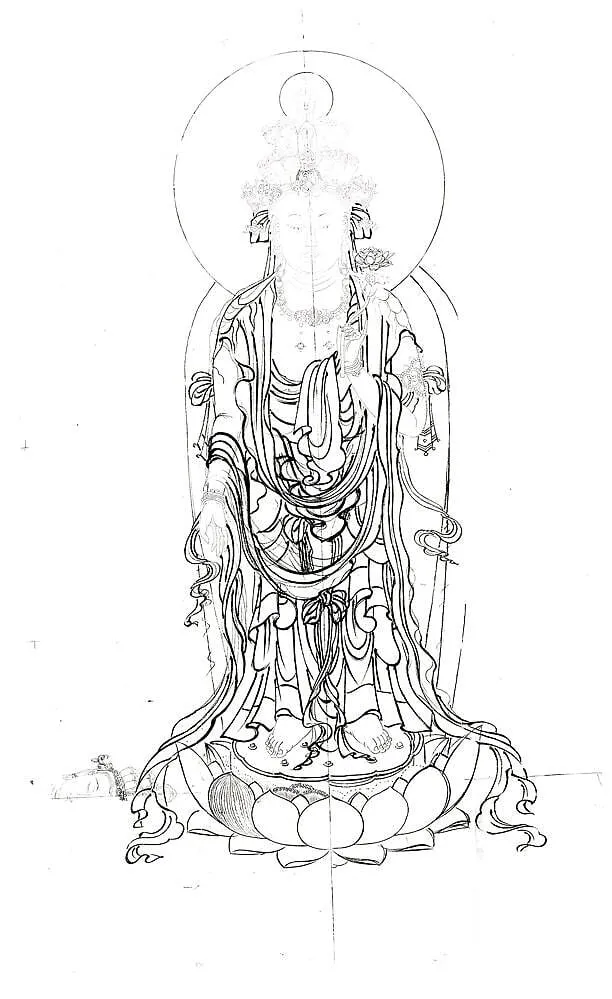
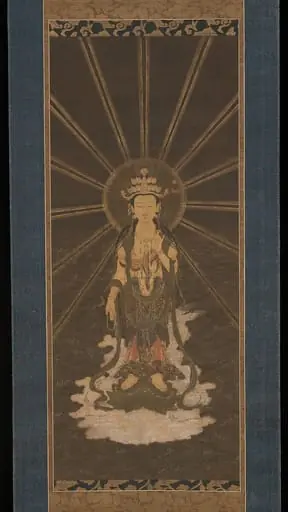
十一面観音像下絵|Drawing of Eleven-headed Kannon is an ink painting. It dates from 1649 and is held in the collection of the Metropolitan Museum of Art. This ink-on-paper drawing, titled Drawing of Eleven-headed Kannon (Jūichimen Kannon-zō Shitae), serves as a preparatory sketch.
About this work
Overview
This ink-on-paper drawing, titled Drawing of Eleven-headed Kannon (Jūichimen Kannon-zō Shitae), serves as a preparatory sketch.
This ink-on-paper drawing, titled Drawing of Eleven-headed Kannon (Jūichimen Kannon-zō Shitae), serves as a preparatory sketch. It depicts the bodhisattva Kannon, characterized by a main face surmounted by eleven smaller heads arranged in a stack. The figure stands upon a cloud, holding a vase and a lotus blossom. The delicate lines suggest a preliminary study, likely intended for a larger, more elaborate religious artwork.
Subject & Meaning
The artwork portrays Kannon, a revered bodhisattva in East Asian Buddhism, specifically in a form known as Eleven-headed Kannon. The multiple heads are not merely decorative; they symbolically represent the deity's capacity to perceive and respond to the diverse suffering of all beings, encompassing a range of expressions from serene wisdom to protective ferocity. The vase and lotus are traditional attributes associated with purity and compassion.
Technique & Style
Rendered in ink on paper, this matted drawing exhibits a delicate yet assured hand. The artist employed swift, precise lines to delineate the sacred form, creating a sense of spiritual shorthand rather than a fully finished composition. This approach is characteristic of a shitae, or underdrawing, where the focus is on capturing the essential form and details before transfer to a final medium, such as a temple painting.
Artist & collection