Artwork
An owl
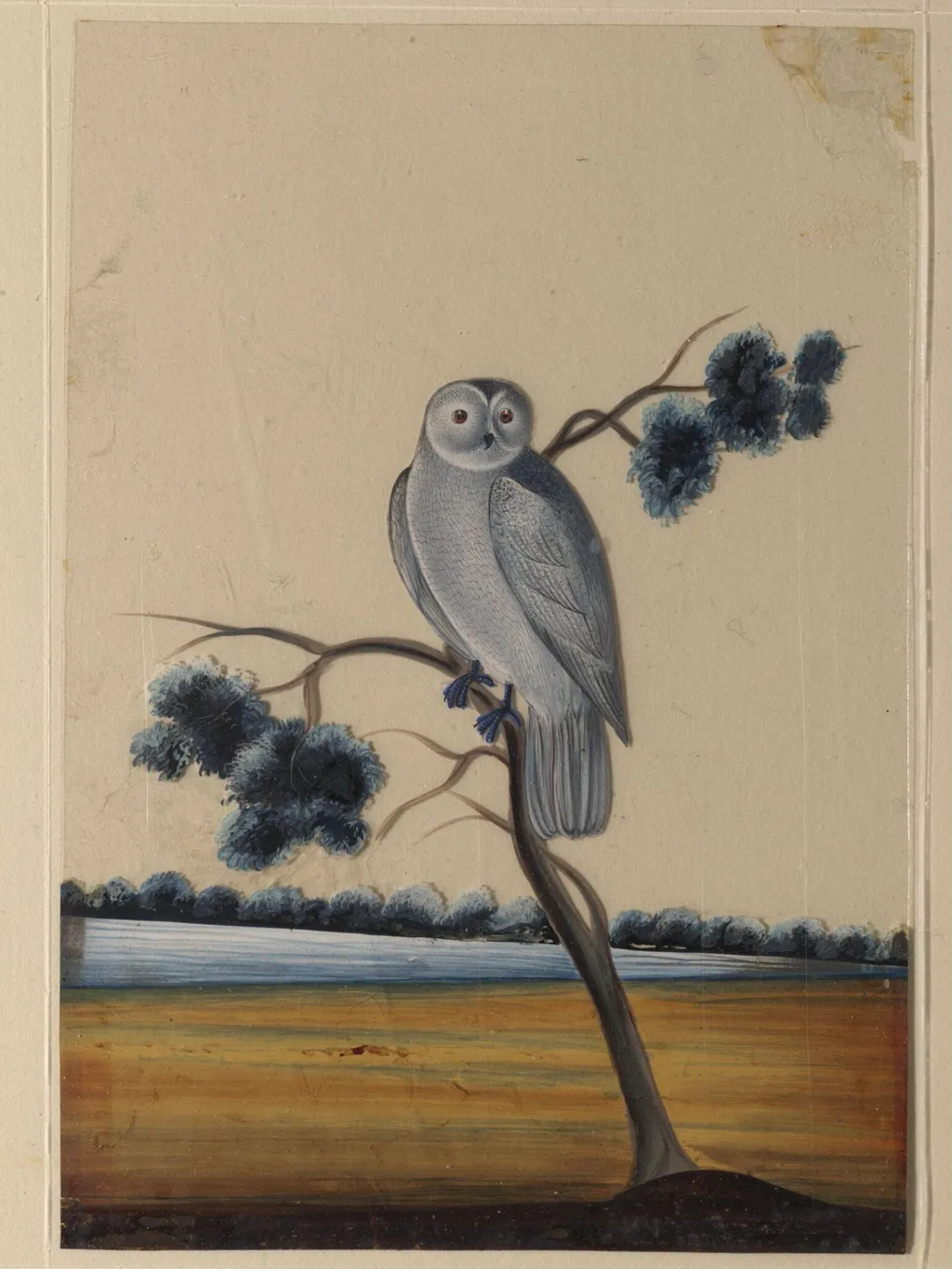
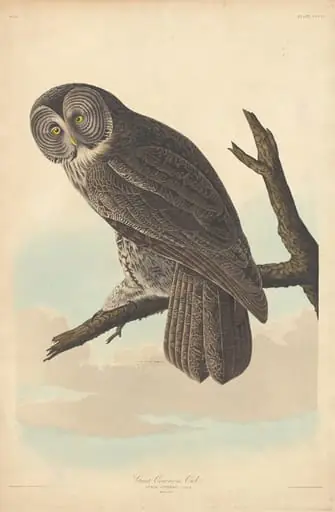
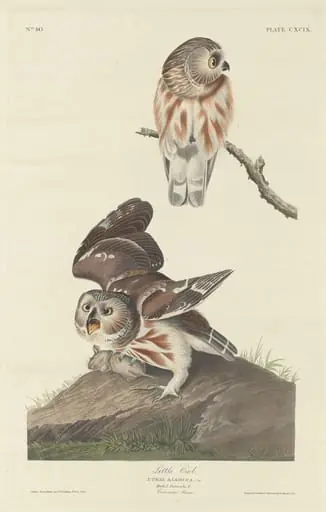
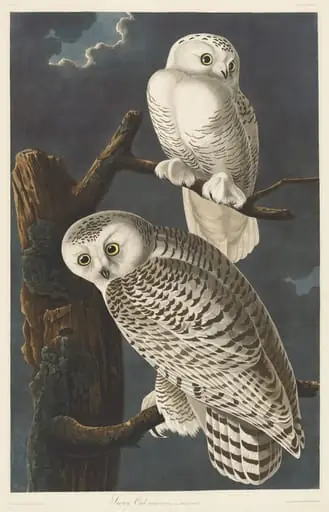
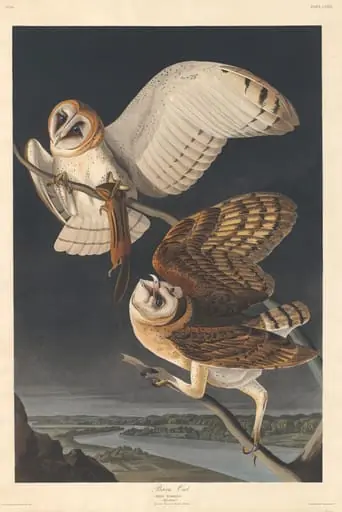
An owl is a paint painting by the Impressionist artist Unknown. It dates from 1860 and is held in the collection of the Victoria and Albert Museum. This painting depicts a solitary owl perched on a bare branch, rendered in quiet, restrained tones.
About this work
Overview
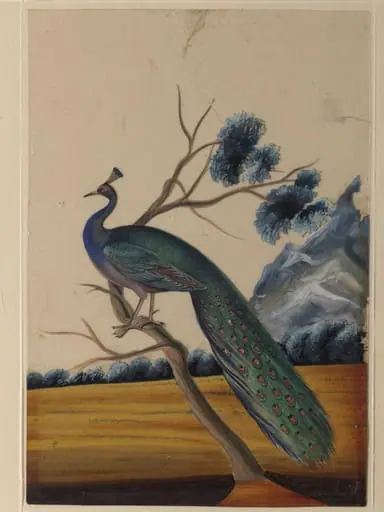
Behind it, sparse clusters of dark blue flowers and a subdued landscape of green hills and yellowish sky frame the figure without distraction.
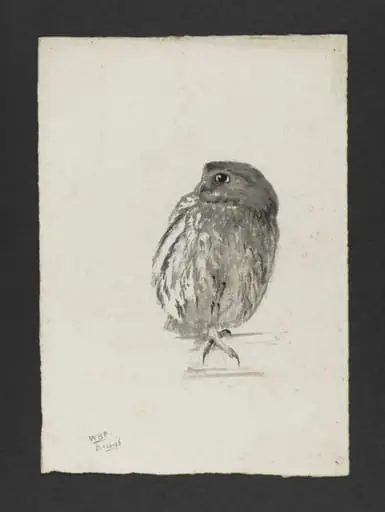
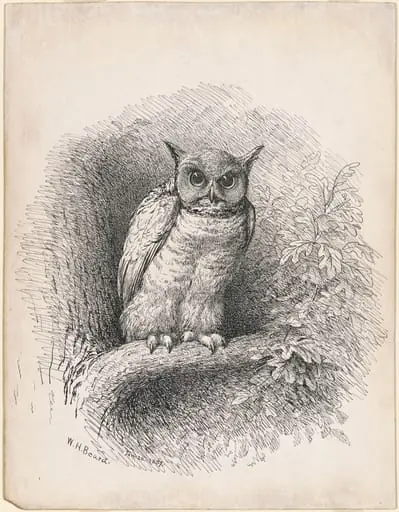
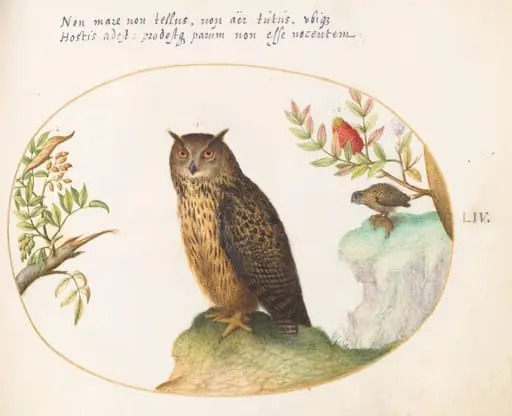
This painting depicts a solitary owl perched on a bare branch, rendered in quiet, restrained tones. The bird faces directly forward, its round red eyes and soft gray plumage drawing attention. Behind it, sparse clusters of dark blue flowers and a subdued landscape of green hills and yellowish sky frame the figure without distraction. The composition emphasizes stillness and simplicity, avoiding dramatic contrast or elaborate detail.
Subject & Meaning
The owl, often associated with solitude or observation in natural symbolism, is presented without mythological or narrative context. Its calm gaze and still posture suggest contemplation rather than threat or mystery. The inclusion of modest floral growth and a distant horizon implies a quiet natural world, untouched by human intervention, reinforcing a sense of serene isolation.
Technique & Style
The owl’s feathers are painted with smooth, even brushwork, creating a sense of soft texture and uniformity. In contrast, the background flowers and landscape are rendered with looser, more suggestive strokes, hinting at form without precise definition. The palette remains muted—gray, blue, green, and pale yellow—avoiding highlights or vivid saturation, contributing to an overall tone of quietude and restraint.
History & Provenance
The painting’s origin and early ownership are not documented in available records. It lacks signatures, dates, or inscriptions that would link it to a known artist or period. Its style suggests a late 19th- or early 20th-century interest in naturalistic observation, possibly from a regional or amateur tradition, though no definitive attribution has been established.
Context
This work aligns with a broader trend in European art of the late 1800s and early 1900s that favored intimate, unembellished depictions of nature. Artists and collectors increasingly valued quiet scenes of wildlife and landscape as antidotes to industrialization. Similar sensibilities appear in the decorative arts and watercolor traditions of the period, particularly in British and Scandinavian collections.
Legacy
Though not widely exhibited or studied, the painting reflects a persistent interest in naturalistic simplicity within 20th-century visual culture. Its quiet aesthetic resonates with modern viewers drawn to understated representations of the natural world. Institutions like the Victoria and Albert Museum hold comparable works, preserving this quiet tradition of observational art outside the mainstream canon.
Artist & collection

 Domestic Scene
 Giacomo and Cardinal Marco, investing Andrea, Abbot of San Zeno, with his Benefice
 The Nymph of Fontainebleau
 Portrait of a Woman
 Madonna and Child with Saints in the Enclosed Garden
 Venus and Minerva
 Family Group of Four on Sofa
 Wall painting from Room H of the Villa of P. Fannius Synistor at Boscoreale