Artwork
Barn Owl
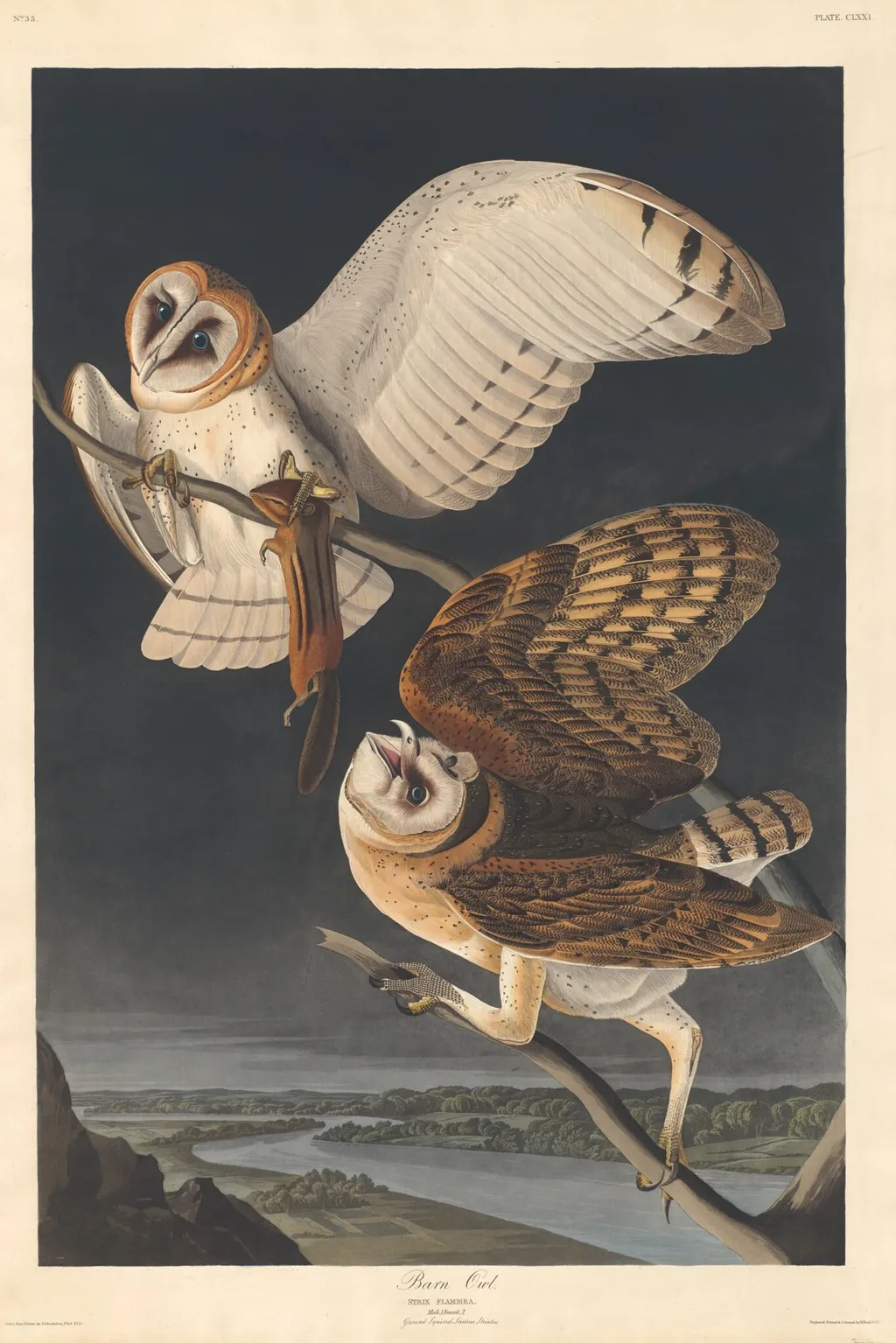
Barn Owl is an ink print by the Romanticist artist Robert Havell Jr.. It dates from 1833 and is held in the collection of the National Gallery of Art.
About this work
Overview
The Havell family, based in Reading, Berkshire, were established printmakers with a reputation for technical precision and delicate color application.
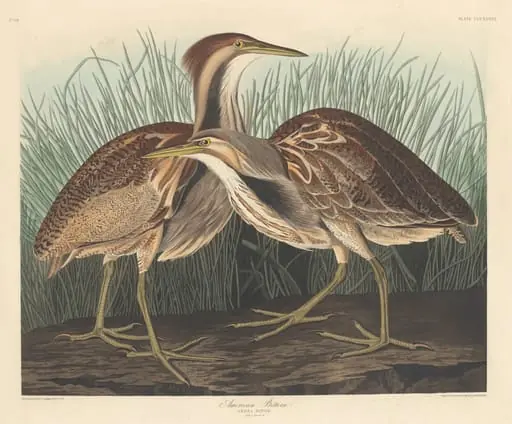
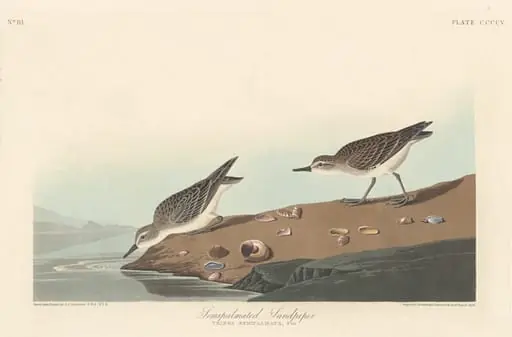
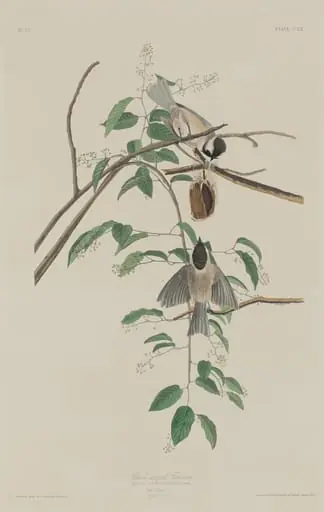
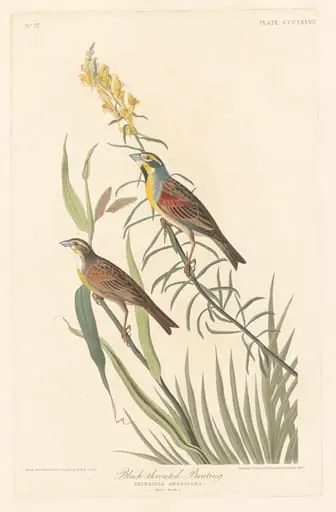
Created in 1833 by Robert Havell Jr., this print is a hand-colored engraving and aquatint on Whatman wove paper. It belongs to a series of natural history illustrations produced during the early 19th century, reflecting the period’s scientific interest in documenting wildlife. The Havell family, based in Reading, Berkshire, were established printmakers with a reputation for technical precision and delicate color application.
Subject & Meaning
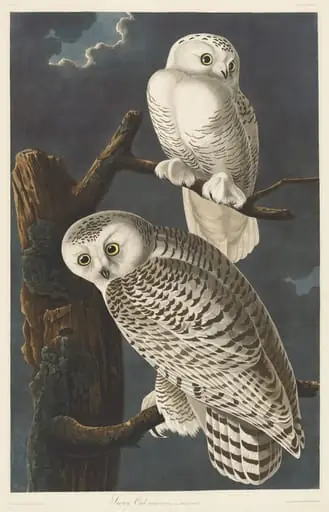
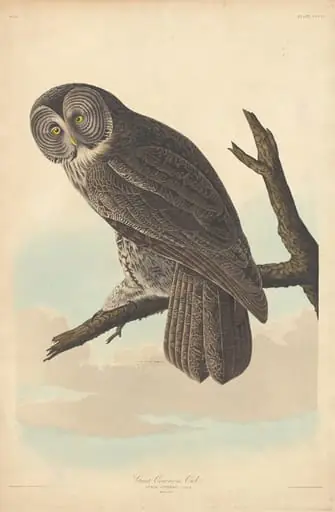
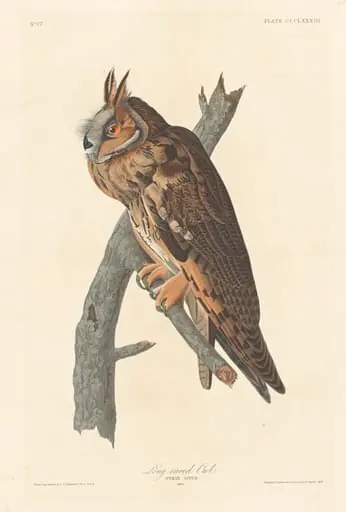
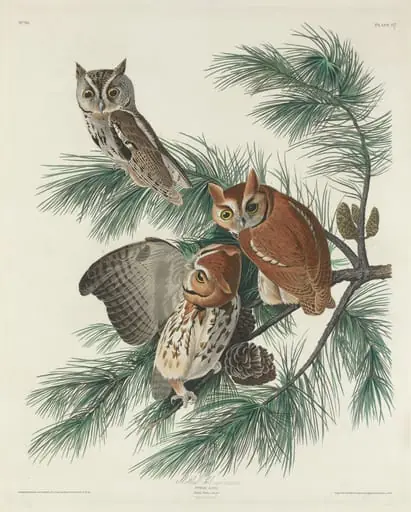
The image depicts two barn owls in flight, one positioned above the other, their forms contrasting in plumage: one pale with dark head markings, the other darker with lighter underparts. Their large, round eyes and sharp beaks convey alertness, while their dynamic posture suggests motion through air. The composition emphasizes the birds’ natural behavior, presenting them not as specimens but as living creatures within their environment.
Technique & Style
Havell employed engraving for fine linear detail and aquatint to achieve subtle tonal gradations, particularly in the feathers and sky. Hand-coloring was applied with care to match observed plumage, enhancing realism. The dark blue background and distant horizon of water and land frame the owls, heightening their sense of movement. The rendering is precise yet expressive, balancing scientific accuracy with atmospheric depth.
History & Provenance
Robert Havell Jr. inherited his father’s printmaking practice and contributed to major natural history publications, including John James Audubon’s works. This print likely originated from such a project, circulating among scientific and amateur naturalist circles. Its production on high-quality Whatman paper reflects the demand for durable, finely crafted illustrations in an era before photographic reproduction.
Context
Produced during the height of Romantic-era naturalism, the work aligns with a broader cultural shift toward observing nature with emotional and aesthetic sensitivity. While grounded in empirical study, the image’s dramatic composition and atmospheric setting echo Romantic ideals, where wildlife became a vessel for contemplation of the sublime and the wild.
Legacy
Havell’s prints remain valued for their technical mastery and contribution to the visual record of 19th-century ornithology. Though not widely known outside specialist circles, his work helped shape public understanding of avian life through accessible, beautifully rendered imagery. These prints continue to inform historical studies of natural history illustration and print culture.
Own this work as a print
Artist & collection

Artist
The Havell family of Reading, Berkshire, England, included a number of notable engravers, etchers and painters, as well as writers, publishers, educators, and musicians.