Artwork
Little Owl
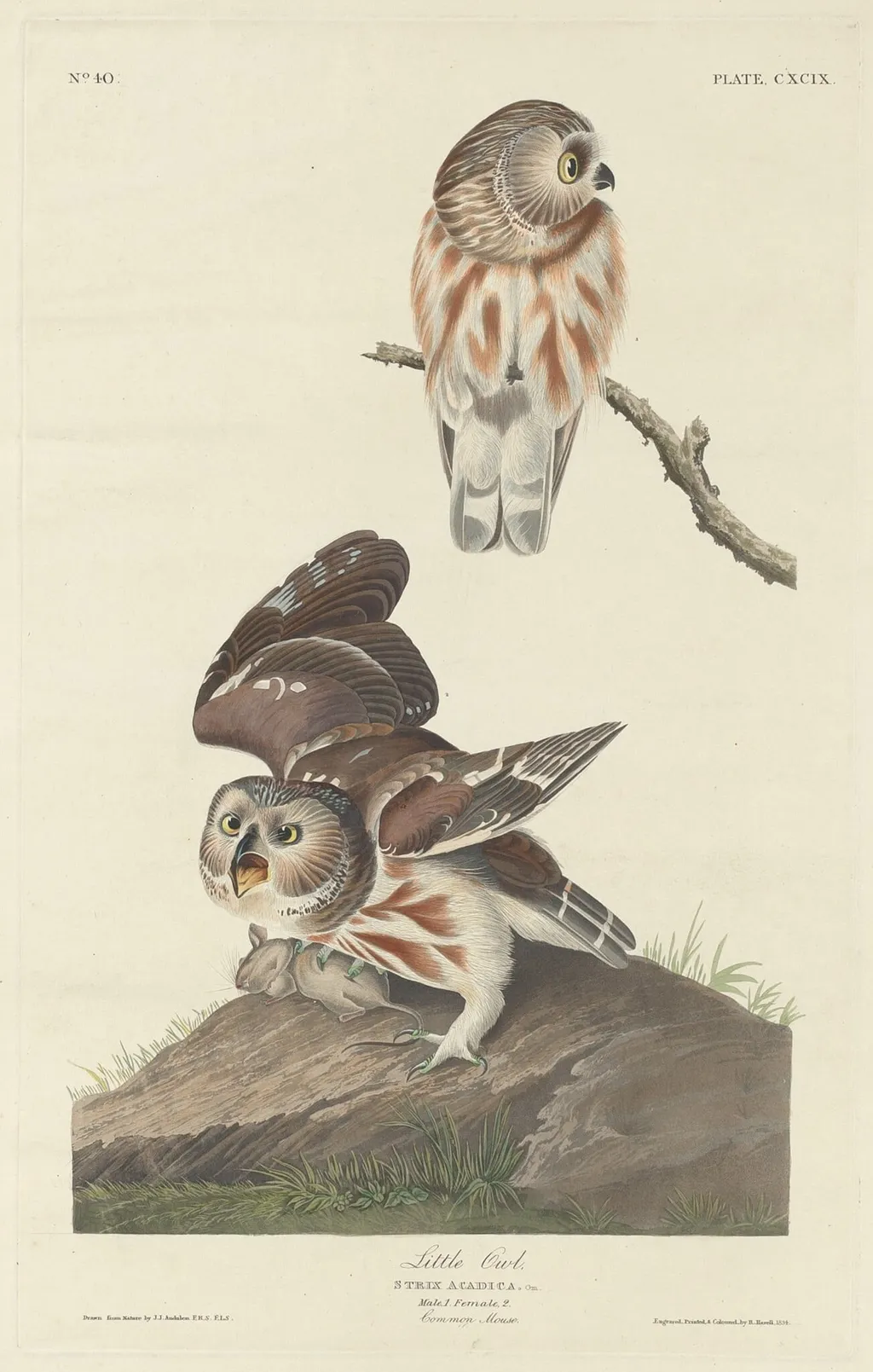
Little Owl is an ink print by the Romanticist artist Robert Havell Jr.. It dates from 1834 and is held in the collection of the National Gallery of Art.
About this work
Overview
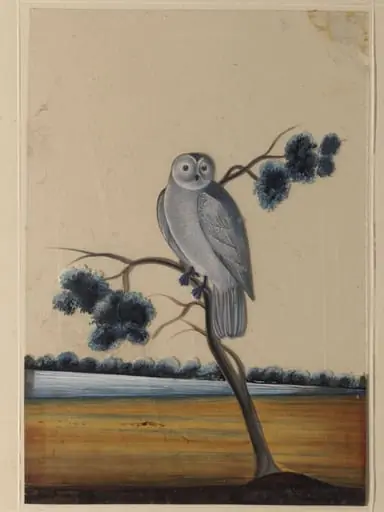
Little Owl is a hand-colored engraving and aquatint print on Whatman wove paper, created by Robert Havell Jr. in 1834. The work showcases the Havell family's technical prowess in aquatint and their interest in Indian art and culture.
Subject & Meaning
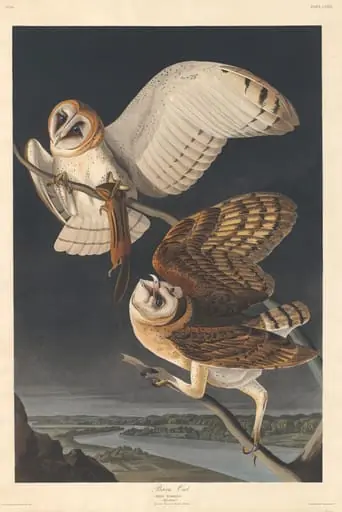
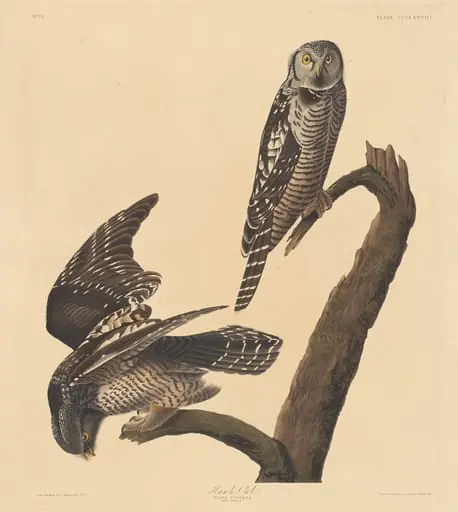
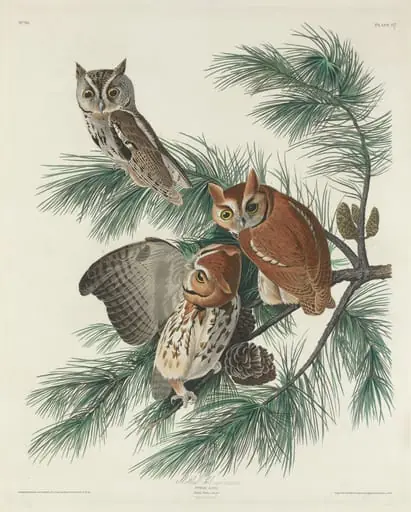
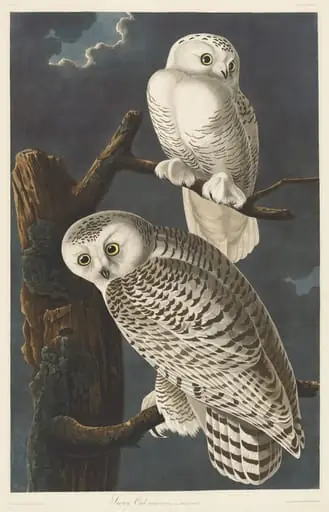
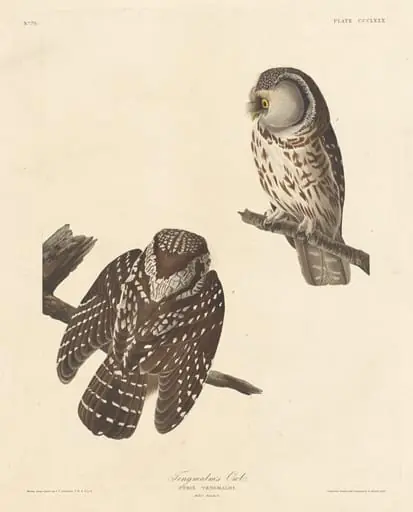
Contrary to the title, the print depicts two owls on a rocky ledge. One owl faces right, while the other hunches over a small mouse, with subtle suggestions of movement. The scene conveys a quiet, observational moment in nature.
Technique & Style
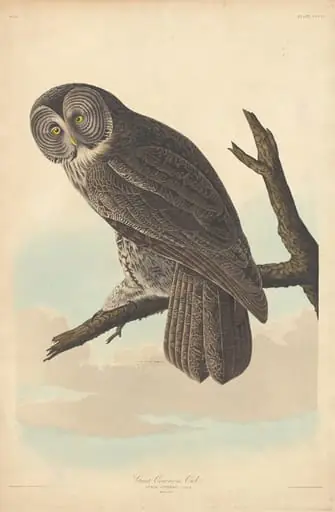
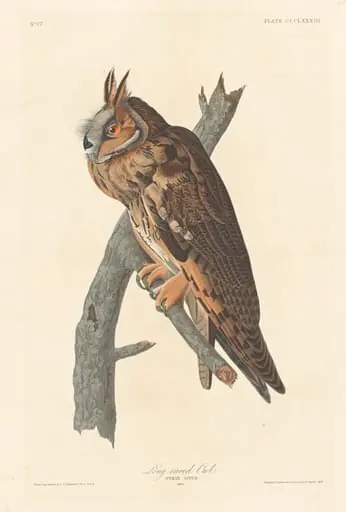
The print combines fine engraving for detailed rendering of the owls, their prey, and the rocky ledge, with subtle aquatint tonal gradations. Hand-coloring adds warmth and depth, particularly in the soft, muted tones of the owls' feathers and the green background.
History & Provenance
Robert Havell Jr. was part of a renowned multi-generational family of English artists from Reading, Berkshire, known for their work in engraving, etching, and painting. This piece exemplifies their expertise in aquatint, a technique for which the family was particularly recognized.
Context
Produced in 1834, Little Owl reflects the Havell family's broader engagement with Indian art and culture, though the subject matter here is more universally naturalistic than specifically Indian.
Legacy
While specific legacy details of Little Owl are not provided, the work contributes to the Havell family's enduring reputation for technical innovation and artistic quality in 19th-century British printmaking.
Artist & collection

Artist
The Havell family of Reading, Berkshire, England, included a number of notable engravers, etchers and painters, as well as writers, publishers, educators, and musicians.