Artwork
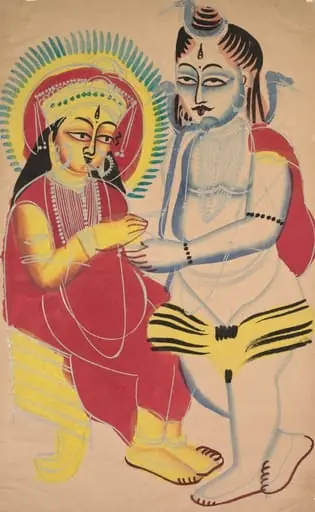
Annapurna and Shiva
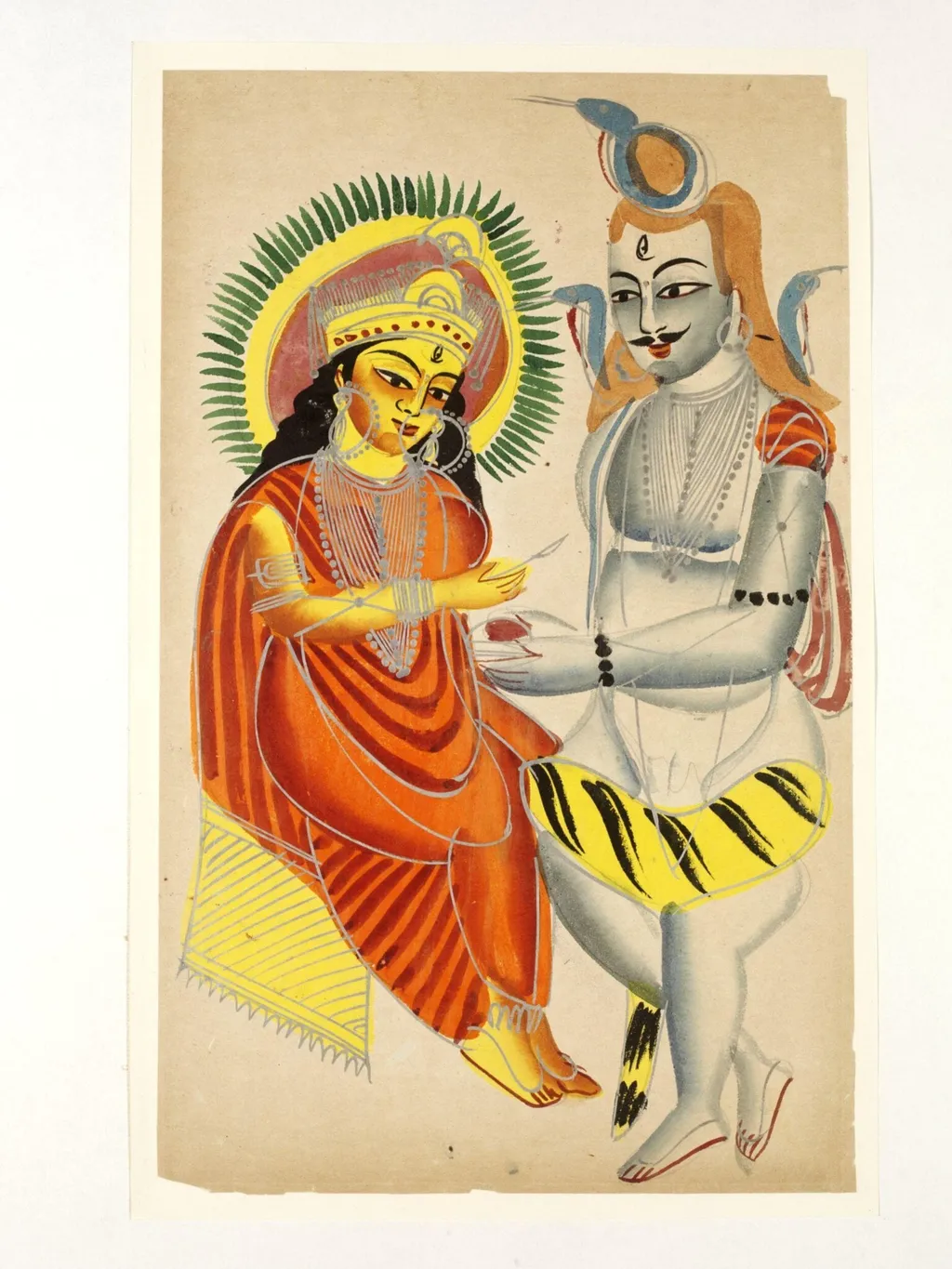
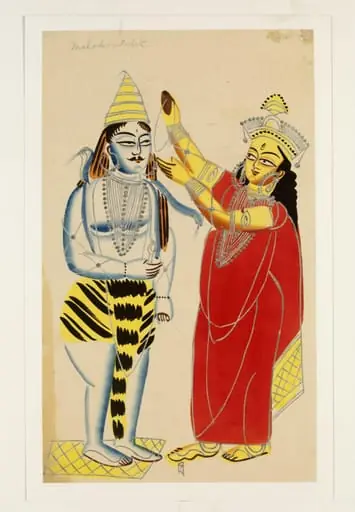
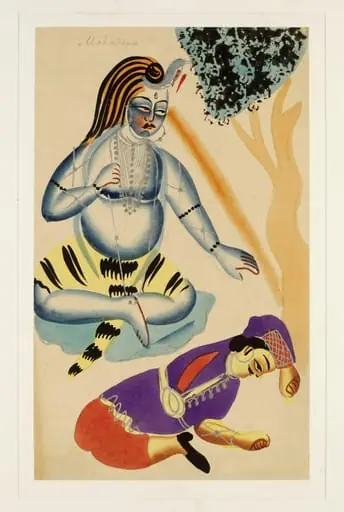
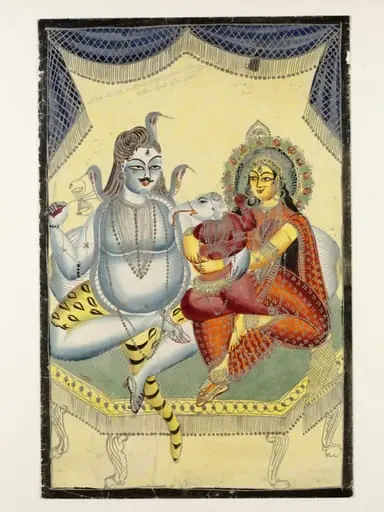
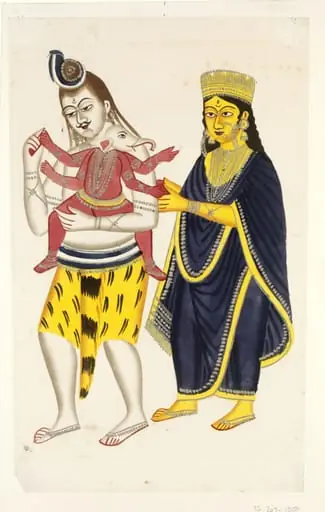
Annapurna and Shiva is a paint painting by the Impressionist artist Unknown. It dates from 1890 and is held in the collection of the Victoria and Albert Museum.
About this work
Overview
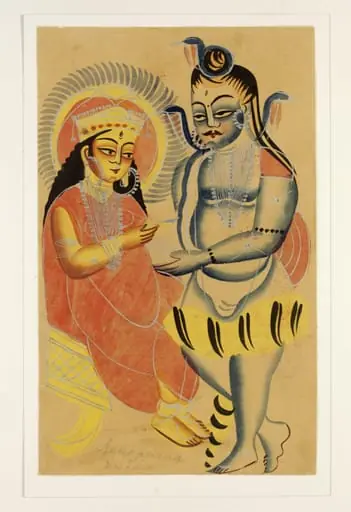
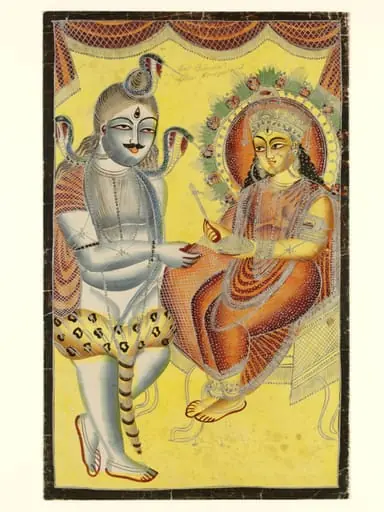
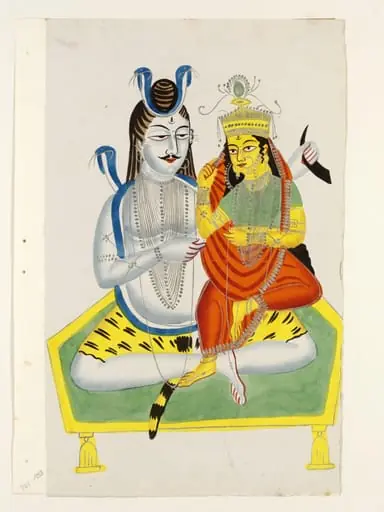
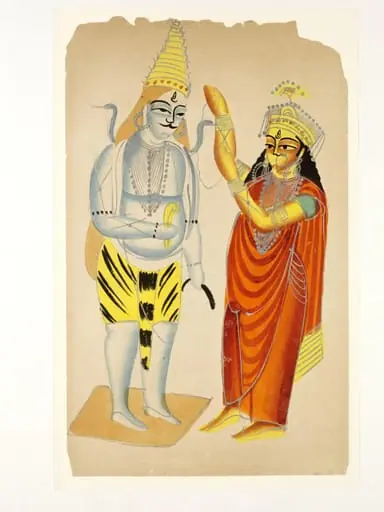
Created in 1890, this watercolor and tin‑alloy work on paper portrays the Hindu deities Annapurna and Shiva together.
Created in 1890, this watercolor and tin‑alloy work on paper portrays the Hindu deities Annapurna and Shiva together. The composition shows the goddess on the left, dressed in a vivid orange garment with gold trim and a flame‑shaped yellow headdress, while Shiva stands to her right, his skin lighter, wearing a blue necklace and a snake coiled around one arm. Both figures are outlined in bold black lines against a minimal background.
Subject & Meaning
The scene captures Annapurna, the goddess of nourishment, presenting food to Shiva, the ascetic god of destruction. Annapurna’s hand rests gently on Shiva’s shoulder, emphasizing a gesture of offering and support, while Shiva holds a small object in his palm, suggesting a reciprocal exchange. The calm expressions and simple facial lines convey a serene interaction between the divine pair.
Technique & Style
Executed in the Kalighat tradition that flourished in 19th‑century Calcutta, the painting employs bright, flat colors and swift brushwork characteristic of the school. The use of watercolor combined with tin‑alloy pigment creates luminous hues, while the strong black outlines simplify forms and lend a graphic quality to the figures.
History & Provenance
The work entered the museum’s collection through a 1955 donation by M. N. Varvill. Its provenance traces back to the late colonial period, when Kalighat artists responded to shifting cultural currents by integrating local mythological subjects with emerging visual trends.
Context
Kalighat paintings emerged from the bustling Kalighat bazaar near the famous Kali temple, serving as popular prints for a growing urban audience. Artists blended traditional iconography with contemporary social commentary, reflecting the complexities of a society under British rule.
Legacy
As an example of the Kalighat genre, this piece illustrates how regional Indian art adapted to modern materials and market demands while preserving devotional themes. It continues to inform studies of colonial‑era visual culture and the transmission of mythological narratives in popular art.
Artist & collection

 Domestic Scene
 Giacomo and Cardinal Marco, investing Andrea, Abbot of San Zeno, with his Benefice
 The Nymph of Fontainebleau
 Portrait of a Woman
 Madonna and Child with Saints in the Enclosed Garden
 Venus and Minerva
 Family Group of Four on Sofa
 Wall painting from Room H of the Villa of P. Fannius Synistor at Boscoreale