Artwork
Annapurna and Shiva
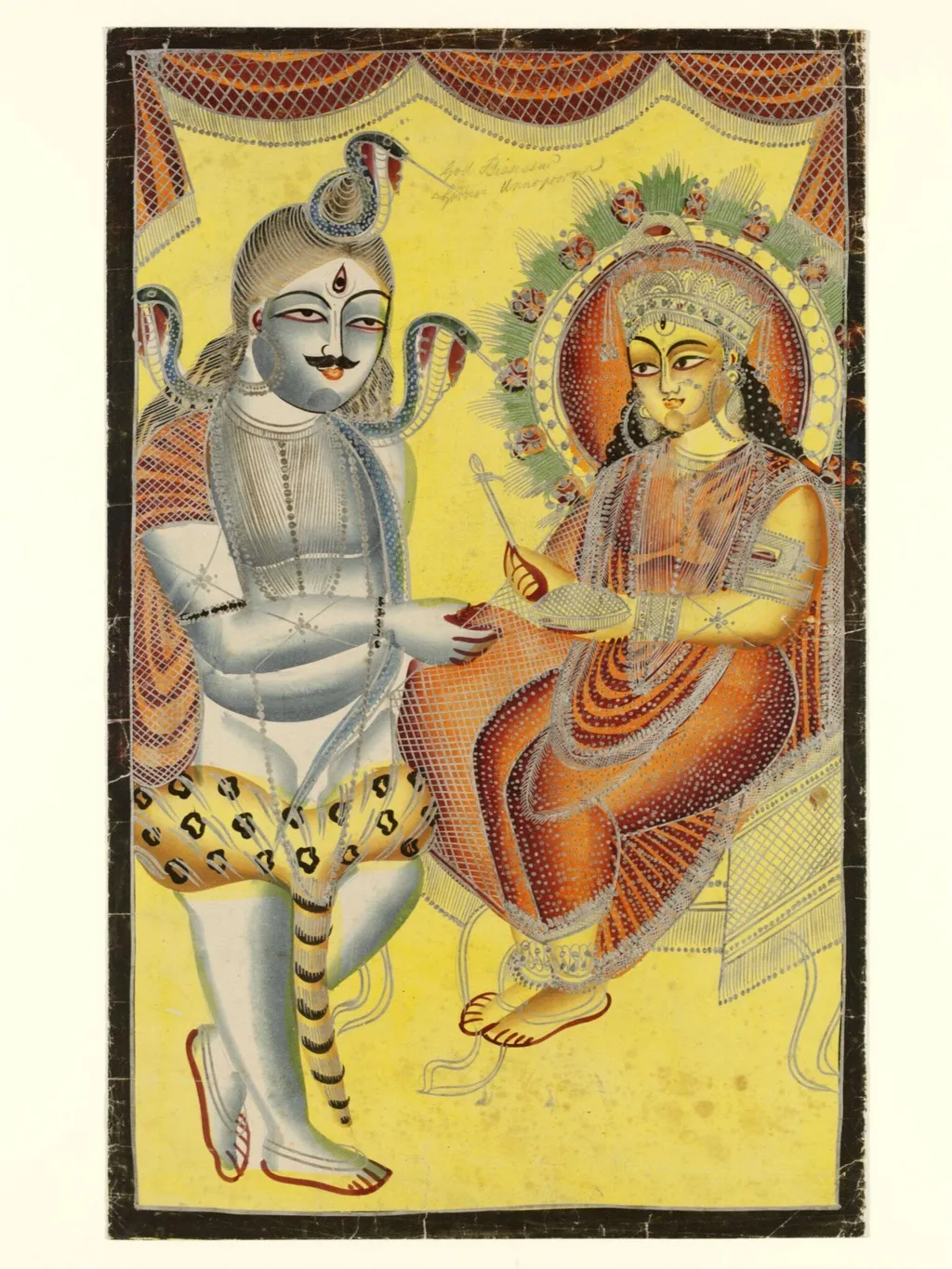
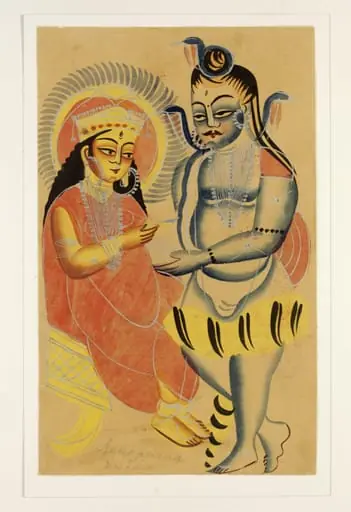
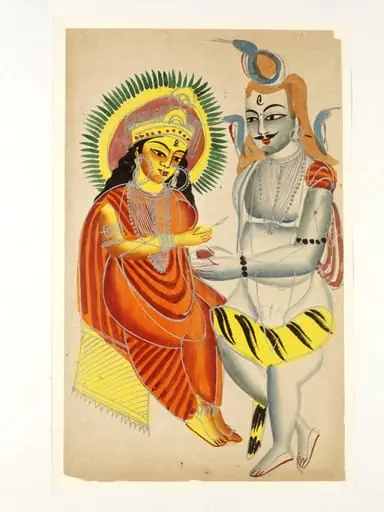
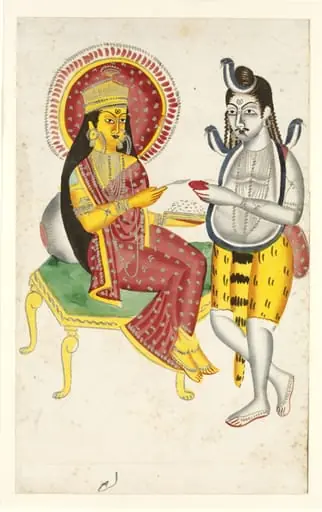
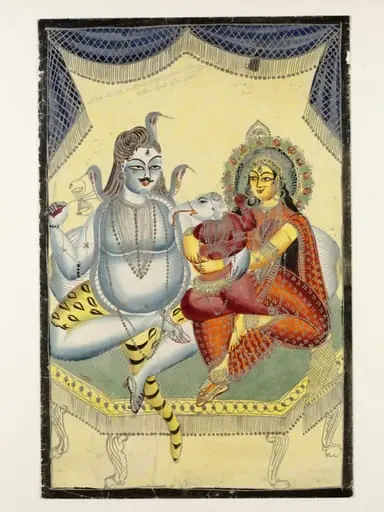
Annapurna and Shiva is a paint painting by the Impressionist artist Unknown. It dates from 1860 and is held in the collection of the Victoria and Albert Museum. This opaque watercolor on paper, dated to 1860, portrays the Hindu deity Annapurna presenting rice to Shiva.
About this work
Overview
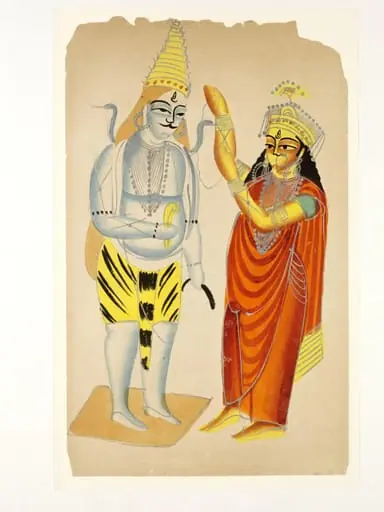
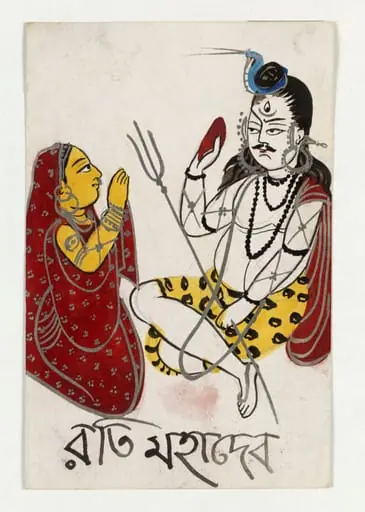
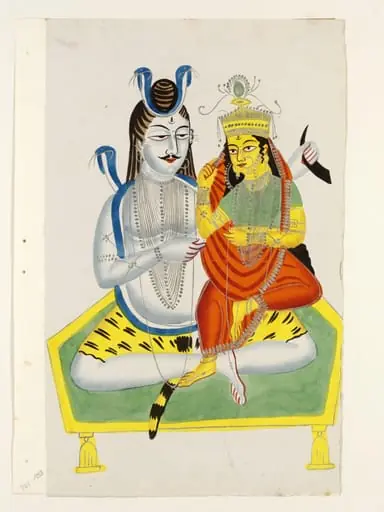
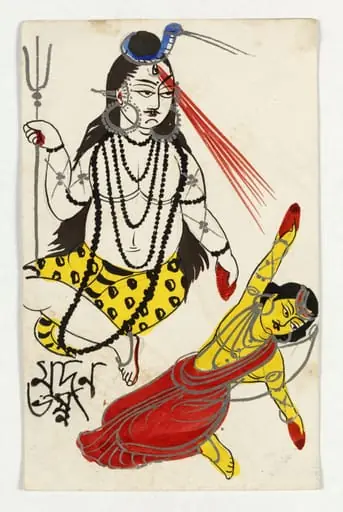
This opaque watercolor on paper, dated to 1860, portrays the Hindu deity Annapurna presenting rice to Shiva. Executed in the Kalighat style that flourished in 19th‑century Calcutta, the work combines vivid pigments with flattened forms typical of popular religious painting of the period.
Subject & Meaning
Annapurna, the goddess associated with nourishment, is shown handing rice to Shiva, the ascetic god of destruction and renewal. The gesture emphasizes the reciprocal relationship between sustenance and spiritual transformation within Hindu mythology.
Technique & Style
The artist employed quick, confident brushstrokes and bold, saturated colors, characteristic of Kalighat painters who often worked on inexpensive paper. Figures are rendered with simplified anatomy, four arms for Annapurna, and decorative jewelry, while the background features patterned motifs rather than realistic depth.
History & Provenance
Kalighat painting emerged among itinerant artists who migrated from rural Bengal to Calcutta, then the capital of British India (1833‑1912). This work reflects that urban‑rural synthesis, documenting the visual culture that catered to both devotional and popular audiences.
Context
The piece belongs to a broader visual tradition that depicted local deities and mythic scenes for a growing market of pilgrims and city dwellers. Its flat composition and vivid palette align with other contemporary works that blended folk aesthetics with emerging commercial art practices.
Artist & collection

 Domestic Scene
 Giacomo and Cardinal Marco, investing Andrea, Abbot of San Zeno, with his Benefice
 The Nymph of Fontainebleau
 Portrait of a Woman
 Madonna and Child with Saints in the Enclosed Garden
 Venus and Minerva
 Family Group of Four on Sofa
 Wall painting from Room H of the Villa of P. Fannius Synistor at Boscoreale