Artwork
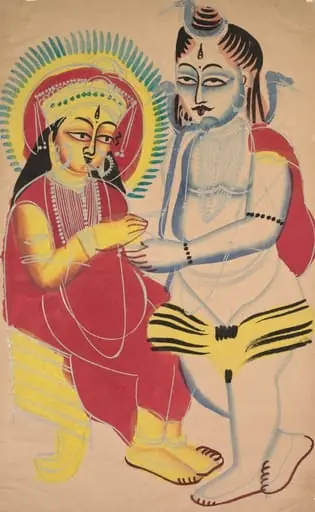
Annapurna and Shiva
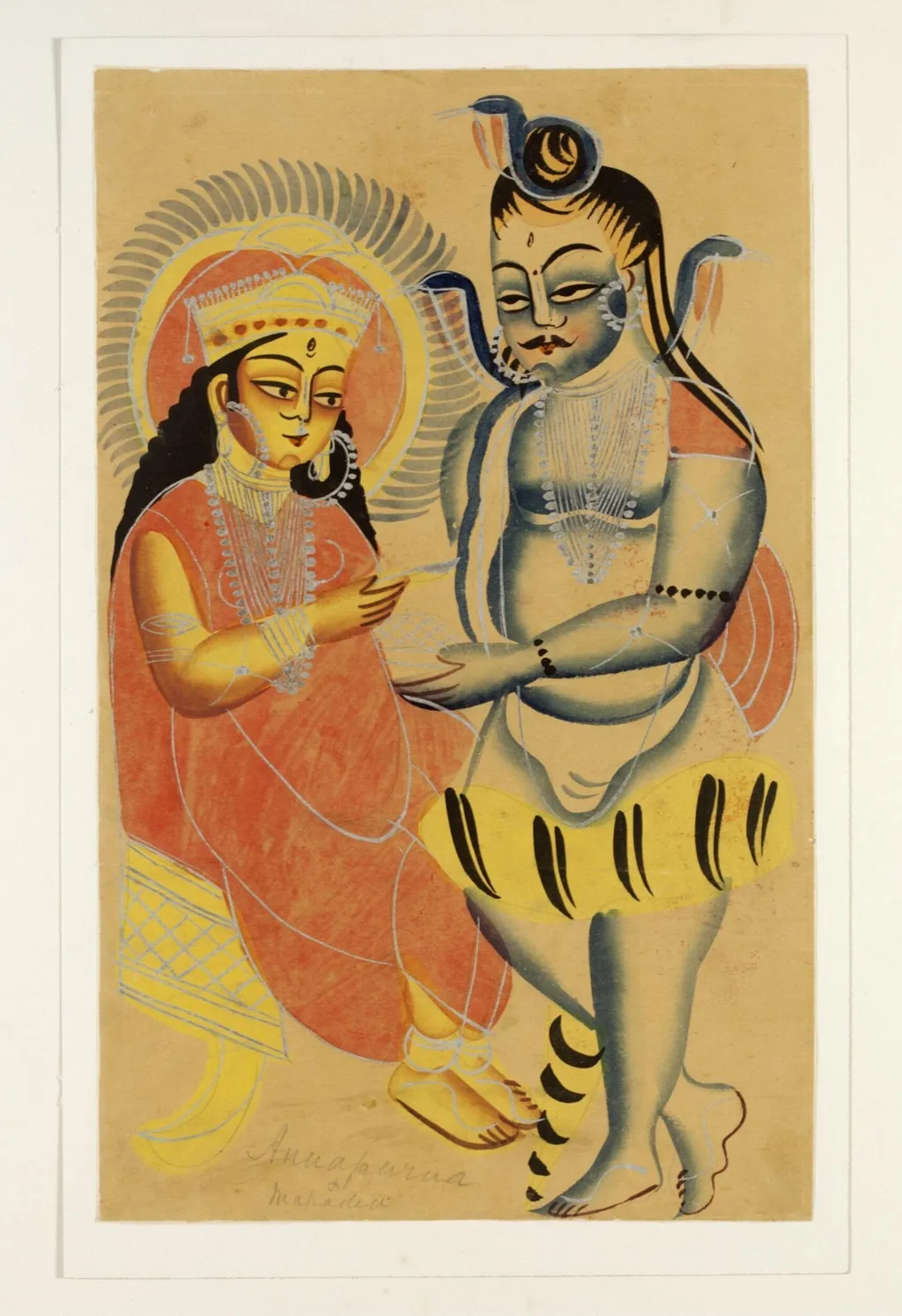
Annapurna and Shiva is a paint painting by the Impressionist artist Unknown. It dates from 1885 and is held in the collection of the Victoria and Albert Museum.
About this work
Overview
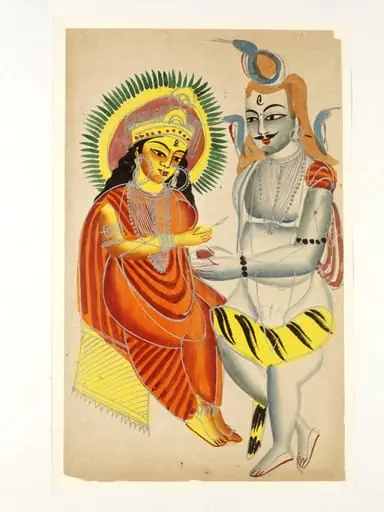
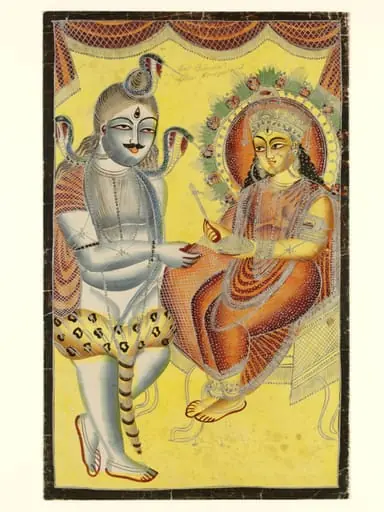
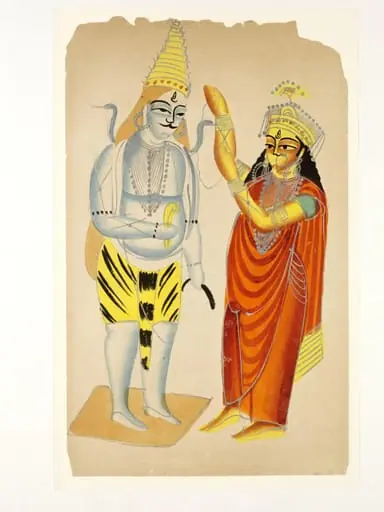
Annapurna and Shiva is an opaque watercolour painting on paper, created in 1885. The work depicts the goddess Annapurna seated and the god Shiva standing together, characterized by distinct attire and attributes.
Subject & Meaning
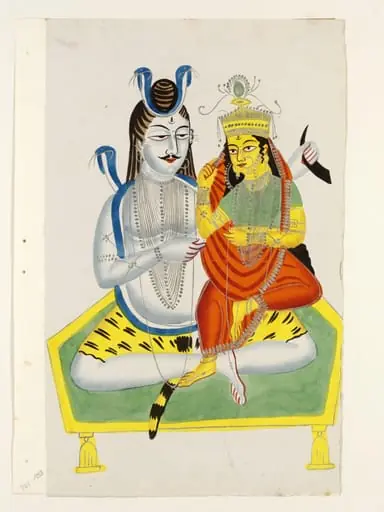
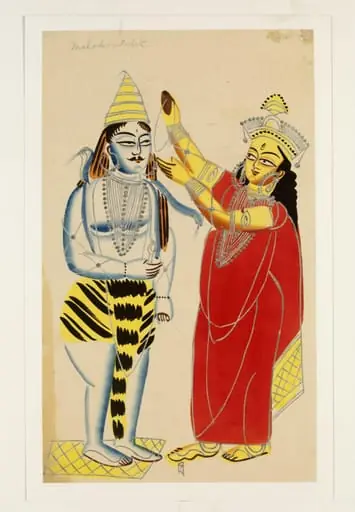
The painting portrays Hindu deities Annapurna, the goddess of nourishment, and Shiva, the destroyer. Annapurna is shown with a halo and a bowl, symbolizing her role as a beneficent deity, while Shiva wears a snake on his head and also holds a bowl, reflecting his complex, multifaceted nature.
Technique & Style
The painting features a yellow background accented with orange and gray lines. The technique involves layering opaque watercolour to achieve depth, though its stylistic attribution is noted separately as potentially misleading - the work's characteristics align more closely with traditional Indian miniature painting techniques than with Impressionism.
History & Provenance
Acquired by the Victoria and Albert Museum in 1950 from Miss M. Steele, the painting was part of a collection inherited from her mother, a Cambridge Sanskrit scholar (acquired in 1894), potentially originally gathered by Miss Steele’s grandmother during her time in India.
Context
The painting reflects the cultural exchange and collecting practices of the late 19th century, particularly among British individuals with ties to India, such as Miss Steele’s family.
Legacy
Housed at the Victoria and Albert Museum, 'Annapurna and Shiva' contributes to the institution’s collection of Indian art, offering insights into late 19th-century Hindu devotional art and the history of cultural exchange.
Artist & collection

 Domestic Scene
 Giacomo and Cardinal Marco, investing Andrea, Abbot of San Zeno, with his Benefice
 The Nymph of Fontainebleau
 Portrait of a Woman
 Madonna and Child with Saints in the Enclosed Garden
 Venus and Minerva
 Family Group of Four on Sofa
 Wall painting from Room H of the Villa of P. Fannius Synistor at Boscoreale