Artwork
Anonymous. Calvary
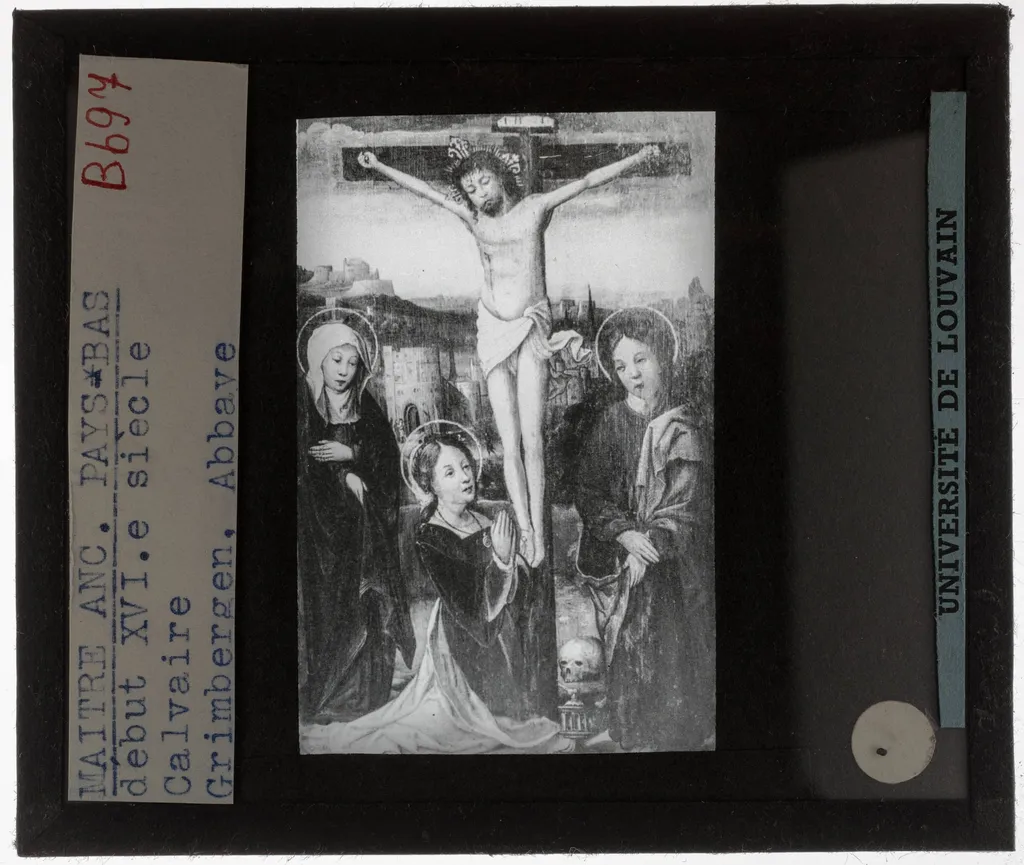
Anonymous. Calvary is a photography by Unknown. It dates from 1924 and is held in the collection of the Catholic University of Leuven.
About this work
Overview
The original painting remains in the Abbey of the Premonstratensians in Grimbergen, Belgium, while the photographic record is held in the Museum of Ethnography.
A 16th-century religious painting depicting the Crucifixion, known as Calvary, was photographed on glass slide between 1839 and 1939 by an unidentified photographer. The image was part of an academic collection used for art historical study, likely compiled by institutions in Louvain. The original painting remains in the Abbey of the Premonstratensians in Grimbergen, Belgium, while the photographic record is held in the Museum of Ethnography.
Subject & Meaning
The scene portrays Christ on the cross at Calvary, surrounded by mourners, soldiers, and onlookers as described in the Gospels. The composition follows traditional iconography of the period, emphasizing suffering, devotion, and divine sacrifice. No individual figures are identified, suggesting the work was intended for communal worship rather than personal veneration.
Technique & Style
The original painting employs tempera or oil on panel, typical of Flemish religious art of the 1500s. Figures are rendered with restrained naturalism, elongated proportions, and muted coloration. The background is minimal, directing focus to the central crucifixion. The photographic reproduction captures these details in monochrome, preserving the work’s formal structure for scholarly use.
History & Provenance
The painting was created in the 16th century and has remained in the care of the Premonstratensian Abbey in Grimbergen since its inception. The glass slide photograph, produced during the late 19th or early 20th century, was likely made for educational purposes by the University of Louvain. The slide later entered the Museum of Ethnography’s visual archive as part of a broader documentation effort.
Context
During the 16th century, religious imagery in the Low Countries served both devotional and didactic roles, especially in monastic communities. The Premonstratensians, a Catholic order, commissioned such works to reinforce liturgical practice. By the 19th century, institutions like Louvain began systematically photographing artworks to preserve and compare regional styles amid industrialization and cultural change.
Legacy
The glass slide preserves a visual record of a painting whose physical condition may have altered over time. As part of an early academic archive, it reflects the shift from direct observation to mediated study in art history. The image continues to serve as a reference for scholars examining the transmission and documentation of religious art in Belgium.
Artist & collection
 Domestic Scene
 Giacomo and Cardinal Marco, investing Andrea, Abbot of San Zeno, with his Benefice
 The Nymph of Fontainebleau
 Portrait of a Woman
 Madonna and Child with Saints in the Enclosed Garden
 Venus and Minerva
 Family Group of Four on Sofa
 Wall painting from Room H of the Villa of P. Fannius Synistor at Boscoreale
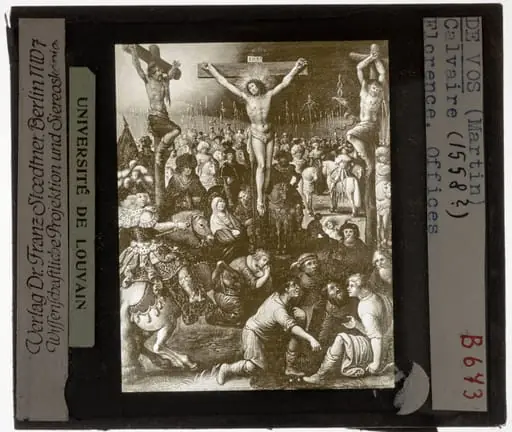 Maarten de Vos. Calvarie
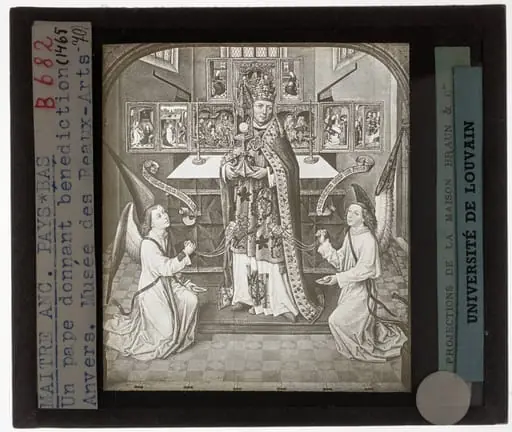 Anoniem. Aanbidding van het Sacrament
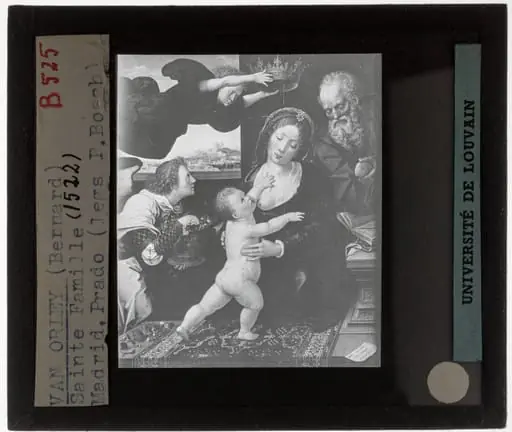 Bernard of Orley. Holy Family
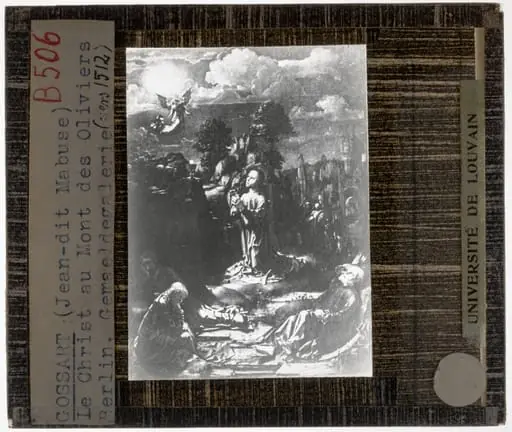 Jan Gossaert. Christus op de olijfberg
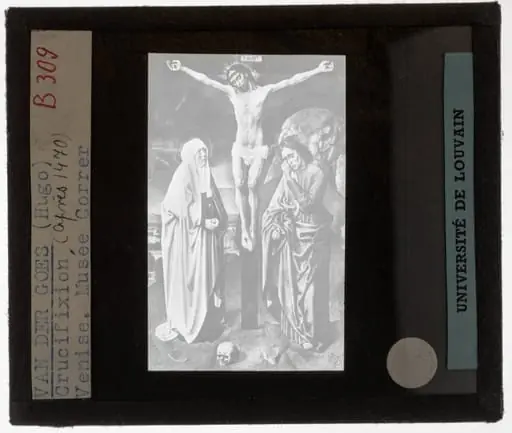 Hugo van der Goes. Kruisiging
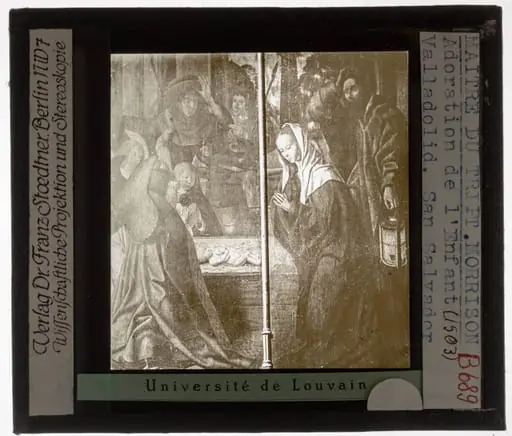 Master of the Morrison Triptych. Adoration of Christ
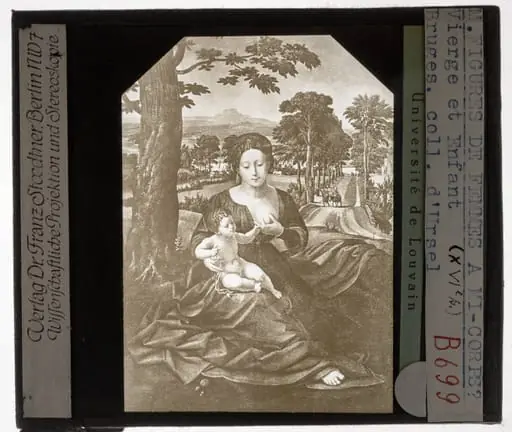 Anoniem. Madonna met kind
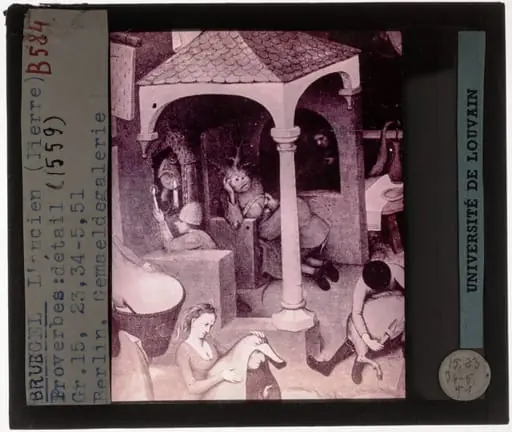 Pieter Brueghel de Oude. Nederlandse spreekwoorden Detail: Vijf spreekwoorden
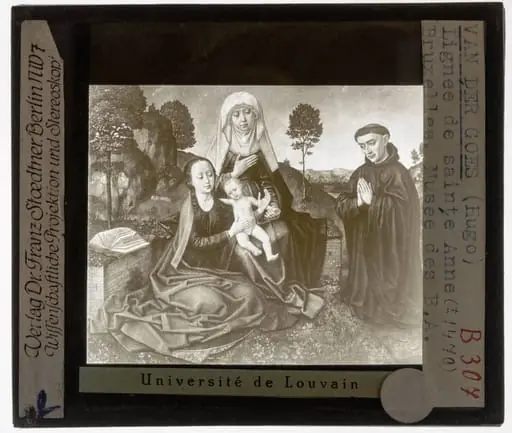 Hugo van der Goes. St Anne's with a Franciscan donor
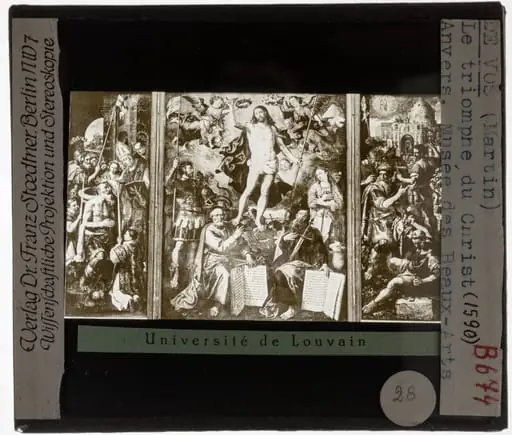 Maarten de Vos. Altaarstuk van de gilde van de oude voetboog